


Key Takeaways
- Whey is vegetarian, not vegan: Whey protein comes from cow's milk, making it suitable for lacto and lacto-ovo vegetarians but off-limits for vegans.
- Diet type matters: Whether whey fits your diet depends on which form of vegetarianism you follow. Lacto-vegetarians are clear. Vegans are not.
- Rennet is a nuance worth checking: Traditional animal-derived rennet is used in some cheese-making processes, though vegetarian-friendly alternatives exist and rennet does not appear in the final powder.
- Concentrate vs. isolate: Both are vegetarian-compatible. Isolate has more protein and less lactose, making it the better pick for those with lactose sensitivity.
- Plant-based alternatives work: Pea protein and peanut butter protein are solid dairy-free options for vegans or those avoiding dairy entirely.
- Look for the V-label: This internationally recognized certification helps you verify that a product meets vegetarian or vegan standards.

Grass Fed Whey Protein Powder | Naked Whey - 1LB
- Build and Maintain Lean Muscle Mass
- Boost Immune System
- Lose Fat
- Improve Heart Health
Is Whey Protein Vegetarian? The Short Answer

Yes, whey protein is generally considered vegetarian. It's derived from cow's milk, not from animal flesh, which means it fits comfortably within most vegetarian dietary frameworks. But the longer answer depends on exactly which type of vegetarian diet you follow.
For lacto-vegetarians and lacto-ovo vegetarians, whey is a straightforward yes. For vegans, it's a firm no. And for strict vegetarians who care about every step of the production process, there's one nuance worth understanding: rennet.
Rennet is the enzyme used to coagulate milk during cheese-making, which is the first step in producing whey. Traditionally, rennet is derived from the stomach lining of ruminant animals. Vegetarian-friendly alternatives exist, including microbial and fermentation-derived versions, but products aren't required to disclose which type they use. The rennet itself doesn't end up in your protein powder, but its use in processing is something strict vegetarians may want to investigate before buying.
The sections below break this down fully so you can make a confident, informed choice.
What Is Whey Protein and Where Does It Come From?

Whey protein is concentrated from whey, the liquid byproduct of cheese-making. When cow's milk is processed into cheese, an enzyme called rennet is added to coagulate the milk, separating it into two components: curds (the solid portion used to make cheese) and whey (the protein-rich liquid that remains). That liquid whey is then filtered, concentrated, and dried into the powder you buy off the shelf, as described in detail by Smithers (2008) in Trends in Food Science and Technology [1].
- Whey is a complete protein, meaning it contains all nine essential amino acids your body can't produce on its own.
- It's especially high in branched-chain amino acids (BCAAs), particularly leucine, which directly triggers muscle protein synthesis.
- Whey has one of the highest biological values of any protein source, meaning your body absorbs and uses it efficiently.
- It digests quickly, making it useful immediately before or after training.
The role of rennet in this process is worth understanding. Traditional animal rennet is sourced from the stomach lining of young ruminants, as documented by ScienceDirect's biochemistry reference on rennet [2]. However, the dairy industry also uses microbial rennet (derived from mold) and fermentation-produced chymosin (made using genetically engineered microorganisms), both of which are considered vegetarian-friendly. The key point for consumers: rennet is not present in the final whey powder, but the type used during processing matters to those following strict vegetarian principles.
Once you understand the source and production process, whey's nutritional case for vegetarians becomes clear. It's a fast-digesting, complete protein with a robust amino acid profile that's hard to match from plant sources alone.
Does Whey Protein Fit Your Type of Vegetarian Diet?
Vegetarianism isn't a single diet. It's a spectrum, and where whey protein lands depends entirely on which version you follow. Here's how the main categories break down:
- Lacto-vegetarian: Avoids meat, poultry, seafood, and eggs, but includes dairy. Whey protein is fully compatible.
- Ovo-vegetarian: Avoids meat, poultry, seafood, and dairy, but includes eggs. Whey protein is not compatible.
- Lacto-ovo vegetarian: The most common form. Avoids animal flesh but includes both dairy and eggs. Whey protein is compatible.
- Pescatarian: Avoids land-based meat but includes fish and often dairy. Whey protein is generally compatible.
- Vegan: Eliminates all animal products and byproducts. Whey protein is not compatible.
The rennet question sits in a gray zone for strict lacto-vegetarians who avoid any product involving animal slaughter. Since manufacturers aren't required to disclose their rennet source, and since the final protein powder contains no rennet itself, most lacto-vegetarians accept whey without concern. Those who want certainty should look for whey products that explicitly state their cheese-making uses microbial or fermentation-derived rennet.
The clearest verification tool available to consumers is the V-label, an internationally recognized certification for vegetarian and vegan products maintained by the V-Label organization [3]. If a whey protein carries the V-label, it has been verified to meet vegetarian standards, including the sourcing of any processing aids used in production.
Whey Protein Concentrate vs. Isolate: What's the Difference?

Both concentrate and isolate come from the same source and are equally vegetarian-compatible. The difference is how far each is processed after the initial whey separation, which affects protein density, lactose content, and cost.
Whey protein concentrate is the less-processed form. It typically contains around 80% protein by weight, with the remaining 20% made up of carbohydrates, fat, and lactose. It retains more of whey's naturally occurring bioactive compounds and tends to be more affordable. It's the right choice for vegetarians who tolerate dairy well and want a cost-effective option.
Whey protein isolate goes through additional filtration to strip out most of the fat and lactose, resulting in a product that's 90% or more protein by weight, as outlined in Tetra Pak's Dairy Processing Handbook [4]. For vegetarians who are lactose-sensitive but don't want to give up dairy protein entirely, isolate is the practical solution. The lactose content is low enough that most people with mild lactose intolerance handle it without issue.
A third form, whey hydrolysate, is pre-digested through a process called hydrolysis, breaking protein chains into smaller peptides for faster absorption. It's the most expensive form and not necessary for most users, but it's worth knowing it exists.
The bottom line on choosing between forms: if you tolerate lactose and want value, go with concentrate. If you're lactose-sensitive or want the highest protein-per-serving ratio, choose isolate.
Benefits of Whey Protein for Vegetarians

Vegetarian diets are healthy and nutritionally sound for most people, but they do present a specific challenge: getting enough complete protein from food alone. Most plant proteins are incomplete, lacking one or more essential amino acids. Whey closes that gap efficiently.
📊 What Research Says
Whey protein is particularly high in leucine, the amino acid most directly responsible for activating muscle protein synthesis. This makes it one of the most effective protein sources for building and preserving lean muscle, which is relevant for vegetarians who may not consistently hit leucine thresholds through diet alone, as noted in research published by Smithers (2008) [1].
Beyond muscle building, whey protein offers several practical benefits for vegetarians:
- Complete amino acid profile: All nine essential amino acids are present, which is not guaranteed with most single plant-protein sources.
- High bioavailability: Whey is absorbed and used by the body faster than most food-based proteins, making it especially useful post-workout.
- Satiety support: Protein is the most satiating macronutrient, and whey specifically has been shown to promote feelings of fullness, which can support weight management goals.
- Recovery: The rapid amino acid delivery from whey helps reduce muscle breakdown and supports tissue repair after resistance training.
For general health, most adults benefit from 1.2 to 2.0 grams of protein per kilogram of bodyweight per day, with the higher end relevant for those training regularly. A single serving of whey protein typically delivers 20 to 25 grams of complete protein, making it one of the most convenient ways for vegetarians to hit their daily targets without overhauling their entire diet.
Best Whey Protein Options for Vegetarians from Naked Nutrition
If you're a vegetarian looking for a clean whey protein with no unnecessary additives, ingredient transparency matters as much as protein content. A lot of whey products on the market pad their formulas with artificial sweeteners, colors, and fillers that have nothing to do with your fitness goals.
Naked Whey is built differently. The ingredient list is short by design: whey protein concentrate sourced from grass-fed cows raised on small dairy farms, with nothing artificial added. Grass-fed sourcing isn't just a marketing claim. Cows raised on pasture produce milk with a better fatty acid profile, and the absence of rBGH (recombinant bovine growth hormone) is something worth caring about if you're already thoughtful enough about your diet to be reading this article.
Naked Nutrition offers whey in both concentrate and isolate forms, so you can choose based on your lactose sensitivity and protein density preferences. Flavored options are available for those who want something beyond plain, and all flavored versions use natural flavoring rather than artificial alternatives.
From a vegetarian standpoint, Naked Whey fits cleanly into lacto and lacto-ovo vegetarian diets. The minimal ingredient list makes it easier to verify what you're consuming, and the brand's sourcing transparency is a practical advantage for anyone who cares about how their food is produced, not just what the label says on the front.
Third-party testing and certifications vary by product. Always check the current product page for the most up-to-date certification information, including any relevant V-label or NSF credentials.
Vegan and Dairy-Free Protein Alternatives to Whey

Whey isn't an option for vegans, and it's not right for everyone with a dairy intolerance, even in isolate form. The good news is that plant-based protein powders have improved significantly, and two options stand out as genuinely effective alternatives.
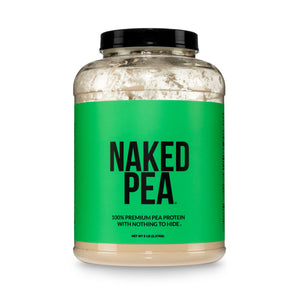
Pea protein is derived from yellow split peas and is the closest plant-based competitor to whey in terms of protein profile and functionality. Research published in the Journal of the International Society of Sports Nutrition found pea protein comparable to whey for supporting muscle thickness gains when combined with resistance training [5, 6]. It's free from the eight most common food allergens, fully vegan, and suitable for people with soy, gluten, or dairy sensitivities. Amino acid-wise, pea protein is high in BCAAs and contains all essential amino acids, though lysine levels are lower than in whey. Combining it with a complementary plant source like brown rice protein addresses that gap [7].
Peanut butter protein is a different category entirely. It has a lower protein density per serving than whey or pea protein, but it brings a rich, naturally satisfying flavor that makes it useful for smoothies, baking, and high-protein snacks. It's not the right choice if pure protein output is your goal, but it works well as a complement to a higher-protein powder or as a flavorful addition to meals.
Other plant-based options worth mentioning include brown rice protein (good amino acid profile, hypoallergenic), hemp protein (complete amino acids, higher in fat and fiber), and soy protein (the most complete plant protein available, though not suitable for those with soy allergies). For most vegetarians and vegans prioritizing athletic performance, pea protein is the most versatile and well-researched starting point. If you're dairy-free but not vegan, whey isolate may still be worth trying before ruling it out entirely.
Frequently Asked Questions
Is whey protein vegetarian?
Yes, whey protein is vegetarian. It's derived from cow's milk during the cheesemaking process, which makes it an animal byproduct but not something that requires animal slaughter. Lacto-vegetarians, who consume dairy, can use whey protein without any conflict with their diet.
Is whey protein vegan?
No, whey protein is not vegan. It comes from cow's milk, which means it's off-limits for anyone avoiding all animal-derived products. If you follow a vegan diet, look for plant-based protein powders made from pea, rice, or hemp instead.
What is whey protein actually made from?
Whey is the liquid that separates from milk curds during cheese production. That liquid gets filtered, concentrated, and dried into the powder you find in protein supplements. The result is a complete protein, meaning it contains all nine essential amino acids your body can't produce on its own.
Does whey protein contain lactose?
It depends on the type. Whey concentrate retains more lactose and fat, while whey isolate goes through additional filtration that removes most of the lactose. If you're lactose intolerant but still want to use whey, isolate is typically the better choice.
How much whey protein should I take per day?
Most research supports a total daily protein intake of 1.6 to 2.2 grams per kilogram of body weight for active individuals looking to build or maintain muscle, per Morton et al., 2018, in the British Journal of Sports Medicine. A single serving of whey protein, typically 25 to 30 grams, is enough to maximally stimulate muscle protein synthesis in one sitting. Use it to fill gaps in your diet, not as your only protein source.
What's the difference between whey concentrate, isolate, and hydrolysate?
Whey concentrate is the least processed form, containing roughly 70 to 80 percent protein along with some fat and lactose. Whey isolate is further filtered to reach 90 percent or more protein with minimal lactose and fat. Hydrolysate is pre-digested for faster absorption, which some research suggests may offer a slight edge in post-workout recovery, though the practical difference for most people is small.
Is whey protein safe for long-term use?
For healthy adults, yes. There's no credible evidence that high protein intake from whey damages kidneys or liver function in people without pre-existing conditions, as confirmed by a 2016 review by Antonio et al. in the Journal of the International Society of Sports Nutrition. If you have a kidney disorder or any underlying health condition, check with your doctor before significantly increasing protein intake.
What should I look for on a whey protein label to make sure it's high quality?
Look for a short ingredient list with whey as the first ingredient, and check for third-party certifications like NSF Certified for Sport or Informed Sport. These certifications confirm the product has been tested for banned substances and that the label accurately reflects what's inside. Avoid products with excessive fillers, proprietary blends, or artificial additives you don't recognize.
Top Whey Protein Picks
Chosen by 1 million+ customers. Free shipping on orders over $100.

Grass Fed Whey Isolate Protein Powder | Naked Whey Isolate - 2LB
$74.99
- ✓ Zero Sugar & Zero Carbs
- ✓ Easy Digestion
- ✓ Maximum Pure Protein

Protein Powder Blend - 3LB Egg, Whey & Casein Protein Blend | Naked Protein - 3LB
$79.99
- ✓ Perfect blend of grass-fed whey protein, micellar casein, and egg white protein powder
- ✓ Provides fast-digesting, medium-digesting, and slow-digesting protein in an ideal ratio
- ✓ Help maintain muscle protein synthesis longer than whey alone*
- ✓ 25g of protein and 5.5g of BCAA's per serving

Pea Protein Powder | Naked Pea - 2LB
$34.99
- ✓ Sustainable Farming Practices
- ✓ Superior Amino Acid Profile
- ✓ Promote Muscle Gain
- ✓ Lose Weight

Vegan Mass Gainer Supplement | Naked Vegan Mass - 8LB
$79.99
- ✓ Fuel Your Workouts
- ✓ Meet Daily Calorie Requirements to Gain Weight
- ✓ Plant-Based Proteins to Build Muscle