



On this page
Does Creatine Improve Skin? What the Science Says
Creatine is beloved by gym-goers, but emerging research suggests this popular supplement may also unlock surprising benefits for your skin.

Key Takeaways
- Creatine is native to your skin: Skin cells rely on creatine for energy metabolism, and your body's natural production declines with age.
- Four evidence-backed skin benefits: Research points to UV protection, improved cell turnover, better hydration, and increased collagen synthesis and firmness.
- Oral and topical routes work differently: Oral creatine supports systemic energy availability; topical creatine (and creatinine) delivers localized collagen-stimulating effects.
- 3 to 5 grams daily is the standard dose: Creatine monohydrate is the most researched form. Consistency matters more than timing.
- Who benefits most: Adults over 30, vegans and vegetarians, and anyone dealing with photoaging or loss of skin firmness.
- The evidence is promising but not complete: UV protection and cell turnover data are stronger; hydration effects via oral supplementation need more research.

Creatine Monohydrate Powder | Naked Creatine - 2.2LB
- Free Shipping Included
- Creatine Monohydrate
- Creatine Formula
- Evidence-Based Formulas
Does Creatine Improve Skin? Here's What the Research Says

You already know creatine as the supplement that powers muscle contraction and fuels high-intensity training. But ask whether creatine improves skin, and most people go quiet. The question sounds like a stretch. It isn't.
Creatine is naturally present in your skin cells, where it supports the same fundamental process it does everywhere else in the body: ATP production. Skin cells need energy to replicate, repair UV damage, synthesize collagen, and maintain their water balance. When creatine availability drops, so does the skin's ability to do all of that efficiently. And creatine synthesis does decline with age.
Research over the past two decades has explored both oral creatine supplementation and topical creatine formulations for skin aging. The findings cover wrinkle reduction, collagen stimulation, UV protection, and improved cell turnover. Some results are more robust than others, and this article is honest about where the evidence is strong versus where more data is still needed.
This article covers what creatine is, how it functions in skin specifically, the difference between taking it orally and applying it topically, and how to actually add it to your routine if you want to try it.
What Is Creatine and How Does It Work in the Body?

Creatine is a naturally occurring compound synthesized primarily in the liver, kidneys, and pancreas from the amino acids arginine, glycine, and methionine. Once produced, it's transported through the bloodstream and stored mostly in skeletal muscle, where it plays a central role in regenerating adenosine triphosphate (ATP), the cell's primary energy currency.
The mechanism is direct: creatine phosphate donates a phosphate group to ADP, rapidly regenerating ATP during short bursts of high-intensity activity. This is why it's so effective for strength training and sprinting. But ATP regeneration isn't exclusive to muscle. Every metabolically active cell in the body, including skin cells, relies on this same process.
Beyond synthesis, you can obtain creatine from dietary sources. Red meat, fish, and seafood are the richest sources. This is why vegans and vegetarians consistently show lower baseline creatine levels than omnivores and often respond more noticeably to supplementation. If your diet contains little to no animal protein, your creatine stores are likely running below optimal.
- Creatine fuels ATP regeneration in every high-energy cell, not just muscle tissue
- Skin cells use ATP for replication, DNA repair, collagen synthesis, and maintaining hydration
- Dietary creatine comes almost entirely from animal sources, leaving vegans and vegetarians at a deficit
- Endogenous creatine production declines with age, reducing cellular energy availability in skin
Creatine is one of the most researched supplements in sports nutrition, with decades of safety and efficacy data behind it. That research base is now being applied to dermatology and skin aging, and the early results are worth paying attention to.
How Does Creatine Benefit Skin Health?

Skin cells are metabolically active and energy-dependent. Keratinocytes, the cells that form the outer layer of skin, continuously divide and migrate to the surface, a process that requires steady ATP output. Fibroblasts, the cells responsible for producing collagen and elastin, are equally energy-hungry. When creatine availability drops in skin tissue, these processes slow down, and the visible effects follow: rougher texture, reduced firmness, slower repair after sun exposure.
UV Protection
UV radiation generates reactive oxygen species that damage DNA and accelerate skin aging. Creatine helps counteract this by supporting the energy-dependent repair mechanisms cells use after UV exposure. Research published in the Journal of Investigative Dermatology found that creatine supplementation reduced UV-induced DNA damage in skin cells [1]. Separately, research in the same journal confirmed that creatine helps recharge skin cell metabolism, protecting against oxidative stress from UV exposure and other environmental stressors [2]. Creatine isn't a sunscreen substitute, but it supports the cellular machinery that limits the downstream damage.
Cell Turnover and Elasticity
Creatine supports keratinocyte proliferation, the process by which skin continuously renews its outer layer. Faster, more efficient cell turnover means older, damaged cells are replaced more readily. The same research that documented UV protection effects also observed that improved skin cell turnover led to greater elasticity and a reduction in hyperpigmentation [1]. These are two of the most visible markers of skin aging, and the mechanism here is well-grounded in basic cell biology.
Hydration
Creatine is osmotically active, meaning it pulls water into cells. This property is well-documented in muscle tissue, where creatine supplementation reliably increases intracellular water content. The same osmotic effect may apply to skin cells. Research has shown that creatine supplementation increases total body water [5], which could partly explain anecdotal reports of skin appearing more hydrated and luminous. That said, direct evidence specifically linking oral creatine to improved skin hydration is limited. This is the area where more research is needed before strong claims can be made.
Collagen Synthesis and Firmness
Collagen production is an energy-intensive process. Fibroblasts require adequate ATP to synthesize and cross-link collagen fibers. When creatine supports fibroblast energy metabolism, collagen output improves. Studies have shown reductions in wrinkle depth and skin roughness following creatine supplementation, and topical application of creatine-related compounds has produced measurable increases in skin firmness (discussed in detail in the next section).
📊 What Research Says
A 2008 study in the Journal of Investigative Dermatology [1] found that creatine supplementation produced measurable reductions in wrinkle depth and skin roughness, alongside improved keratinocyte proliferation and reduced UV-induced DNA damage. It remains one of the most cited studies linking oral creatine to visible skin aging outcomes.
Oral Supplementation vs. Topical Creatine: What's the Difference?

The original research on creatine and skin covers two distinct delivery methods, and it's worth separating them clearly because they work differently and the evidence for each comes from different contexts.
Oral creatine supplementation raises systemic creatine availability. When you take 3 to 5 grams of creatine monohydrate daily, you're replenishing stores throughout the body, including in skin tissue. The skin benefits observed from oral creatine, such as reduced UV damage and improved cell turnover, are the result of better-energized skin cells doing their jobs more effectively over time.
Topical creatine is applied directly to skin and is used in several anti-aging skincare products. The studies showing collagen stimulation and improved skin firmness cited in this article (reference 3, reference 4) used topical application, not oral supplementation. These effects are localized and relatively direct: creatine in the formulation supports fibroblast energy metabolism right at the application site.
One distinction worth clarifying: creatine and creatinine are related but not the same compound. Creatinine is a metabolic byproduct of creatine breakdown. Some skincare research uses creatinine rather than creatine, and some studies use both. When reviewing product labels or research, check which compound is actually being used.
Can you combine both approaches? Yes, and there's a reasonable case for it. Oral supplementation addresses systemic creatine availability, which benefits skin alongside every other tissue in the body. Topical products deliver localized effects. Neither approach has been proven superior to the other for skin specifically, but they work through complementary mechanisms rather than competing ones.
How to Take Creatine for Skin Health
The protocol for skin health is the same as for athletic performance: 3 to 5 grams of creatine monohydrate per day. Creatine monohydrate is the most extensively studied form, the most cost-effective, and the benchmark against which all other creatine formulations are compared. There's no compelling evidence that more expensive forms perform better for skin or for sport.
Timing is less important than consistency. Creatine works by saturating muscle and tissue stores over time. Missing the "perfect" window around your workout won't matter. What does matter is taking it daily. Some research suggests that taking creatine alongside a carbohydrate-containing meal may modestly improve uptake by leveraging the insulin response, so pairing it with breakfast or a post-workout meal is a practical default.
How long before you see skin changes? Set realistic expectations. Creatine stores take approximately 3 to 4 weeks to fully saturate with daily supplementation. Structural changes in skin, particularly collagen remodeling and reduced wrinkle depth, occur over months rather than weeks. Most studies showing visible skin improvements ran for 6 weeks or longer. Don't judge results at two weeks.
Naked Creatine Monohydrate contains one ingredient: creatine monohydrate. No fillers, no flow agents, no artificial flavors. If you want to add creatine to your routine without adding anything else, that's the point.
Glowing Skin Mango Smoothie
A practical way to take your daily creatine alongside other skin-supporting nutrients:
- ½ cup frozen mango (vitamin C for collagen synthesis)
- ½ cup frozen strawberries (antioxidants to combat oxidative stress)
- 1 to 2 handfuls of spinach (vitamin A, folate, and iron for skin cell repair)
- 1 scoop creatine monohydrate
- 2 tablespoons ground flaxseeds or flax oil (omega-3 fatty acids for skin barrier function)
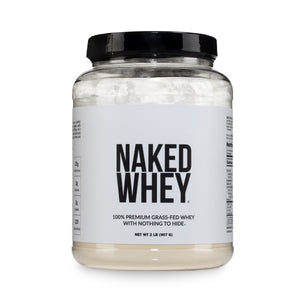
- ½ cup Greek yogurt or 2 scoops of Naked Whey (protein for collagen precursors)
- 1 cup soy milk
Directions: Blend all ingredients until smooth. The carbohydrates from the fruit provide a natural uptake assist for the creatine, and the protein ensures you're delivering collagen-building amino acids alongside the creatine.
Who Can Benefit Most from Creatine for Skin?

Not everyone will notice the same degree of benefit from creatine supplementation for skin. Some people start from a lower baseline, which means there's more ground to recover.
Adults over 30 are the most likely to see meaningful results. Endogenous creatine synthesis declines with age, meaning the skin's energy supply naturally diminishes over time. Supplementing restores availability closer to the levels present in younger skin.
Vegans and vegetarians are the other high-benefit group. Because dietary creatine comes almost entirely from animal sources, plant-based eaters operate with chronically lower creatine stores. Research consistently shows that this population responds more strongly to creatine supplementation, both in muscle tissue and, likely, in skin.
Athletes already supplementing for performance may find skin benefits come as a secondary effect without any change to their current protocol. If you're already taking 3 to 5 grams of creatine monohydrate daily for training, your skin cells are receiving the same energy support.
Anyone concerned with photoaging, wrinkle depth, or declining skin firmness has a reasonable evidence basis for adding oral creatine, particularly when combined with topical skincare products containing creatine or creatinine.
- Creatine is among the most researched supplements in existence, with a well-established safety record in healthy adults
- Long-term studies confirm no adverse effects on kidney or liver function in healthy individuals [6]
- Additional research supports its safety at standard supplementation doses [7]
- Individuals with pre-existing kidney conditions should consult a doctor before supplementing, as creatine metabolism increases creatinine output, which can affect certain kidney function markers
The Bottom Line on Creatine and Skin

Creatine's role in skin health isn't speculative. Skin cells depend on ATP, creatine supports ATP production, and creatine levels in skin decline with age. The research connecting supplementation to reduced wrinkles, improved firmness, UV protection, and better cell turnover is grounded in that straightforward biology.
The evidence is strongest for UV protection and cell turnover. Collagen stimulation and firmness data are solid for topical application and suggestive for oral supplementation. Hydration effects via oral creatine remain the least-supported claim and deserve more rigorous study before drawing firm conclusions.
If you're over 30, eat little to no meat, or are already noticing the early signs of skin aging, 3 to 5 grams of creatine monohydrate per day is a low-cost, well-tolerated addition to your routine. Keep a single-ingredient product like Naked Creatine Monohydrate on hand, take it daily with food, and give it at least six weeks before evaluating results. Your skin's energy metabolism will be working better whether or not you can see it immediately.
Frequently Asked Questions
Does creatine actually improve skin appearance?
Research suggests creatine may offer modest skin benefits, including improved hydration, reduced wrinkle depth, and enhanced firmness when applied topically or taken as a supplement. Studies indicate it supports cellular energy production in skin cells, which can help repair and regenerate tissue more efficiently. However, results vary by individual and creatine should not be considered a standalone skincare solution.
How does creatine benefit skin at the cellular level?
Creatine helps replenish ATP — the primary energy currency of cells — which supports the metabolic activity of skin fibroblasts responsible for producing collagen and elastin. When skin cells have more available energy, they are better equipped to repair UV damage and maintain structural integrity. This cellular energy boost is what researchers believe drives creatine's potential anti-aging effects on the skin.
Is it better to take creatine orally or apply it topically for skin benefits?
Both delivery methods have shown promise, but topical application delivers creatine directly to the skin where it can act locally on epidermal and dermal cells. Oral creatine supplementation primarily benefits muscle tissue and may have limited direct impact on skin compared to a dedicated topical formula. Some researchers suggest that a combination approach — supplementing orally while using a creatine-containing skincare product — may yield the most comprehensive results.
Can creatine help reduce wrinkles and signs of aging?
Clinical studies have found that topical creatine formulations can reduce the appearance of fine lines and wrinkles, particularly when combined with other active ingredients like folic acid. By energizing skin cells and stimulating collagen synthesis, creatine supports the skin's natural repair processes that slow down with age. While it is not a replacement for proven anti-aging actives like retinol, it can be a valuable complementary ingredient in an anti-aging routine.
Is creatine safe to use for skin health?
Creatine is widely regarded as safe for both oral supplementation and topical use, with decades of research supporting its tolerability in healthy adults. Topical creatine products are generally well-tolerated and do not commonly cause irritation or allergic reactions. As always, individuals with sensitive skin or underlying health conditions should consult a dermatologist or healthcare provider before adding new ingredients to their routine.
How long does it take to see skin improvements from creatine?
Most studies observing measurable skin improvements from topical creatine report results after 4 to 12 weeks of consistent use. Oral creatine supplementation may take longer to produce any noticeable effects on skin, as muscles and other tissues are prioritized for creatine uptake. Consistency is key — irregular use is unlikely to produce meaningful or lasting results.
Does creatine supplementation cause water retention that affects the skin?
Oral creatine is well-known for drawing water into muscle cells, which can cause a temporary increase in overall body weight due to intracellular fluid retention. This effect is primarily localized to muscle tissue and does not typically cause visible facial puffiness or skin bloating. If you are concerned about water retention, staying well-hydrated and starting with a lower dose can help your body adjust more comfortably.
What should I look for in a creatine supplement if I want skin benefits?
For general supplementation, look for products using Creapure® or another third-party tested creatine monohydrate, as purity and quality directly impact efficacy and safety. If you want targeted skin benefits, seek out topical skincare products that list creatine as an active ingredient, ideally alongside complementary compounds like niacinamide, peptides, or hyaluronic acid. Certifications such as NSF or Informed Sport are valuable markers of product quality and help ensure you are getting exactly what is on the label.
Top Product Picks
Chosen by 1 million+ customers. Free shipping on orders over $100.
Creatine Monohydrate Powder | Naked Creatine - 2.2LB
$35.99
- ✓ 100% premium creatine monohydrate
- ✓ Highest grade available: fast dissolving and quickly absorbed
- ✓ 5g of creatine per serving
- ✓ No artificial sweeteners, flavors, or colors

Strawberry Creatine Monohydrate Powder | Naked Creatine - 1.1LB
$29.99
- ✓ 100% premium creatine monohydrate
- ✓ Highest grade available: fast dissolving and quickly absorbed
- ✓ 5g of creatine per serving
- ✓ No Artificial Sweeteners, Flavors, or Colors

Orange Creatine Monohydrate Powder | Naked Creatine - 1.1LB
$29.99
- ✓ 100% premium creatine monohydrate
- ✓ Highest grade available: fast dissolving and quickly absorbed
- ✓ 5g of creatine per serving
- ✓ No artificial sweeteners, flavors, or colors