


Key Takeaways
- Versatile and practical: Pea protein powder works in smoothies, hot sauces, baked goods, and savory meals, making it one of the most flexible protein supplements available.
- Strong amino acid profile: It's high in BCAAs and digestible, though pairing it with rice protein fills the methionine gap for a complete amino acid profile.
- Easy to mix: Use a blender or shaker with a whisk ball, and choose the right liquid to control texture and reduce pea protein's naturally earthy flavor.
- Clean sourcing matters: Naked Nutrition's pea protein uses just one ingredient: yellow split peas sourced from the US and Canada, with no artificial additives.
- Works for most people: Whether you're vegan, lactose intolerant, soy-sensitive, or just looking for a cleaner protein option, pea protein fits most dietary needs without compromise.

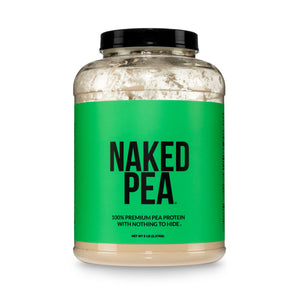
Pea Protein Powder | Naked Pea
- Plant-Based Protein
- Third-Party Tested
- No Artificial Additives
- Made in the USA
How to Use Pea Protein Powder: Tips, Recipes, and More

If you've just bought your first bag of pea protein powder and you're staring at it wondering what to actually do with it, you're not alone. Knowing how to use pea protein powder effectively, beyond shaking it into water, is what separates a supplement that collects dust from one that genuinely supports your nutrition goals.
Pea protein is derived from yellow split peas and has become one of the most popular plant-based protein supplements on the market. It's easy to digest, free from common allergens like dairy and soy, and surprisingly versatile in the kitchen. A single serving typically delivers 20 to 27 grams of protein depending on the product, making it a legitimate alternative to whey for a wide range of people.
The reasons people reach for it vary: some are vegan or vegetarian, some are lactose intolerant, and others simply want a cleaner ingredient list without sacrificing protein quality. Naked Pea Protein checks all of those boxes with a single-ingredient formula sourced from North American yellow split peas.
This article covers everything you need to get the most out of your pea protein: how to mix it, how to bake and cook with it, and several tested recipes ranging from refreshing smoothies to a surprisingly good protein mac 'n' cheese.
What Is Pea Protein and Why Use It?

Pea protein is made by extracting the protein from yellow split peas, then drying it into a fine powder. The result is a concentrated protein source with a naturally mild, slightly earthy flavor that works well in both sweet and savory applications.
From a nutritional standpoint, pea protein holds up well. It's rich in branched-chain amino acids, particularly arginine and leucine, which play a direct role in muscle protein synthesis. A 2015 double-blind study published in the Journal of the International Society of Sports Nutrition found that pea protein supplementation produced muscle thickness gains comparable to whey protein over an 12-week resistance training program, challenging the assumption that plant protein is inherently inferior for muscle building.
- High in leucine, isoleucine, and valine: the three BCAAs that drive muscle protein synthesis
- Rich in arginine, which supports blood flow and cardiovascular function
- Low in methionine: pairing with rice protein creates a more complete amino acid profile
- Digestibility score (PDCAAS) close to 0.89, comparable to many animal proteins
- Naturally free from gluten, dairy, soy, and most common allergens
Technically, pea protein is not classified as a complete protein because it's low in methionine. Practically speaking, this is easy to address by pairing it with rice protein or eating a varied diet throughout the day. Naked Nutrition's Naked Pea uses only cold-processed yellow split peas from the US and Canada, with no additives, fillers, or artificial flavors.
Compared to whey, pea protein digests more slowly, which can help with satiety. Compared to soy protein, it avoids the phytoestrogen concerns that some consumers want to sidestep. For vegans, vegetarians, or anyone with dairy or soy sensitivities, it's one of the strongest options available.
How to Mix Pea Protein Powder for the Best Results
Pea protein doesn't always dissolve as smoothly as whey isolate, and that trips up a lot of first-time users. The fix is straightforward: use a blender or a shaker bottle fitted with a whisk ball. Stirring it with a spoon into a glass of water will leave you with clumps and a gritty texture that's hard to enjoy.
Your choice of liquid matters more than most people realize. Water keeps it light and low-calorie, but it also lets the earthy flavor come through more prominently. Unsweetened almond milk or oat milk adds a subtle creaminess that softens the taste without adding much sugar. Full-fat dairy milk creates a thicker, more satisfying texture and adds additional protein per serving. Start with about 8 to 10 ounces of liquid per scoop, then adjust based on whether you want something thicker or thinner.
📊 What Research Says
The same 2015 JISSN study that compared pea and whey protein used 25 grams per serving, administered twice daily, to achieve statistically significant improvements in muscle thickness. That's roughly one heaping scoop of Naked Pea per session.
Flavor pairing is worth thinking about strategically. Pea protein's natural earthiness pairs well with chocolate, vanilla, banana, berries, and warm spices like cinnamon or nutmeg. If you're using unflavored pea protein, a tablespoon of cocoa powder or a handful of frozen berries is usually enough to shift the flavor profile in a more appealing direction.
On timing: pea protein works well pre-workout for sustained amino acid availability, post-workout for recovery, and as a meal replacement when blended with healthy fats and carbohydrates. A standard serving is one scoop (roughly 25 to 30 grams of powder), which typically delivers 20 to 27 grams of protein depending on the product.
Pea Protein Smoothie Recipes
Smoothies are the fastest, easiest way to use pea protein powder. These three recipes are tested, practical, and each hits a different flavor profile so you won't get bored rotating through them.
Summer Fruit SmoothiePrep time: 5 minutes | Servings: 1 | Approx. macros: 22g protein, 18g carbs, 1g fat
- 2/3 cup peeled, seeded cucumber
- 2/3 cup seeded honeydew melon
- Zest of half an orange
- 1/8 cup fresh mint
- 1 scoop Naked Pea protein powder
- Ice and water as needed
Add all ingredients to a blender and process until smooth. Adjust ice and water to reach your preferred consistency. This one is ideal as a light post-workout option in warmer months.
Pumpkin Pie SmoothiePrep time: 5 minutes | Servings: 1 | Approx. macros: 28g protein, 34g carbs, 5g fat
- 1 cup milk of choice
- 1 scoop Naked Pea protein powder
- 1/2 cup yogurt (dairy or coconut)
- 1/3 cup pumpkin puree (not pie filling)
- 1/2 tsp roasted ground cinnamon
- 1/2 tbsp maple syrup
- 1 tbsp brown sugar
- 1/2 tsp pumpkin pie spice
- Ice and water as needed
Blend all ingredients until smooth. This is a solid meal-replacement smoothie with a higher carbohydrate load, making it useful for post-training recovery when you need to replenish glycogen alongside protein.
Chocolate Banana SmoothiePrep time: 5 minutes | Servings: 1 | Approx. macros: 27g protein, 38g carbs, 6g fat
- 1 frozen banana
- 1 scoop Naked Pea protein powder
- 1 tbsp natural peanut butter
- 1 tbsp unsweetened cocoa powder
- 1 cup oat milk
- Ice as needed
This is the easiest recipe for masking pea protein's earthy base flavor. The cocoa and banana dominate the palate while the peanut butter adds healthy fat and creaminess. Blend until smooth.
To customize any of these for specific goals: add oats for more carbohydrates if you're in a building phase, swap yogurt for ice water to cut calories, or add a tablespoon of flaxseed for additional fiber and omega-3s.
How to Use Pea Protein Powder in Cooking and Baking
Pea protein holds up reasonably well to heat, but there's a limit. Sustained high temperatures can denature the protein and create a dry, chalky texture in baked goods. The general rule: bake at or below 350°F (175°C) and avoid prolonged cooking times. In hot sauces or soups, add pea protein at the end of cooking and keep it below a boil.
Protein Mac 'n' CheesePrep time: 15 minutes | Servings: 2 | Approx. macros per serving: 28g protein, 40g carbs, 10g fat
- 1/2 cup dry macaroni
- 1 scoop Naked Pea protein powder
- 3/4 cup milk of choice
- 1/4 cup shredded cheddar cheese
- Salt to taste
Cook the macaroni according to package instructions. While the pasta cooks, combine the pea protein, milk, and cheese in a small saucepan over medium heat, stirring continuously. Do not let the sauce boil. Once the pasta is done, drain and fold it into the cheese sauce. The key here is controlling the heat: a gentle simmer keeps the sauce creamy rather than grainy.
Baking with Pea ProteinFor pancakes, muffins, or protein bars, substitute no more than 25 to 30 percent of the flour with pea protein. Going higher than that produces a dense, gummy texture that doesn't bake evenly. Add an extra tablespoon of liquid per scoop of pea protein used to compensate for its absorbency.
Savory ApplicationsPea protein blends into soups and stews without altering flavor significantly, adding a protein boost to dishes like lentil soup or tomato bisque. For veggie burgers, mix one scoop into the patty mixture alongside beans, oats, and seasoning: it binds the patty while contributing an additional 20-plus grams of protein per serving without changing the texture noticeably.
Naked Pea Protein: Why Quality Matters
Not all pea protein powders are the same. The sourcing, processing method, and what gets added (or left out) determine how clean and effective the final product is. Naked Nutrition's approach is built around one principle: fewer ingredients, higher quality.
Naked Pea is made exclusively from yellow split peas grown on US and Canadian farms. There are no artificial sweeteners, no synthetic flavors, no proprietary blends, and no unnecessary fillers. The cold-processing method preserves the protein's natural integrity without chemical solvents.
- Single ingredient: yellow split peas, nothing else in the unflavored version
- Cold-processed to preserve nutritional integrity without chemical solvents
- Third-party tested for heavy metals and banned substances
- No artificial sweeteners, colors, or synthetic flavors
- Available in unflavored, chocolate, and vanilla options
- Sourced exclusively from US and Canadian farms
If you're cooking or baking with pea protein, the unflavored version gives you the most flexibility: it won't clash with savory recipes and lets you control the flavor profile completely in smoothies. The flavored versions (chocolate and vanilla) are ideal for shakes and smoothies where you want a finished taste without adding extra ingredients.
Third-party testing matters more than most consumers realize. Supplements aren't regulated the same way food products are, which means contamination with heavy metals or undisclosed ingredients is a real risk in lower-quality products. Naked Nutrition tests each batch independently so you know what's in the bag matches what's on the label.
Start Using Pea Protein Like a Pro

Pea protein powder earns its place in your nutrition stack not by doing one thing well, but by doing many things well. It mixes into shakes, cooks into savory meals, bakes into snacks, and delivers a solid amino acid profile without the dairy, soy, or artificial additives that complicate other protein sources.
The recipes in this article are starting points, not endpoints. Try the summer smoothie after a morning run. Make the pumpkin pie version as a seasonal meal replacement. Fold pea protein into your next batch of homemade muffins and see how your body responds to higher protein meals without the usual supplement taste.
The practical summary:
- Use a blender or shaker bottle to avoid clumping
- Pair with oat milk or almond milk for smoother texture and better flavor
- Keep baking temperatures at or below 350°F to avoid denaturing the protein
- Substitute no more than 25 to 30 percent of flour with pea protein in baked goods
- Add pea protein at the end of hot cooking to preserve quality in soups and sauces
If you haven't tried Naked Pea Protein yet, start with the unflavored version. It gives you the most flexibility across every recipe and use case covered here, and you'll know exactly what you're putting into your body: peas, and nothing else.
Frequently Asked Questions
How much pea protein powder should I take per day?
Most adults do well with one to two servings per day, which typically equals 20 to 50 grams of protein from pea protein alone. Your total daily protein target should sit between 1.6 and 2.2 grams per kilogram of body weight if you're training regularly, with pea protein filling in whatever gap whole foods leave behind. Don't treat it as your only protein source — use it strategically to hit your numbers.
When is the best time to use pea protein powder?
Timing matters less than total daily intake, but there are smart windows. Post-workout within 30 to 60 minutes supports muscle protein synthesis, and using it as a breakfast addition or high-protein snack helps you distribute protein intake evenly across the day, which research consistently shows improves muscle retention. Find the timing that fits your schedule and you'll actually stick to it.
Is pea protein powder a complete protein?
Pea protein is close to complete but low in one essential amino acid: methionine. It's rich in leucine, isoleucine, and valine — the branched-chain amino acids most directly tied to muscle protein synthesis. Pairing it with rice protein or eating methionine-containing foods like eggs, meat, or sunflower seeds throughout the day covers the gap easily.
Can I bake or cook with pea protein powder without losing its benefits?
Yes. Heat doesn't destroy the amino acid content in pea protein the way it might affect some live enzymes or probiotics. You can bake it into muffins, stir it into oatmeal, or mix it into pancake batter and still get the full protein value. Just keep your ratios in check — using too much can make baked goods dense or gummy, so start by replacing about 25 percent of the flour with pea protein.
Does pea protein powder cause bloating or digestive issues?
Some people experience mild bloating when they first introduce pea protein, particularly if they're not accustomed to a high-fiber, legume-based diet. Starting with half a serving and building up over one to two weeks gives your digestive system time to adjust. If bloating persists, check the label for added fillers, gums, or artificial sweeteners, which are more likely culprits than the pea protein itself.
How does pea protein powder compare to whey protein for building muscle?
A 2015 double-blind study published in the Journal of the International Society of Sports Nutrition found that pea protein produced equivalent muscle thickness gains to whey protein in men performing resistance training over 12 weeks. Whey still edges ahead slightly in leucine content and absorption speed, but the practical difference for most people is small. If you're dairy-free or prefer plant-based sources, pea protein is a legitimate alternative, not a compromise.
Is Naked Nutrition's pea protein powder third-party tested?
Naked Pea Protein is Informed Sport certified, meaning every batch is tested by an independent lab for banned substances and contaminants before it reaches you. The formula contains a single ingredient: yellow split peas. No artificial sweeteners, no fillers, no proprietary blends hiding what you're actually consuming.
What liquids work best for mixing pea protein powder?
Pea protein blends smoothly with oat milk, almond milk, and full-fat coconut milk, all of which round out its slightly earthy flavor better than plain water. Water works fine if you're keeping calories low, but the texture is thinner and the taste more noticeable. For shakes, unsweetened oat milk is a practical first choice — it adds creaminess and a small amount of carbohydrates that pair well post-workout.
Top General Nutrition Picks
Chosen by 1 million+ customers. Free shipping on orders over $100.

Chocolate Pea Protein Powder | Naked Chocolate Pea - 5LB
$57.99
- ✓ Sustainable Farming Practices
- ✓ Superior Amino Acid Profile
- ✓ Promote Muscle Gain
- ✓ Lose Weight

Vanilla Pea Protein Powder | Naked Vanilla Pea - 5LB
$57.99
- ✓ Sustainable Farming Practices
- ✓ Superior Amino Acid Profile
- ✓ Promote Muscle Gain
- ✓ Lose Weight

Double Chocolate Pea Protein Powder | Naked Pea - 2LB
$34.99
- ✓ Sustainable Farming Practices
- ✓ Superior Amino Acid Profile
- ✓ Promote Muscle Gain
- ✓ Lose Weight

Vanilla Pea Protein Powder | Naked Vanilla Pea - 2LB
$34.99
- ✓ Sustainable Farming Practices
- ✓ Superior Amino Acid Profile
- ✓ Promote Muscle Gain
- ✓ Lose Weight