



On this page
What Is Micronized Creatine and Why Does It Matter?
Discover how this finely processed form of creatine dissolves better, absorbs faster, and could transform your supplement routine.

Key Takeaways
- What it is: Micronized creatine is standard creatine monohydrate processed into smaller particles, which increases surface area and improves how it dissolves, absorbs, and sits in your stomach.
- How it works: Creatine replenishes ATP during high-intensity exercise. Supplementation can increase muscle creatine stores by 10–40%, directly supporting power output, muscle growth, and recovery.
- vs. Regular creatine: The same active compound, better physical properties. Micronized creatine dissolves more completely, absorbs more efficiently, and causes less GI discomfort — at a slightly higher cost per serving.
- Dosing: 3–5g daily for maintenance; 20g/day (split into four doses) for 5–7 days if you choose to load. Results appear in 1–2 weeks with loading, 3–4 weeks with maintenance dosing.
- Safety: Among the most researched and safest supplements available. The cramping association is not supported by evidence. Those with kidney conditions should consult a doctor first.
- Who benefits most: Anyone who experiences GI issues with regular creatine, vegetarians and vegans with lower baseline stores, and athletes who want maximum absorption per gram.

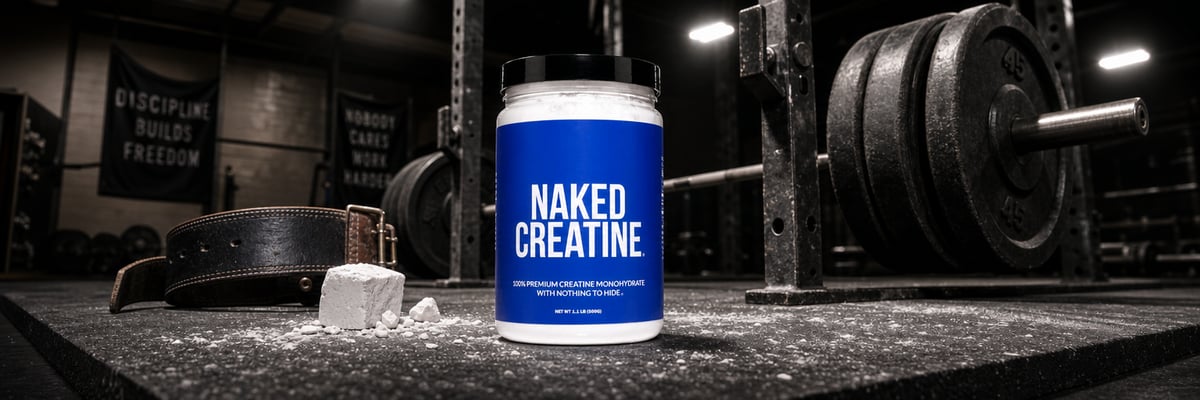
Creatine Monohydrate Powder | Naked Creatine - 2.2LB
- 100% premium creatine monohydrate
- Highest grade available: fast dissolving and quickly absorbed
- 5g of creatine per serving
- No artificial sweeteners, flavors, or colors
What Is Micronized Creatine? A Simple Explanation

Micronized creatine is creatine monohydrate that has been mechanically milled into significantly smaller particles. The chemical compound is identical to regular creatine monohydrate. The only thing that changes is particle size — and that change matters more than it sounds.
Think of it like the difference between fine sand and coarse gravel dropped into a glass of water. The gravel clumps and settles. The fine sand disperses almost instantly. Smaller particles mean more surface area exposed to liquid, which means faster and more complete dissolution. When a supplement dissolves fully before reaching your gut, your body has an easier time absorbing it.
In practical terms, micronized creatine mixes cleanly into water or a shake without the gritty texture or settled powder you often see with standard creatine. More importantly, the improved solubility translates to better absorption and less digestive irritation — two of the most common complaints people have about regular creatine monohydrate.
The rest of this article covers how creatine actually functions in your body, what the research says about the micronized form specifically, and how to use it effectively.
How Creatine Works in Your Body

Your body produces creatine naturally in the liver, kidneys, and pancreas from the amino acids arginine, glycine, and methionine. You also get creatine from dietary sources — primarily red meat and fish. The problem is that your skeletal muscles can only store a limited amount as phosphocreatine, and most people's stores are well below their maximum capacity.
Here's why that matters: during explosive, high-intensity efforts like a heavy squat, a sprint, or a jump, your muscles burn through adenosine triphosphate (ATP) almost instantly. Phosphocreatine is what allows your body to regenerate ATP in seconds, keeping that energy system running through repeated high-intensity bouts. Without adequate creatine stores, that system runs out of fuel faster.
Supplementation increases muscle creatine stores by 10–40%, according to the International Society of Sports Nutrition's comprehensive review of creatine research, which also identified creatine monohydrate as the single most effective supplement for increasing lean muscle mass. A 2019 review found that creatine supplementation improves both muscle mass and strength in older adults, with or without resistance training.
- During high-intensity exercise, muscles deplete ATP in 1–3 seconds
- Phosphocreatine donates a phosphate group to ADP, rapidly regenerating ATP
- This system sustains maximal power output for roughly 10–15 seconds
- Higher muscle creatine stores = more ATP regenerated = better performance in repeated efforts
- Supplementation saturates stores that diet and natural production alone often can't fill
Creatine's reach extends beyond muscle. Your brain relies on the same phosphocreatine system for energy, and a systematic review and meta-analysis of eight randomized controlled trials found that creatine supplementation enhanced cognitive performance measures in healthy older adults aged 66–76.
One group that consistently sees stronger responses: vegetarians and vegans. Because they consume no dietary creatine from meat or fish, their baseline muscle stores are lower. That means supplementation produces a larger relative increase, and the performance benefits are often more pronounced.
Micronized Creatine vs. Regular Creatine: What's Actually Different?

The micronization process uses mechanical milling to reduce creatine monohydrate particles to a much finer size — typically reducing diameter by a factor of 10 to 20 compared to standard powder. That reduction creates a dramatically larger total surface area, which drives three practical improvements.
Solubility: Regular creatine monohydrate partially dissolves in water and settles quickly. Micronized creatine disperses almost completely, producing a smooth solution with no gritty residue. You won't find clumps at the bottom of your shaker.
Absorption: More complete dissolution in your digestive tract means more creatine is available for uptake across the intestinal wall. Less passes through as waste. The 2025 comparative study by Maheshwari et al. published in Cureus found measurable improvements in bioavailability with an enhanced micronized formulation versus standard micronized creatine monohydrate.
GI tolerance: The improved dissolution reduces the load of undissolved particles moving through your gut. For people who experience bloating, nausea, or cramping on regular creatine — particularly during loading phases — micronized creatine is frequently the solution.
| Comparison Factor | Micronized Creatine | Regular Creatine Monohydrate |
| Particle Size | Significantly reduced | Standard |
| Solubility | Enhanced | Moderate |
| Absorption | Improved | Standard |
| GI Tolerance | Better | Moderate |
| Cost per Serving | Slightly higher | Lower |
| Clinical Research | Growing | Extensive |
Creatine HCl is another alternative that claims improved solubility, but the research base comparing it to micronized monohydrate is thin. Micronized creatine offers the advantage of retaining creatine monohydrate's decades-long safety and efficacy record while adding a meaningful physical improvement. For a detailed comparison, see our full breakdown of creatine monohydrate vs. creatine HCl.
On cost: yes, micronized creatine costs slightly more per gram due to additional processing. But if improved absorption means more creatine actually reaches your muscles per dose, the effective cost per gram absorbed narrows considerably.
Benefits of Micronized Creatine: What the Research Shows

The performance benefits of creatine supplementation are among the most replicated findings in sports nutrition research. Micronized creatine delivers all of those same benefits with additional advantages in how efficiently your body processes each dose.
📊 What Research Says
A 2025 comparative pharmacokinetic study by Maheshwari et al. in Cureus found that an enhanced micronized creatine formulation produced a 38.97% increase in bioavailability, an 18.10% higher peak blood concentration, a 21.37% longer half-life, and a 34.67% reduction in clearance rate compared to regular micronized creatine monohydrate in healthy male adults.
What do those numbers mean in practice? Higher bioavailability means more creatine reaches your muscle cells per gram consumed. A longer half-life means sustained creatine availability throughout your training session and recovery window. Lower clearance means your body retains creatine more efficiently rather than excreting it before it can be used.
When creatine enters muscle cells, it draws water with it — a process called cell volumization. This cellular hydration creates an anabolic environment that supports muscle protein synthesis over time. It also contributes to the temporary weight gain some people notice when starting creatine, which is water inside muscle tissue, not fat accumulation.
The direct performance benefits are well-established:
- Energy output: Greater phosphocreatine availability means more ATP regeneration during high-intensity efforts, translating to more reps, heavier loads, and faster sprint times
- Reduced fatigue: Enhanced creatine stores buffer fatigue during repeated high-intensity sets, allowing more total training volume
- Muscle growth support: Improved cellular hydration and training volume capacity create stronger conditions for hypertrophy over time
Expect to notice results within 1–2 weeks if you use a loading protocol, or within 3–4 weeks with standard maintenance dosing. Women respond to creatine the same way men do and see equivalent performance and body composition benefits. Those with high training volumes — multiple sessions per day or frequent competition — have the most to gain from optimized creatine absorption.
How to Take Micronized Creatine: Dosage, Timing, and Protocols

Creatine works through saturation. Your goal is to fill your muscle creatine stores and keep them full. There are two approaches to getting there, and both work.
Maintenance dosing: Take 3–5g daily, every day. This gradually saturates your muscle stores over 3–4 weeks. It's simple, well-tolerated, and avoids the digestive strain of loading doses. For a 150-pound person, this sits at approximately 0.03–0.05g per pound of body weight per day.
Loading phase: Take 20g daily — split into four 5g doses — for 5–7 days, then drop to 3–5g for maintenance. This saturates your stores in about a week. It's a legitimate strategy if you want faster results, though the improved absorption of micronized creatine means you may reach saturation faster than you would with standard powder.
Hydration is non-negotiable when supplementing with creatine. Because creatine draws water into muscle cells, your fluid requirements increase. Aim for at least 8–10 glasses of water daily. Inadequate hydration is the most common cause of the cramping that people mistakenly attribute to creatine itself.
Timing: Post-workout is the most evidence-supported window. Your muscles are primed to take up nutrients, and insulin sensitivity is elevated, making creatine uptake more efficient. Taking creatine with carbohydrates enhances this effect further — the insulin response helps shuttle creatine into muscle cells. Mix it with fruit juice, a recovery shake, or take it alongside a carbohydrate-containing meal.
Cycling: Not necessary. Current research supports continuous daily use as safe and more effective for maintaining peak muscle creatine stores than cycling on and off. There's no evidence that creatine "stops working" with prolonged use.
Special populations: Vegetarians and vegans often benefit from the higher end of the dosing range (5g/day) because their baseline muscle creatine stores are lower. If you have kidney conditions, take medications affecting kidney function, or are pregnant or breastfeeding, consult a healthcare professional before starting supplementation.
Safety and Side Effects of Micronized Creatine

Creatine monohydrate is one of the most extensively studied supplements in existence, with a safety record built across decades of research in diverse populations. Micronized creatine carries that same profile, with a few specific improvements worth knowing.
- Creatine monohydrate has been studied in clinical settings for over 30 years with no documented long-term adverse effects in healthy individuals
- The ISSN position paper identifies creatine as safe, effective, and ethical for use by athletes
- Cramping linked to creatine is not supported by controlled research — inadequate hydration is the actual culprit
- Creatine does not damage healthy kidneys; precautions apply only to those with pre-existing renal conditions
- Third-party testing (NSF, Informed Sport) confirms purity and absence of banned substances
GI discomfort: The most common complaint with regular creatine monohydrate is stomach upset, particularly during loading phases. Micronized creatine's superior solubility directly reduces this. More complete dissolution in the digestive tract means less undissolved powder irritating your gut lining. If you've given up on creatine in the past because of stomach issues, the micronized form is worth trying before writing off the supplement entirely.
Water retention and weight gain: Some temporary weight gain when you start creatine is normal and expected. Creatine pulls water into muscle cells — that's part of the mechanism, not a side effect to avoid. This is water stored in muscle tissue, not subcutaneous fluid or fat. It's a sign the creatine is working.
Kidney health: For healthy individuals, creatine supplementation does not impair kidney function. The concern stems from the fact that creatine metabolism raises creatinine levels in the blood, which can look alarming on standard kidney panels — but elevated creatinine from creatine supplementation is not the same as kidney damage. Anyone with pre-existing kidney disease or a history of kidney stones should clear creatine use with their doctor.
When selecting a product, look for third-party testing certification, a single-ingredient label with no artificial additives, and manufacturing transparency. Creapure is one of the most recognized quality standards for creatine monohydrate purity.
Consult a healthcare professional before starting if you:
- Have kidney or liver conditions
- Take medications that affect kidney function
- Have a history of kidney stones
- Are pregnant or breastfeeding
- Experience unusual symptoms during supplementation
Naked Nutrition Micronized Creatine: Clean, Pure, and Effective

If you're going to supplement with micronized creatine, the quality of your source matters. Most creatine products on the market are loaded with artificial flavors, sweeteners, and fillers that add nothing to performance and plenty to your ingredient label you didn't ask for.
Naked Nutrition's Micronized Creatine contains one ingredient: micronized creatine monohydrate. No artificial flavors, no sweeteners, no additives. It's non-GMO, third-party tested for purity, and sourced to meet rigorous quality standards. You know exactly what you're getting with every scoop.
Naked Nutrition Micronized Creatine is manufactured using Creapure, a pharmaceutical-grade creatine monohydrate produced in Germany and recognized as the global benchmark for creatine purity. It's the standard used in the majority of clinical research on creatine effectiveness.
Each 5g serving delivers pure creatine monohydrate in a form that mixes cleanly into water, a post-workout shake, or any beverage. No clumping, no residue, no aftertaste.
Creatine fits naturally into a broader supplement stack. Pair it with a quality protein powder to support muscle protein synthesis alongside the performance benefits creatine provides. If you train with a pre-workout, micronized creatine mixes well as an add-on, or use it post-workout as part of your recovery routine. The simplicity of a single-ingredient product means it integrates without conflict into any existing protocol.
If you want micronized creatine without the label clutter, this is the product to use.
Frequently Asked Questions
What is micronized creatine?
Micronized creatine is creatine monohydrate that has been processed into much smaller particles — typically around 200 mesh or finer — through a technique called micronization. This process increases the surface area of each particle, which improves how easily the powder dissolves in water and how efficiently it is absorbed by the body. The underlying compound is still creatine monohydrate, meaning it carries the same well-researched benefits.
How is micronized creatine different from regular creatine monohydrate?
The key difference is particle size — micronized creatine has particles up to 20 times smaller than standard creatine monohydrate. This makes micronized creatine significantly easier to mix into liquids, reducing the gritty texture and clumping that some people experience with regular creatine. Both forms deliver the same active compound and comparable performance benefits, so the choice often comes down to personal preference and mixability.
Does micronized creatine actually work better than standard creatine?
In terms of core performance benefits — increased strength, improved power output, and faster muscle recovery — micronized creatine and standard creatine monohydrate are considered equally effective. The micronization process does not chemically alter creatine, so the physiological effects on ATP production and muscle saturation remain the same. The advantage of micronized creatine is primarily practical: better solubility and easier digestion for those who experience stomach discomfort with the coarser form.
What is the recommended dosage for micronized creatine?
The most widely studied and recommended maintenance dose is 3–5 grams of creatine per day, which applies to micronized creatine as well. Some individuals choose to begin with a loading phase of 20 grams per day (split into four 5-gram doses) for 5–7 days to saturate muscle creatine stores more quickly. After loading, returning to the 3–5 gram daily maintenance dose is sufficient to keep muscle creatine levels elevated.
Is micronized creatine safe to take?
Creatine monohydrate, including its micronized form, is one of the most extensively researched sports supplements available and has a strong safety profile when used at recommended doses. Long-term studies in healthy adults have found no significant adverse effects on kidney or liver function. As with any supplement, individuals with pre-existing medical conditions should consult a healthcare provider before starting creatine supplementation.
When is the best time to take micronized creatine?
Research suggests that taking creatine close to your workout — either shortly before or immediately after — may offer a slight advantage in muscle gain and strength compared to taking it at a random time of day. However, consistency matters more than precise timing; taking micronized creatine at the same time each day ensures your muscles remain fully saturated. Mixing it with a carbohydrate or protein source may also help improve uptake by leveraging an insulin response.
Is Naked Nutrition's micronized creatine third-party tested or certified?
Naked Nutrition's Naked Creatine is made with 100% pure creatine monohydrate and is manufactured in facilities that follow cGMP (Current Good Manufacturing Practice) standards. The product is free from artificial additives, fillers, and proprietary blends, so you know exactly what you're putting into your body. Checking the product page for the most current certifications and testing details is always recommended, as standards are regularly updated.
Is micronized creatine worth the cost compared to regular creatine monohydrate?
Micronized creatine is often priced slightly higher than standard creatine monohydrate due to the additional processing involved, but the difference is usually minimal. For most people, the improved mixability and reduced digestive discomfort make it a worthwhile upgrade — especially if you've ever found gritty, hard-to-dissolve creatine off-putting. If budget is the primary concern, standard creatine monohydrate delivers essentially the same performance results at a lower cost per serving.
Top Product Picks
Chosen by 1 million+ customers. Free shipping on orders over $100.
Creatine Monohydrate Powder | Naked Creatine - 2.2LB
$35.99
- ✓ 100% premium creatine monohydrate
- ✓ Highest grade available: fast dissolving and quickly absorbed
- ✓ 5g of creatine per serving
- ✓ No artificial sweeteners, flavors, or colors

Lemon Lime Creatine Monohydrate Powder | Naked Creatine - 1.1LB
$29.99
- ✓ 100% premium creatine monohydrate
- ✓ Highest grade available: fast dissolving and quickly absorbed
- ✓ 5g of creatine per serving
- ✓ No artificial sweeteners, flavors, or colors

Strawberry Creatine Monohydrate Powder | Naked Creatine - 1.1LB
$29.99
- ✓ 100% premium creatine monohydrate
- ✓ Highest grade available: fast dissolving and quickly absorbed
- ✓ 5g of creatine per serving
- ✓ No Artificial Sweeteners, Flavors, or Colors