



On this page
Should You Take Creatine Every Day? What Experts Say
Daily creatine use is trending, but experts reveal whether skipping rest days is helping or hurting your gains.

Key Takeaways
- Daily use is the goal: Taking 3–5 grams of creatine every day is both safe and effective — consistency is what drives results, not timing.
- Creatine works by saturation: Muscle creatine stores build up over time. Skipping days, including rest days, gradually erodes those stores.
- Loading is optional: A loading phase (20g/day for 5–7 days) gets you to full saturation faster, but skipping it and going straight to 3–5g/day works just as well over 3–4 weeks.
- Benefits go beyond the gym: Creatine supports muscle strength, exercise recovery, and cognitive performance — particularly under stress or sleep deprivation.
- It's safe long-term: Mayo Clinic confirms creatine is likely safe at recommended doses for up to five years. It does not damage kidneys in healthy individuals.
- Form matters: Creatine monohydrate is the most researched and cost-effective form. Choose a single-ingredient product with third-party testing.

Creatine Monohydrate Powder | Naked Creatine - 2.2LB
- Free Shipping Included
- Creatine Monohydrate
- Creatine Formula
- Evidence-Based Formulas
Should You Take Creatine Every Day? The Short Answer

Yes. Taking creatine every day is one of the most well-supported practices in sports nutrition. The research isn't ambiguous on this point: daily supplementation at 3–5 grams per day is both safe and effective for most healthy adults.
Here's why consistency matters more than almost anything else with creatine. Unlike caffeine or beta-alanine, creatine doesn't produce an acute performance effect from a single dose. It works by gradually saturating your muscle phosphocreatine stores over time. Once those stores are full, your muscles have more fuel available for high-intensity contractions, which translates to more reps, heavier lifts, faster recovery, and over time, greater muscle growth.
Miss days regularly and you're chipping away at that saturation. The logic of taking creatine only on workout days misunderstands how the supplement actually functions.
📊 What Research Says
A 2007 study published in the Journal of the International Society of Sports Nutrition found that taking 0.3 grams of creatine per kilogram of body weight daily for at least 3 days significantly elevated muscle creatine stores — demonstrating that consistent, daily dosing is the mechanism behind creatine's performance benefits.
The rest of this article covers how creatine works, what benefits you can expect, how to dose it correctly, and how to choose a supplement worth buying.
What Is Creatine and How Does It Work?

Creatine is a naturally occurring compound made from the amino acids arginine, glycine, and methionine. Your liver, kidneys, and pancreas produce it endogenously, and it's also found in dietary protein sources. About 95% of your body's creatine is stored in skeletal muscle, with the remainder in the brain and other tissues.
Its primary function is fueling the ATP-phosphocreatine energy system. During short, explosive efforts — a heavy squat, a sprint, a max pull-up — your muscles burn through adenosine triphosphate (ATP) rapidly. Phosphocreatine donates a phosphate group to replenish ATP so that effort can continue. More creatine stored in muscle means more ATP available, which translates directly to sustained power output.
Food sources do contribute creatine: beef, salmon, pork, tuna, and shellfish all contain meaningful amounts. But even a high-protein omnivore diet typically delivers only 1–2 grams per day. Saturating muscle stores to the level that produces measurable performance improvements requires supplementation. For vegetarians and vegans, whose dietary creatine intake is near zero, the case for supplementing is even stronger.
Benefits of Taking Creatine Every Day

Creatine is one of the most studied supplements in existence, and the benefits are consistent across dozens of well-controlled trials. Here's what the evidence actually shows.
Muscle Strength and Size
Creatine's most documented benefit is increasing strength and lean muscle mass when paired with resistance training. A 2010 study found that 8 weeks of creatine supplementation alongside resistance training improved bench press strength and reduced myostatin, a protein that inhibits muscle cell growth. Less myostatin means a better environment for building muscle. A 2017 study confirmed that creatine supplementation increased lean muscle mass and strength gains during resistance training. The mechanism is straightforward: more available energy per set means more total training volume over time, and more volume drives hypertrophy.
Faster Exercise Recovery
A 2017 article in the Journal of the International Society of Sports Nutrition found that 5 grams of creatine taken alongside carbohydrates and protein boosted muscle creatine stores and led to measurably faster recovery. Creatine also reduces inflammation and muscle soreness in endurance athletes, shortening the time between hard training sessions. Recovery isn't a passive process — it's where adaptation happens, and creatine supports it directly.
Brain Health and Cognitive Performance
The brain uses phosphocreatine as an energy buffer just like muscle tissue does. A 2018 review found that creatine supplementation is particularly effective when cognitive demand is high: after poor sleep, during complex tasks, or following traumatic brain injury. Earlier research demonstrated improved working memory performance in participants taking creatine, using backward digit span tests as a measure. The cognitive angle is underappreciated but real.
Benefits for Specific Populations
Three groups tend to see outsized returns from daily creatine supplementation:
- Vegetarians and vegans: With near-zero dietary creatine intake, plant-based athletes start from a lower baseline and often experience larger performance improvements when they supplement.
- Older adults: Creatine helps counteract age-related muscle loss (sarcopenia) and may support cognitive resilience as the brain's natural creatine metabolism slows with age.
- Women: Research confirms that women respond to creatine supplementation similarly to men, with benefits including improved muscle tone, strength, and cognitive performance. Women are historically underrepresented in creatine research, but the evidence that exists is positive.
- Phosphocreatine replenishes ATP faster during high-intensity sets, allowing more reps before fatigue
- Greater training volume over time is the primary driver of muscle hypertrophy
- Creatine reduces myostatin, improving the hormonal environment for muscle growth
- Enhanced recovery between sessions means you can train harder, more frequently
How Much Creatine Should You Take Daily?

The standard maintenance dose is 3–5 grams per day. For most people, 5 grams is the practical daily target — it's a round number that sits comfortably within the safe and effective range, and it's easy to measure with a standard scoop.
The optional loading phase involves taking approximately 20 grams per day, split into four 5-gram doses, for 5–7 days. This rapidly saturates muscle creatine stores. After loading, you drop back to the 3–5 gram maintenance dose. The trade-off is straightforward: loading gets you to full saturation in about one week. Skipping it and going straight to 3–5 grams per day achieves the same saturation in approximately 3–4 weeks. Neither approach is wrong.
The main downside of loading is a higher likelihood of temporary GI discomfort, since you're consuming four separate doses throughout the day. Spacing those doses with meals helps considerably.
| Loading Phase | Maintenance Phase | |
|---|---|---|
| Daily Dose | 20g (4 × 5g doses) | 3–5g (single dose) |
| Duration | 5–7 days | Ongoing |
| Time to Full Saturation | ~1 week | ~3–4 weeks |
| Best For | Athletes wanting faster results | Anyone preferring simplicity |
| GI Risk | Higher (take with food) | Low |
If you're new to creatine, skipping the loading phase and starting directly at 5 grams per day is the simplest approach. You'll get there either way.
Should You Take Creatine on Rest Days?

Yes, and the reason comes back to how creatine works. Your muscle creatine stores don't reset between sessions — they're maintained at a relatively stable level when you supplement consistently. Stop supplementing on rest days and you gradually deplete those stores. Over time, that erosion undermines the saturation you've built.
Think of it like maintaining a full tank of gas. The tank doesn't empty just because you didn't drive. But if you stop refilling it regularly, the level drops, and eventually you're back to running on less fuel than you need for peak performance.
On rest days, timing is irrelevant. There's no workout window to work around, no pre- or post-training rationale. Take your 3–5 grams whenever it's most convenient — with breakfast, in a smoothie, or mixed into your afternoon meal. The only thing that matters is that you take it.
There's also a recovery argument for rest day dosing. Creatine reduces inflammation and supports muscle repair, processes that are most active during the 24–48 hours after a hard training session. Your rest days are when this repair happens. Creatine on those days isn't just about maintaining saturation — it's actively contributing to the recovery process that makes your next workout productive.
When Should You Take Creatine: Before or After a Workout?

Timing has a minimal impact on outcomes. This has been studied, and the honest answer is that the research doesn't consistently favor either window. One study did find slightly better results when creatine was taken before exercise, but subsequent trials have not reliably replicated that finding. The consensus among sports nutrition researchers is that total daily creatine intake matters far more than when you take it.
That said, there are practical considerations worth knowing:
- Pre-workout: Some people experience mild stomach discomfort when taking creatine on an empty stomach close to exercise. If that's you, take it with a small meal 30–60 minutes before training, or shift to a post-workout dose.
- Post-workout: Creatine taken after training pairs well with protein and carbohydrates, supporting glycogen replenishment and muscle repair simultaneously. For athletes prioritizing recovery, this is a natural fit.
The practical recommendation: pick the time that fits most naturally into your routine and stick with it. Inconsistency because you're overthinking timing will cost you more than any marginal difference between pre- and post-workout dosing ever would.
Is It Safe to Take Creatine Every Day? Side Effects and Considerations

Mayo Clinic states that creatine, taken at appropriate doses, is likely safe for up to five years. At 3–5 grams per day, it's one of the most well-tolerated supplements in sports nutrition. Serious adverse events at recommended doses are essentially absent from the research literature.
The most common side effects are minor:
- Water retention: Creatine draws water into muscle cells, which can cause a temporary increase in body weight of 1–3 pounds. This is intramuscular fluid, not fat. It typically stabilizes within the first two weeks.
- GI discomfort: Taking creatine on an empty stomach or in excess of recommended doses can cause bloating or nausea. Taking it with food resolves this for most people.
Two myths deserve direct correction. Creatine does not cause hair loss. The concern stems from a single small study showing a rise in DHT (dihydrotestosterone) levels, but evidence linking this to actual hair loss is not established. Creatine also does not damage kidneys in healthy individuals. This myth likely arose because creatine metabolism produces creatinine, a waste product filtered by the kidneys, which can appear elevated on standard bloodwork. In people with healthy kidney function, this is not a sign of damage.
Who should exercise real caution: individuals with pre-existing kidney disease, or those taking medications that affect kidney function. Adequate daily hydration matters for everyone supplementing with creatine, since muscle cells are pulling in more water. And as with any supplement, consult a healthcare provider before starting if you have an existing medical condition.
How to Choose the Best Creatine Supplement
Creatine monohydrate is the default recommendation, and the reason is simple: it has decades of research behind it, it's the most cost-effective form available, and it works. Newer forms like creatine HCl or buffered creatine are marketed as superior, but none have consistently outperformed monohydrate in head-to-head trials. Don't pay a premium for novelty.
When evaluating any creatine product, look for:
- Single-ingredient formula: Creatine doesn't need help. Proprietary blends, artificial sweeteners, and unnecessary fillers add cost and complexity without adding benefit.
- Third-party testing: Independent verification that the product contains what it claims and nothing it doesn't. This matters especially for competitive athletes subject to drug testing.
- Creapure certification: Creapure is a trademarked form of creatine monohydrate manufactured in Germany to pharmaceutical-grade standards. It's a reliable quality signal.
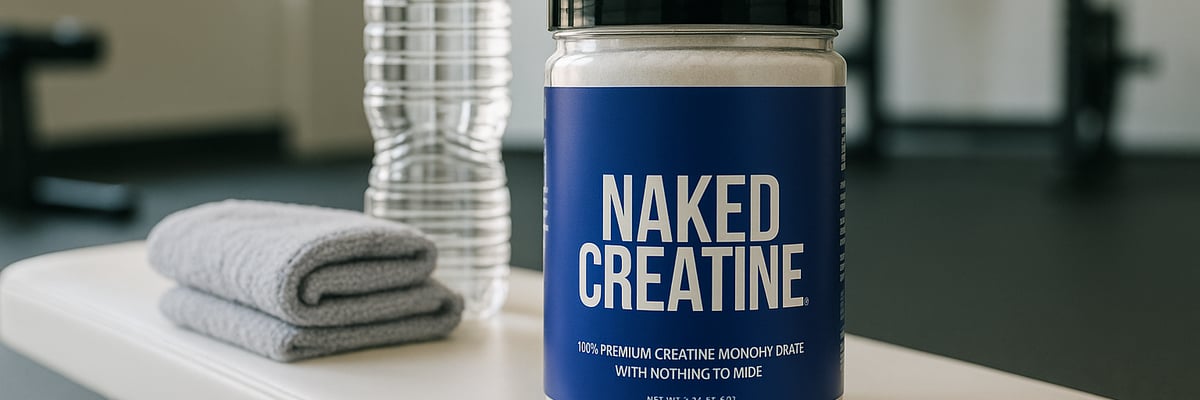
Naked Creatine is 100% pure creatine monohydrate with zero additives, artificial ingredients, or fillers. It's unflavored and dissolves easily, which means it works in water, protein shakes, smoothies, or juice without altering the taste. The formula is exactly what the research supports: one ingredient, clearly dosed, nothing else.
📊 What Research Says
Creatine monohydrate remains the most studied form of supplemental creatine. According to a position stand by the International Society of Sports Nutrition, creatine monohydrate is the most effective ergogenic nutritional supplement currently available to athletes — with no alternative form demonstrating superior results in peer-reviewed trials.
Mixing is simple: add one 5-gram scoop to your post-workout protein shake or morning smoothie. The unflavored format means it disappears into whatever you're already drinking, making daily use easy to stick with.
Creatine works when you take it every day. The supplement that gives you the best results is the one you're consistent with. Keep the formula simple, keep the habit consistent, and let the research do the rest.
Frequently Asked Questions
Should you take creatine every day, even on rest days?
Yes, taking creatine daily — including on rest days — is recommended to maintain optimal muscle saturation levels. Consistency is key because creatine stores deplete gradually, and skipping days can slow your progress toward peak muscle phosphocreatine levels.
What is the recommended daily dose of creatine?
The most widely supported maintenance dose is 3–5 grams of creatine monohydrate per day. Some people choose to front-load with a loading phase of 20 grams per day (split into 4 doses) for 5–7 days to saturate muscles faster, though this step is optional.
Is it safe to take creatine every day long-term?
Research consistently shows that daily creatine supplementation is safe for healthy individuals, with studies tracking continuous use for up to five years without adverse health effects. As with any supplement, it's a good idea to consult your healthcare provider if you have pre-existing kidney or liver conditions before starting a daily regimen.
How long does it take to see results from taking creatine daily?
Most people begin noticing improvements in strength, power output, and exercise performance within 2–4 weeks of consistent daily use. If you use a loading phase, you may experience these benefits within the first 5–7 days as muscle saturation is achieved more rapidly.
Does it matter what time of day you take creatine?
The timing of creatine intake has a relatively minor impact on its overall effectiveness compared to simply taking it consistently every day. Some research suggests that consuming creatine close to your workout — either pre- or post-exercise — may offer a slight advantage for muscle gains, but the most important factor is daily consistency.
Will taking creatine every day cause weight gain?
Creatine can cause an initial increase in body weight, typically 1–3 pounds, due to increased water retention within the muscle cells — not fat gain. This intramuscular water retention is actually a sign that creatine is working, and over time, consistent use supports lean muscle growth that contributes to healthy body composition.
Is Naked Nutrition's creatine third-party tested?
Naked Nutrition's Naked Creatine is made with 100% pure creatine monohydrate and undergoes third-party testing to verify purity and potency. The product contains no additives, artificial flavors, or unnecessary fillers, making it a clean option for those committed to daily supplementation.
Can you take creatine every day without cycling off?
Unlike some supplements, creatine does not require cycling, and there is no scientific evidence that taking breaks enhances its effectiveness or improves safety. Continuous daily use is the most practical and evidence-backed approach for maintaining elevated creatine stores and sustaining performance benefits over time.
Top Product Picks
Chosen by 1 million+ customers. Free shipping on orders over $100.
Creatine Monohydrate Powder | Naked Creatine - 2.2LB
$35.99
- ✓ 100% premium creatine monohydrate
- ✓ Highest grade available: fast dissolving and quickly absorbed
- ✓ 5g of creatine per serving
- ✓ No artificial sweeteners, flavors, or colors

Lemon Lime Creatine Monohydrate Powder | Naked Creatine - 1.1LB
$29.99
- ✓ 100% premium creatine monohydrate
- ✓ Highest grade available: fast dissolving and quickly absorbed
- ✓ 5g of creatine per serving
- ✓ No artificial sweeteners, flavors, or colors

Strawberry Creatine Monohydrate Powder | Naked Creatine - 1.1LB
$29.99
- ✓ 100% premium creatine monohydrate
- ✓ Highest grade available: fast dissolving and quickly absorbed
- ✓ 5g of creatine per serving
- ✓ No Artificial Sweeteners, Flavors, or Colors