



Key Takeaways
- Hidden in plain sight: Most mainstream protein powders contain at least one artificial sweetener, often listed under trade names like Splenda, NutraSweet, or Ace-K.
- Gut microbiome disruption: Research links artificial sweeteners to changes in gut bacteria that increase calorie extraction and fat storage, directly contradicting weight management goals.
- Insulin paradox: Sweet taste alone can trigger an insulin response, even without real sugar, potentially contributing to metabolic dysfunction over time.
- Byproduct concern: Aspartame breaks down into formaldehyde and formic acid. Sucralose may form chlorinated compounds at high temperatures. These are real chemical events, not theoretical risks.
- Natural alternatives exist: Stevia, monk fruit, and unsweetened formulations are legitimate options that avoid these concerns entirely.
- Label literacy matters: Knowing what to look for on a supplement label is the most practical step you can take right now.

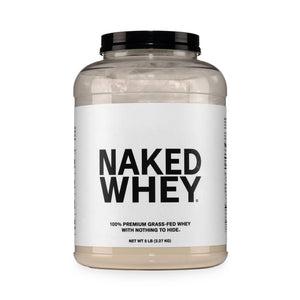
Grass Fed Whey Protein Powder | Naked Whey
- Whey Protein Base
- Non-GMO
- Grass-Fed Source
- No Artificial Additives
What Are Artificial Sweeteners in Protein Powder?
Pick up almost any tub of flavored protein powder at a grocery store or supplement shop and flip it over. Somewhere in that ingredient list, you'll likely find sucralose, acesulfame potassium, aspartame, or some combination of two or three of them. These are artificial sweeteners: synthetic compounds engineered to replicate the sweetness of sugar at a fraction of the caloric cost.
The appeal to manufacturers is straightforward. Artificial sweeteners are intensely sweet, often hundreds of times sweeter than sucrose by weight, which means only a small amount is needed per serving. They add no meaningful calories to the nutrition label, they're inexpensive at scale, and they make otherwise chalky or bitter protein bases palatable. For a product category where taste drives repeat purchases, that's a commercially compelling formula.
The most common artificial sweeteners found in protein supplements include:
- Sucralose (Splenda): A chlorinated derivative of sucrose, approximately 600 times sweeter than sugar
- Aspartame (NutraSweet, Equal): Composed of two amino acids and methanol, roughly 200 times sweeter than sugar
- Acesulfame Potassium (Ace-K): Often paired with sucralose or aspartame to mask aftertaste, about 200 times sweeter than sugar
- Saccharin: One of the oldest synthetic sweeteners, now less common in protein powders but still present in some budget formulations
Regulatory agencies including the FDA classify these compounds as Generally Recognized as Safe (GRAS), and that designation is frequently cited in their defense. But regulatory approval and optimal health are not the same standard. The question isn't just whether these sweeteners are lethal. It's whether they belong in a product you're using to support health, body composition, and performance.
Why Artificial Sweeteners in Protein Powder Are a Problem

Here's the core contradiction: protein powder is a health product. People reach for it to build muscle, support recovery, manage weight, or fill nutritional gaps. It sits in the same mental category as eating whole foods and training consistently. So when that product contains ingredients with documented negative effects on metabolism, gut health, and hormonal function, something has gone wrong with the formulation.
The problem isn't that these sweeteners are acutely toxic at typical serving sizes. For most people, a single scoop of protein powder isn't going to cause measurable harm. The problem is cumulative exposure in a population that already consumes artificial sweeteners through beverages, packaged foods, yogurt, chewing gum, and dozens of other daily sources. Protein powder adds to that load, often daily, for people who are already health-conscious and presumably trying to minimize exactly this kind of chemical exposure.
The specific concerns with artificial sweeteners in protein powder fall into three categories: disruption of gut microbiota, interference with normal metabolic signaling, and the formation of potentially harmful breakdown products. Each of these is worth understanding in detail, because the mechanisms are different and so are the implications for your goals.
At Naked Nutrition, the position is simple. Clean ingredients produce better outcomes. That's not a marketing claim; it reflects a straightforward logic: if you're using a supplement to support your health, every ingredient in that supplement should be working toward the same goal, not against it.
Artificial Sweeteners and Gut Health: What the Research Shows

Your gut microbiome is not a passive bystander in your metabolism. The trillions of bacteria that live in your digestive tract actively regulate how efficiently you extract calories from food, how well you manage blood sugar, and how effectively your immune system functions. Disrupt that bacterial community and you can alter all of those processes, often in ways that work directly against body composition goals.
📊 What Research Says
A 2015 study published in Nature by Suez et al. demonstrated that non-caloric artificial sweeteners, including saccharin, sucralose, and aspartame, induced glucose intolerance in mice and altered gut microbiota composition. When germ-free mice were transplanted with microbiota from sweetener-consuming mice, they developed the same glucose intolerance, confirming the bacterial mechanism. Human subjects in the study showed similar microbiome shifts within just one week of sweetener consumption.
The specific bacterial changes observed in this research are metabolically significant. After exposure to artificial sweeteners, certain gut bacteria shift their behavior in ways that extract more calories from ingested food than they would under normal conditions and increase the proportion of those calories stored as fat. For someone using protein powder specifically to support weight management or lean muscle development, this effect is counterproductive by definition.
The practical implication here is worth stating plainly. If your gut microbiome is disrupted by daily artificial sweetener consumption, you may be working harder in the gym and eating more carefully than necessary, while a component of your supplement stack quietly undermines those efforts at the bacterial level. The irony is that the very product category designed to accelerate results may be slowing them down.
The Link Between Artificial Sweeteners and Obesity and Diabetes Risk
The association between diet sodas and increased risk of obesity and type 2 diabetes confused researchers for years. If these drinks have no calories, how do they contribute to metabolic disease? The gut microbiome disruption described above is part of the answer. But there's a second mechanism that's equally important: the insulin response paradox.
When you taste something sweet, your body begins preparing for incoming sugar. That preparation includes releasing insulin, the hormone responsible for shuttling glucose into cells. This response happens whether or not actual sugar follows. With artificial sweeteners, the sweet taste triggers insulin release, but no glucose arrives to be cleared. Over time, this repeated mismatch between insulin signal and blood sugar reality may contribute to insulin resistance, the foundational dysfunction underlying type 2 diabetes and metabolic syndrome.
- Sweet taste receptors on the tongue signal the pancreas to prepare for incoming glucose
- Insulin is released even when no real sugar follows the sweetener
- Repeated mismatches between insulin secretion and blood glucose may desensitize cells to insulin over time
- This process is implicated in the development of insulin resistance and metabolic syndrome
Acesulfame potassium adds another layer of concern. Unlike some sweeteners that pass through the body largely unabsorbed, Ace-K is absorbed into the bloodstream. Research suggests it may interfere with hormonal signaling pathways, though the full scope of this effect in humans requires further study. What is clear is that Ace-K is almost universally paired with other sweeteners in protein powders, meaning most consumers are receiving combined exposure without being aware of it. This is an evolving area of research, and causality in human populations remains difficult to establish definitively. But the direction of the evidence is consistent enough to warrant genuine caution.
Breaking Down the Most Controversial Sweeteners: Aspartame, Sucralose, and Ace-K

Understanding what these compounds actually are, and what happens to them inside your body, moves the conversation from abstract concern to concrete chemistry.
Aspartame is composed of two amino acids, phenylalanine and aspartic acid, bound together with methanol. Your body handles the amino acids normally. The methanol is a different story. When metabolized, methanol breaks down into formaldehyde and then formic acid. Both compounds occur naturally in the body at low concentrations, and proponents of aspartame frequently cite this as evidence of safety. The more accurate framing is that naturally occurring levels are tightly regulated by your physiology, and additional exogenous sources push those levels higher. People with phenylketonuria (PKU) must avoid aspartame entirely because they cannot metabolize phenylalanine safely.
Sucralose is produced by chlorinating sucrose, substituting three hydroxyl groups with chlorine atoms. The chemical transformation makes it largely indigestible, which is how it escapes caloric classification. However, research by Schiffman and Rother (2013) raised concerns about sucralose's stability at high temperatures, where it can generate chloropropanols, compounds with established toxicological profiles. This matters for anyone who bakes with sucralose-sweetened protein powder. At room temperature and in beverages, sucralose is more stable, but its demonstrated impact on gut bacteria remains a separate and legitimate concern.
Acesulfame potassium contains a potassium salt structure that is absorbed into the bloodstream, unlike sucralose which is largely excreted intact. Its potential to interact with hormonal signaling makes it the least well-understood of the three major sweeteners in terms of long-term metabolic effects. It's rarely used alone precisely because its aftertaste requires masking with other sweeteners, so if you see Ace-K on a label, there's almost always another sweetener next to it.
Natural Sweeteners vs. Artificial Sweeteners in Protein Powder

If the goal is a protein powder that actually tastes like something without the chemical concerns, natural sweeteners are the logical alternative. The most common options in cleaner supplement formulations are stevia, monk fruit, and coconut sugar, each with a different profile of sweetness, caloric contribution, and metabolic impact.
Stevia, derived from the leaves of Stevia rebaudiana, is a non-caloric sweetener with a solid safety record and a meaningfully different mechanism from synthetic alternatives. Unlike aspartame or sucralose, stevia compounds are glycosides that are metabolized by gut bacteria into steviol before excretion. Research to date does not show the same microbiome disruption patterns associated with synthetic sweeteners. Some users find stevia's slight bitterness at high concentrations off-putting, but high-quality formulations manage this well.
Monk fruit extract is similarly non-caloric and comes from a fruit native to Southeast Asia. Its sweetness comes from mogrosides rather than sugars. It has a cleaner taste profile than stevia for many people and shows no adverse metabolic signals in current research.
Coconut sugar contributes actual calories and carbohydrates, so it's not appropriate for every application. But for protein powders where a small amount of natural carbohydrate is acceptable, it provides sweetness with a lower glycemic index than refined sugar and without synthetic chemistry.
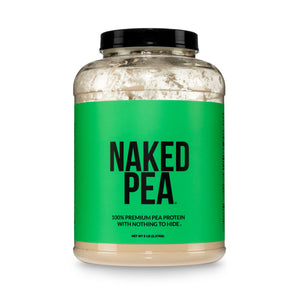
Then there's the unsweetened option. Unflavored protein powder, like Naked Whey or Naked Pea, contains nothing but the protein source itself. No sweeteners, no flavoring, no additives. It blends into smoothies, oatmeal, or recipes without altering taste. For people who want maximum control over what they consume, it's the cleanest possible choice.
How to Choose a Protein Powder Without Artificial Sweeteners

Reading a supplement label well is a skill, and it's one worth developing quickly. Manufacturers are not required to flag artificial sweeteners in any special way. They appear in the ingredient list like any other component, sometimes under their chemical names, sometimes under trade names, and sometimes buried at the end of a long list where most consumers stop reading.
When evaluating a protein powder label, look specifically for these names:
- Sucralose (also sold as Splenda)
- Aspartame (also listed as NutraSweet or Equal)
- Acesulfame potassium (abbreviated as Ace-K or acesulfame K)
- Saccharin (also listed as Sweet'N Low in some contexts)
- Neotame and advantame, newer synthetic sweeteners appearing in some formulations
A clean protein powder ingredient list should be short. If you're looking at a whey protein isolate, the list might read: whey protein isolate, sunflower lecithin. That's it. For a flavored version using natural sweeteners, you'd add something like: organic cocoa powder, coconut sugar, stevia leaf extract. If the list runs to fifteen or twenty ingredients and includes terms you can't pronounce, that's a signal.
One practical habit: read the "Other Ingredients" section separately from the protein content panel. This is where sweeteners, flavors, thickeners, and fillers are listed. Many consumers focus on the macros and skip this section entirely. The macros don't tell you what's actually in the product beyond the nutrients.
Naked Nutrition's protein powder line is built on the principle that fewer, cleaner ingredients produce better results. Products like Naked Whey, Naked Casein, and Naked Pea use no artificial sweeteners, no artificial flavors, and no synthetic colors. For athletes and health-conscious consumers who have spent time understanding what goes into their body, that specificity matters. If you've read this far, you're already making better decisions. The next step is finding a product whose ingredient list reflects the same standards.
Frequently Asked Questions
Are artificial sweeteners in protein powder safe to consume daily?
For most healthy adults, the artificial sweeteners used in protein powders — sucralose, acesulfame potassium, and aspartame — fall well below FDA acceptable daily intake levels even with regular use. That said, some individuals report digestive discomfort, particularly with sucralose and acesulfame-K at higher doses. If you're using protein powder multiple times per day, checking total sweetener load across all your supplements is a smart habit.
Do artificial sweeteners affect gut health or the microbiome?
Some research suggests certain non-nutritive sweeteners can alter gut microbiota composition. A 2022 study by Suez et al. in Cell found that sucralose and saccharin disrupted glycemic responses in some participants by changing microbiome profiles. The effects vary significantly between individuals, and not all artificial sweeteners appear to carry the same risk.
What's the difference between artificial sweeteners and natural sweeteners in protein powder?
Artificial sweeteners like sucralose and acesulfame potassium are synthetically manufactured, while natural sweeteners like stevia and monk fruit are derived directly from plant sources. Both provide sweetness without significant calories, but they differ in metabolic pathway and how they interact with gut bacteria. If you're sensitive to artificial additives, natural sweetener options are a straightforward swap.
Will artificial sweeteners in protein powder spike my insulin or blood sugar?
Traditional artificial sweeteners don't raise blood glucose the way sugar does, which is why they're marketed as diabetic-friendly. However, the Suez et al. 2022 Cell study showed that sucralose and saccharin triggered measurable glycemic responses in some participants, likely through microbiome-mediated pathways. If blood sugar management is a priority for you, opting for a protein powder sweetened with stevia or monk fruit, or no sweetener at all, is worth considering.
Does protein powder with artificial sweeteners still support muscle building?
Yes. The sweetener in a protein powder has no meaningful impact on its muscle-building capacity. What drives muscle protein synthesis is the protein content itself, specifically the leucine concentration and overall amino acid profile. A whey protein powder sweetened with sucralose delivers the same anabolic stimulus as one sweetened with stevia, assuming the protein quality and dose are equivalent.
Why do so many protein powders use artificial sweeteners instead of sugar?
Artificial sweeteners are 200 to 600 times sweeter than sugar by weight, which lets manufacturers deliver a highly palatable product without adding meaningful calories or carbohydrates. This keeps the macronutrient profile cleaner on the label, which matters to consumers tracking calories or following low-carb diets. It's a cost-effective way to improve taste without compromising the nutrition panel.
Are there protein powders that contain no artificial sweeteners at all?
Yes, several brands offer completely unflavored protein powders with no sweeteners of any kind, artificial or natural. Naked Nutrition's unflavored whey and casein lines, for example, contain only the protein source with no additives. These options give you full control over sweetness, letting you add your own fruit, honey, or nothing at all depending on your goals.
How can I tell if a protein powder contains artificial sweeteners by reading the label?
Check the ingredient list directly — artificial sweeteners are always disclosed, not hidden. Look for sucralose, acesulfame potassium (acesulfame-K or Ace-K), aspartame, saccharin, or neotame. If you see "natural flavors" listed without a sweetener, that doesn't mean the product is sweetener-free, so scanning the full ingredient deck rather than just the front label is the right approach.
Top General Nutrition Picks
Chosen by 1 million+ customers. Free shipping on orders over $100.

Pea Protein Powder | Naked Pea - 5LB
$57.99
- ✓ Sustainable Farming Practices
- ✓ Superior Amino Acid Profile
- ✓ Promote Muscle Gain
- ✓ Lose Weight

Organic Brown Rice Protein Powder - 5LB
$74.99
- ✓ Superior Amino Acid Profile
- ✓ Promote Muscle Gain
- ✓ Lose Weight
- ✓ Boost Protein Intake

Egg White Protein Powder | Naked Egg - 3LB
$79.99
- ✓ From non-GMO eggs exclusively from US farms
- ✓ Processed from fresh eggs into powder in under one day to retain a complete amino acid profile
- ✓ 25g of protein and 5.8g of BCAA's per serving
- ✓ Zero sugar