




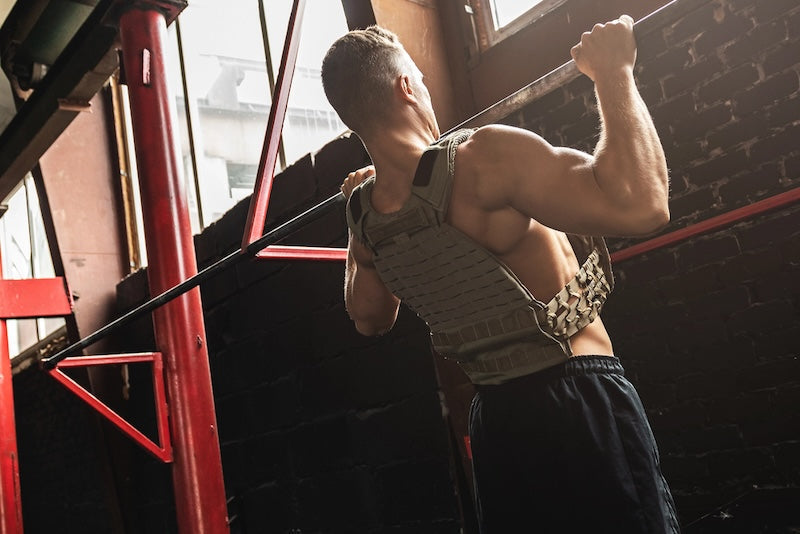

Want to turn up the difficulty in your workouts (and also your results)? Try working out with a weighted vest.
West vest training is a great way to challenge your body further, and turn regular bodyweight exercises into extremely effective strength training workouts.
Keep reading to learn all you need to know about training with a weight vest, and how to do it safely, for maximum results.
What is Weight Vest Training?
A weighted vest, or weight vest, is a piece of training equipment that adds extra resistance to bodyweight exercises, cardiovascular workouts, and strength training.
It usually comes in the form of a vest you can slip on over your shoulders, with adjustable pockets for small weights, allowing you to increase or decrease the total weight.
You’ll typically do some kind of bodyweight exercise (e.g. pull ups, dips, squats) or cardio (e.g. walking or running). Adding a weighted vest for these workouts increases resistance, making the workout more difficult (and thus increasing the benefits).
The Benefits of Training with a Weighted Vest

Here are the top benefits to using a weighted vest in your workouts.
Increased Strength and Power
Training with a weighted vest introduces more resistance, and progressive overload to bodyweight movements like push ups, pull ups, squats, and lunges.
Typically, with bodyweight exercises like pull ups, you can only increase the difficulty (and achieve progressive overload) by increasing reps.
If you weigh 180lbs, you’ll always be lifting 180lbs.
A weight vest allows you to lift more. The added resistance forces your muscles to generate more force, leading to greater strength gains over time.
Enhanced Cardiovascular Endurance
Using a weighted vest during running, stair climbing, or high-intensity workouts increases difficulty, consequently increasing heart rate and oxygen consumption.
This added intensity can boost cardiovascular endurance, making it a valuable tool for endurance athletes and individuals preparing for physically demanding tasks like military training or obstacle course races.
Improved Bone Density and Joint Health
The additional weight puts increased stress on your bones, stimulating bone remodeling and increasing bone density.
While this stress can be a downside (see the risks a little further down), if done safely, it can help prevent osteoporosis and joint problems as you age.
Greater Caloric Burn and Fat Loss

With more resistance, you’ll burn more calories in your workout, making a weighted vest a great tool to increase fat loss and build lean muscle.
Improved Athletic Performance and Speed
Athletes can use weighted vests to simulate game-time conditions, improving their agility, speed, and power.
Sprinters, basketball players, and football players can benefit from the added resistance, which enhances neuromuscular adaptation and functional movement patterns, leading to improved sports performance.
The Downsides and Risks of Weighted Vest Training

Weight vest training is not for everyone – and there are risks involved if you don’t do it the right way.
Increased Stress on Joints
While weight vest training can strengthen muscles and bones, it also increases stress on joints, particularly in the knees, ankles, and lower back.
This can lead to joint pain or injuries, with the risk increasing for those with pre-existing conditions.
Risk of Improper Form and Posture Issues
Carrying extra weight on your body will alter the mechanics of your movement.
You’re adjusting to doing familiar movements with an unfamiliar body weight (imagine you just woke up this morning and were 30-50lbs heavier).
You can end up compensating with movement patterns that cause muscle imbalances, discomfort, or injuries, if you don’t take care to maintain proper form.
Potential for Overtraining
The additional load can increase fatigue, and potentially lead to overtraining.
It’s easier to overdo it, particularly for beginners, or people recovering from injuries.
It’s important to incorporate a weighted vest gradually, starting slow, and maintaining good nutrition and recovery practices between workouts.
How to Safely Incorporate a Weighted Vest into Your Training

Weighted vests can totally transform your training – as long as you do it right, to minimize the potential risks.
Here’s how to use a weighted vest the right way.
Choosing the Right Type of Vest and Weight
It’s easy to go too hard when you first start working out with a weighted vest.
When you first put it on, you might think the weight is easily manageable. But remember, you’re going to be doing athletic movements with this extra weight on, and the extra stress and resistance will really add up in time.
When just starting out, start with a weight that’s 5-10% of your body weight. Over time, you can start to increase the weight, just as you would with any other resistance training exercise.
Best Exercises to Perform with a Weighted Vest
Weighted vests can be used for a variety of exercises. Most common are bodyweight movements like push ups, pull ups, dips, lunges, and squats.
Cardio exercises like walking, running, hiking, and stair climbing can also be intensified with a vest.
You can also try weighted vests with high-intensity workouts incorporating sprints, agility drills, and jump rope. However, take care not to overload yourself with dynamic, vigorous, high-impact movements, as the added weight makes it easier to cause joint damage.
Progression and Programming
To prevent injury, gradually increase the weight over time.
Think of it like when you first start deadlifting, or squatting. You’re not going to jump right into lifting 3x your body weight, or increase the weight by 50% each workout.
You’re going to slowly add a little more each workout, and gradually let your body adapt.
Same with a weighted vest. Start slow (maybe you don’t use a weighted vest in every workout at first), and progress at a rate that your body can handle.
Recovery and Injury Prevention
A thorough warm up and cooldown are essential when training with a weighted vest. Stretching and mobility exercises can help prevent stiffness and reduce injury risk.
Make sure you listen to your body, and don’t be scared to reduce the weight or training frequency if you feel too much discomfort.
Final Thoughts: Is Training with a Weighted Vest Right for You?

Weighted vests can be an excellent tool for enhancing strength, endurance, and overall fitness.
But they do come with risks, and aren’t suitable for everyone.
Avoid weight vest training (or start with utmost care) if you’re dealing with or recovering from an injury, or you’re not used to athletic activity or working out.
If you have any pre-existing physical or health conditions, definitely consult with a professional before moving forward.
When you do start, start slow, gradually increase the load, and prioritize recovery and proper nutrition between workouts (make sure you get enough protein).
By following these guidelines, you’ll be able to safely and effectively introduce a weighted vest into your training routine, and take your performance, and muscle gains and/or fat loss to a new level.