



La plancha es uno de los mejores ejercicios para el core que puedes hacer, porque entrena tu zona media para resistir el movimiento, tal como funciona tu core en la vida real, sin cargar la columna como lo hacen los abdominales.
Una vez que la plancha estándar se vuelve fácil, puedes progresar cambiando el ángulo, estrechando la base, añadiendo movimiento o peso. Estas variaciones añaden un nuevo desafío o alteran los grupos musculares trabajados, para ofrecer una gama completa de beneficios de este ejercicio relativamente simple.
A continuación, 17 variaciones de planchas, así como las principales razones por las que las planchas son uno de los ejercicios de core más eficientes y versátiles que puedes hacer.
Por qué la plancha es un ejercicio tan bueno

La plancha podría ser el ejercicio más subestimado que puedes hacer. Es simple, no requiere equipo y (usualmente) no implica movimiento. Sin embargo, eso es parte de lo que la hace tan poderosa.
Aquí están las principales razones por las que vale la pena hacer la humilde plancha:
Entrena todo tu core anterior a la vez
Cuando mantienes una plancha frontal, trabajas el recto abdominal (el músculo del "six-pack"), los oblicuos externos y los oblicuos internos. Eso hace que este único ejercicio sea una forma súper eficiente de desarrollar fuerza integral del core.
Es más fácil para tu columna que los abdominales
Las mantenidas isométricas del core como las planchas producen una alta activación muscular con baja compresión y cizallamiento en la columna lumbar.
En comparación, otros ejercicios populares para el core como los abdominales y crunches cargan la columna en flexión una y otra vez, lo que puede potencialmente causar problemas en la parte baja de la espalda, o agravar problemas existentes.
Puede ayudar a tu presión arterial
Aquí hay un beneficio que la mayoría de la gente no espera. Un gran Meta-análisis de red de 2023 en el British Journal of Sports Medicine, reuniendo 270 ensayos y casi 16,000 participantes, encontró que el ejercicio isométrico (como sentadillas contra la pared y planchas) produjo las mayores reducciones en la presión arterial en reposo de cualquier tipo de ejercicio estudiado; una caída promedio de aproximadamente 8/4 mmHg.
Ese es un efecto significativo, comparable a algunos medicamentos individuales para la presión arterial. Las planchas no sustituyen la atención médica, pero el estilo de entrenamiento de mantener la posición estática parece hacer más que solo desarrollar la resistencia del core.
Desarrolla resistencia del core, no solo fuerza

Las mantenidas temporizadas como las planchas son excelentes para desarrollar resistencia muscular, una cualidad a menudo descuidada en las rutinas de entrenamiento.
La capacidad de mantener el tronco firme durante un período prolongado es lo que protege tu columna durante largos días de pie, levantamientos repetidos y esfuerzos atléticos, y ayuda a que tu fuerza y potencia general rindan más.
Cómo hacer una plancha adecuada
La mayoría de la gente piensa que sabe cómo hacer una plancha regular. Parece simple. Pero hay algunos pequeños matices, y con un ejercicio como este, la forma es literalmente todo.
Así es como se hace correctamente:
-
Coloca tus antebrazos. Acuéstate boca abajo y apóyate sobre los antebrazos, con los codos directamente debajo de los hombros, antebrazos paralelos o manos entrelazadas.
-
Apóyate en las puntas de los pies. Levanta las caderas para que tu cuerpo forme una línea recta desde los talones hasta la parte posterior de la cabeza.
-
Contrae. Aprieta tus abdominales como si fueras a recibir un golpe, contrae tus glúteos y tira de tus rótulas hacia arriba flexionando tus cuádriceps.
-
Coloca tu cabeza y caderas. Mantén el cuello neutral (mirando al suelo, sin levantar la cabeza) y resiste la tentación de dejar que las caderas se eleven en pica o se hundan hacia el suelo.
-
Respira. Sigue respirando con respiraciones cortas y controladas mientras mantienes la contracción. No contengas la respiración.
Un buen tiempo de trabajo es entre 20 y 60 segundos para 2 a 4 series. La progresión es sencilla: una vez que tengas la forma correcta, intenta mantener un poco más cada vez.
Concéntrate primero en perfeccionar la plancha básica. Pero una vez que la domines y quieras un poco de variedad, mayor dificultad o un enfoque más fuerte en un aspecto particular, puedes probar una de las variaciones de plancha a continuación.
Las mejores variaciones de plancha para la estabilidad del núcleo

Estas mantienen la misma demanda anti-extensión que la plancha estándar pero aumentan la dificultad cambiando tu palanca o base de apoyo.
Plancha alta (plancha con brazos rectos)
Mantén la posición superior de una flexión con los brazos extendidos y las manos debajo de los hombros. Cambiar el apoyo a las manos involucra más los hombros, el pecho y los tríceps, y es la posición inicial para la mayoría de las variaciones dinámicas que siguen. Bueno para desarrollar estabilidad en la posición de empuje y una base útil para aprender.
Plancha RKC
Una plancha estándar de antebrazo con la intensidad aumentada. Tira de tus codos hacia los dedos de los pies (sin moverlos realmente), aprieta tus glúteos con fuerza y contrae tus abdominales al máximo. Creas tu propia tensión, lo que significa que incluso mantener la posición de 10 a 20 segundos es brutalmente difícil. Ideal para enseñar la máxima contracción de todo el cuerpo en una breve duración.
Plancha de palanca larga
Camina con los codos hacia adelante para que queden delante de tus hombros en lugar de debajo de ellos. Mover tu punto de apoyo más lejos de tu centro de masa aumenta dramáticamente la carga en tus abdominales. Añade esto cuando las planchas estándar te resulten demasiado fáciles pero no quieras aumentar el tiempo.
Plancha con elevación de brazo o pierna

Desde una plancha de antebrazo o alta, levanta un brazo o una pierna del suelo y mantén la posición. Quitar un punto de contacto obliga a tu núcleo a resistir la rotación y mantener las caderas cuadradas. Desarrolla el control anti-rotación y expone desequilibrios laterales. Progresar levantando un brazo y una pierna opuestos juntos.
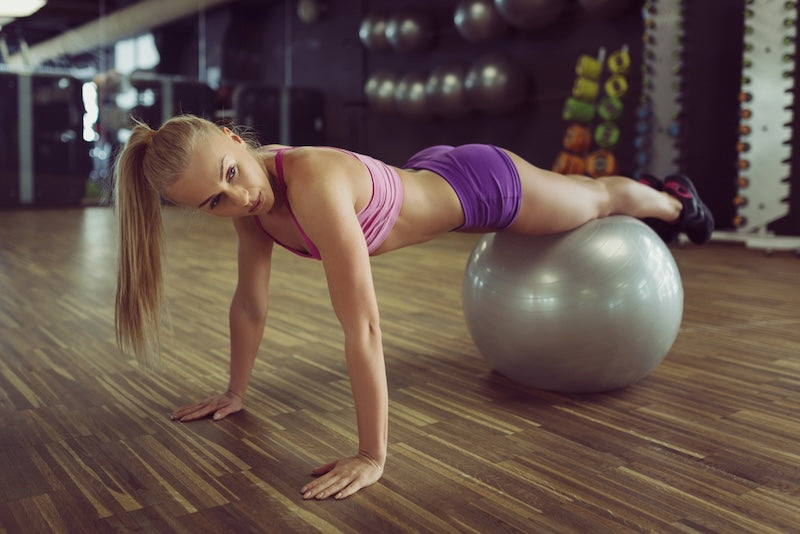
Plancha con pelota de estabilidad
Coloca tus antebrazos sobre una pelota de estabilidad en lugar del suelo. La superficie inestable hace que tu núcleo trabaje más para mantener la pelota quieta, lo que aumenta la activación de los músculos del núcleo en comparación con una plancha estable en el suelo. Bueno para aumentar la dificultad sin añadir carga o tiempo. También puedes elevar los pies sobre la pelota en su lugar.
Las mejores variaciones de plancha para desarrollar fuerza lateral y rotacional
La plancha frontal entrena la parte frontal de tu núcleo. Estas trabajan los lados; tus oblicuos y los músculos profundos que resisten la flexión lateral y la torsión.
Plancha lateral
Acuéstate de lado, apóyate en un antebrazo con el codo bajo el hombro y levanta las caderas para que tu cuerpo forme una línea recta. Este es un ejercicio anti-flexión lateral: fortalece los oblicuos y el cuadrado lumbar que evitan que te dobles hacia un lado. Es fundamental para la salud de la espalda y obligatorio si solo vas a añadir una nueva plancha.
Plancha lateral con bajadas de cadera

Desde una plancha lateral, baja la cadera hacia el suelo y levántala de nuevo con control. Añadir movimiento convierte la posición estática en un trabajo dinámico de oblicuos, desarrollando fuerza a través de un rango de movimiento en lugar de solo mantener la posición.
Plancha lateral con elevación de pierna (Plancha estrella)
Mantén una plancha lateral y levanta la pierna superior hacia el techo. Esto amplía la base de apoyo y añade un desafío de abducción de cadera al trabajo de los oblicuos. Una opción avanzada una vez que la plancha lateral estándar se siente estable.
Plancha de Copenhague
Una plancha lateral donde la pierna superior descansa sobre un banco y la pierna inferior queda libre, de modo que te sostienes entre el antebrazo y el muslo interno elevado. Esto carga intensamente los aductores de la cadera y es popular para fortalecer la ingle y reducir el riesgo de lesiones en los aductores en atletas. Trátalo como una variación avanzada y avanza poco a poco en el rango.
Las mejores variaciones dinámicas de plancha que desarrollan control y acondicionamiento

Estos añaden movimiento a la plancha, por lo que tu núcleo debe mantener la columna estable mientras se mueven las extremidades. También funcionan como acondicionamiento de bajo impacto.
Toques de hombro en plancha
Desde una plancha alta, toca con una mano el hombro opuesto, luego alterna. El objetivo es mantener las caderas completamente quietas mientras tu peso se desplaza, lo que es un entrenamiento anti-rotación disfrazado. Separa los pies para hacerlo más fácil, júntalos para hacerlo más difícil.
Plancha sube y baja (Plancha caminata)
Comienza en una plancha sobre los antebrazos, presiona hacia arriba a una plancha alta con un brazo a la vez, luego baja de nuevo. Esto entrena tu núcleo para resistir la rotación durante la transición y añade un elemento de acondicionamiento para los hombros y tríceps. Ideal como ejercicio final.
Alcance en plancha (Alcance en plancha)
Desde una plancha sobre los antebrazos o alta, extiende un brazo recto frente a ti y mantenlo brevemente antes de cambiar. Extender el brazo alarga la palanca y obliga a tu core a luchar contra la rotación y la extensión. Desarrolla el mismo control que el levantamiento de brazo con una demanda adicional de alcance.
Planchas con salto
En una plancha alta o sobre los antebrazos, salta con los pies hacia afuera y luego juntos como un jumping jack horizontal. Tu core tiene que resistir el rebote y evitar que las caderas se balanceen, mientras tu ritmo cardíaco sube. Un buen puente entre el trabajo de core y el cardio.
Escaladores
Desde una plancha alta, lleva una rodilla hacia el pecho y luego cambia de pierna en un movimiento de carrera. Cuanto más rápido vayas, más se convierte en acondicionamiento; más lento y controlado, es trabajo de flexión de cadera con demanda constante de anti-extensión. Mantén las caderas bajas y niveladas en lugar de levantarlas.
Sierra corporal
En una plancha sobre los antebrazos, empuja tu cuerpo hacia atrás y adelante unos pocos centímetros usando los dedos de los pies, manteniendo todo lo demás rígido. La longitud variable de la palanca significa que tus abdominales se cargan durante todo el rango. Una de las formas más efectivas de aumentar la demanda del core anterior sin peso.
Las mejores variaciones de planchas con carga para ganar fuerza
Una vez que la estabilidad no sea el factor limitante, puedes añadir resistencia externa para seguir desarrollando fuerza.
Plancha con peso
Mantén una plancha estándar con un disco de peso descansando sobre la parte superior de tu espalda (que alguien te lo coloque). Esta es una gran manera de aplicar sobrecarga progresiva a la plancha: añade peso con el tiempo en lugar de añadir minutos. Lo mejor para personas que ya pueden mantener una plancha limpia por más de un minuto.
Planchas con arrastre (Drag)
En una plancha alta con una mancuerna o kettlebell al lado de una muñeca, alcanza con la mano opuesta por debajo de tu cuerpo y arrastra el peso hacia el otro lado, luego alterna. Arrastrar una carga a través de tu cuerpo crea un fuerte desafío anti-rotación además de mantener la plancha. Una excelente opción con carga que requiere equipo mínimo.
Conclusión
La plancha es uno de los ejercicios de core más efectivos que puedes hacer. Entrena tu zona media para que haga su verdadero trabajo, mantener estable tu columna vertebral, mientras protege tu espalda de la carga repetida de los abdominales tradicionales.
La investigación vincula el entrenamiento isométrico del core con mejores resultados en la zona lumbar e incluso con una presión arterial más baja. Y es el tipo de entrenamiento de fuerza que probablemente no estás obteniendo con una rutina básica de entrenamiento de resistencia.
Si quieres desarrollar una mejor fuerza central, resistencia muscular y (lo que es importante) abdominales y oblicuos marcados, las planchas son el camino a seguir; desde la plancha básica que probablemente ya conoces, hasta variaciones como las planchas laterales, planchas con balón de estabilidad y toques de hombro que añaden un nuevo nivel de dificultad (y beneficios) a este increíble ejercicio.