


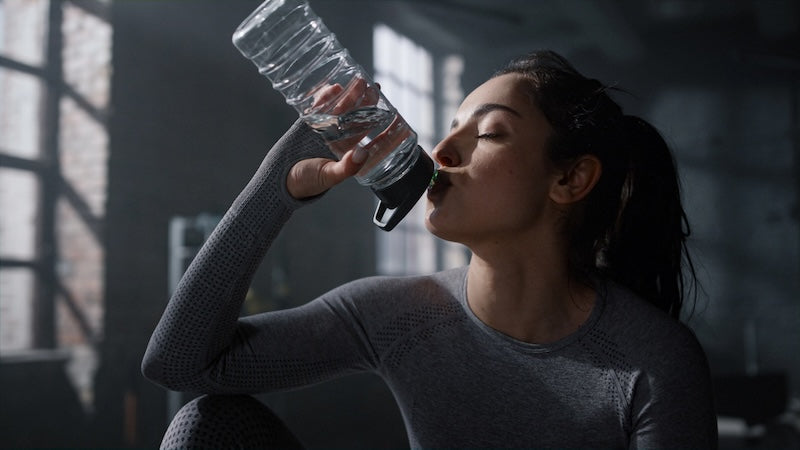

A water intake calculator estimates daily fluid needs from body size, activity level, climate, and similar inputs. It applies population data on water turnover, meaning the total volume of water moving through the body each day. Individual needs vary several-fold between people, and a meaningful share of daily fluid comes from food rather than drinks. The result is best treated as a starting estimate to check yourself against, not a daily quota that must be hit exactly.
The bottom line: the number above is a good starting point and a bad target. For a healthy adult, your own thirst and the colour of your urine are better day-to-day guides than any equation, including ours.
That is an odd thing to say underneath a calculator, so let me justify it. Hydration advice is unusually full of confident nonsense, and a lot of the pages handing you a number are also selling you a water filter, a supplement, or a weight-loss programme. The number itself is genuinely useful. Just not in the way most people use it.
I am a registered dietitian, and here is what the research actually supports: how to tell whether you are dehydrated, whether coffee counts (it does), what to do around training, the honest answer on weight loss, and the one group for whom "just trust your thirst" is the wrong advice.
Why Your Body Is a Better Guide Than the Number

Start with how much people differ.
The largest study of human water needs ever conducted tracked 5,604 people aged from eight days to 96 years across 23 countries, using isotope-tracking rather than asking people to remember what they drank. Water turnover varied with age, body size and composition, activity, athletic status, pregnancy, socioeconomic status, latitude, altitude, air temperature and humidity [1]. The spread between individuals is enormous.
Any calculator, including the one above, returns the population average for someone with your inputs. It cannot know your sweat rate, today's weather, or what you ate.
Meanwhile, you have a built-in system that does know all of that. And in the one area where researchers have studied the consequences of getting this wrong most closely, the professional advice has moved firmly toward trusting it. A 2026 review of exercise-associated hyponatremia, the condition caused by drinking too much, concluded that recommendations to drink in anticipation of thirst "should be replaced by the 'drinking when thirsty' strategy" [2]. An earlier review put it plainly: overdrinking beyond thirst is among the most common causes [3].
So the calculator earns its place as a sanity check. If your result says 2.5 litres and you are drinking closer to one, that gap is worth knowing. Treating it as a quota to force down is where it goes wrong.
One important exception, flagged now and explained later: this reasoning depends on a working thirst signal. That assumption weakens with age, and it can also fall short in people with very high sweat rates [4].
How to Tell If You Are Actually Dehydrated

The practical everyday check is urine colour, and it has been formally tested rather than just repeated.
A systematic review of ten studies found urine colour correlated with laboratory hydration measures at r = 0.40 to 0.93, with generally high sensitivity for detecting dehydration [5]. That is a decent range for something free that requires no equipment.
Pale yellow is the target. Not clear. Completely colourless urine usually means you are drinking more than you need, which is not a prize.
The honest limitations: colour is affected by B vitamins and some foods, it lags behind rapid changes in fluid balance, and the same review found weaker correlations in adults over 60 [5], which matters for the section further down.
The Other Direction
Drinking far too much is the less-discussed risk, and it is worth understanding calmly rather than fearfully.
When people take in large volumes of fluid faster than the kidneys can clear it, blood sodium can fall to dangerous levels. The main driver is overdrinking beyond thirst, combined with a hormonal response to hard exercise. Notably, sodium lost in sweat plays a lesser role than most people assume [2]. It was once thought to affect only ultramarathoners, but it has since been described in a wider range of events [3].
This is not a reason to be nervous about a glass of water. It is a reason not to force fluid on a schedule during a long event because a number told you to. The calculator above also covers the upper limit.
Do Coffee, Tea and Other Drinks Count?

Yes. This surprises people, and the belief that caffeine dehydrates you is one of the most durable myths in nutrition.
A review of the literature on caffeine and fluid balance found that doses equivalent to standard servings of tea, coffee and soft drinks appear to have no diuretic action. A large acute dose does briefly raise urine output, but mainly in people who have gone days or weeks without caffeine, and strong tolerance develops quickly. The authors concluded there is no clear basis for avoiding caffeinated drinks where fluid balance matters [6].
To be precise rather than sloganeering, a controlled trial in habitual coffee drinkers found that 6 mg of caffeine per kg of body weight, roughly 537 mg or several strong coffees at once, did produce a short-term diuretic effect. Half that dose did not disturb fluid balance at all [7].
Even for recovering from mild dehydration, it makes little difference. After losing about 1% of body mass, fluid retention was essentially identical whether people rehydrated with water (52.2%), green tea (51.0%) or caffeinated water (47.9%) [8].
So your coffee counts. So does tea, milk, and the water in your food. The number the calculator gave you is total fluid, not glasses of plain water, which means most people are closer to their target than they think.
Alcohol is the genuine exception and behaves differently.
Hydration Around Training

This is where a personal number beats a population estimate, and there is a simple way to get one.
Sweat rates vary enormously. Across 1,303 athletes, whole-body sweating rates averaged 1.51 litres per hour in American football, 1.28 in endurance sport, 0.95 in basketball, 0.94 in soccer and 0.83 in baseball [10]. Those are averages; individuals within each sport vary widely again.
Find Your Own Sweat Rate in One Session
The method is free, and it is the one the research literature endorses. According to a review of sweat-testing methodology, "the simplest and most accurate method to assess whole-body sweating rate is via changes in body mass during exercise" [9].
Weigh yourself before a training session, with minimal clothing. Train. Towel off and weigh yourself again, accounting for anything you drank during the session. The difference is roughly your fluid loss for that duration and those conditions. Do it a couple of times in different weather, and you will know more about your own hydration than any calculator can tell you.
When Water Alone Stops Being Enough
For most sessions under an hour, water is fine. Sodium starts to matter when sessions run long, conditions are hot, or you are a heavy or salty sweater. The same normative data found sodium loss rates were highest in American football and endurance sports, and the authors singled those out as having the greatest need for deliberate hydration strategies [10].
Sweat composition also varies between people and is influenced by intensity, heat acclimation, fitness, body size, sex, age and diet [9]. If you finish sessions with salt visible on your skin or kit, you are likely at the higher end.
We cover how much salt to add to water and the signs of an electrolyte imbalance separately. If you would rather not measure salt into a bottle, an electrolyte powder does the same job with a known amount in it. For most people, most days, plain water is genuinely enough.
One more note if you take creatine: it slightly increases the water your muscles hold, and we cover how much water to drink with creatine in detail. The calculator above already factors it in.
Does Drinking More Water Help With Weight Loss?

A little, in some people, and nowhere near as much as the pages selling weight-loss programmes suggest.
Here is what has actually been shown. Drinking 500 mL of water before a meal acutely reduced perceived hunger and how much people ate at that meal. Doing it three times a day increased the amount of weight lost over 12 weeks [11].
Two honest caveats that rarely travel with that finding. Those results are in middle-aged and older adults with overweight or obesity, and the effect is an adjunct to a weight-loss effort rather than a strategy on its own.
The least glamorous mechanism is also the most reliable: water has no calories, so replacing sugary drinks with it lowers your intake. That is not a metabolic trick, it is subtraction, and it works.
If you see a claim that water "boosts your metabolism and burns fat," check whether the page is selling you something. On this topic, it usually is.
What Changes as You Get Older
Now the exception to everything in the first section.
Thirst genuinely does blunt with age. Reduced thirst in response to dehydration has been reported consistently in older adults across different types of stimulus, and during heat waves, dehydration in older people is largely attributable to inadequate intake caused by changes in the brain's thirst mechanisms [12].
The consequences are not trivial. Deficits in kidney function, thirst and the response to fluid loss have been repeatedly demonstrated in older populations, with implications including cognitive effects, falls, hospital readmission, fractures and mortality [13].
Add the earlier finding that urine colour correlates less well with laboratory measures in adults over 60 [5], and both of the everyday tools in this article get less reliable at once. That is the case for drinking on a light schedule rather than waiting to feel thirsty, and it is where a calculator estimate is genuinely more useful.
Worth one piece of honesty. A 2026 perspective paper re-examined the standard advice that older adults should drink before feeling thirsty, compared it against newer studies of how older people actually drink during heat and exercise, and concluded that knowledge here "remains surprisingly limited" [14]. The blunted-thirst finding is solid. The precise prescription that follows from it is less settled than it is usually presented.
Frequently Asked Questions

How Do I Know If I Am Drinking Enough Water?
Pale yellow urine and an absence of persistent thirst cover it for most healthy adults. Urine colour has been validated against laboratory hydration measures with correlations from 0.40 to 0.93 and good sensitivity for detecting dehydration [5].
Does Coffee Count Toward My Daily Water Intake?
Yes. Standard servings of coffee, tea and soft drinks show no diuretic action, and there is no good basis for avoiding them when fluid balance matters [6]. Very large single doses of caffeine can briefly increase urine output, but ordinary servings do not [7].
Should My Urine Be Completely Clear?
No. Pale yellow is the target. Consistently colourless urine generally means you are drinking more than you need.
Can You Drink Too Much Water?
Yes, though it is uncommon in everyday life. Taking in large volumes faster than your kidneys can clear them can lower blood sodium dangerously. The main cause is drinking well beyond thirst, particularly during prolonged exercise [2,3].
How Much Water Should I Drink While Exercising?
Enough to replace what you lose, which is personal. Weigh yourself before and after a session, since change in body mass is the simplest and most accurate way to estimate your sweating rate [9]. Rates differ substantially by sport and individual [10].
Does Drinking Water Help You Lose Weight?
Modestly. Pre-meal water reduced hunger and meal intake, and 500 mL three times daily increased weight lost over 12 weeks in middle-aged and older adults with overweight or obesity [11]. It supports a weight-loss effort rather than driving one.
Do I Need Electrolytes or Is Water Enough?
Water is enough for most sessions under an hour in moderate conditions. Sodium becomes more relevant for long or hot sessions and heavy sweaters, with sodium loss rates highest in American football and endurance sports [10].
Conclusion
A water intake calculator is a useful reference point wrapped around a genuinely variable target.
-
People differ enormously. Water turnover varies with body size, activity, climate, altitude and more, across thousands of people in 23 countries [1].
-
Your body is the better daily guide. Thirst and pale yellow urine outperform an equation for most healthy adults [2,5].
-
Everything you drink counts, coffee and tea included, plus the water in your food [6,8].
-
For training, measure yourself. Weighing before and after a session beats any estimate [9].
-
Age is the real exception. Thirst blunts, and urine colour gets less reliable, so scheduled drinking makes more sense [5,12].
Use the number above the way you would use a map rather than a metronome. Check whether you are in the right region, then let thirst and a quick glance handle the day-to-day. If you train hard, spend one session with a scale and learn your own number instead. And if you are older, or caring for someone who is, that is the one case where drinking on a schedule genuinely beats waiting to feel thirsty.
References
-
Yamada Y, Zhang X, Henderson MET, et al. (2022). Variation in human water turnover associated with environmental and lifestyle factors. Science. DOI
-
Altieri B, Sbardella E, Tirabassi G, et al. (2026). Pathophysiology and treatment of exercise-associated hyponatremia. Journal of Endocrinological Investigation. DOI
-
Hew-Butler T, Loi V, Pani A, Rosner MH (2017). Exercise-associated hyponatremia: 2017 update. Frontiers in Medicine. DOI
-
Wierick SC, et al. (2025). Hydration strategies in ultra-endurance running: a narrative review of programmed versus thirst-driven approaches. Nutrients. DOI
-
Kostelnik SB, Davy KP, Hedrick VE, et al. (2020). The validity of urine color as a hydration biomarker within the general adult population and athletes: a systematic review. Journal of the American College of Nutrition. DOI
-
Maughan RJ, Griffin J (2003). Caffeine ingestion and fluid balance: a review. Journal of Human Nutrition and Dietetics. DOI
-
Seal AD, Bardis CN, Gavrieli A, et al. (2017). Coffee with high but not low caffeine content augments fluid and electrolyte excretion at rest. Frontiers in Nutrition. DOI
-
Takamata A, Oka A, Nagata M, et al. (2023). Effect of fluid replacement with green tea on body fluid balance and renal responses under mild thermal hypohydration: a randomized crossover study. European Journal of Nutrition. DOI
-
Baker LB (2017). Sweating rate and sweat sodium concentration in athletes: a review of methodology and intra/interindividual variability. Sports Medicine. DOI
-
Barnes KA, Anderson ML, Stofan JR, et al. (2019). Normative data for sweating rate, sweat sodium concentration, and sweat sodium loss in athletes: an update and analysis by sport. Journal of Sports Sciences. DOI
-
Davy BM (2025). Water intake, hydration, and weight management: the glass is half-full! Physiology & Behavior. DOI
-
Begg DP (2017). Disturbances of thirst and fluid balance associated with aging. Physiology & Behavior. DOI
-
Cowen LE, Hodak SP, Verbalis JG (2023). Age-associated abnormalities of water homeostasis. Endocrinology and Metabolism Clinics of North America. DOI
-
Deshayes TA (2026). Beyond the one-size-fits-all hydration recommendation for older adults: a call for more research on age-related change in thirst and hydration behavior. European Journal of Applied Physiology. DOI