



Key Takeaways
- Processing method matters: High heat during manufacturing can denature whey protein irreversibly, reducing bioavailability and stripping vitamins and minerals.
- Cold processing preserves protein integrity: Both Vat and HTST pasteurization keep temperatures low enough that any denaturation is reversible, leaving the primary protein structure intact.
- Grass-fed sourcing changes the nutritional profile: Dairy from grass-fed cows contains lower saturated fat, more omega-3 fatty acids, and higher concentrations of conjugated linoleic acid (CLA) than conventional feedlot dairy.
- Non-denatured and cold processed mean the same thing: Both terms describe whey that has not had its primary protein structure damaged during manufacturing.
- You can cook with cold processed whey: Heating whey protein in recipes doesn't destroy its nutritional value. The amino acids stay intact, just like when you cook eggs or meat.
- Label transparency is your best filter: A short ingredient list, grass-fed sourcing, and clear pasteurization method disclosure are the marks of a quality product.

Grass Fed Whey Protein Powder | Naked Whey - 5LB
- Build and Maintain Lean Muscle Mass
- Boost Immune System
- Lose Fat
- Improve Heart Health
What Is Cold Processed Whey Protein?

Not all whey protein is created equal, and the processing method is the single biggest reason why. Cold processed whey protein is whey that has been manufactured using low-temperature pasteurization methods, specifically to avoid the kind of heat exposure that degrades protein structures and strips out beneficial nutrients. The result is a product with higher bioavailability, a more complete nutrient profile, and nothing cooked out of it before it reaches you.
Whey itself is the liquid byproduct of cheese production. After it's separated from the curds, it goes through filtration and pasteurization before being dried into the powder you scoop. What happens during that pasteurization step determines the quality of the finished product. Heat-processed whey gets pushed through high temperatures quickly. Cold processed whey takes a gentler route, one that keeps the protein's structural integrity intact.
This isn't a minor distinction. The difference between cold processing and conventional heat processing affects the amino acid profile, the vitamin and mineral content, and how efficiently your body can actually use what you're consuming. If you're evaluating protein powders, understanding this matters as much as reading the macros on the label.
- Proteins have four structural levels: primary, secondary, tertiary, and quaternary. The primary structure is the amino acid sequence itself.
- The primary structure serves as the blueprint for all higher-order structures. If it stays intact, the protein retains its full nutritional potential.
- High heat can irreversibly damage tertiary and quaternary structures, reducing bioavailability.
- Cold processing keeps temperatures low enough that any structural changes remain reversible, meaning the protein reforms as it cools.
Why Processing Method Matters for Whey Protein Quality

Protein denaturation sounds technical, but the concept is straightforward. Denaturation happens when a protein's structure is altered by an external force. Heat is the most common culprit during food manufacturing, but extreme pH levels, UV radiation, and physical agitation can also cause it. When the protein's shape changes enough, your body has a harder time recognizing, breaking down, and absorbing it efficiently.
Denaturation itself isn't always a problem. Your body denatures protein naturally during digestion. That process is exactly how it breaks proteins down into individual amino acids for use in muscle repair, enzyme production, and dozens of other functions. The issue isn't denaturation per se. It's the degree of denaturation and whether it's reversible or permanent.
Reversible denaturation is temporary. When you remove the stressor, the protein refolds into its original shape. Irreversible denaturation is permanent. The structure is broken in a way the protein can't recover from, and that affects how well your body can utilize it. Extreme heat during manufacturing is the most likely cause of irreversible denaturation in commercial whey protein production.
Processing method also affects the vitamin and mineral content of the final product. Heat degrades heat-sensitive micronutrients. A whey protein that's been pushed through high-temperature processing may show strong numbers on the amino acid panel while delivering less of the naturally occurring vitamins and minerals present in quality milk.
Cold Processing vs. Heat Processing: What's the Difference?

Conventional heat processing typically involves Ultra-High Temperature (UHT) pasteurization, where milk is heated to 280°F or above for two to four seconds. It's fast and effective at eliminating pathogens, but the extreme temperature can push protein structures past the point of recovery. The tertiary and quaternary structures break down, and that damage is often permanent. The protein that ends up in your tub is functionally different from the protein that started in the milk.
Cold processing uses one of two lower-temperature pasteurization methods. Vat Pasteurization heats the milk to 145°F for 30 minutes. HTST (High-Temperature Short-Time) pasteurization heats it to a minimum of 161°F for 15 seconds. Both methods are classified as "cold processing" because the temperatures stay below the threshold for irreversible structural damage.
📊 What Research Says
Research published in the International Journal of Molecular Sciences shows that proteins generally begin to denature at 40°C (104°F). During cold pasteurization, some denaturation does occur, but it is reversible. As the milk cools, protein structures reform to their original shape. Studies published in the Journal of Dairy Science confirm that β-lactoglobulin, one of the most heat-sensitive components of milk protein, remains structurally intact under both Vat and HTST cold-processing conditions.
The practical outcome is that cold processing preserves the primary protein structure. As long as that primary structure remains undamaged, the protein retains its full bioavailability. Its amino acid sequence is intact, and your body can process it efficiently. Cold processing also protects the naturally occurring vitamins, minerals, and bioactive compounds in whey that high-heat methods tend to degrade.
The Benefits of Grass-Fed Cold Processed Whey Protein

Cold processing addresses how whey is handled during manufacturing. Grass-fed sourcing addresses what goes into the milk before processing begins. Both variables matter, and together they produce a meaningfully different product.
Most commercial dairy cows are raised in feedlot environments and fed a diet primarily composed of corn and grain. Grass-fed cows graze in open pastures on the diet they evolved to eat. That difference in diet changes the fatty acid composition of the milk. Dairy from feedlot cows is higher in saturated fat. Dairy from grass-fed cows is lower in saturated fat, higher in omega-3 fatty acids, and significantly higher in conjugated linoleic acid (CLA).
CLA is a naturally occurring fatty acid found in the meat and dairy of ruminant animals. It's associated with improved body composition, reduced body fat, and cardiovascular benefits. Omega-3 fatty acids support heart health, reduce systemic inflammation, and play a direct role in brain function and cognitive health. These aren't incidental additions. They're part of what makes grass-fed dairy nutritionally distinct from conventional dairy.
When you combine grass-fed sourcing with cold processing, the descriptor you get is "non-denatured grass-fed whey protein." That phrase tells you two things: the protein comes from cows raised on pasture, and it was processed in a way that preserved its structural integrity. On a label, look for explicit "grass-fed" sourcing language and a clear statement about pasteurization method. If neither appears, the manufacturer probably isn't proud of either.
How to Choose the Best Cold Processed Whey Protein
The supplement industry has a packaging problem. A lot of products that look premium are carrying questionable ingredients behind a clean aesthetic. When you're evaluating a cold processed whey protein, the ingredient label is your most reliable tool.
Start with the ingredient list length. The best products have one or two ingredients: whey protein concentrate or whey protein isolate, and nothing else. The moment you see artificial sweeteners, proprietary blends, vegetable oils, thickeners, or a list of synthetic additives, you're no longer buying a clean protein. You're buying a processed food product.
- Explicit "grass-fed" sourcing: Not "natural" or "premium" — specifically grass-fed, ideally with farm origin disclosed.
- Processing method stated: Look for "cold processed," "Vat pasteurized," or "HTST pasteurized" language.
- Short ingredient list: One to two ingredients maximum for a truly clean product.
- No artificial sweeteners or colors: Sucralose, acesulfame potassium, and artificial flavors are red flags.
- Third-party testing or certification: Look for NSF Certified for Sport, Informed Sport, or similar verification.
On the question of concentrate versus isolate: whey concentrate retains more of the naturally occurring fats, including CLAs and omega-3s, because less filtration has been applied. Whey isolate is more heavily filtered, which removes most of the fat and lactose and delivers a higher protein percentage per gram. Neither is objectively superior, but if the fatty acid profile matters to you, concentrate from grass-fed cows offers more of it. The right choice depends on your goals and any dietary sensitivities to lactose.
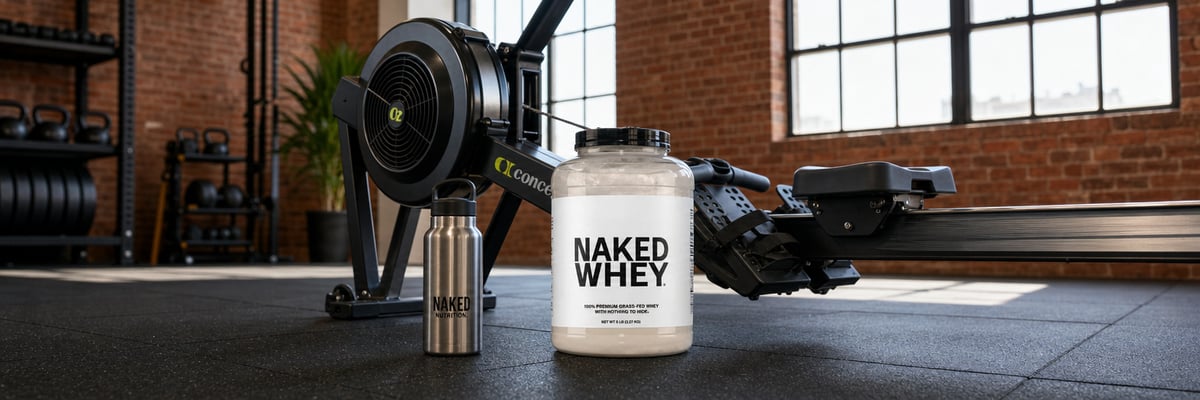
Naked Whey is a product that checks all of these boxes: single ingredient, grass-fed sourcing from small Northern California and Idaho farms, cold processing, and no artificial additives. It's the standard that a genuinely clean cold processed whey protein should meet.
Naked Whey: Our Cold Processed Grass-Fed Whey Protein
Naked Whey contains one ingredient: grass-fed whey protein concentrate sourced from small dairy farms in Northern California and Idaho. That's the entire ingredient list. No fillers, no artificial sweeteners, no additives. Just protein.
The cows supplying the milk for Naked Whey are pasture-raised, which means the whey comes in with a naturally higher CLA and omega-3 content before processing even begins. Cold processing then ensures those nutrients, along with the protein's full amino acid profile, make it through to the finished product without being damaged by heat.
The result is a whey protein with high bioavailability. Your body absorbs and uses it efficiently because the primary protein structure is intact. You're also getting the cardiovascular and metabolic benefits of CLA and omega-3 fatty acids that conventional heat-processed whey proteins, especially those from feedlot dairy, don't deliver in meaningful amounts.
Naked Whey is available unflavored and in natural chocolate and vanilla flavors. The unflavored version is particularly useful for cooking and baking, where you want the protein without any flavor interference. All variants are free from artificial sweeteners and synthetic additives.
If you're looking for a straightforward benchmark: a cold processed grass-fed whey protein should have one ingredient, disclose its sourcing, state its pasteurization method, and carry no artificial additives. Naked Whey meets every one of those criteria.
Can You Cook or Bake with Cold Processed Whey Protein?
Yes, and the science behind why is worth understanding. When you bake a protein pancake, blend whey into oatmeal, or use it in a muffin recipe, you're applying heat to the protein. That heat does denature it. The question is whether that denaturation destroys the nutritional value, and the answer is no.
Cooking denatures the tertiary and quaternary structures of a protein, just like high-heat industrial processing does. But the primary structure, the actual amino acid sequence, stays intact. And the primary structure is what your body is after. When you eat a cooked protein, your digestive system breaks it down into its individual amino acids regardless of whether it arrived folded or denatured. The amino acids themselves are not destroyed by cooking temperatures.
This is exactly what happens when you cook eggs or grill chicken. The protein structure changes with heat, but the nutritional content doesn't disappear. You're still getting the same amino acids either way. The same principle applies to whey protein in recipes.
What you don't want is to assume that cold processing is undone by cooking. The cold processing during manufacturing protects protein integrity during production and storage. What you do with it in the kitchen is a separate matter, and it doesn't compromise the fundamental nutritional value you bought the product for.
If you enjoy cooking with protein powder, cold processed whey works well in both sweet and savory applications. The unflavored version offers the most versatility without altering the taste of your recipe.
Frequently Asked Questions
What does "cold processed" actually mean for whey protein?
Cold processing refers to manufacturing whey protein at low temperatures, typically below 40°F (4°C), to avoid heat-induced protein denaturation. Standard whey processing often uses high heat to speed up filtration and drying, which can destroy fragile bioactive proteins like lactoferrin, immunoglobulins, and beta-lactoglobulin. Cold processing preserves those fractions so you're getting protein in a closer-to-natural state.
Is cold processed whey protein actually more effective for muscle building?
For raw leucine content and muscle protein synthesis, the difference between cold processed and standard whey is small. Where cold processed whey pulls ahead is in its preserved bioactive fractions, which support immune function and gut health alongside muscle recovery. If muscle building is your only goal, both work. If overall health matters too, cold processed whey delivers more.
Does cold processed whey protein cost more, and is it worth the price difference?
Yes, cold processed whey typically costs more because low-temperature manufacturing is slower and more resource-intensive than heat-based processing. The premium reflects a genuinely different product, not just marketing. If you're buying whey to support recovery, immune health, and gut integrity, the added cost is justified. If you're price-sensitive and only tracking protein grams, standard whey gets the job done.
What bioactive proteins are preserved in cold processed whey?
Cold processing retains lactoferrin, immunoglobulins (IgG, IgA, IgM), beta-lactoglobulin, alpha-lactalbumin, and glycomacropeptides at meaningful levels. These proteins are heat-sensitive and degrade significantly above 72°C (161°F). Lactoferrin alone has documented antimicrobial and immune-modulating properties, as shown in research published in the Journal of Dairy Science by Lönnerdal (2003).
How do I know if a whey protein is truly cold processed?
Look for brands that explicitly state low-temperature or cold processing on the label and can point to third-party testing or certificates of analysis confirming intact bioactive fractions. Vague terms like "minimally processed" or "natural" don't confirm cold processing. Ask the brand directly for documentation on processing temperatures. Reputable companies won't hesitate to provide it.
Is cold processed whey safe for people with lactose intolerance?
Cold processed whey concentrate still contains residual lactose, so it's not automatically safe for people with significant lactose intolerance. Cold processed whey isolate has most of the lactose removed through filtration and is typically better tolerated. If you're sensitive to dairy, start with a small serving and monitor your response before committing to a full scoop.
What is the recommended dosage for cold processed whey protein?
Most research supports 20 to 40 grams of whey protein per serving to maximize muscle protein synthesis, with the lower end sufficient for most people under 180 pounds. Consuming more than 40 grams in a single sitting doesn't significantly increase muscle protein synthesis rates, as demonstrated by Moore et al. (2009) in the American Journal of Clinical Nutrition. Timing around workouts matters, but total daily protein intake matters more.
Does cold processed whey protein contain artificial additives or fillers?
That depends on the brand, not the processing method itself. Cold processing preserves protein quality, but manufacturers can still add artificial sweeteners, flavors, thickeners, or fillers afterward. Read the ingredient list carefully. The cleanest cold processed whey proteins have a short ingredient list: whey protein concentrate or isolate, and nothing else you can't pronounce.
Top Whey Protein Picks
Chosen by 1 million+ customers. Free shipping on orders over $100.

Grass Fed Whey Isolate Protein Powder | Naked Whey Isolate - 2LB
$74.99
- ✓ Whey Protein Base
- ✓ Protein Isolate
- ✓ Grass-Fed Source

Chocolate Grass-Fed Whey Isolate Protein Powder | Naked Whey Isolate - 2LB
$74.99
- ✓ Whey Protein Base
- ✓ Protein Isolate
- ✓ Grass-Fed Source

Goat Whey Protein Powder | Naked Goat - 2lb
$74.99
- ✓ 100% premium grass-fed goat whey protein
- ✓ Sourced from pasture-raised, small-herd dairy goats
- ✓ Cold processed without acid or bleach
- ✓ Non-denatured: rich in amino acids and glutathione