


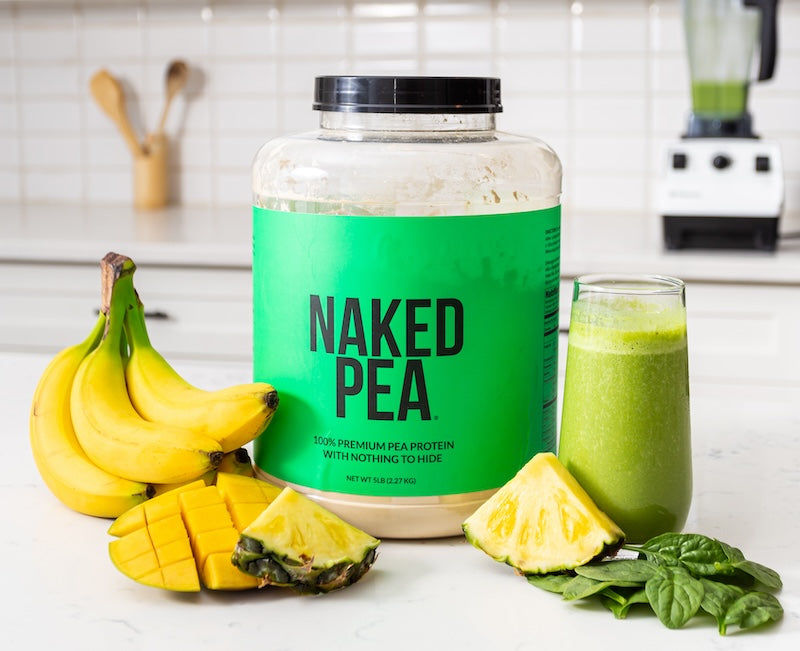

¿Qué es el polvo de proteína de guisante?
El polvo de proteína de guisante es un suplemento proteico derivado de plantas hecho a partir de guisantes partidos amarillos (Pisum sativum). Para producirlo, los guisantes se secan, muelen en harina y luego se procesan para eliminar la mayor parte del almidón y la fibra, dejando una fracción concentrada de proteína. El resultado se vende ya sea como un concentrado, que retiene más carbohidratos y grasas junto con la proteína, o como un aislado, que pasa por una filtración adicional para ofrecer una mayor proporción de proteína por peso, típicamente entre 80-90% de proteína en masa.
La proteína de guisante ha crecido constantemente en popularidad por varias razones prácticas. Es naturalmente vegana y libre de lácteos, lo que la hace adecuada para personas que evitan productos animales o son intolerantes a la lactosa. También se considera hipoalergénica en comparación con alérgenos comunes como el suero, la soja, el huevo y la caseína, lo que la convierte en una opción viable para personas con sensibilidades alimentarias.
Desde un punto de vista nutricional, la proteína de guisante contiene los nueve aminoácidos esenciales, aunque es relativamente baja en metionina. Su contenido de aminoácidos de cadena ramificada (BCAA), especialmente leucina, es significativo pero generalmente menor que el del suero de leche. La leucina es el aminoácido más directamente asociado con la activación de la síntesis de proteína muscular, por lo que recibe especial atención en la nutrición deportiva.
La digestibilidad es otra consideración. La proteína de guisante tiene una puntuación de digestibilidad razonablemente alta, aunque algunas personas experimentan hinchazón o gases al consumirla en grandes cantidades. Los productos que incluyen mezclas de enzimas digestivas pueden ayudar a mitigar esto. Una combinación comúnmente recomendada es la proteína de guisante con proteína de arroz integral, ya que la proteína de arroz es más alta en metionina y juntas crean un perfil de aminoácidos más completo.
¿Para quién es más adecuada la proteína de guisante? Veganos, vegetarianos, personas con intolerancia a la lactosa o a los lácteos, individuos sensibles al suero de leche y cualquiera que priorice una fuente de proteína limpia y mínimamente procesada.

Cómo clasificamos los mejores polvos de proteína de guisante
Para identificar los mejores polvos de proteína de guisante disponibles en 2026, nuestro equipo de investigación analizó más de 35 productos utilizando un modelo de puntuación ponderado basado en los criterios más importantes para los consumidores conscientes de la salud y los atletas. Cada producto fue evaluado según las etiquetas nutricionales disponibles públicamente, listas de ingredientes, certificaciones, divulgaciones de pruebas de terceros, datos de precios y temas agregados de reseñas de consumidores.
Calidad de la proteína y perfil de aminoácidos (25%): Evaluamos proteína por porción, porcentaje de proteína por peso, contenido de leucina cuando se declaró y cualquier indicio de aumento artificial de aminoácidos (la práctica de añadir aminoácidos baratos para inflar la lectura de proteína en la etiqueta).
Simplicidad de ingredientes y aditivos (20%): Favorecimos productos con listas de ingredientes más cortas, sin edulcorantes artificiales, sin sabores o colorantes artificiales y sin rellenos innecesarios. Los productos de un solo ingrediente recibieron las puntuaciones más altas en esta categoría.
Digestibilidad y textura (15%): Revisamos comentarios de consumidores para detectar patrones relacionados con textura arenosa, hinchazón y mezclabilidad, y notamos si los productos incluían mezclas de enzimas digestivas.
Pruebas de terceros y detección de metales pesados (15%): Dimos crédito por pruebas de laboratorio independientes, certificados de análisis (COAs) disponibles públicamente y transparencia sobre posibles contaminantes, incluidos metales pesados.
Origen y certificaciones (10%): Evaluamos la certificación orgánica USDA, estado libre de OGM, reclamos de libre de alérgenos y país de origen declarado.
Reseñas y satisfacción del cliente (10%): Revisamos calificaciones verificadas y prestamos especial atención a comentarios de uso a largo plazo en plataformas donde las reseñas son más rigurosamente evaluadas.
Precio por 20g de proteína (5%): Calculamos un costo estandarizado por 20g de proteína para cada producto para permitir comparaciones directas de precios sin importar el tamaño de la porción o del envase.
Mejores polvos de proteína de guisante: tabla comparativa 2026
|
Clasificación |
Marca |
Proteína por porción |
Porcentaje de proteína por peso |
Orgánico |
Probado por terceros |
Edulcorante |
Precio por 20g de proteína |
Mejor para |
|
1 |
Naked Nutrition – Naked Pea |
27g / porción de 30g |
90% |
No |
Sí |
Ninguno |
$0.56 |
Puristas de etiqueta limpia, mejor aislado en valor |
|
2 |
Transparent Labs – Aislado de proteína de guisante |
28g / porción de 39.7g |
71% |
Sí (USDA) |
Sí (Informed Choice) |
Ninguno |
$1.19 |
Atletas orgánicos y certificados |
|
3 |
Nutricost – Proteína orgánica de guisante |
20g / porción de 25g |
80% |
Sí (USDA) |
Sí (GMP) |
Ninguno |
$0.89 |
Compradores orgánicos con presupuesto |
|
4 |
NOW Sports – Proteína de guisante |
24g / porción de 33g |
73% |
No |
Sí (GMP) |
Ninguno (sin sabor) |
$0.43 |
Mejor valor general |
|
5 |
MyProtein – Aislado de proteína de guisante |
21g / porción de 25g |
84% |
No |
Sí (GMP) |
Ninguno |
$0.48 |
Atletas con presupuesto limitado |
|
6 |
BulkSupplements – Aislado de proteína de guisante |
21g / porción de 30g |
70% |
No |
Algunos lotes |
Ninguno |
$0.63 |
Compradores al por mayor / formuladores caseros |
|
7 |
Anthony's – Proteína premium de guisante |
8g / porción de 10g |
80% |
No |
Sí (pruebas por lote) |
Ninguno |
$0.81 |
Uso para hornear y batidos |
|
8 |
Garden of Life – Proteína orgánica cruda |
22g / porción de 29g |
76% |
Sí (USDA) |
Sí |
Stevia |
$1.68 |
Buscadores de apoyo digestivo |
|
9 |
Orgain – Polvo de proteína vegetal orgánica |
21g / porción de 46g |
46% |
Sí (USDA) |
No |
Eritritol + estevia |
$1.62 |
Consumidores enfocados en el sabor |
|
10 |
KOS – Proteína vegetal superalimento orgánica |
20g / porción de 39g |
51% |
Sí (USDA) |
No |
Azúcar de coco + estevia + fruta del monje |
$2.00 |
Buscadores de mezclas superalimento |
Costo por 20g de proteína calculado a partir de precios minoristas típicos a febrero de 2026. Los precios reales pueden variar según el minorista.
Reseñas individuales de productos

#1 — Naked Nutrition: Naked Pea
Naked Pea ocupa el primer lugar en esta revisión, y no es una decisión reñida. Ningún otro producto que evaluamos combina una proporción de proteína por peso del 90 %, una fórmula de un solo ingrediente, pruebas de metales pesados por terceros y un costo de solo $0.56 por 20 g de proteína. Los competidores que igualan su pureza tienden a costar significativamente más. Los competidores que igualan su precio tienden a comprometer la densidad de proteína, la transparencia en las pruebas o la simplicidad de los ingredientes. Naked Pea no hace ninguna de esas cosas. Con 27 gramos de proteína de una porción de 30 gramos y nada más en la fórmula, es la recomendación más clara para veganos, atletas y consumidores de etiqueta limpia que quieren que su fuente de proteína sea exactamente eso: proteína, y nada más.
Especificaciones clave del producto
-
Proteína por porción: 27 g
-
Tamaño de la porción: 30 g (2 cucharadas)
-
Porciones por envase: 15 (1 lb) / 76 (5 lb)
-
Tipo de proteína de guisante: Aislado
-
Contenido de leucina: No divulgado en la etiqueta
-
Endulzante: Ninguno
-
Orgánico: No
-
Probado por terceros: Sí (metales pesados)
-
País de origen: No divulgado
-
Precio: ~$19.99 (1 lb) / ~$57.99 (5 lb)
-
Precio por 20g de proteína: ~$0.56
Fortalezas
-
La mayor proporción de proteína por peso de cualquier producto revisado, con un 90 % (27 g de proteína por una porción de 30 g)
-
Fórmula de un solo ingrediente: aislado de proteína de guisante amarillo no transgénico, sin nada añadido
-
Uno de los costos por 20 g de proteína más asequibles entre todos los productos revisados, a $0.56
-
Libre de gluten, lácteos, soja, edulcorantes artificiales, sabores y gomas
-
Probado por terceros para metales pesados
-
Disponible en tamaños de 1 lb y 5 lb, lo que la hace flexible para compras de prueba y compradores al por mayor por igual
-
Fundada en 2014 con una misión constante de nutrición con ingredientes mínimos y etiqueta transparente
Consideraciones
-
No está certificado como USDA Organic. Los consumidores que buscan específicamente guisantes orgánicos deberían considerar Transparent Labs o Nutricost.
-
Solo sin sabor; el sabor terroso de la proteína de guisante es más notable cuando se mezcla con agua simple
-
La textura puede ser arenosa cuando se mezcla solo con agua; mezclar en un batido mejora significativamente la experiencia
-
El contenido de leucina no se divulga en la etiqueta
Resumen de reseñas de clientes
Los evaluadores elogian constantemente Naked Pea por su pureza y valor, especialmente aquellos que han probado múltiples productos de proteína de guisante y aprecian la ausencia de aditivos. Los comentarios sobre la mezclabilidad son generalmente positivos cuando se usa en batidos o licuados, pero más divididos cuando se mezcla solo con agua. El sabor es el punto más común de crítica. El sabor terroso y ligeramente a guisante es notable sin ingredientes que lo enmascaren, lo que es un intercambio que algunos usuarios aceptan voluntariamente y otros encuentran desafiante. Los usuarios a largo plazo reportan buena tolerancia digestiva sin hinchazón significativa, y quienes monitorean resultados de construcción muscular describen resultados consistentes con otras fuentes de proteína al mismo nivel de ingesta.
#2 — Transparent Labs: Aislado de proteína de guisante
Transparent Labs ocupa el segundo lugar gracias a su certificación Informed Choice combinada con el estatus USDA Organic y una fórmula de un solo ingrediente. Proporciona 28 gramos de proteína por porción de 39,7 gramos, y su certificado de análisis descargable lo convierte en uno de los productos más transparentes en esta categoría. Es ideal para atletas competitivos sujetos a pruebas de sustancias prohibidas o para cualquier persona que valore especialmente la certificación orgánica junto con una formulación de etiqueta limpia.
Especificaciones clave del producto
-
Proteína por porción: 28 g
-
Tamaño de la porción: 39.7g
-
Porciones por envase: 30
-
Tipo de proteína de guisante: Aislado (orgánico)
-
Contenido de leucina: No divulgado
-
Endulzante: Ninguno (sin sabor); sin edulcorantes en ninguna variante
-
Orgánico: Sí (Certificado Orgánico USDA)
-
Probado por terceros: Sí (Informed Choice; COA disponible)
-
País de origen: No divulgado
-
Precio: $49.99 (pago único) / $44.99 (suscripción)
-
Precio por 20g de proteína: ~$1.19
Fortalezas
-
La certificación Informed Choice ofrece garantía de pruebas de sustancias prohibidas para atletas competitivos
-
Certificado USDA Orgánico y No-OGM
-
Certificado de análisis (COA) disponible públicamente
-
Fórmula de un solo ingrediente: solo aislado de proteína de guisante orgánico
-
Disponible sin sabor, chocolate y vainilla sin edulcorantes
Consideraciones
-
A $1.19 por 20 g de proteína, cuesta más del doble que Naked Pea
-
La densidad proteica es del 71 % en peso, menor que varios competidores no orgánicos a precios similares o más bajos
-
Algunos revisores notan un sabor terroso fuerte
Resumen de reseñas de clientes
Los revisores citan con frecuencia la transparencia en el etiquetado de Transparent Labs y la certificación Informed Choice como motivadores principales de compra. La textura recibe comentarios positivos, con muchos señalando una sensación en boca más suave de lo esperado para un aislado sin sabor. El sabor a veces se describe como terroso en la versión sin sabor, pero las variantes de chocolate y vainilla son agradables sin edulcorantes. La tolerancia digestiva se reporta como buena. Los usuarios a largo plazo notan calidad constante entre lotes.
#3 — Nutricost: Aislado de proteína de guisante orgánico

Nutricost ofrece un aislado de proteína de guisante orgánico sencillo a un precio que lo convierte en la opción USDA Orgánica más rentable en esta revisión. A $0.89 por 20 g de proteína, cubre la brecha entre productos económicos y opciones certificadas orgánicas. La fórmula es de un solo ingrediente: aislado de proteína de guisante orgánico, sin edulcorantes, sabores ni aditivos. Es ideal para consumidores que priorizan la certificación orgánica y son conscientes del costo.
Especificaciones clave del producto
-
Proteína por porción: 20g
-
Tamaño de la porción: ~25 g
-
Porciones por envase: ~36 (envase de 2 lb)
-
Tipo de proteína de guisante: Aislado (orgánico)
-
Contenido de leucina: No divulgado
-
Endulzante: Ninguno
-
Orgánico: Sí (Certificado Orgánico USDA)
-
Probado por terceros: Instalación conforme a GMP y registrada por la FDA
-
País de origen: No divulgado
-
Precio: ~$31.95
-
Precio por 20g de proteína: ~$0.89
Fortalezas
-
Certificado USDA Orgánico y No-OGM a uno de los precios orgánicos más bajos revisados
-
Fórmula de un solo ingrediente sin aditivos
-
80 % de proteína en peso, lo que representa una alta densidad proteica para un producto orgánico
-
Fabricado en una instalación registrada por la FDA y conforme a GMP
-
El sabor neutral es ampliamente mencionado en las reseñas
Consideraciones
-
20 g de proteína por porción es menos que algunos competidores con tamaños de porción similares
-
La certificación de pruebas de terceros es la certificación de instalaciones GMP, en lugar de un certificador independiente como Informed Choice
-
Se nota un sabor terroso en algunas reseñas
Resumen de reseñas de clientes
Los compradores de Nutricost citan con mayor frecuencia el valor y el estado orgánico como factores decisivos. Las reseñas de sabor describen el sabor como neutral a ligeramente terroso, lo cual es más agradable que muchas proteínas de guisante sin sabor. La mezclabilidad se califica positivamente. La tolerancia digestiva es generalmente buena, con mínimas quejas de hinchazón.
#4 — NOW Sports: Proteína de guisante
NOW Sports ofrece el costo más bajo por 20g de proteína de cualquier producto revisado, aproximadamente $0.43, siendo el claro ganador en valor puro. La versión sin sabor contiene un solo ingrediente: aislado de proteína de guisante amarillo. Las variantes con sabor como Vainilla Toffee añaden sabores naturales, xilitol, sal marina y estevia orgánica. NOW también divulga más detalles de aminoácidos que la mayoría de competidores, listando BCAA por encima de 4,200mg por porción y leucina en aproximadamente 2,009mg. Es ideal para consumidores conscientes del presupuesto que quieren una proteína limpia y sin complicaciones.
Especificaciones clave del producto
-
Proteína por porción: 24g (sin sabor) / 25g (con sabor)
-
Tamaño de la porción: 33g (sin sabor) / 41g (Vainilla Toffee)
-
Porciones por envase: ~38 (2 lb)
-
Tipo de proteína de guisante: Aislado
-
Contenido de leucina: ~2,009mg por porción (divulgado)
-
Endulzante: Ninguno (sin sabor); xilitol + estevia (con sabor)
-
Orgánico: No
-
Probado por terceros: Sí (instalación certificada GMP; probado para sustancias prohibidas)
-
País de origen: No divulgado
-
Precio: ~$19.49
-
Precio por 20g de proteína: ~$0.43
Fortalezas
-
El costo más bajo por 20g de proteína de cualquier producto revisado
-
Contenido de leucina divulgado, un nivel de transparencia raro entre marcas de proteína de guisante
-
Versión sin sabor de un solo ingrediente
-
Libre de soya, lácteos y edulcorantes artificiales en la variante sin sabor
-
NOW Foods fabrica suplementos desde 1968, lo que le da una fuerte herencia de marca y confiabilidad en la cadena de suministro
Consideraciones
-
No certificado como orgánico por USDA
-
Las versiones con sabor contienen xilitol, que algunos consumidores prefieren evitar
-
Algunas reseñas describen las versiones con sabor como demasiado dulces
-
El polvo sin sabor tiene un sabor terroso común en aislados de guisante
Resumen de reseñas de clientes
El valor es el tema dominante en las reseñas de NOW Sports. La mayoría de compradores lo reportan como una proteína confiable y sin complicaciones que se mezcla adecuadamente y cumple lo prometido. La tolerancia digestiva es generalmente buena. El sabor Vainilla Toffee recibe opiniones mixtas. Algunos aprecian una opción con sabor a este precio; otros encuentran el nivel de dulzura alto. Usuarios a largo plazo describen calidad constante y buenos resultados para mantenimiento y recuperación muscular.
#5 — MyProtein: Aislado de proteína de guisante

El aislado de proteína de guisante de MyProtein destaca por ofrecer 84% de proteína en peso a un costo aproximado de $0.48 por 20g, ubicándose en un grupo reducido de productos con alta densidad proteica y bajo costo junto a Naked Pea. La fórmula es de un solo ingrediente sin aditivos, sabores ni gomas. Es ideal para atletas que entrenan con frecuencia, buscan una proteína económica para complementar una ingesta alta y se sienten cómodos comprando de una marca internacional grande.
Especificaciones clave del producto
-
Proteína por porción: 21g (cucharada de 25g) / 25g (cucharada de 30g)
-
Tamaño de la porción: 25g
-
Porciones por envase: ~40 (1 kg)
-
Tipo de proteína de guisante: Aislado
-
Contenido de leucina: No divulgado
-
Endulzante: Ninguno
-
Orgánico: No
-
Probado por terceros: Instalación GMP
-
País de origen: Reino Unido (fabricado por THG Nutrition)
-
Precio: ~$19.99 (1 kg)
-
Precio por 20g de proteína: ~$0.48
Fortalezas
-
84% de proteína en peso, entre las densidades más altas en esta revisión
-
Costo muy bajo por 20g de proteína a $0.48
-
Fórmula de un solo ingrediente
-
Disponible en tamaños grandes para usuarios frecuentes
Consideraciones
-
No cuenta con certificación USDA Organic
-
Las pruebas de terceros son estándar de instalaciones GMP, no certificación independiente
-
Sabor terroso fuerte frecuentemente mencionado en reseñas
-
Textura tizosa al mezclar solo con agua
Resumen de reseñas de clientes
Los compradores de MyProtein citan abrumadoramente el precio y el contenido de proteína como razones para la compra. El sabor es la crítica más constante, con reseñadores que señalan que el sabor terroso y soso se maneja mejor mezclándolo con frutas u otros ingredientes para batidos. La mezclabilidad es adecuada pero no excepcional. La tolerancia digestiva se reporta como buena.
#6 — BulkSupplements: Aislado de Proteína de Guisante Limpio y Puro
BulkSupplements es la opción preferida para formuladores caseros, entusiastas del fitness que mezclan sus propios productos de proteína y compradores que desean la flexibilidad de comprar en cantidades que van desde 250 g hasta 25 kilogramos. La fórmula es de un solo ingrediente: aislado de proteína de guisante, sin edulcorantes, gomas ni aditivos. El costo por 20 g de proteína disminuye aún más con tamaños de bolsa más grandes, lo que lo convierte en una opción potencialmente de mejor valor para usuarios de alto volumen.
Especificaciones clave del producto
-
Proteína por porción: 21g
-
Tamaño de la porción: 30 g
-
Porciones por envase: ~33 (1 kg)
-
Tipo de proteína de guisante: Aislado
-
Contenido de leucina: No divulgado
-
Endulzante: Ninguno
-
Orgánico: Opcional (variante orgánica disponible)
-
Probado por terceros: Algunos lotes; instalación cGMP
-
País de origen: No divulgado (empresa con sede en Nevada)
-
Precio: ~$21.96 (1 kg)
-
Precio por 20g de proteína: ~$0.63
Fortalezas
-
Disponible en una amplia gama de tamaños, ideal para compras al por mayor
-
Fórmula de un solo ingrediente, sin aditivos
-
Instalación de fabricación cGMP
-
No transgénico
-
Variante orgánica disponible
Consideraciones
-
Las pruebas de terceros son inconsistentes; no todos los lotes se prueban de forma independiente
-
La textura arenosa al mezclar con agua es una queja común
-
70% de proteína por peso, densidad inferior a la de competidores a un precio similar
-
Certificaciones limitadas en comparación con algunos competidores
Resumen de reseñas de clientes
Los compradores de BulkSupplements están principalmente motivados por el precio y la disponibilidad al por mayor. Los reseñadores señalan que el producto funciona como se anuncia como una fuente pura de proteína. La textura arenosa es el tema negativo más frecuente en los comentarios. La tolerancia digestiva es generalmente buena. Los usuarios a largo plazo que mezclan el polvo en recetas o batidos tienden a estar más satisfechos.
#7 — Anthony's: Aislado Premium de Proteína de Guisante
Anthony's adopta un enfoque ligeramente diferente en el empaque: sus bolsas de 2 libras están porcionadas con porciones de 10 gramos (aproximadamente una cucharada), lo que lo hace más adecuado para usar como ingrediente en recetas añadidas a avena, productos horneados o panqueques en lugar de como proteína para batidos por sí sola. Es un producto de un solo ingrediente sin aditivos, probado por lotes para garantizar que esté libre de gluten y verificado como no transgénico.
Especificaciones clave del producto
-
Proteína por porción: 8 g (porción de 10 g / 1 cucharada)
-
Tamaño de la porción: 10 g
-
Porciones por envase: ~90 (2 lb)
-
Tipo de proteína de guisante: Aislado
-
Contenido de leucina: No divulgado
-
Endulzante: Ninguno
-
Orgánico: No
-
Probado por terceros: Sí (probado por lotes como libre de gluten)
-
País de origen: No divulgado
-
Precio: ~$28.99 (2 lb)
-
Precio por 20g de proteína: ~$0.81
Fortalezas
-
Aislado de proteína de guisante de un solo ingrediente
-
80% de proteína por peso
-
Bien adecuado para aplicaciones de cocina y repostería
-
Probado por lotes como libre de gluten y no transgénico
-
Sabor neutro que se mezcla fácilmente en recetas
Consideraciones
-
Tamaño de porción pequeño (10 g), menos práctico para quienes buscan 25–30 g de proteína por batido
-
Sabor a tiza cuando se usa solo
-
No cuenta con certificación USDA Organic
-
Certificaciones limitadas de terceros más allá de las pruebas por lotes sin gluten
Resumen de reseñas de clientes
Los compradores de Anthony suelen usar este producto como aditivo para hornear o cocinar en lugar de un batido post-entrenamiento, y las reseñas en ese contexto son positivas. La capacidad de mezcla en batidos está bien valorada. El sabor por sí solo recibe opiniones mixtas. Los comentarios sobre la relación calidad-precio son generalmente positivos dado el porcentaje de proteína y la fórmula limpia.
#8 — Garden of Life: Raw Organic Protein (Vanilla Chai)

Garden of Life adopta un enfoque fundamentalmente diferente para la proteína de guisante que los productos centrados en aislados mencionados arriba. En lugar de maximizar la densidad de proteína, Raw Organic Protein está formulado como un producto integral de nutrición a base de plantas que combina proteínas de guisante y arroz integral germinados con una larga lista de granos, semillas y legumbres germinadas, además de una mezcla de enzimas digestivas y probióticos. Cuenta con certificaciones USDA Organic, Non-GMO Project Verified, Certified Vegan y sin gluten, y está endulzado con stevia. Es más adecuado para consumidores que priorizan el apoyo digestivo, la certificación orgánica y una filosofía de ingredientes de alimentos integrales sobre la densidad bruta de proteína.
Especificaciones clave del producto
-
Proteína por porción: 22g
-
Tamaño de la porción: 29g
-
Porciones por envase: 20
-
Tipo de proteína de guisante: Mezcla (guisante + arroz integral germinado + granos/semillas germinados)
-
Contenido de leucina: No divulgado
-
Endulzante: Stevia
-
Orgánico: Sí (Certificado Orgánico USDA)
-
Probado por terceros: Sí; incluye mezcla de probióticos y enzimas
-
País de origen: No divulgado
-
Precio: ~$36.99
-
Precio por 20g de proteína: ~$1.68
Fortalezas
-
USDA Organic, Non-GMO, Certified Vegan, sin gluten y kosher
-
Incluye enzimas digestivas (lipasa, proteasa, bromelina, papaína y otras) y probióticos para mejorar la tolerancia intestinal
-
Filosofía de ingredientes basados en alimentos integrales
-
Disponible en varios sabores
Consideraciones
-
A $1.68 por 20 g de proteína, es una de las opciones más caras en esta reseña
-
La densidad de proteína es relativamente baja, con un 76% en peso
-
Contiene gomas de guar y algarroba, que algunos consumidores prefieren evitar
-
El sabor Vanilla Chai tiene un perfil especiado distintivo que no atrae a todos los consumidores
-
Endulzado con stevia
Resumen de reseñas de clientes
Los evaluadores de Garden of Life tienden a ser muy leales a la marca, atraídos por su posicionamiento orgánico y de alimentos integrales. Los temas positivos se centran en la comodidad digestiva, con muchos usuarios que notan menos hinchazón en comparación con otros polvos de proteína, junto con la certificación limpia. Las reseñas negativas mencionan una textura arenosa y el sabor polarizante de chai especiado. El precio se señala ocasionalmente como un inconveniente para el uso diario.
#9 — Orgain: Polvo de Proteína Orgánica a Base de Plantas

Orgain es el producto que más se asemeja a una comida en esta reseña, con una porción de 46 gramos que incluye una base cremosa (acacia, aceite de girasol alto en oleico, dextrina de arroz y lecitina de girasol) junto con una mezcla de proteínas de guisante, arroz integral y semillas de chía. El resultado es una textura más espesa y cremosa que se parece más a un batido listo para beber que a la mayoría de los polvos en esta categoría. Cuenta con certificaciones USDA Organic, Non-GMO y Certified Vegan. Es más adecuado para consumidores que priorizan el sabor y la textura sobre la densidad de proteínas, o para quienes buscan usar un polvo de proteína como parte de un reemplazo de comida.
Especificaciones clave del producto
-
Proteína por porción: 21g
-
Tamaño de la porción: 46g (2 cucharadas)
-
Porciones por envase: 20 (2 lb)
-
Tipo de proteína de guisante: Mezcla (guisante + arroz integral + chía)
-
Contenido de leucina: No divulgado
-
Endulzante: Eritritol + extracto de stevia
-
Orgánico: Sí (Certificado Orgánico USDA)
-
Probado por terceros: Orgánico USDA; no se divulga prueba independiente de terceros
-
País de origen: No divulgado (empresa fundada en California)
-
Precio: ~$33.99
-
Precio por 20g de proteína: ~$1.62
Fortalezas
-
Orgánico USDA, No GMO, Certificado Vegano
-
Textura más cremosa que la mayoría de los polvos de proteína de guisante
-
Incluye fibra prebiótica (acacia)
-
Múltiples sabores disponibles
-
Fundada en 2009 por el Dr. Andrew Abraham, con reputación establecida en nutrición basada en plantas
Consideraciones
-
La menor densidad de proteína de cualquier producto revisado con 46% en peso. El tamaño grande de la porción se debe a la base cremosa, no a la proteína.
-
Contiene eritritol, que algunos consumidores reportan causa gases o molestias gastrointestinales
-
No se divulga certificación de pruebas independientes de terceros
-
$1.62 por 20g de proteína es relativamente alto
Resumen de reseñas de clientes
Orgain recibe altas calificaciones por sabor y textura, y está consistentemente entre los mejor valorados en palatabilidad en la categoría de proteínas vegetales. Las reseñas destacan frecuentemente los sabores chocolate y vainilla como realmente agradables. Las críticas más comunes involucran el regusto a eritritol y molestias digestivas ocasionales. Los consumidores que controlan macros a veces señalan que el tamaño grande de la porción y el menor porcentaje de proteína lo hacen menos eficiente para objetivos dietéticos altos en proteína.
#10 — KOS: Proteína vegetal orgánica con superalimentos
KOS se posiciona como un producto de proteína con superalimentos, mezclando proteína de guisante con semilla de linaza, quinoa, proteína de semilla de calabaza, semilla de chía, enzimas digestivas y leche de coco orgánica. Las versiones con sabor están endulzadas con azúcar de coco, stevia y fruta del monje, y la versión de chocolate aporta 170 calorías por porción con 20 gramos de proteína. Es Orgánico USDA, No GMO, sin gluten, sin soja y sin lácteos. Es ideal para consumidores que ven su polvo de proteína como parte de una estrategia nutricional más amplia en lugar de una fuente pura de proteína, y que están dispuestos a pagar un precio premium por la mezcla de superalimentos.
Especificaciones clave del producto
-
Proteína por porción: 20g
-
Tamaño de la porción: 39g (con sabor) / 34g (sin sabor)
-
Porciones por envase: ~20
-
Tipo de proteína de guisante: Mezcla (guisante + linaza + quinoa + semilla de calabaza + chía)
-
Contenido de leucina: No divulgado
-
Endulzante: Azúcar de coco + stevia + fruta del monje (con sabor); ninguno (sin sabor)
-
Orgánico: Sí (Certificado Orgánico USDA)
-
Probado por terceros: Contiene enzimas digestivas; no se divulga certificación de pruebas independientes de terceros
-
País de origen: Santa Bárbara, California
-
Precio: ~$39.99 (20 porciones)
-
Precio por 20g de proteína: ~$2.00
Fortalezas
-
Orgánico USDA, No GMO, sin gluten, sin soja, sin lácteos
-
Incluye mezcla de enzimas digestivas
-
Perfil de ingredientes superalimentos con semilla de calabaza, chía, linaza y quinoa
-
Ampliamente disponible en múltiples sabores
-
Opción sin sabor y sin endulzar disponible
Consideraciones
-
El costo más alto por 20 g de proteína de todos los productos revisados, a $2.00
-
La densidad proteica es baja, 51% (con sabor), impulsada en gran parte por el blend de superalimentos y el polvo de leche de coco
-
Contiene azúcar de coco (un azúcar añadido) en las versiones con sabor
-
No se divulga certificación de pruebas independientes de terceros
Resumen de reseñas de clientes
KOS recibe buenas reseñas por su sabor, especialmente las variedades de chocolate y pastel de cumpleaños, y muchos usuarios aprecian las adiciones de superalimentos. Las críticas negativas mencionan con más frecuencia la textura espesa como tizosa o densa, y algunos señalan que el mayor contenido de grasas y carbohidratos del blend de superalimentos no se alinea con sus objetivos de macronutrientes. El precio a veces se señala como una barrera para el uso diario.
Cómo evaluar un polvo de proteína de guisante

Con docenas de productos compitiendo por espacio en el estante, ayuda tener un marco claro para separar la calidad genuina del ruido publicitario.
Comienza con el porcentaje de proteína. Divide los gramos de proteína por porción entre el tamaño total de la porción en gramos. Un aislado de proteína de guisante debe ofrecer al menos 75% de proteína en peso; los productos por encima del 80% son de alto rendimiento. Si un producto está muy por debajo de este umbral, el peso restante se destina a grasas, carbohidratos, rellenos o sistemas de saborización.
Revisa la lista de ingredientes. Mientras más corto, mejor. Un aislado de proteína de guisante con un solo ingrediente te dice exactamente qué estás obteniendo. Cada ingrediente añadido después es un compromiso. Algunas adiciones como enzimas digestivas pueden ser realmente útiles; otras como gomas, alcoholes de azúcar o sabores artificiales pueden no coincidir con tus preferencias.
Busca pruebas de terceros. La industria de suplementos no está estrictamente regulada y la precisión de las etiquetas no está garantizada. Los productos con certificaciones independientes como Informed Choice, NSF Certified for Sport u otras han sido verificados por un laboratorio externo, lo que brinda una garantía significativa. Un certificado de análisis (COA) disponible públicamente es un indicador adicional del compromiso de la marca con la transparencia.
Entiende la diferencia entre orgánico y no orgánico. La certificación USDA Organic confirma que los guisantes se cultivaron sin pesticidas o fertilizantes sintéticos. Si eso importa para ti depende de tus prioridades. Los productos orgánicos en esta categoría generalmente cuestan más, y la diferencia práctica en la calidad de la proteína es mínima. Si el estatus orgánico es importante para ti, dale prioridad; si no, los aislados no orgánicos pueden ofrecer una excelente densidad proteica a un precio menor.
Calcula el costo por 20 g de proteína, no el costo por porción. Las porciones varían ampliamente entre productos, desde 10 gramos (Anthony's) hasta 46 gramos (Orgain). La única forma justa de comparar precios es estandarizar en torno a una cantidad de proteína. Usamos 20 g como referencia a lo largo de esta reseña.
|
Factor |
Mínimo |
Promedio |
Excelente |
|
Porcentaje de proteína por peso |
Por debajo del 70% |
70–79% |
80%+ |
|
Lista de ingredientes |
Muchos aditivos |
Sabores naturales + gomas |
Ingrediente único o adiciones mínimas |
|
Pruebas de terceros |
Ninguno |
Instalación GMP |
Informed Choice / NSF / COA disponible públicamente |
|
Textura |
Muy arenoso |
Moderado |
Suave; con soporte enzimático si es necesario |
|
Certificaciones |
Ninguno |
No transgénico |
USDA Organic + libre de alérgenos + abastecimiento transparente |
Preguntas para hacer antes de comprar un polvo de proteína de guisante
Antes de comprometerte con un producto, considera revisar lo siguiente:
-
¿Es un aislado o un concentrado? Los aislados ofrecen más proteína por gramo de polvo con menos carbohidratos y grasas.
-
¿Se divulga el perfil de aminoácidos? Las marcas que publican el contenido de leucina y BCAA suelen ser más transparentes que las que no lo hacen.
-
¿Es orgánica? Si la obtención orgánica es importante para tu estilo de vida o valores, confirma la certificación USDA Organic en lugar de confiar en términos como "natural" o "limpio".
-
¿Ha sido probado de forma independiente para metales pesados y contaminantes? La proteína de guisante, como otras proteínas vegetales, puede acumular metales pesados del suelo; las pruebas independientes abordan este riesgo.
-
¿Contiene edulcorantes artificiales? Los aislados sin sabor evitan esta pregunta por completo; los productos con sabor deben revisarse para detectar stevia, eritritol, xilitol, sucralosa o acesulfamo potásico según tus preferencias.
-
¿Cuál es el costo por 20 g de proteína? Calcula esto tú mismo usando los datos de la etiqueta. Es la forma más precisa de comparar el valor entre productos.
-
¿La fórmula incluye gomas, rellenos o una base cremosa? Estos ingredientes no son necesariamente dañinos, pero diluyen el porcentaje de proteína por porción y pueden no alinearse con un objetivo de etiqueta limpia.
¿Es segura la proteína de guisante?
Para la mayoría de los adultos sanos, la proteína de guisante es segura cuando se consume como parte de una dieta equilibrada. Tiene un perfil de seguridad bien establecido y es ampliamente bien tolerada. Dicho esto, vale la pena tener en cuenta algunas consideraciones específicas.
Perfil de alérgenos. La proteína de guisante está libre de los alérgenos más comunes: lácteos, gluten, soja, huevo y frutos secos, lo que la convierte en uno de los suplementos de proteína más ampliamente hipoalergénicos disponibles. Sin embargo, las personas con alergias a las legumbres (incluyendo alergias a lentejas, garbanzos o cacahuetes) deben tener precaución y consultar a un profesional de la salud antes de usarla, ya que es posible la reactividad cruzada.
Sensibilidad digestiva. Algunas personas experimentan hinchazón, gases o malestar gastrointestinal al consumir proteína de guisante, especialmente en grandes cantidades o al introducirla por primera vez. Comenzar con una porción pequeña e incrementar gradualmente la ingesta puede ayudar. Los productos que incluyen una mezcla de enzimas digestivas pueden facilitar esta transición.
Metales pesados. Las proteínas de origen vegetal pueden absorber metales pesados (incluyendo plomo, cadmio y arsénico) del suelo donde se cultivan. Esto no es exclusivo de la proteína de guisante, pero hace que las pruebas de terceros para contenido de metales pesados sean un criterio importante de selección y no solo un extra deseable.
Salud renal. Las personas con enfermedad renal preexistente deben consultar a un médico antes de aumentar significativamente la ingesta de proteína de cualquier tipo, incluyendo las de origen vegetal.
Interacciones con medicamentos. Como con cualquier suplemento dietético, las personas que toman medicamentos recetados o manejan condiciones crónicas de salud deben consultar con un profesional sanitario antes de añadir proteína de guisante a su régimen.
¿Quién debería elegir la proteína de guisante?

La proteína de guisante es una opción sólida para una amplia gama de consumidores:
Veganos y vegetarianos y necesitan cumplir con sus objetivos diarios de proteína sin productos de origen animal encontrarán que la proteína de guisante es una de las opciones más prácticas disponibles, dado su perfil de aminoácidos y amplia disponibilidad.
Quienes tienen intolerancia a los lácteos o a la lactosa pueden usar la proteína de guisante como reemplazo directo de suero o caseína sin complicaciones digestivas relacionadas con la lactosa.
Personas con sensibilidad a la proteína de suero o alergias a la soja se benefician del perfil limpio de alérgenos de la proteína de guisante; evita simultáneamente los dos alérgenos más comunes en polvos de proteína.
Atletas basados en plantas que buscan apoyar la síntesis de proteína muscular encontrarán que la evidencia sobre la eficacia de la proteína de guisante en esta área es razonablemente sólida, especialmente cuando la ingesta es adecuada y la dieta está bien equilibrada.
Consumidores que prefieren etiquetas limpias quienes quieren saber exactamente qué contiene su suplemento y nada más encontrarán que los aislados de proteína de guisante de un solo ingrediente, especialmente los productos sin sabor y sin endulzar, están muy alineados con ese objetivo.
Recomendación final
Para la gran mayoría de los compradores, Naked Pea de Naked Nutrition es la respuesta. Es el único producto en esta revisión que simultáneamente ofrece un 90 % de proteína en peso, una fórmula de un solo ingrediente, pruebas de metales pesados por terceros y un costo de $0.56 por 20 g de proteína. Algunos compradores específicos tienen razones legítimas para buscar otras opciones: los atletas competitivos sujetos a requisitos antidopaje deberían considerar Transparent Labs por su certificación Informed Choice, y los consumidores que requieren origen USDA Organic encontrarán en Nutricost la opción certificada más rentable. Pero para cualquiera cuya prioridad sea una proteína de guisante limpia, verificada y de alta densidad a un precio que haga práctico su uso diario, ningún producto en esta revisión se acerca más a hacerlo todo bien que Naked Pea.
Los datos de precios reflejan los precios minoristas típicos en EE. UU. a febrero de 2026. Los precios pueden variar según el minorista y con el tiempo. Esta revisión se realizó de forma independiente; no se proporcionaron productos gratis a cambio de cobertura.