




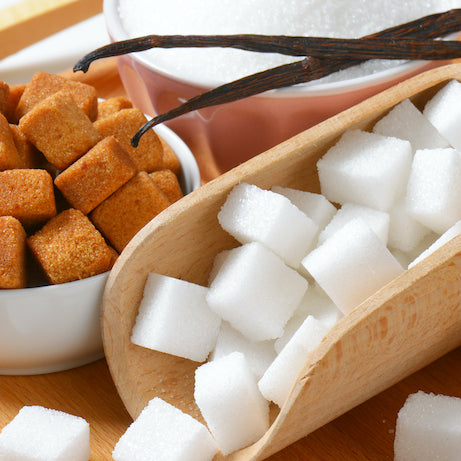
In de afgelopen jaren heeft suiker een behoorlijk slechte reputatie gekregen – vooral onder atleten en bodybuilders. Maar de waarheid is dat deze vaak verguisde voedingsstof nuttig kan zijn wanneer hij op de juiste manier wordt gebruikt. Op het juiste moment ingenomen, kan een beetje suiker je spiergroei stimuleren.
Beïnvloedt suiker de spiergroei?
Suiker heeft het de afgelopen decennia niet makkelijk gehad. Over het algemeen wordt deze voedingsstof gezien als een guilty pleasure, die atleten en bodybuilders fanatiek vermijden. De realiteit is echter dat dit een grote vereenvoudiging is.
In feite kunnen de juiste suikers, gegeten op de juiste momenten, je helpen om meer magere massa op te bouwen. Natuurlijk kan het ook anders uitpakken; je kunt in plaats daarvan vet aankomen. Dus, hoe vind je de balans? Hoe beïnvloedt suiker de spiergroei? En specifieker, hoe kun je suiker gebruiken om je doelen te bereiken?
Enige verduidelijking
Voordat we kunnen begrijpen hoe suiker je lichaam beïnvloedt en hoe je het strategisch kunt gebruiken, is het belangrijk dat we precies duidelijk hebben waar we het over hebben. Te vaak wordt de term “suiker” gebruikt om verschillende dingen aan te duiden.
Over het algemeen bedoelen mensen met dat woord eigenlijk sucrose – gewone tafelsuiker, meestal gewonnen uit suikerriet of bieten. Hoewel alle planten kleine hoeveelheden sucrose bevatten als bijproduct van fotosynthese, is de concentratie meestal te laag om economisch te kunnen worden geïsoleerd.

Maar er zijn ook andere soorten suiker, die elk uit verschillende bronnen komen en iets andere functies in je lichaam hebben. Hier is een (zeer) korte opsomming van de verschillende soorten suiker, inclusief sucrose, en hun veelvoorkomende bronnen:
- Fructose: Fruit en honing
- Galactose: Melk en zuivel
- Glucose: Honing, fruit en groenten
- Lactose: Melk en zuivel; gemaakt van glucose en galactose
- Maltose: Gerst
- Sucrose: Alle planten; bestaat uit glucose en fructose
- Xylose: Hout of stro
Deze suikers vallen onder de bredere categorie koolhydraten en worden, in verschillende mate en met verschillende snelheden, omgezet in glucose als brandstof zodra ze je lichaam binnenkomen. Hoe precies elke suiker in je lichaam werkt is een veel uitgebreider onderwerp dan we hier kunnen behandelen. Laten we het erop houden dat glucose en sucrose snel worden opgenomen, terwijl de andere suikers meestal wat langzamer zijn.
Je lichaam en suiker
Maar waarom is dit allemaal belangrijk? Omdat je om te begrijpen hoe suiker spiergroei beïnvloedt, precies moet weten wat suiker is. En zoals we hebben gezien, kan “suiker” van alles betekenen.
Ongeacht de exacte vorm en bron veroorzaakt elke suiker die je lichaam binnenkomt een stijging van het hormoon insuline. Deze chemische boodschapper vertelt je cellen dat ze de voedingsstoffen die op dat moment in je bloed aanwezig zijn moeten opnemen – of het nu koolhydraten, eiwitten of vetten zijn. Hoe sterk de insulinepiek is, hangt af van hoe snel de suiker wordt afgebroken. Omdat insuline voedingsstoffen naar de juiste plekken kan sturen, kan het allerlei veranderingen in je lichaamssamenstelling stimuleren.
De toepassing
Goed, al die achtergrondinformatie is bedoeld om dit uit te leggen: een insulinepiek na je training helpt je spieren te laten groeien. Dit gebeurt doordat zowel koolhydraten als eiwitten voor herstel naar de beschadigde spiervezels worden gebracht. En die insulinepiek wordt veroorzaakt door het eten van suiker – vooral snelle suikers.
Wees je er echter van bewust dat eiwitten in je systeem moeten zijn om je spieren te bereiken. Je snack na de training moet dus zowel eenvoudige suikers als eiwitten bevatten. Op andere momenten kan dezezelfde voedingsaanpak er echter voor zorgen dat je lichaamsvet aankomt. Onthoud dat insuline een opslaghormoon is, dus alles wat niet direct nodig is, wordt opgeslagen – vaak als lichaamsvet.