




Key Takeaways
- Both are complete proteins: Egg white and whey protein contain all essential amino acids and can support muscle growth, recovery, and weight management.
- Whey digests faster: Its rapid absorption and high leucine content make whey particularly effective for post-workout muscle protein synthesis.
- Egg white is dairy-free: It's the better choice for lactose-intolerant individuals, paleo dieters, or anyone avoiding dairy, and it contains zero fat per serving.
- Whey has more research behind it: Studies show whey outperforms egg white protein for satiety and body composition, though egg white protein is understudied rather than proven inferior.
- The right choice depends on you: Dietary restrictions, fitness goals, and digestive tolerance should drive your decision, not marketing claims.

Egg White Protein Powder | Naked Egg - 3LB
- From non-GMO eggs exclusively from US farms
- Processed from fresh eggs into powder in under one day to retain a complete amino acid profile
- 25g of protein and 5.8g of BCAA's per serving
- Zero sugar
Egg White Protein Powder vs. Whey: What's the Difference?

Before protein powder became a crowded, over-marketed category, there were really only two options serious athletes considered: eggs and milk. Whey protein eventually dominated the market, and for good reason. But egg white protein powder never disappeared, and it still earns its place in the right circumstances.
When you're comparing egg white protein powder vs. whey, the differences go beyond a simple label comparison. Both are high-quality, complete proteins that deliver all nine essential amino acids. But they differ meaningfully in digestion rate, fat content, allergen profile, and the body of research supporting their use.
This article breaks down exactly how these two proteins compare so you can make a confident, informed choice based on your goals and dietary needs, not just which one has better branding.
Where Does Each Protein Come From?
Whey is a byproduct of cheese manufacturing. When milk is curdled and strained, the liquid that separates out is whey. That liquid is then filtered, processed, and dried into the powder you scoop into your shaker. Because it originates from cow's milk, whey naturally contains lactose, which is the primary reason some people experience digestive discomfort from it.
Whey comes in two main forms. Whey concentrate retains more of the natural fats and lactose from milk, giving it a richer flavor but a slightly lower protein percentage per serving. Whey isolate undergoes additional filtration to remove most of the fat and lactose, resulting in a leaner product with a higher protein concentration per gram.
Egg white protein powder is made from pasteurized, dehydrated egg whites. The yolks are removed entirely, which strips out the fat and cholesterol but also most of the fat-soluble vitamins. What remains is a protein that is essentially pure albumin, the primary protein found in egg whites, with minimal fat and carbohydrates.
Naked Nutrition's whey is sourced from grass-fed cows in California and Wisconsin with no rBGH hormones, and our egg white protein is made from non-GMO eggs, both produced with no artificial additives or fillers. Sourcing matters, especially when the ingredient list is intentionally short.
Nutritional Profile: How Do They Stack Up?

On the surface, egg white protein and whey look nearly identical in a macros-only comparison. Dig a little deeper and meaningful differences emerge, particularly around fat content, leucine concentration, and scoring on protein quality metrics.
| Metric | Naked Whey (per serving) | Naked Egg White Protein (per serving) |
| Calories | 120 | 110 |
| Protein | 25g | 25g |
| Fat | 2g | 0g |
| Carbohydrates | 3g | 2g |
| Leucine (approx.) | ~2.5g | ~2.0g |
| Biological Value (BV) | ~104 | ~100 |
| PDCAAS Score | 1.0 | 1.0 |
| Allergens | Dairy / Lactose | Egg |
| Fat-Free | No | Yes |
Both proteins score a perfect 1.0 on the Protein Digestibility Corrected Amino Acid Score (PDCAAS), meaning they supply all essential amino acids in sufficient quantities to meet human needs. Whey has a slight edge in biological value and leucine content, the amino acid most directly responsible for triggering muscle protein synthesis. Egg white's main structural advantage is its zero-fat profile, which is relevant for individuals managing their total daily fat intake precisely.
Digestion, Absorption, and Amino Acid Delivery

How fast a protein digests is not just a trivia point. It determines when amino acids arrive in your bloodstream and how effectively they can support muscle repair after training.
Whey is one of the fastest-digesting proteins available. Amino acids from whey appear in the bloodstream within 60 to 90 minutes of consumption, making it well-suited for post-workout use when muscles are primed to absorb nutrients. Whey's high leucine content reinforces this timing advantage by activating the mTOR signaling pathway, the molecular switch that initiates muscle protein synthesis.
Egg white protein digests at a moderate rate, slower than whey but meaningfully faster than casein. This middle-ground absorption profile means amino acids are released over a longer window, which may support more sustained muscle protein availability rather than a single sharp spike. For people who train fasted or eat infrequently, that sustained release can be useful.
- Whey digests rapidly, delivering a concentrated amino acid spike that strongly activates muscle protein synthesis post-workout
- Egg white protein digests moderately, providing a more sustained release of amino acids over several hours
- Casein digests slowly, making it the standard recommendation for overnight muscle support
- Leucine threshold matters: you need roughly 2 to 3 grams of leucine per serving to robustly trigger mTOR signaling, whey consistently hits this range
Neither absorption speed is categorically better. The right digestion rate depends on your training schedule, meal timing, and overall diet structure.
Performance, Muscle Growth, and Weight Management

Whey protein has one of the deepest bodies of research of any supplement category. Studies have consistently linked whey consumption to improvements in lean mass, strength, and recovery when combined with resistance training. One frequently cited review found that whey protein shown potential for improving both body composition and exercise performance, driven largely by its amino acid profile and rapid bioavailability.
Whey also has a documented satiety advantage. A direct comparison study found that whey protein was significantly more effective than egg white protein at producing feelings of fullness and suppressing subsequent food intake. For anyone using protein as a tool for calorie management, this is a meaningful difference.
📊 What Research Says
In a head-to-head comparison published in Nutrition Journal, whey protein produced significantly greater satiety than egg white protein over a four-hour period, with participants consuming fewer calories at a subsequent meal. The difference was attributed to whey's unique peptide profile and its effect on appetite-regulating hormones.
Egg white protein, by contrast, is genuinely understudied. The existing research on egg white protein's effects on performance and body composition has not proved itself effective in the same consistent results seen with whey. But understudied is not the same as ineffective. Egg white delivers a complete amino acid profile at a high biological value, and the principles of muscle protein synthesis apply regardless of the protein source when leucine thresholds are met. The honest answer is that more research is needed before drawing strong conclusions either way.
Who Should Choose Egg White Protein vs. Whey?

There's no single right answer here. The better protein is the one that fits your body, your diet, and your goals. Here's a practical breakdown.
Choose whey protein if:
- You want the most-studied option for muscle protein synthesis and recovery
- You train hard and want fast post-workout amino acid delivery
- Satiety and appetite control are part of your weight management strategy
- You have no dairy sensitivity or lactose intolerance
- You prefer a protein with a well-established research base
Choose egg white protein if:
- You're lactose intolerant or avoiding dairy for any reason
- You follow a paleo or dairy-free diet
- You want a completely fat-free protein source
- You're managing fat intake closely and need clean protein macros
- You want a non-dairy animal protein that still delivers a complete amino acid profile
On taste and mixability: whey protein generally mixes more smoothly and has a milder, slightly creamy flavor. Egg white protein has improved significantly from the chalky, sulfur-tinged versions of the past, but the texture can differ depending on the brand and formulation. Neither allergen profile is safer in absolute terms: egg allergies and dairy sensitivities both require equal attention.
Naked Nutrition's Egg White and Whey Protein Options
If you've worked out which protein type fits your needs, the next step is choosing a version that doesn't undermine your goals with unnecessary additives.
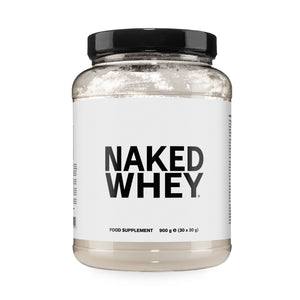
Naked Whey is sourced from grass-fed cows and contains only one ingredient: whey protein concentrate. No artificial sweeteners, no fillers, no proprietary blends. Each serving delivers 25 grams of protein with 5.9 grams of BCAAs and 2.5 grams of leucine. It's third-party tested for heavy metals and banned substances.
Naked Egg White Protein Powder is made from non-GMO dried egg whites, again with a minimal ingredient approach. Each serving provides 25 grams of protein, zero grams of fat, and a complete essential amino acid profile. It works for anyone avoiding dairy who still wants an animal-based protein with a high biological value.
- Single-ingredient or minimal-ingredient formulas with no artificial sweeteners or colors
- Grass-fed whey sourced from small US dairy farms with no rBGH hormones
- Non-GMO egg whites from hens raised without hormones or antibiotics
- Third-party tested for heavy metals and banned substances
- No proprietary blends: what's on the label is everything in the product
Most protein powders hide behind long ingredient lists and bold claims. Naked Nutrition's approach is the opposite: fewer ingredients, transparent sourcing, and no shortcuts. Whether you're reaching for egg white or whey, you're getting the protein without the noise. Start with the option that matches the profile you identified in the section above, and adjust based on how your body responds.
Frequently Asked Questions
What's the main difference between egg white protein powder and whey protein?
The biggest difference comes down to source and digestion speed. Whey is a dairy-derived byproduct that absorbs quickly, making it popular for post-workout use, while egg white protein is dairy-free and digests at a moderate rate. Both are complete proteins with high leucine content, so muscle-building potential is comparable between the two.
Which protein powder has a better amino acid profile?
Both are complete proteins, meaning they contain all nine essential amino acids. Whey has a slight edge in leucine concentration, the amino acid most directly tied to triggering muscle protein synthesis, but egg white protein's profile is still considered one of the best among whole-food sources. For most people training consistently, either option will fully support muscle repair and growth.
Is egg white protein powder better for people who are lactose intolerant?
Yes. Egg white protein is completely dairy-free, so it contains zero lactose. If whey concentrate causes bloating, cramping, or digestive discomfort, egg white protein is a straightforward alternative that delivers comparable protein quality without any dairy-related side effects.
How does the protein content per serving compare between the two?
Naked Nutrition's Egg White Protein delivers 25 grams of protein per serving, while Naked Whey delivers 25 grams per serving as well, so the per-scoop protein yield is essentially equal. Where they differ is in fat content: egg white protein is naturally fat-free, while whey concentrate retains a small amount of fat and lactose from the original milk source.
Which one is better for building muscle?
Research supports both. A 2015 study by Tang et al. in the Journal of Applied Physiology confirmed that whey produces a slightly faster acute spike in muscle protein synthesis due to its leucine content and rapid absorption rate. Egg white protein produces a more sustained amino acid release, which can be advantageous between meals or before sleep. Over time, total daily protein intake matters more than which specific source you choose.
Are there any safety concerns with either protein powder?
Both are safe for healthy adults when used at recommended doses. People with a milk allergy, not just lactose intolerance, should avoid whey entirely, as it contains casein and whey proteins that trigger an immune response. Anyone with an egg allergy should obviously avoid egg white protein. Outside of those two allergy cases, neither carries meaningful health risks for the general population.
Does Naked Nutrition test its protein powders for purity and heavy metals?
Yes. Naked Nutrition's products are third-party tested and Informed Sport certified, meaning every batch is screened for banned substances, heavy metals, and contaminants. The brand uses minimal ingredient lists, which reduces the risk of hidden additives that inflate serving weight without adding nutritional value.
Which protein powder is better value for the money?
Whey protein is generally more affordable per gram of protein because dairy manufacturing infrastructure is well-established and scalable. Egg white protein tends to cost slightly more due to the additional processing required to separate, pasteurize, and dry egg whites at scale. If budget is a primary concern, whey delivers excellent protein quality at a lower price point. If dairy is off the table, egg white protein justifies its cost as one of the cleanest non-dairy options available.
Top Whey Protein Picks
Chosen by 1 million+ customers. Free shipping on orders over $100.

Grass Fed Whey Protein Powder | Naked Whey - 5LB
$139.99
- ✓ Build and Maintain Lean Muscle Mass
- ✓ Boost Immune System
- ✓ Lose Fat
- ✓ Improve Heart Health

Grass Fed Whey Isolate Protein Powder | Naked Whey Isolate - 2LB
$74.99
- ✓ Whey Protein Base
- ✓ Protein Isolate
- ✓ Grass-Fed Source

Pea Protein Powder | Naked Pea - 5LB
$57.99
- ✓ Sustainable Farming Practices
- ✓ Superior Amino Acid Profile
- ✓ Promote Muscle Gain
- ✓ Lose Weight