



Det finns en häpnadsväckande mängd proteinpulver på marknaden, och alla påstår att de gör samma sak: bygger muskler.
Naturligtvis finns det många andra anledningar att ta ett proteinpulver – förbättrad näring, immunstöd och förbättrad matsmältning, för att nämna några – men oftast är det främst effekterna av proteintillskott på kroppssammansättningen som folk bryr sig om.
Med alla dessa förvirrande alternativ finns det egentligen bara en fråga som tränande och idrottare står kvar med: vilket är det bästa proteinpulvret för muskelökning?
För att verkligen svara på det behöver vi ta hänsyn till några faktorer.
Proteinkälla
Protein är ett livsviktigt näringsämne som kan komma från en stor variation av både växt- och djurkällor. Men inte alla är lika bra.
När man bedömer proteinkvalitet är den viktigaste aspekten aminosyraprofilen i proteinet. Aminosyror bygger upp proteiner – och eftersom proteiner utgör nästan varje del av din kropp är aminosyror väldigt viktiga.
Men det finns två klasser av aminosyror: icke-essentiella (de som din kropp kan tillverka själv från andra ämnen) och essentiella (de som måste fås via kosten).
“Kvaliteten” på ett protein syftar på hur många av de essentiella aminosyrorna proteinet innehåller, och ett “fullständigt” protein innehåller dem alla.
Men ett riktigt högkvalitativt protein erbjuder inte bara alla nödvändiga aminosyror, det har dem i tillräckliga mängder. Vassle och kasein är båda högkvalitativa fullständiga proteiner medan andra proteinkällor behöver blandas för att uppnå samma effekt.

Det bör också noteras att både vassle och kasein är mycket användbara proteinkällor (båda härstammar från mjölk) som har något olika användningsområden.
Den främsta skillnaden är att vassle verkar snabbt medan kasein frisätts långsamt i systemet. Vassle och kasein har också något olika aminosyraprofiler.
Proteinkoncentration
Beroende på hur proteinet utvinns och bearbetas kan det innehålla varierande procentandelar av faktiskt protein – medan resten av tillskottet består av kolhydrater, fett, smaktillsatser eller andra tillsatser.
Vissa “protein”pulver innehåller så lite som 35 procent faktiskt protein. Om du letar efter det bästa proteinpulvret för muskelökning vill du alltså vara säker på att det mestadels består av protein. Ett proteinpulver av god kvalitet innehåller 80 procent eller mer protein.
Om du vill göra lite matte kan du själv räkna ut den faktiska proteinprocenten (eftersom inte alla tillverkare annonserar detta). Dela mängden protein per portion (i gram) med portionsstorleken (i gram). Multiplicera sedan resultatet med 100. Detta är procentandelen protein i ditt proteinpulver.
Andra ingredienser
Men vad är dessa “andra tillsatser” som tar upp plats i ditt proteinpulver?
Som nämnts finns det naturligt förekommande kolhydrater och fetter som bara kan tas bort genom omfattande bearbetning, samt andra mikronäringsämnen beroende på ursprungskällan.
Det kan dock finnas ett stort antal ingredienser i ditt proteinpulver. Du kan också upptäcka att en produkt märkt som “vassle” innehåller en blandning av andra proteiner.
Det bästa proteinpulvret för muskelökning listar vassleprotein som den första – och helst enda – ingrediensen.

Slutsatsen
Så, med dessa faktorer i åtanke, behöver det bästa proteinpulvret för muskelökning vara ett fullständigt, högkvalitativt protein som innehåller höga koncentrationer av detta värdefulla protein.
Det bör finnas få tillsatser, om några alls, och du bör veta vad de har för syfte.
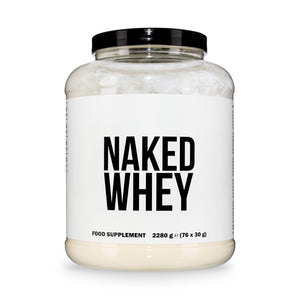
Naked Nutrition-produkter är stolta över att endast innehålla lättförståeliga ingredienser, och alla våra proteinpulver innehåller en ingrediens.