



On this page
What Are the Benefits of Creatine? A Complete Guide
Discover how creatine boosts strength, accelerates muscle growth, sharpens mental focus, and why it's one of the most researched supplements ever.

Key Takeaways
- ATP and energy: Creatine replenishes phosphocreatine stores, which the body uses to rapidly regenerate ATP — the primary fuel for every muscular contraction.
- Strength and muscle mass: Creatine is the most thoroughly researched supplement for increasing lean muscle and resistance training performance, with consistent results across demographics.
- Recovery and endurance: Creatine reduces post-exercise muscle damage, speeds glycogen replenishment, and is especially effective for repeated sprint and high-intensity interval efforts.
- Brain health: The brain depends on ATP too. Creatine supplementation shows promise for short-term memory, reasoning, and buffering cognitive decline from sleep deprivation.
- Broader health benefits: Evidence supports creatine's role in blood sugar regulation, bone density, and combating age-related muscle loss.
- Safety: Creatine monohydrate has decades of safety data behind it. At 3–5g per day, it's well-tolerated by healthy adults.
- Form matters: Creatine monohydrate remains the gold standard — most studied, most cost-effective, and backed by the strongest evidence base.

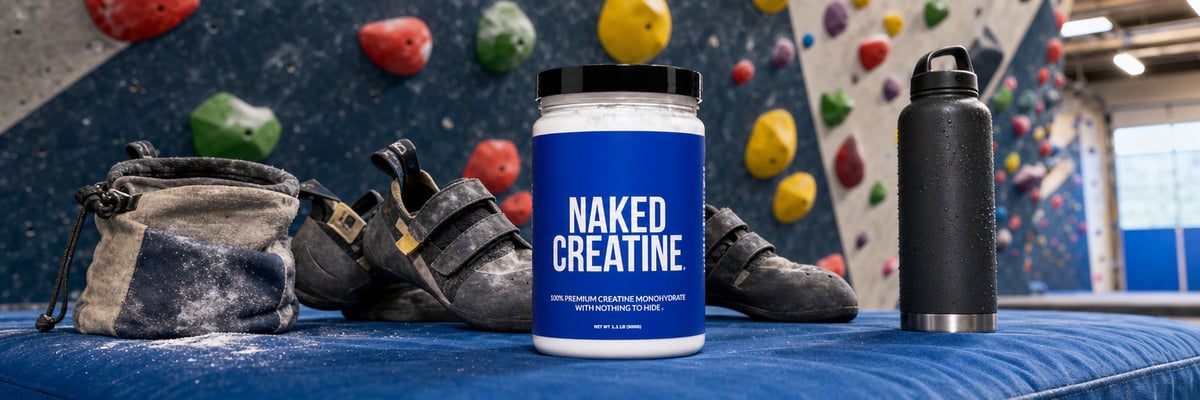
Creatine Monohydrate Powder | Naked Creatine - 2.2LB
- 100% premium creatine monohydrate
- No artificial sweeteners, flavors, or colors
- Vegan, gluten free and GMO free
- Zero sugar
What Are the Benefits of Creatine? A Science-Backed Overview

Creatine is a compound your body synthesizes from three amino acids: glycine, arginine, and methionine. About 95 percent of it is stored in skeletal muscle, where it sits ready to do one specific job: rapidly regenerate ATP (adenosine triphosphate), the molecule that powers every muscular contraction, every cognitive process, and every heartbeat. When your ATP runs out during intense exercise, creatine steps in to rebuild it faster than any other system in the body can.
Knowing what creatine does at a cellular level explains why the benefits of creatine extend well beyond the gym. Because the brain also runs on ATP, the same mechanism that fuels a deadlift also supports memory, focus, and cognitive resilience under stress. And because bone and metabolic tissue depend on cellular energy too, creatine's influence on health is broader than its reputation as a "gym supplement" suggests.
You can get creatine from red meat and seafood, but the amounts are small. You'd need to eat roughly 2 to 3 pounds of raw meat every day to match what a single teaspoon of creatine monohydrate powder delivers. For most people, supplementation is the only practical way to saturate muscle creatine stores and see measurable results.
Creatine is one of the most studied compounds in sports nutrition, with hundreds of peer-reviewed trials supporting both its efficacy and its safety. What follows is a complete, evidence-based breakdown of what creatine actually does, and who stands to benefit most from it.
Top Benefits of Creatine Supplementation at a Glance

Before getting into the mechanisms, here's the full picture of what consistent creatine supplementation supports:
- Increased muscle strength and power output during resistance training
- Greater lean muscle mass gains over time
- Improved performance in repeated sprint and high-intensity efforts
- Faster post-workout recovery and reduced muscle cell damage
- Sharper short-term memory and reasoning, particularly under cognitive stress
- Reduced cognitive impairment from sleep deprivation
- Better blood sugar regulation when combined with exercise
- Preservation of muscle mass and bone density with aging
The sections below explain the research behind each of these benefits, including who benefits most and what the evidence actually shows.
📊 What Research Says
A comprehensive review published in the Journal of the International Society of Sports Nutrition concluded that creatine monohydrate is the most effective ergogenic nutritional supplement currently available for increasing high-intensity exercise capacity and lean body mass during training — and that it is safe for use by healthy individuals across all age groups. [12]
Creatine Increases Muscle Strength, Power, and Mass

Here's the mechanism in plain terms: during high-intensity efforts lasting fewer than 10 seconds, your muscles rely almost entirely on phosphocreatine to regenerate ATP. The faster you can regenerate ATP, the longer you can sustain maximum effort before fatigue sets in. Creatine supplementation raises phosphocreatine stores in muscle by up to 40 percent, giving you a larger energy reserve to draw from during every heavy set or explosive rep. [1]
The downstream effect on training is significant. When you can sustain higher intensity for more reps across more sets, you accumulate greater training volume. Greater training volume is one of the primary drivers of both strength adaptation and muscle hypertrophy. [2] Creatine doesn't build muscle on its own. It allows you to do the work that builds muscle.
The research on this is consistent across populations. Studies show that creatine combined with resistance training produces meaningful gains in both strength and lean muscle mass. [3] These results hold for trained athletes, older adults, and recreational gym-goers alike. Creatine is particularly effective during short-burst, high-intensity exercise: sprints, heavy lifts, plyometrics, and any activity that demands rapid, repeated energy output.
- ATP is consumed within seconds during intense exercise — your phosphocreatine stores are what allow rapid ATP regeneration.
- Supplementing with creatine raises muscle phosphocreatine levels by up to 40 percent, extending your capacity for explosive effort.
- More available ATP per set means you can lift heavier, do more reps, and accumulate more training volume over time.
- Greater training volume drives both strength gains and muscle hypertrophy — creatine makes the training stimulus possible.
Creatine Supports Exercise Performance, Endurance, and Recovery

Creatine's performance benefits are most pronounced in repeated sprint efforts and high-intensity intervals, not necessarily in long-distance steady-state cardio. If you run a 10K at a steady pace, creatine won't dramatically change your experience. But if you're doing 400-meter repeats, circuit training, or playing a sport that demands repeated explosive efforts — soccer, basketball, hockey — creatine gives you a meaningful edge. Studies show improved endurance in sprint-based running tasks with creatine supplementation. [4] [5] Athletes who rely on short bursts of intense exertion benefit especially from increased phosphocreatine availability. [6]
Recovery is where creatine's benefits compound over time. Research shows that creatine supplementation combined with resistance training reduces exercise-induced muscle cell damage and attenuates post-workout inflammation. [2] It also accelerates glycogen replenishment after training, which means your muscles reload their fuel stores faster between sessions.
The practical implication is straightforward: if your muscles recover faster, you can train more frequently without accumulating excessive fatigue. More training frequency — with adequate recovery — means more progress over a full training cycle. Creatine doesn't just help you perform in individual sessions. It supports the consistency that drives long-term adaptation.
Brain Health, Cognitive Function, and Sleep

The brain is one of the most metabolically demanding organs in the body, accounting for roughly 20 percent of total energy expenditure despite comprising only 2 percent of body weight. It runs on ATP, which means higher creatine availability in brain tissue translates directly to better energy supply for neural function. This is the mechanism behind creatine's cognitive benefits — and it's the same one driving its muscular benefits.
Research in healthy adults shows that creatine supplementation may improve short-term memory and boost intelligence and reasoning skills. [9] These effects are more pronounced in populations with lower baseline creatine levels, including vegetarians and vegans, who obtain almost no dietary creatine. For this group, supplementation can produce noticeably sharper cognitive performance. There's also growing interest in creatine's potential neuroprotective properties, though large-scale clinical trials are still needed before strong claims can be made.
One emerging area worth noting is creatine's effect on sleep-deprived cognitive performance. After a night of poor sleep, brain creatine levels drop, which contributes to impaired focus and mental sharpness. Studies show that creatine supplementation can reduce some of the cognitive deficits caused by sleep deprivation. [10] [11] This doesn't replace quality sleep — nothing does — but it's a meaningful buffer on the days when sleep falls short. For more on this topic, see our article on how creatine affects sleep.
Additional Health Benefits: Blood Sugar, Bone Health, and Healthy Aging
Creatine's influence extends into metabolic and structural health in ways that are often overlooked in discussions about athletic performance. On the blood sugar front, creatine supplementation combined with regular exercise has been shown to improve glycemic control. [7] The likely mechanism involves upregulation of GLUT-4 transporters — the proteins responsible for shuttling glucose out of the bloodstream and into muscle cells. In one study, diabetic patients who added creatine to their routine saw better post-meal blood sugar management compared to the exercise-only group. [8]
For older adults, creatine addresses one of the most significant age-related health concerns: sarcopenia, the progressive loss of muscle mass and strength that accelerates after age 50. Muscle loss isn't just an aesthetic issue. It's closely tied to fall risk, metabolic function, and independent living. Creatine combined with resistance training has shown consistent results in improving functional strength and lean mass retention in older populations. For women specifically, the perimenopausal transition brings a sharp decline in both muscle mass and bone density — two areas where creatine's benefits are directly relevant.
Bone health is another area where creatine shows promise. By enabling more productive resistance training sessions, creatine indirectly supports the mechanical loading that stimulates bone remodeling and density maintenance. These secondary benefits won't replace targeted bone-health strategies, but they reinforce the case that creatine is more than a performance supplement — it's a meaningful tool for long-term physical health.
Is Creatine Safe? What the Research Says

The short answer is yes, for healthy adults at recommended doses, creatine monohydrate has an extensive safety record. The International Society of Sports Nutrition (ISSN) position stand is unambiguous: creatine monohydrate is the most effective and safest ergogenic nutritional supplement available. [12] Hundreds of studies spanning decades of use have not identified meaningful adverse effects in healthy individuals taking 3 to 5 grams daily.
The most common concern is kidney health. This one comes from a misunderstanding of lab values. Creatinine — a metabolic byproduct of creatine, not creatine itself — may appear slightly elevated on standard blood panels when you're supplementing. This elevation does not indicate kidney damage. It's a predictable biochemical response, not a red flag. People with pre-existing kidney disease should still consult their doctor before supplementing, but for healthy adults there's no evidence that creatine harms kidney or liver function.
Other commonly raised concerns:
- Hair loss: One study showed a potential increase in DHT (a hormone linked to hair loss) with creatine loading, but the evidence is thin and has not been replicated consistently.
- Bloating: Some users report initial water retention in muscle tissue, which is part of how creatine works. It's not the same as fat gain or subcutaneous bloating.
- Dehydration: Not supported by evidence at standard doses. Staying well-hydrated remains good practice regardless.
The standard maintenance dose is 3 to 5 grams per day. An optional loading phase of 20 grams per day (divided into four doses) for 5 to 7 days can saturate muscle stores faster, but it's not required. Long-term use at maintenance dose produces the same result — just over a longer timeline.
How to Choose and Use Creatine: Dosage, Timing, and Form

Creatine monohydrate is the form you want. It's the most studied, the most cost-effective, and the form used in nearly every major clinical trial. Other forms — creatine HCl, buffered creatine, ethyl ester — have been marketed as superior, but none have demonstrated better real-world results than monohydrate in head-to-head comparisons. Some are marketed as causing less bloating or better absorption, but the evidence supporting those claims is weak. Monohydrate wins on research volume, price, and proven track record.
On dosage and timing:
- Maintenance dose: 3 to 5 grams per day, taken consistently.
- Loading protocol (optional): 20 grams per day in 4 divided doses for 5 to 7 days, followed by 3 to 5 grams daily. Saturates muscle stores faster, but is not required.
- Timing: Timing is flexible. Post-workout with carbohydrates may slightly optimize uptake due to insulin-mediated creatine transport, but the difference is modest. Consistency matters far more than timing.
- Hydration: Drink adequate water throughout the day. Creatine draws water into muscle cells, so staying hydrated supports both performance and comfort.
Creatine powder mixes easily into water, juice, a smoothie, or a protein shake. There's no need for a complex protocol. One scoop, one glass, done.
Naked Creatine is 100% creatine monohydrate with zero additives, artificial flavors, or fillers. One ingredient. Third-party tested for purity. If you're ready to add creatine to your routine, Naked Creatine monohydrate powder is the cleanest, most straightforward option available.
Creatine works best when taken consistently over weeks and months, not just around individual workouts. Muscle creatine saturation is what drives the benefits — and saturation takes time to build and maintain. Start with 5 grams daily, stay consistent, and let the compound effect do its job.
Frequently Asked Questions
What are the main benefits of taking creatine?
Creatine is best known for increasing strength, power output, and muscle mass by replenishing ATP — your muscles' primary energy source — during high-intensity exercise. Beyond performance, research also supports its role in improving recovery, reducing muscle damage, and even supporting cognitive function and brain health.
How long does it take to see results from creatine?
Most people begin noticing improvements in strength and workout performance within one to two weeks of consistent use, especially if they follow a loading protocol. Without a loading phase, it typically takes three to four weeks of daily supplementation for creatine stores to fully saturate and deliver noticeable results.
Is creatine safe to take every day?
Yes, creatine monohydrate is one of the most extensively studied supplements in sports nutrition and has a strong long-term safety profile when used at recommended doses. Research spanning multiple years shows no adverse effects on kidney or liver function in healthy individuals who follow standard dosing guidelines.
How much creatine should I take per day?
The standard maintenance dose is 3–5 grams of creatine monohydrate per day, which is sufficient to keep muscle creatine stores fully saturated over time. Some people choose to begin with a loading phase of 20 grams per day (split into four doses) for five to seven days to accelerate saturation, though this step is optional.
Does creatine cause water retention or bloating?
Creatine does draw water into your muscle cells, which can lead to a small increase in body weight — typically one to two pounds — during the initial weeks of supplementation. This intramuscular water retention is actually beneficial for muscle function and performance, and it is quite different from the subcutaneous bloating associated with high sodium intake or poor digestion.
Can women benefit from taking creatine?
Absolutely — women experience the same core benefits as men, including improved strength, enhanced exercise performance, and better recovery. Emerging research also highlights potential benefits specific to women, such as supporting bone density, managing mood fluctuations during hormonal changes, and preserving muscle mass during perimenopause and menopause.
What is the difference between creatine monohydrate and other forms of creatine?
Creatine monohydrate is the original and most researched form, with decades of clinical evidence supporting its safety and effectiveness, making it the gold standard for supplementation. Other forms like creatine HCl or buffered creatine are often marketed as superior due to better solubility or reduced side effects, but no peer-reviewed research currently shows them to be meaningfully more effective than monohydrate.
Should I look for any certifications when buying a creatine supplement?
Yes — look for products that are third-party tested and carry certifications such as Informed Sport, NSF Certified for Sport, or similar seals that verify the product is free from banned substances and contains what the label claims. These certifications are especially important for competitive athletes who are subject to drug testing and need confidence in their supplement's purity and label accuracy.
Top Creatine Picks
Chosen by 1 million+ customers. Free shipping on orders over $100.
Creatine Monohydrate Powder | Naked Creatine - 2.2LB
$35.99
- ✓ 100% premium creatine monohydrate
- ✓ Highest grade available: fast dissolving and quickly absorbed
- ✓ 5g of creatine per serving
- ✓ No artificial sweeteners, flavors, or colors

Strawberry Creatine Monohydrate Powder | Naked Creatine - 1.1LB
$29.99
- ✓ 100% premium creatine monohydrate
- ✓ Highest grade available: fast dissolving and quickly absorbed
- ✓ 5g of creatine per serving
- ✓ No Artificial Sweeteners, Flavors, or Colors

Orange Creatine Monohydrate Powder | Naked Creatine - 1.1LB
$29.99
- ✓ 100% premium creatine monohydrate
- ✓ Highest grade available: fast dissolving and quickly absorbed
- ✓ 5g of creatine per serving
- ✓ No artificial sweeteners, flavors, or colors