



On this page
What Type of Creatine Should I Use? A Simple Guide
Cut through the confusion and find the best creatine for your goals with this straightforward, science-backed breakdown.

Key Takeaways
- Creatine Monohydrate Wins: It's the most researched form of creatine and the one recommended by sports nutrition bodies like the ISSN — newer forms haven't outperformed it.
- Liquid Creatine Doesn't Work: A 2004 study in the Journal of Sports Sciences found liquid creatine failed to raise blood creatine levels; powder did.
- Dose Matters More Than Form: Take 3–5g daily. Loading (20g/day for 5–7 days) is optional but speeds up muscle saturation.
- It's Safe and Affordable: Creatine monohydrate powder costs around 10–15 cents per serving and has a long-term safety record supported by decades of research.
- Most People Benefit: Strength athletes, vegans, and older adults all have reasons to supplement — baseline creatine stores vary significantly by diet and age.

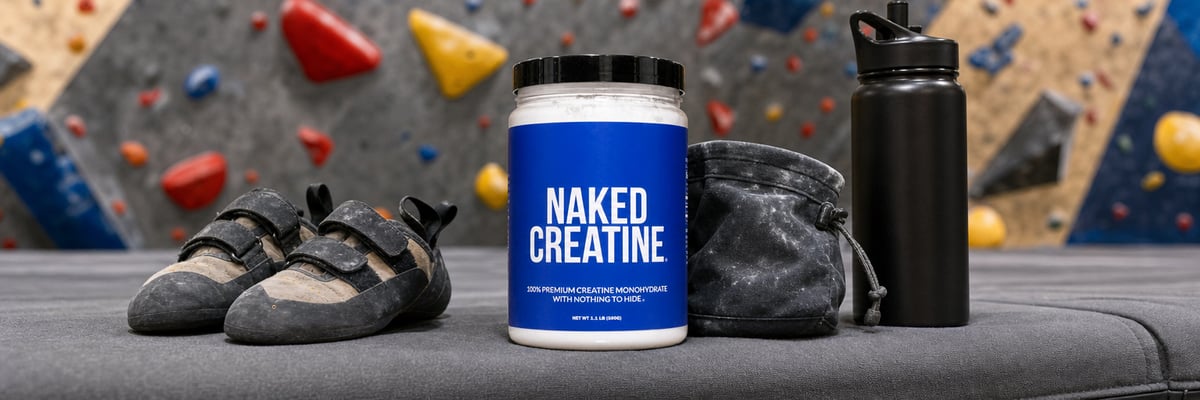
Creatine Monohydrate Powder | Naked Creatine - 2.2LB
- 100% premium creatine monohydrate
- No artificial sweeteners, flavors, or colors
- Vegan, gluten free and GMO free
- Zero sugar
What Type of Creatine Should You Use? The Short Answer

You're standing in a supplement aisle, or scrolling through an online store, and there are a dozen different creatine products staring back at you. Creatine HCl. Buffered creatine. Micronized. Liquid. Ethyl ester. They all promise something slightly better than the last. So what type of creatine should you use?
Creatine monohydrate. That's the answer. It's been studied in hundreds of clinical trials, recommended by the International Society of Sports Nutrition (ISSN), and it's the form used in virtually every study that established creatine's benefits in the first place. Everything else is marketing layered on top of a solid, proven foundation.
Creatine is a naturally occurring compound synthesized from the amino acids arginine, glycine, and methionine. Your body stores it primarily in skeletal muscle as phosphocreatine, where it plays a direct role in regenerating adenosine triphosphate (ATP) — the primary energy currency for short, high-intensity efforts like sprinting, lifting, and jumping. When phosphocreatine stores run low, performance drops. Supplementing with creatine raises those stores, extending your capacity for high-output work.
This article covers every major form of creatine on the market, explains what the research actually shows, and gives you practical guidance on dosing and timing — so you can make a genuinely informed decision, not just a heavily marketed one.
The Different Types of Creatine Explained

The supplement industry has introduced a wide range of creatine variants over the years, most of them positioned as upgrades. Here's what each form actually is — and whether the claims hold up.
- Creatine Monohydrate: The original and most studied form. One creatine molecule bonded to one water molecule. Extensively validated for safety and efficacy. This is the baseline everything else is compared against.
- Creatine HCl: Creatine bonded to hydrochloric acid for improved water solubility. Marketed as requiring a smaller dose with less bloating. The solubility claim is real — the performance advantage over monohydrate is not supported by comparative research.
- Buffered Creatine (Kre-Alkalyn): A higher-pH form claimed to reduce breakdown into creatinine before reaching muscle tissue. Independent studies have not found it to be superior to standard monohydrate in performance outcomes.
- Creatine Ethyl Ester: One of the more aggressively marketed forms of the 2000s. Research has since shown it actually converts to creatinine more rapidly than monohydrate, making it less effective, not more.
- Micronized Creatine: Creatine monohydrate processed into finer particles for better mixability. It's functionally identical to standard monohydrate — just easier to dissolve in liquid, which is useful for people who have texture sensitivity.
- Liquid Creatine: Pre-dissolved creatine sold in ready-to-drink formats. As covered in detail below, research shows it does not effectively raise blood creatine levels. The reason is straightforward: creatine breaks down to creatinine when left in solution for extended periods.
The pattern here is consistent. Newer forms solve real or perceived inconveniences — solubility, dose size, mixability — but none have demonstrated a meaningful performance edge over monohydrate in well-designed, head-to-head trials.
- Creatine is stored in muscle as phosphocreatine, where it donates a phosphate group to regenerate ATP during high-intensity efforts.
- Supplementing increases total phosphocreatine stores by 10–40%, depending on baseline levels and diet.
- Higher phosphocreatine stores mean more ATP available for repeated sprints, sets, and bursts of power before fatigue sets in.
- Vegetarians and vegans typically have lower baseline stores because creatine is found almost exclusively in animal-based foods — meaning they often see larger gains from supplementation.
Why Creatine Monohydrate Is the Gold Standard

Creatine monohydrate isn't the default recommendation because it was the first form available — it's the default because it has earned that position through decades of rigorous research. The ISSN's position stand on creatine, updated and reaffirmed over the years, identifies monohydrate as the most effective ergogenic nutritional supplement currently available for increasing high-intensity exercise capacity and lean body mass.
The evidence base is substantial. Studies consistently show that creatine monohydrate supplementation increases muscle phosphocreatine stores, improves one-rep max strength, increases power output in repeated sprint efforts, and supports lean muscle gain when combined with resistance training. These aren't marginal effects — they're among the most reliable outcomes in sports nutrition research.
Cost is another practical advantage that often gets overlooked. Creatine monohydrate powder costs approximately 10 to 15 cents per serving. Premium "advanced" forms routinely cost three to five times more while delivering no measurable benefit over the base compound. When you're paying more, you're paying for the label, not the performance.
📊 What Research Says
A comprehensive review published in the Journal of the International Society of Sports Nutrition concluded that creatine monohydrate is the most extensively studied and clinically effective form of creatine available, with no other commercially available form demonstrating superior absorption, safety, or performance outcomes in comparative trials. The evidence supporting monohydrate spans more than 500 peer-reviewed studies conducted over three decades.
For most people, Naked Creatine Monohydrate is exactly what they need: one ingredient, no fillers, no proprietary blends, and no additives obscuring what you're actually putting in your body.
Liquid vs. Powdered Creatine: What the Research Shows
The case for liquid creatine typically rests on convenience — it's pre-mixed and ready to consume. Some proponents argue it's also more bioavailable. Neither claim survives contact with the evidence.
A 2004 study published in the Journal of Sports Sciences directly tested this. Researchers found that regular use of liquid creatine [Gill et al., 2004] did not raise blood creatine levels. The product used was one of the more premium-priced options on the market at the time. The same study tested creatine powder and found significant increases in blood creatine levels. The contrast was clear.
The mechanism behind liquid creatine's failure is straightforward: when creatine is dissolved in water and stored over time, it breaks down into creatinine — a waste byproduct that the body simply excretes. Creatinine has no ergogenic effect. You're essentially paying for a product that has already degraded before you drink it.
The cost disparity compounds the problem. Powdered creatine monohydrate runs about 10 to 15 cents per serving. Liquid creatine typically costs 30 cents to over $1 per serving, and many products come in individually bottled single doses, generating significant packaging waste.
Powder also wins on flexibility. A flavorless creatine powder mixes into water, juice, a protein shake, or a pre-workout without changing the taste or texture. The vast majority of studies documenting creatine's performance benefits were conducted using powder — which matters when you're assessing what's actually proven to work.
How to Take Creatine: Dosage, Timing, and Loading

Getting the dose right is more important than agonizing over timing. Creatine works by saturating muscle tissue over time — that saturation is what drives performance improvements. Consistency is the non-negotiable variable.
Standard maintenance dose: 3–5 grams per day. This is the amount supported by the bulk of research for maintaining elevated phosphocreatine stores in muscle tissue. It's also the dose most people should start with and stay at.
Loading phase (optional): Taking 20 grams per day — split into four 5g doses — for 5 to 7 days saturates muscle stores faster. After the loading phase, drop back to the 3–5g maintenance dose. Loading isn't required; it simply means you reach full saturation in one week rather than three to four weeks. Both approaches work. Choose based on how quickly you want results.
Timing: Research comparing pre-workout vs. post-workout creatine intake is mixed, with a slight edge in some studies for post-workout dosing in terms of body composition outcomes. The practical takeaway: the timing difference is small. Taking it consistently at any point in the day is far more important than optimizing the exact window.
How to mix it: add your 3–5g serving to 8–12 ounces of water, juice, or a protein shake. Creatine monohydrate dissolves fully at room temperature with brief stirring. If you use micronized creatine, it disperses even more easily.
One practical note on hydration: creatine draws water into muscle cells as part of its mechanism. Drinking adequate water throughout the day — at minimum 2–3 liters — supports this process and reduces the chance of minor cramping that some people report during the early stages of supplementation.
Who Should Use Creatine and What Are the Benefits?

Creatine isn't just for competitive athletes or bodybuilders. The research on who benefits has expanded considerably, and the population of people who could see meaningful results is broader than most people assume.
Strength athletes and power sport competitors have the most established evidence base. Creatine consistently increases one-rep max performance, improves repeated sprint capacity, and supports lean muscle gain when combined with resistance training.
Vegetarians and vegans typically have lower baseline muscle creatine stores, since dietary creatine comes almost entirely from meat and fish. Research shows this group often experiences larger performance improvements from supplementation than omnivores — because they have more room to gain.
Older adults represent one of the more compelling emerging use cases. Studies have shown that creatine supplementation, combined with resistance training, helps preserve muscle mass and functional strength in aging populations. There's also growing interest in creatine's role in cognitive health, particularly in the context of age-related mental fatigue and brain energy metabolism.
The proven benefits of creatine monohydrate supplementation include:
- Increased maximal strength and power output
- Improved performance during high-intensity, repeated-effort exercise
- Greater lean muscle mass gains when combined with resistance training
- Reduced muscle damage markers and faster recovery between sessions
- Potential cognitive benefits, particularly in sleep-deprived or aging populations
On safety: creatine is one of the most well-studied supplements in existence. Long-term supplementation at standard doses has not been linked to kidney damage, liver toxicity, or other serious adverse effects in healthy individuals. The ISSN's position confirms creatine monohydrate is safe for long-term use at recommended doses.
Our Recommendation: Naked Creatine Monohydrate

If you've read this far, the choice is clear. You want creatine monohydrate, in powder form, from a brand that doesn't pad the label with unnecessary additives. That's exactly what Naked Creatine Monohydrate is.
The formula contains one ingredient: pure creatine monohydrate. No artificial flavors, no fillers, no proprietary blends, no colorants. What's on the label is what's in the bag. Sourced from a certified manufacturer and third-party tested, it gives you the same compound used in hundreds of peer-reviewed studies — nothing more, nothing less.
At roughly 10 to 15 cents per serving, it's one of the most cost-effective performance supplements available. Each 5g serving mixes cleanly into water or any beverage without clumping or leaving a gritty residue.
Naked Creatine fits naturally into a broader supplement stack. Pair it with a high-quality protein powder to cover both the performance and recovery sides of training. Add it to a pre-workout for convenience. Or take it on its own — the unflavored format makes it versatile enough to go into anything.
For most people, the supplement decision doesn't need to be complicated. A clean, single-ingredient creatine monohydrate powder taken consistently at 3–5g per day covers everything the research supports. Start there, stay consistent, and the results follow.
Frequently Asked Questions
What is the most effective type of creatine for building muscle?
Creatine monohydrate is widely considered the most effective and well-researched form of creatine for building muscle and improving athletic performance. Decades of peer-reviewed studies consistently show it increases phosphocreatine stores in muscles, leading to improved strength, power output, and lean mass gains. Other forms like creatine HCl or buffered creatine have not demonstrated superior results in head-to-head clinical comparisons.
Is creatine monohydrate safe to take every day?
Yes, creatine monohydrate is one of the most extensively studied sports supplements and has a well-established safety profile when taken at recommended doses. Research spanning up to five years of continuous use shows no adverse effects on kidney, liver, or cardiovascular health in healthy individuals. As always, consult your healthcare provider before starting any new supplement, especially if you have a pre-existing medical condition.
What is the difference between creatine monohydrate and creatine HCl?
Creatine monohydrate is the original, most studied form, while creatine hydrochloride (HCl) is bonded with hydrochloric acid to improve solubility and potentially reduce digestive discomfort. Creatine HCl is often marketed as requiring a smaller dose due to better absorption, though the evidence supporting superior performance outcomes over monohydrate remains limited. For most users, creatine monohydrate delivers excellent results at a lower cost per serving.
How much creatine should I take per day?
The standard maintenance dose for creatine monohydrate is 3–5 grams per day, which is sufficient to saturate muscle creatine stores over time. Some individuals choose to begin with a loading phase of 20 grams per day split into four servings for 5–7 days to accelerate saturation, though this step is optional. Skipping the loading phase and sticking to the daily maintenance dose will produce the same results — it simply takes a few extra weeks to reach full saturation.
Does the type of creatine I choose affect how quickly I see results?
The type of creatine can influence how quickly your muscles become saturated, but ultimately the results in strength and performance are comparable across high-quality forms. Creatine monohydrate with a loading phase tends to produce noticeable improvements in strength and endurance within one to two weeks. Without loading, most users report feeling a difference within three to four weeks regardless of the creatine form used.
Should I choose a creatine supplement that is third-party tested?
Yes, opting for a creatine supplement that is third-party tested is strongly recommended to ensure purity, accurate dosing, and the absence of banned substances or contaminants. Certifications from organizations like Informed Sport, NSF Certified for Sport, or Creapure® indicate that the product has been independently verified for quality. This is especially important for competitive athletes who are subject to drug testing.
Is creatine suitable for beginners or only experienced athletes?
Creatine is appropriate for a wide range of individuals, including beginners who are just starting a resistance training program. In fact, research suggests that newer trainees may experience particularly pronounced strength and muscle gains when supplementing with creatine alongside a consistent workout routine. It is not a stimulant and does not require cycling, making it a straightforward and beginner-friendly supplement choice.
Is more expensive creatine always better quality?
Not necessarily — price alone is not a reliable indicator of creatine quality or effectiveness. Creatine monohydrate, one of the most affordable forms available, consistently outperforms or matches more expensive alternatives in clinical research. When evaluating cost, focus on third-party certifications, ingredient transparency, and reputable manufacturing standards rather than price point alone.
Top Creatine Picks
Chosen by 1 million+ customers. Free shipping on orders over $100.

Creatine HCl Powder | Naked Lean Creatine - 232g
$34.99
- ✓ 750 mg Con-Cret® Creatine HCl
- ✓ Organic prickly pear for natural water balance
- ✓ Highly potent: superior muscle performance at lower doses
- ✓ Critical electrolytes for optimal creatine absorption
Creatine Monohydrate Powder | Naked Creatine - 2.2LB
$35.99
- ✓ 100% premium creatine monohydrate
- ✓ Highest grade available: fast dissolving and quickly absorbed
- ✓ 5g of creatine per serving
- ✓ No artificial sweeteners, flavors, or colors

Creatine Monohydrate Powder | Naked Creatine - 500g
$25.99
- ✓ Improve Strength and Performance
- ✓ Recover Quicker During Exercise
- ✓ Promote Muscle Gain