Skip to content

★★★★★ 1,000,000+ Happy Customers

Free Shipping On Orders $99+

Take the quizLink to /en-uk/pages/supplements-quiz

Your cart is empty

Continue shopping or browse the categories below to add items to your cart.

What Are Incomplete and Complete Proteins?

What Are Incomplete and Complete Proteins?

No discussion regarding sports nutrition would be complete without at least mentioning protein. And, if proteins come up, you're very likely to start talking about the quality of said macronutrient.


When that happens, there are generally two terms that get used: complete protein and incomplete protein. But what, exactly, do these phrases mean?


Measuring Protein Completeness


As you may or may not be aware, proteins are actually composed of many small substances called amino acids. In fact, these amino acids are what make proteins so very important. Because aminos acids can be used to build just about any cell, tissue or chemical that your body needs, having a steady supply of them supports a huge range of biological functions.


Protein shake next to a scoop of protein powder and a gym weight


But, some – in fact, most – amino acids can actually be made within your body out of other raw materials. Because you do not need to get these aminos through your diet, they are considered “nonessential.”


There are nine amino acids, however, which can only be found in your diet. These are referred to as “essential amino acids.” Just for reference's sake, these are:


  • tryptophan
  • lysine
  • methionine
  • phenylalanine
  • threonine
  • valine
  • leucine
  • histidine
  • isoleucine

    In dietary jargon, a “complete” protein is one that contains all of these amino acids. Logically, then, an incomplete protein is lacking one or more essential amino acid.


    Interestingly, the term “complete” does not refer to the content of nonessential amino acids. Although, it should be noted, “incomplete” is sometimes used incorrectly to describe a protein that is lacking a nonessential amino acid or two.


    Does It Matter?


    Often, when people do get to talking about complete and incomplete proteins, the general attitude seems to suggest that only complete proteins are with your time and energy.


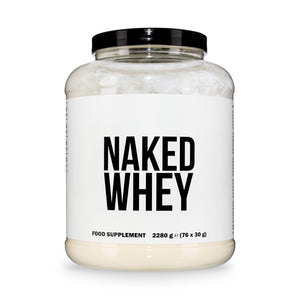
    Tub of Naked Whey in a black gym bag


    Is this true? Well... not really. While it is true that complete proteins do provide everything your body needs in one easy package, that does not make incomplete proteins useless. In fact, can make effective use of amino acids that come from a variety of foods or even from different meal spread throughout the day.


    Because many plants are incomplete proteins, vegans, for example often make excellent use of wise food combinations. This allows one incomplete protein to complement and complete another. As mentioned, however, this doesn't even need to be done in the same meal.


    Eating a variety of foods over the course of the day, then, will give you a chance to collect all of the essential amino acids that you need from incomplete sources. 

    Related Articles

    Best Protein Powder to Mix With Coffee

    If you want to increase your protein intake, squeezing it in during snacks and meals can sometimes feel a bit much. Thankfully, protein powders exist but they aren’t always easy to incorporate, especially if you are new to making your own shakes.  Enter protein coffee, aka Proffee. This new trend involves incorporating a protein powder or shake into your morning...

    Link to theBest Protein Powder to Mix With Coffeearticle

    Best Protein Powder for Children: Evidence-Based Safety Guide for Parents 2025

    The bottom line: Research shows that no single protein powder is universally "best" for children, but several safe and effective options include milk-based, soy protein hydrolysate, amaranth, and fish-derived proteins.  The optimal choice depends on your child's individual allergies, nutritional needs, and health status. Always consult your pediatrician before introducing protein supplements to your child's diet [1, 2, 3, 4]....

    Link to theBest Protein Powder for Children: Evidence-Based Safety Guide for Parents 2025article

    Is Organic Whey Protein Healthier? Evidence-Based Analysis 2025

    The bottom line: Current research shows no significant health advantages of organic whey protein over conventional forms. Both types provide identical muscle-building, metabolic, and recovery benefits that make whey protein valuable for health and performance [1, 2]. **Disclaimer: This article is for informational purposes only and does not constitute medical or nutritional advice. Always consult a qualified healthcare provider or...

    Link to theIs Organic Whey Protein Healthier? Evidence-Based Analysis 2025article

    What Are the Common Side Effects of Whey Protein? Complete 2025 Safety Guide

    While there is the generic worry of supplements causing negative reactions, is whey protein really much of a concern? In this article, we look at the possible side effects.

    Link to theWhat Are the Common Side Effects of Whey Protein? Complete 2025 Safety Guidearticle