




Key Takeaways
- Both forms come from the same source: Whey concentrate and isolate are both derived from liquid whey, a byproduct of cheese and yogurt production.
- Isolate is more processed: Additional filtration steps remove more fat, carbs, and lactose, yielding 90%+ protein by weight versus 70-80% for concentrate.
- Protein density differs, caloric difference is small: A 30g serving of isolate delivers slightly more protein per calorie, but the calorie gap between forms is around 10 calories.
- Both are complete proteins: Each form provides all nine essential amino acids, including the three branched-chain amino acids: leucine, isoleucine, and valine.
- Lactose intolerance matters: Isolate is the better choice if you're lactose-sensitive; concentrate still contains low levels of lactose.
- Neither form is universally superior: The right choice depends on your goals, budget, and digestive tolerance — not a blanket ranking.
- Both are fast-digesting: Contrary to a common claim, concentrate is not more bioavailable than isolate. Both absorb rapidly; isolate may have a marginal edge due to lower fat content.

Grass Fed Whey Protein Powder | Naked Whey - 5LB
- Build and Maintain Lean Muscle Mass
- Boost Immune System
- Lose Fat
- Improve Heart Health
Whey Protein Concentrate vs. Isolate: Key Differences at a Glance

You're staring at two tubs of whey protein — one labeled concentrate, one labeled isolate — and the price difference is real. Before you default to the cheaper option or assume the pricier one is automatically better, it helps to understand exactly what separates these two forms of whey protein.
Whey protein concentrate is the less-processed form, retaining more of the naturally occurring fat, carbohydrates, and lactose found in liquid whey. It typically contains 70-80% protein by weight. Whey protein isolate undergoes additional filtration to strip away most of that fat and lactose, resulting in a product that's 90% or more protein by weight.
Here's how they compare head-to-head per standard 30g serving:
| Attribute | Whey Concentrate | Whey Isolate |
|---|---|---|
| Protein content | 70-80% by weight | 90%+ by weight |
| Protein per 30g serving | ~22-24g | ~25-27g |
| Calories per 30g serving | ~120 kcal | ~110 kcal |
| Fat | Higher | Minimal |
| Carbohydrates | Higher | Minimal |
| Lactose | Low but present | Trace to none |
| Cost | Lower | Higher |
| Best use case | Calorie surplus, budget-conscious, creamier texture | Lactose intolerance, cutting, max protein density |
The differences aren't dramatic in absolute terms, but they're meaningful depending on your goals. The sections below break down what those differences actually mean for your training, digestion, and results.
How Whey Protein Concentrate and Isolate Are Made

Both forms of whey start in the same place: a large vat of liquid whey left over from cheese or yogurt production. Whey makes up about 20% of the protein in cow's milk. When milk is processed, enzymes cause it to separate into solid curds (mostly casein and fat, which become cheese) and liquid whey. That liquid is collected, filtered, and dried into the powder you scoop into your shaker.
The processing diverges at the filtration stage. Whey protein concentrate is produced using microfiltration or ultrafiltration — techniques that remove water and some impurities while preserving a portion of the naturally occurring fat, carbohydrates, and lactose. The result is a powder that's roughly 70-80% protein by weight, with the remaining percentage composed of fats, carbs, and other milk compounds.
Whey protein isolate goes through additional processing steps — cross-flow microfiltration or ion exchange chromatography — that push protein concentration above 90% by weight. These extra filtration passes remove most of the fat and nearly all of the lactose. More processing means a leaner, purer product, but it also means a higher production cost, which is reflected in the price tag.
📊 What Research Says
The Dairy Processing Handbook confirms that filtration method directly determines the final protein concentration and macro composition of whey — more filtration passes result in a higher-protein, lower-fat product, which is precisely why isolate costs more to produce.
Sourcing also matters. Naked Nutrition uses grass-fed whey from cows raised on pasture rather than in confined feedlots. Grass-fed dairy tends to have a better omega-3 to omega-6 ratio and a cleaner production chain from farm to powder, making it a meaningful quality differentiator regardless of which form you choose.
Nutritional Comparison: Protein, Calories, Carbs, and Fat

The practical question isn't which form has a higher protein percentage by weight — it's what lands in your glass per serving. On a standard 30g serving, whey isolate typically delivers 25-27g of protein versus 22-24g for concentrate. That 2-4g gap per serving is meaningful if you're tracking macros tightly, but it won't make or break your results on its own.
Calorie difference is where most people expect a bigger gap than actually exists. A 30g serving of concentrate runs about 120 calories; isolate comes in around 110. That 10-calorie difference is small enough that calories alone shouldn't drive your purchase decision. Where isolate earns its edge is in protein per calorie: a 100-calorie serving of isolate delivers approximately 23g of protein, while the same 100 calories from concentrate yields around 18g. If you're in a caloric deficit and need to maximize protein within a strict daily calorie target, isolate is the more efficient tool.
- Fat content drops significantly in isolate due to additional filtration — helpful for those following low-fat protocols.
- Carbohydrate content is reduced, meaning fewer grams of sugars per serving in isolate.
- Lactose is nearly eliminated in isolate; concentrate retains low but present lactose levels.
- Amino acid profiles remain virtually identical — both forms deliver the same complete set of essential amino acids.
Lactose content is where the gap matters most for a specific group of people. Whey concentrate contains low levels of lactose, but enough to cause bloating, gas, or discomfort in lactose-sensitive individuals. Whey isolate reduces lactose to trace amounts, making it a practical choice if dairy usually gives you trouble. Neither form is entirely dairy-free, so if you have a true dairy allergy rather than lactose sensitivity, neither is appropriate.
Benefits of Whey Protein: What the Research Says

Whey protein's reputation in the fitness world is backed by a substantial body of research — not marketing copy. Both concentrate and isolate deliver these benefits, since the active compounds responsible are preserved in both forms.
Muscle protein synthesis and lean mass: A 2015 review in the Journal of the American College of Nutrition found that active individuals supplementing with whey protein saw notable increases in lean body mass and strength compared to placebo groups. Whey's fast absorption rate drives a rapid spike in blood amino acids, which directly stimulates muscle protein synthesis.
Preventing age-related muscle loss: Sarcopenia — the gradual loss of muscle mass with age — is a serious health concern. Research published in the American Journal of Clinical Nutrition found whey protein effective at preserving muscle mass and improving strength in older adults, making it a useful tool well beyond athletic performance.
Superiority over other protein sources: Head-to-head comparisons show whey performs better for muscle growth than both casein and soy protein, likely due to its faster digestion rate and higher leucine content — leucine being the primary amino acid that triggers muscle protein synthesis.
Blood pressure support: Whey contains bioactive peptides called lactokinins, which research has linked to modest reductions in blood pressure in hypertensive individuals.
Blood sugar regulation: Taking whey protein alongside or before carbohydrate-containing meals has been shown to improve insulin response and moderate post-meal blood glucose spikes, which is useful for metabolic health beyond just athletic performance.
Both concentrate and isolate deliver all nine essential amino acids, including the three branched-chain amino acids (BCAAs) — leucine, isoleucine, and valine. This complete amino acid profile is what qualifies whey as a high-quality protein source by any credible measurement standard.
Whey Concentrate vs. Isolate: Which One Is Right for You?

There's no universal winner here. The better form is the one that matches your specific situation. Here's a straightforward decision framework:
Choose whey protein isolate if:
- You're lactose-sensitive or experience digestive discomfort with dairy products
- You're in a cutting phase and tracking calories and carbs tightly
- You want the maximum amount of protein per serving
- You prefer a lighter, less milky texture in your shake
Choose whey protein concentrate if:
- Budget is a primary consideration and you tolerate dairy well
- You're in a calorie surplus and the additional fats and carbs fit your macros
- You prefer a creamier texture and richer flavor
- You want naturally occurring growth factors and immunoglobulins that are partially retained in less-processed forms
Choose a whey blend if:
- You want a middle-ground option that combines the protein density of isolate with the cost profile of concentrate
- You're not lactose-sensitive but still want a higher protein-per-serving ratio than concentrate alone provides
On the post-workout timing question: both forms of whey are fast-digesting. The original claim that concentrate is more bioavailable than isolate is inaccurate. Both absorb rapidly compared to casein or plant proteins. Isolate may have a marginal absorption advantage because its lower fat and lactose content means fewer compounds slowing gastric emptying — but the difference is small and not a deciding factor for most people. What matters more is that you consume protein within a reasonable window around your training, regardless of form.
What to Look for When Buying Whey Protein
The whey protein market is crowded, and not all products are created equal. A few key factors separate a clean, effective product from one that delivers less than advertised.
Read the ingredient list, not just the front label. Many whey products include artificial sweeteners, proprietary blends, thickeners, and fillers that add cost and complexity without adding value. A quality product should list whey protein as the first and primary ingredient. Shorter ingredient lists are generally a good sign.
Look for grass-fed sourcing. Grass-fed dairy cattle produce milk with a better fatty acid profile, including a higher proportion of conjugated linoleic acid (CLA) and omega-3 fats. Grass-fed sourcing also reflects better animal welfare and farming practices. It's a meaningful quality indicator, not just a marketing claim.
Check for third-party testing. Certifications from organizations like Informed Sport or NSF for Sport indicate that the product has been independently tested for banned substances and label accuracy. This matters especially for competitive athletes subject to drug testing, but it also confirms the product contains what it claims to contain.
Understand protein per calorie, not just protein per serving. Two products might both list "25g protein" on the label, but if one serving is 35g of powder and the other is 30g, you're getting different protein densities. Divide protein grams by total calories to compare products accurately.
Unflavored vs. flavored options: Unflavored whey is more versatile — it blends into smoothies, oatmeal, baked goods, and recipes without altering taste. Flavored options are more convenient for standalone shakes. Naked Nutrition offers both, with no artificial colors or sweeteners in either format.
Naked Nutrition's Whey Protein Options
Naked Nutrition's product line reflects a simple philosophy: fewer ingredients, higher quality. Every whey option is sourced from grass-fed cattle and produced without artificial additives. Here's what's available and who each product suits best.
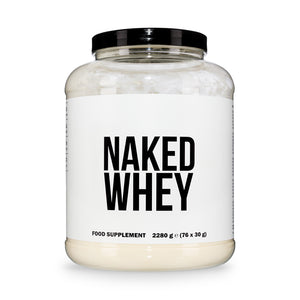
Naked Whey (Concentrate): A single-ingredient product — nothing but grass-fed whey protein concentrate. It's unflavored, which makes it one of the most versatile options available. Mix it into anything without affecting the taste profile. It's the right pick if you tolerate dairy well, want a creamier texture, and prefer to control your own flavoring. At a lower price point than isolate, it delivers a complete amino acid profile without compromise on sourcing quality.
Naked Whey Isolate: Sourced from grass-fed cows in New Zealand, this isolate is processed to 90%+ protein by weight with minimal fat and carbohydrates. It's the right choice if you're cutting calories, sensitive to lactose, or want the highest protein density per serving. Like Naked Whey concentrate, it contains no artificial sweeteners, colors, or flavors — just protein.
Clear Naked Whey: A whey isolate product with a fundamentally different texture profile. Rather than a thick, milky shake, Clear Naked Whey mixes into a light, clear, fruit-forward drink — closer to juice than a traditional protein shake. It suits people who dislike the heaviness of conventional whey shakes, especially post-workout when a lighter option is more appealing. It delivers the same high protein content and clean ingredient standard as the rest of the Naked Whey lineup.
All three options carry Naked Nutrition's commitment to transparency: no proprietary blends, no ingredient lists that require a chemistry degree, and no artificial shortcuts. The grass-fed sourcing standard applies across the board, so whichever form fits your goals, the quality foundation is consistent.
Frequently Asked Questions
What is the main difference between whey protein concentrate and isolate?
The core difference is processing. Whey concentrate undergoes less filtration and retains more fat, carbohydrates, and lactose, typically landing between 70 and 80 percent protein by weight. Isolate goes through additional filtration steps, stripping out most of the fat and lactose to reach 90 percent or higher protein content per serving.
Is whey isolate better than concentrate for building muscle?
Not meaningfully, no. Both forms deliver a complete amino acid profile with ample leucine, which is the key driver of muscle protein synthesis. A 2006 study by Tang et al. in the Journal of Applied Physiology found no significant difference in lean mass gains between protein forms when total protein intake was matched across groups.
Which should I choose if I'm lactose intolerant?
Whey isolate is the better fit. The additional filtration process removes the vast majority of lactose, leaving most isolate products with less than 1 gram per serving. Concentrate retains more lactose and can cause bloating, gas, or digestive discomfort in people with lactose sensitivity.
Why is whey protein isolate more expensive than concentrate?
Additional processing costs money. Isolate requires more filtration stages, higher-grade equipment, and longer production time to achieve that 90-plus percent protein purity. You're paying for a cleaner macronutrient profile and lower lactose content, not necessarily a superior product for everyone.
Does whey concentrate have any advantages over isolate?
Yes. Concentrate retains naturally occurring bioactive compounds like immunoglobulins and lactoferrin that are partially reduced during isolate's heavier processing. It's also more cost-effective, making it a practical choice for anyone who digests it well and isn't operating on a strict low-fat or low-carb plan.
How much protein per serving should I expect from each type?
A standard 30-gram scoop of whey concentrate typically delivers 22 to 24 grams of protein, while the same scoop of isolate usually provides 25 to 27 grams. The gap is real but not dramatic. Where it matters is if you're tracking macros precisely or trying to keep fat and carbohydrate intake tight.
Are Naked Nutrition whey protein products third-party tested?
Yes. Naked Nutrition products are Informed Sport certified, meaning every batch is tested by an accredited third-party lab for banned substances, heavy metals, and label accuracy. That certification matters if you're a tested athlete or simply want confidence that what's on the label is what's in the bag.
How long does it take to see results from whey protein supplementation?
Expect to see measurable changes in muscle recovery and training performance within three to four weeks of consistent use, assuming your overall protein intake, training, and sleep are dialed in. Visible body composition changes typically take six to eight weeks and depend far more on your total diet and training load than on whether you chose concentrate or isolate.
Top Whey Protein Picks
Chosen by 1 million+ customers. Free shipping on orders over $100.

Grass Fed Whey Isolate Protein Powder | Naked Whey Isolate - 2LB
$51.99
- ✓ Zero Sugar & Zero Carbs
- ✓ Easy Digestion
- ✓ Maximum Pure Protein

Micellar Casein Protein Powder | Naked Casein - 2LB
$44.99
- ✓ Slow-release micellar casein, perfect before bed
- ✓ Exclusively sourced from U.S. farms
- ✓ 26g of protein and 5.4g of BCAA's per serving
- ✓ Made with rBGH-free skim milk

Pea Protein Powder | Naked Pea - 5LB
$57.99
- ✓ Sustainable Farming Practices
- ✓ Superior Amino Acid Profile
- ✓ Promote Muscle Gain
- ✓ Lose Weight

Egg White Protein Powder | Naked Egg - 3LB
$79.99
- ✓ From non-GMO eggs exclusively from US farms
- ✓ Processed from fresh eggs into powder in under one day to retain a complete amino acid profile
- ✓ 25g of protein and 5.8g of BCAA's per serving
- ✓ Zero sugar