



On this page
What Is Creatine HCL? Benefits, Uses, and How It Works
Discover how this highly soluble form of creatine boosts muscle performance, enhances recovery, and why it may outperform traditional creatine monohydrate.

Key Takeaways
- What it is: Creatine HCL is a creatine molecule bonded to a hydrochloride group, forming a highly soluble creatine salt that absorbs more efficiently than creatine monohydrate.
- Lower dose required: Most people need only 1.5g of creatine HCL daily, compared to 3–5g for creatine monohydrate, because of its superior bioavailability.
- Fewer GI issues: The higher solubility of creatine HCL means less undissolved creatine in the digestive tract, reducing bloating and stomach discomfort.
- Performance benefits: Creatine HCL supports ATP production, muscle growth, strength gains, and even cognitive function including memory and focus.
- Less water retention: Creatine HCL is associated with less water retention than monohydrate, making it a better option for those sensitive to bloating or puffiness.
- Research gap: Creatine monohydrate has decades of clinical research behind it. Creatine HCL has a smaller but growing body of evidence, plus strong mechanistic reasoning for its advantages.
- Quality matters: Choose a creatine HCL supplement with no fillers, no artificial additives, and third-party testing to ensure what's on the label is what's in the product.

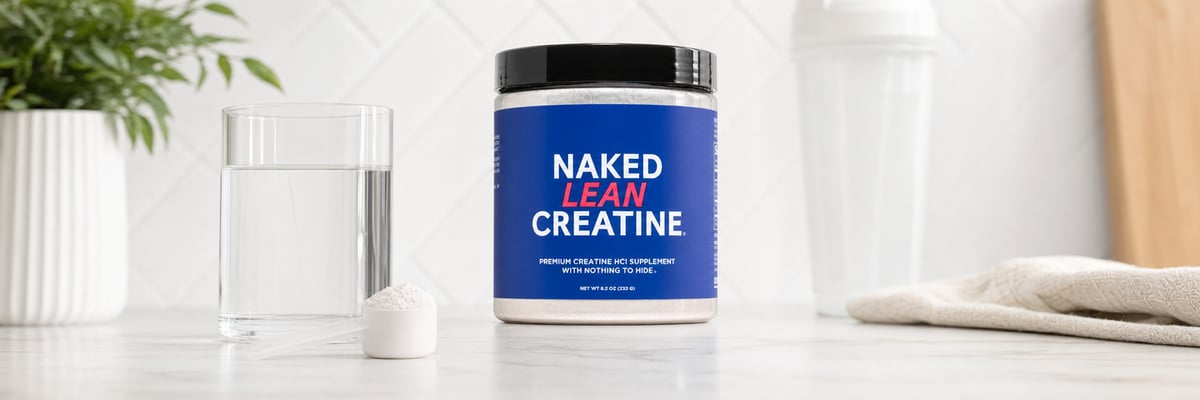
Creatine HCl Powder | Naked Lean Creatine - 232g
- Creatine Formula
- No Artificial Additives
- Made in the USA
- Quality Verified
What Is Creatine HCL? Definition, Form, and How It Works

If you've ever taken creatine monohydrate and dealt with bloating, cramping, or the need to choke down multiple large scoops, you've probably wondered whether there's a better option. Creatine HCL is the answer a lot of athletes land on. But what is creatine HCL, exactly, and does the science actually back up the hype?
Creatine HCL stands for creatine hydrochloride. It's a form of creatine in which the creatine molecule is chemically bonded to a hydrochloride group, creating what's known as a creatine salt. This structural difference changes how the compound behaves in water and in your body, which is where the real advantages come from.
Creatine itself is a naturally occurring compound synthesized from three amino acids: glycine, arginine, and methionine. Your body stores it primarily in muscle tissue, where it plays a central role in producing ATP (adenosine triphosphate), the molecule your cells use for quick, high-intensity energy. You get small amounts from meat, fish, and dairy, but supplementing is the most efficient way to saturate your muscle creatine stores.
- Creatine is stored in muscles as phosphocreatine, a rapid energy reserve used during explosive efforts like sprinting or heavy lifting.
- When ATP is depleted during intense exercise, phosphocreatine donates a phosphate group to regenerate ATP almost instantly.
- Higher creatine stores mean more ATP available, which translates to more reps, more power, and faster recovery between sets.
- The HCL form dissolves faster and absorbs more completely, so more creatine reaches the muscles where it's needed.
Creatine HCL offers all the foundational benefits of creatine supplementation with structural improvements that make it easier to dose, easier to digest, and easier to absorb. The sections below break down exactly how and why.
The Science Behind Creatine HCL: Solubility and Absorption

The key to understanding creatine HCL is understanding solubility. When a compound dissolves more completely in water, it becomes available for absorption more quickly. Compounds that don't dissolve well tend to sit in the digestive tract longer, causing irritation and passing through without being fully utilized.
In creatine monohydrate, the creatine molecule is bonded to a single water molecule. This structure is stable and effective, but it results in relatively poor water solubility. Undissolved creatine in the gut is a known contributor to the bloating and GI discomfort that some monohydrate users report.
Creatine HCL takes a different approach. When creatine is bonded to a hydrochloride group, the resulting compound is significantly more polar. Polarity is the chemical property that drives solubility in water: more polar molecules dissolve more completely and more rapidly. Research by Gufford et al. (2010) published in the Journal of Dietary Supplements found that creatine HCL is approximately 38 times more soluble in water than creatine monohydrate. That's not a marginal improvement.
📊 What Research Says
Gufford et al. (2010) demonstrated that creatine HCL dissolves in water at a rate approximately 38 times greater than creatine monohydrate. Higher solubility means more creatine is available for intestinal absorption, which is the mechanistic basis for the lower effective dose and reduced digestive side effects seen with creatine HCL.
Greater solubility translates directly to greater bioavailability. When creatine HCL hits your digestive system, it dissolves quickly and is absorbed efficiently into the bloodstream, then transported to muscle tissue. Less creatine is wasted. Less sits unabsorbed in the gut. This is why the effective dose for creatine HCL is dramatically lower than for monohydrate, and why tolerability tends to be better. The chemistry explains what users report anecdotally.
Creatine HCL Benefits: Performance, Muscle, and Beyond

Creatine's benefits are among the most consistently replicated in sports nutrition research. The HCL form delivers those same benefits with structural advantages that make it more practical for daily use. Here's what you can expect.
ATP production and high-intensity performanceYour muscles rely on phosphocreatine to regenerate ATP during explosive, high-intensity efforts. Creatine supplementation increases your muscle phosphocreatine reserves, which means your body can sustain peak effort longer before fatigue sets in. This is particularly valuable for strength training, sprinting, and any sport requiring repeated bursts of power.
Muscle growth and protein synthesisCreatine supports muscle protein synthesis both directly and indirectly. It improves the intracellular environment for muscle growth by increasing cell hydration and signaling pathways associated with hypertrophy. When combined with resistance training, creatine consistently increases lean muscle mass across multiple studies.
Strength and reduced fatigue between setsMore available ATP means muscles can work harder for longer before reaching failure. This translates to more reps per set, heavier loads over time, and faster recovery between efforts, all of which compound into greater strength gains over a training program.
Cognitive benefitsThe brain is an energy-intensive organ. Creatine provides phosphocreatine to brain cells just as it does to muscle cells. Research by Rae et al. (2003) in Proceedings of the Royal Society B found that creatine supplementation improved working memory and intelligence test performance in healthy adults. Other studies point to benefits in attention, mental fatigue, and mood, particularly under conditions of sleep deprivation or mental stress.
Broader audience than you might expectCreatine isn't only for bodybuilders. Older adults experiencing age-related muscle loss, women looking to preserve muscle and bone density, and anyone engaged in regular physical activity can benefit. The lower dose and better tolerability of creatine HCL make it particularly practical for people who aren't taking multiple scoops of supplements each day.
Creatine HCL vs Creatine Monohydrate: Which Is Better?

Creatine monohydrate deserves its reputation. It has more than 30 years of clinical research behind it, with hundreds of studies demonstrating benefits for muscle mass, strength, and performance. It's effective, it's inexpensive, and it works for most people. That's the honest baseline.
Creatine HCL doesn't have the same volume of clinical data yet. That's a real limitation worth acknowledging. But the mechanistic evidence for its advantages is strong, and its tolerability profile is meaningfully better for a subset of users.
| Factor | Creatine HCL | Creatine Monohydrate |
|---|---|---|
| Solubility | ~38x more soluble in water | Poor solubility |
| Daily dose | ~1.5g | 3–5g |
| GI tolerability | Generally better tolerated | May cause bloating in some |
| Water retention | Less common | More common |
| Loading phase | Not typically needed | Optional but common |
| Clinical research volume | Growing, but limited | Extensive (30+ years) |
| Cost per serving | Slightly higher | Generally lower |
The practical conclusion: if you tolerate monohydrate well, it remains a solid choice. If you experience GI discomfort, bloating, or water retention on monohydrate, or if you simply prefer taking a smaller dose with fewer additives, creatine HCL is worth the switch. The two forms aren't competitors so much as options suited to different users. Anyone curious about a more detailed breakdown can read the full creatine monohydrate vs HCL comparison separately.
Creatine HCL Dosage: How Much Should You Take?

Dosing creatine HCL is straightforward, but there's a common source of confusion worth clearing up. Some sources list 3–5g as the recommended dose for creatine HCL. That figure is actually pulled from monohydrate research and doesn't apply here. Because creatine HCL absorbs more efficiently, the effective daily dose is lower.
Standard daily dose: 1.5g of creatine HCL is the typical recommendation for most adults. This is sufficient to saturate muscle creatine stores over time given the higher bioavailability of the HCL form.Compare that to creatine monohydrate, which requires 3–5g daily to achieve comparable muscle saturation. The difference comes down entirely to absorption efficiency. You're consuming less because more of what you consume is actually being used.
Loading phase: A loading phase, where you take 20g or more daily for 5–7 days before dropping to a maintenance dose, is common with creatine monohydrate. It's generally not necessary with creatine HCL. The higher bioavailability means your muscle stores increase steadily at a lower daily dose without the GI stress a loading phase can cause. Timing: Both pre- and post-workout timing are effective. Some research supports a slight edge for post-workout supplementation in the context of muscle building, but consistency matters far more than exact timing. Take it when it fits your routine and you'll actually remember to do it. What to mix it with: Creatine HCL dissolves easily in water, juice, or any shake due to its superior solubility. No need for large amounts of liquid or vigorous stirring.Individual needs can vary based on body weight, training intensity, and diet. If you eat little or no meat, your baseline creatine stores may be lower, and you might notice benefits more quickly. As with any supplement, consulting a registered dietitian or physician is a good step if you have specific health considerations.
Creatine HCL Side Effects and Safety

Creatine is one of the most studied supplements in sports nutrition, with a safety record that spans decades of research in healthy adults. The side effects people encounter are typically mild and manageable, and creatine HCL tends to produce fewer of them than monohydrate.
- Creatine has been studied extensively for over 30 years with no evidence of harm in healthy adults at recommended doses.
- Any weight gain in the first weeks of supplementation is primarily water weight drawn into muscle cells, not fat gain.
- Creatine HCL's higher solubility means less undissolved creatine in the gut, reducing the risk of bloating and cramping compared to monohydrate.
- Creatine does not damage healthy kidneys. This myth persists despite no clinical evidence supporting it in people with normal kidney function.
- People with pre-existing kidney disease should consult a physician before supplementing with any form of creatine.
- Start with the standard 1.5g dose rather than experimenting with higher amounts.
- Stay well-hydrated throughout the day.
- Skip the loading phase if GI tolerance is a concern.
- Take with food if you notice any stomach sensitivity.
Pregnant or breastfeeding individuals, and those with kidney disease or other significant health conditions, should speak with a healthcare provider before starting creatine supplementation.
How to Choose a Quality Creatine HCL Supplement
Not all creatine HCL supplements are the same. The label might say creatine HCL, but what's mixed in alongside it makes a meaningful difference in both safety and efficacy. Here's what to look for.
Purity and ingredient list: The best creatine HCL supplements have exactly one ingredient: creatine hydrochloride. Any unnecessary fillers, artificial sweeteners, proprietary blends, or dyes are a sign of cost-cutting or marketing-driven formulation rather than performance-focused product design. An unflavored option gives you the flexibility to mix it into water, coffee, a protein shake, or whatever fits your routine without adding unwanted ingredients. Third-party testing: The supplement industry isn't regulated the same way pharmaceuticals are. Third-party testing from organizations like Informed Sport, NSF, or independent labs verifies that the product contains what it claims, at the amount listed, without banned substances or contaminants. Always look for a Certificate of Analysis (COA) or a third-party certification mark on the label. Transparent sourcing: Responsible brands disclose where their ingredients come from and how products are manufactured. Look for GMP-certified (Good Manufacturing Practices) production facilities.Naked Nutrition's Creatine HCL is formulated with a single ingredient and no additives: pure creatine hydrochloride, unflavored and free from artificial colors, flavors, or sweeteners. It's manufactured to rigorous quality standards with transparent sourcing. If you're evaluating creatine HCL options, it's the benchmark to measure others against.
The supplement you choose should support your goals without adding ingredients you don't need. Simpler is better here. Your creatine supplement shouldn't require a chemistry degree to decode the label.
Frequently Asked Questions
What is creatine HCl and how is it different from creatine monohydrate?
Creatine HCl (hydrochloride) is a form of creatine where the creatine molecule is bonded to a hydrochloride group, which significantly increases its solubility in water compared to creatine monohydrate. This enhanced solubility means smaller doses are typically needed to deliver an effective amount of creatine to your muscles. Both forms ultimately work to replenish ATP energy stores, but they differ in concentration, mixability, and how your digestive system handles them.
What does creatine HCl actually do in the body?
Once ingested, creatine HCl is absorbed into the bloodstream and transported to muscle tissue, where it is stored as phosphocreatine. Phosphocreatine acts as a rapid energy reserve, helping regenerate ATP — the primary fuel your muscles use during short bursts of intense exercise like weightlifting or sprinting. Over time, consistent creatine supplementation can support increased strength, power output, and muscle mass.
How much creatine HCl should I take per day?
Because creatine HCl is more concentrated than creatine monohydrate, effective doses are generally smaller — typically around 750 mg to 1.5 g per day depending on body weight and activity level. Unlike creatine monohydrate, a loading phase is generally not considered necessary with creatine HCl. Always follow the dosage guidelines on your specific product label and consult a healthcare professional if you are unsure.
Does creatine HCl cause bloating or water retention?
One of the most commonly cited advantages of creatine HCl over creatine monohydrate is that it is less likely to cause bloating or gastrointestinal discomfort. Its superior water solubility means it dissolves more completely in the gut, reducing the osmotic effect that can cause water to be drawn into the intestines and lead to stomach upset. Most users report a noticeably smoother digestive experience with creatine HCl compared to other forms.
Is creatine HCl safe to use long-term?
Creatine is one of the most extensively studied sports supplements available, and it has a strong safety profile when used as directed in healthy individuals. Creatine HCl specifically is generally well-tolerated, with no significant adverse effects reported in healthy adults using standard doses. As with any supplement, those with pre-existing kidney or liver conditions should consult a doctor before starting creatine HCl.
When is the best time to take creatine HCl?
Research suggests that taking creatine close to your workout — either shortly before or after — may offer a slight advantage for muscle building and performance compared to taking it at random times of day. Post-workout timing alongside a protein and carbohydrate source is a popular and practical approach, as it may help shuttle creatine into muscles more efficiently. Consistency in daily intake matters more than perfect timing, so find a schedule you can stick to.
Is Naked Nutrition's creatine HCl third-party tested or certified?
Naked Nutrition is committed to transparency and quality, and its supplements are formulated without unnecessary additives, fillers, or artificial ingredients. Products are manufactured in facilities that follow Good Manufacturing Practices (GMP), and Naked Nutrition pursues third-party testing to verify the purity and potency of its ingredients. Checking the product page for the most current certifications and testing details is always recommended.
Can women take creatine HCl, and will it make them bulky?
Creatine HCl is safe and beneficial for women, supporting the same performance and recovery benefits it provides for men — including improved strength, endurance, and lean muscle development. It will not cause women to become bulky, as muscle size is primarily determined by training volume, intensity, hormones, and overall diet rather than creatine alone. Many women find creatine HCl particularly appealing because its lower dose and reduced bloating profile align well with their fitness and physique goals.
Top Product Picks
Chosen by 1 million+ customers. Free shipping on orders over $100.
Creatine HCl Powder | Naked Lean Creatine - 232g
$34.99
- ✓ 750 mg Con-Cret® Creatine HCl
- ✓ Organic prickly pear for natural water balance
- ✓ Highly potent: superior muscle performance at lower doses
- ✓ Critical electrolytes for optimal creatine absorption

Raspberry Lime Creatine HCl Powder | Naked Lean Creatine - 231g
$34.99
- ✓ 750 mg Con-Cret® Creatine HCl
- ✓ Organic prickly pear for natural water balance
- ✓ Highly potent: superior muscle performance at lower doses
- ✓ Critical electrolytes for optimal creatine absorption

Creatine Monohydrate Powder | Naked Creatine - 2.2LB
$35.99
- ✓ 100% premium creatine monohydrate
- ✓ Highest grade available: fast dissolving and quickly absorbed
- ✓ 5g of creatine per serving
- ✓ No artificial sweeteners, flavors, or colors