




On this page
BCAA vs Creatine: Which Supplement Do You Actually Need?
Stop wasting money on the wrong supplement — here's exactly which one matches your fitness goals and why it matters.

Key Takeaways
- Different mechanisms: BCAAs stimulate muscle protein synthesis directly; creatine replenishes ATP to fuel higher-intensity training.
- Best for strength: Creatine is the stronger choice for power output, heavy lifting, and high-intensity performance.
- Best for recovery: BCAAs have stronger direct evidence for reducing muscle damage and post-exercise soreness.
- Muscle preservation: BCAAs are better suited for protecting muscle during a caloric deficit, illness, or periods of reduced training.
- Stack them: The two supplements have complementary mechanisms and can be taken together safely and effectively.
- Vegan athletes: Both supplements are particularly valuable if you're not getting adequate amounts from diet alone.
- Safety: Both are well-researched and safe for healthy adults at recommended doses.

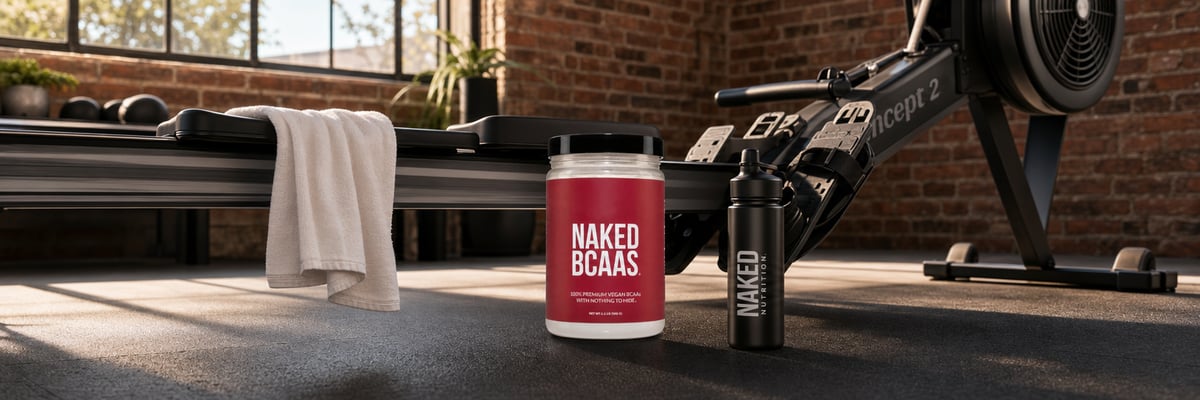
Branched Chain Amino Acids | Naked BCAAs - 100 Servings
- BCAA Formula
- No Artificial Additives
- Made in the USA
- Quality Verified
BCAA vs Creatine: Key Differences at a Glance

You've probably seen both BCAAs and creatine recommended for muscle growth, strength, and recovery. The confusion is understandable: they're two of the most popular supplements in sports nutrition, they're often sold side-by-side, and the goals people use them for frequently overlap. But they work through completely different mechanisms, and that difference determines which one fits your specific goal.
The short answer: creatine is better for strength and power; BCAAs are better for muscle protein synthesis, recovery, and muscle preservation. Both can support muscle growth, just via different pathways. And for many athletes, using both together makes more sense than choosing one.
| Factor | BCAAs | Creatine |
|---|---|---|
| What it is | Three essential amino acids: leucine, isoleucine, valine | Naturally occurring compound stored in muscle tissue |
| Primary mechanism | Activates mTOR pathway; stimulates muscle protein synthesis | Replenishes ATP via the phosphocreatine system |
| Best use case | Recovery, muscle preservation, endurance, caloric deficit | Strength, power output, high-intensity training volume |
| Food sources | Meat, eggs, dairy, legumes, soy | Red meat, fish, poultry |
| Vegan-friendly | Yes (check source on label) | Yes (supplement form) |
| Typical dosage | 5–10g per serving | 3–5g daily (maintenance) |
| Timing flexibility | High — pre, intra, or post-workout | Moderate — pre or post-workout preferred |
| Body produces naturally | No — must come from diet or supplements | Yes — roughly 50% produced endogenously |
What Are BCAAs and How Do They Work?

BCAAs are three specific essential amino acids: leucine, isoleucine, and valine. What sets them apart structurally is the branched side chain in their molecular makeup, which is also why they're metabolized differently from other amino acids. Rather than being broken down in the liver first, BCAAs are metabolized directly in skeletal muscle tissue, which means they're available to working muscles faster during and after exercise.
The word "essential" means your body cannot synthesize them. Of the 20 amino acids, 11 can be made internally; the remaining nine, including all three BCAAs, must come from food or supplements. Good dietary sources include meat, eggs, dairy, and for those eating plant-based diets, legumes and soy products.
- Leucine binds to receptors that activate the mTOR signaling pathway, the primary trigger for muscle protein synthesis (MPS).
- Isoleucine supports glucose uptake in muscle cells and contributes to energy availability during training.
- Valine plays a supporting role in energy metabolism and helps reduce central fatigue by competing with tryptophan for brain entry.
- The 2:1:1 ratio of leucine to isoleucine to valine is backed by research as the optimal ratio for muscle recovery.
One important nuance: BCAAs stimulate MPS, but they don't complete the process alone. Research consistently shows that all nine essential amino acids are needed to fully build muscle tissue. If you're choosing between BCAAs and a complete protein source like whey post-workout, whey often wins on muscle-building completeness. That's why products like Naked Nutrition BCAA use the science-backed 2:1:1 leucine-heavy ratio, and why pairing BCAAs with a full protein source gives you the best of both approaches.
If you're already consuming adequate protein from whole foods or a complete protein supplement, BCAAs become most valuable for their anti-catabolic effects, recovery support, and intra-workout use when eating a full meal isn't practical.
What Is Creatine and How Does It Work?

Creatine is an organic compound naturally stored in your muscles, primarily in the form of phosphocreatine. Your liver and kidneys synthesize roughly half of your body's creatine from the amino acids glycine and arginine. The other half comes from dietary sources, mainly red meat, fish, and poultry, which is why vegans and vegetarians tend to have lower baseline creatine stores.
The mechanism is straightforward: during short bursts of intense exercise, your muscles burn through ATP (adenosine triphosphate) rapidly. Your phosphocreatine stores donate a phosphate group to regenerate ATP almost instantly, allowing you to maintain output during those critical high-intensity seconds. More phosphocreatine available means more sustained power output before fatigue sets in.
📊 What Research Says
A 10-week study found that participants who took creatine close to their workout, either immediately before or after weight training, gained significantly more muscle and strength than those who took it several hours away from training. Antonio & Ciccone (2013, Journal of the International Society of Sports Nutrition) concluded that timing relative to exercise matters more than the total daily dose schedule.
Creatine monohydrate is the most studied and cost-effective form available. There's no compelling evidence that newer forms, such as creatine HCl or buffered creatine, outperform monohydrate in healthy adults. Naked Creatine provides pure creatine monohydrate with no additives, making it easy to dose accurately and stack with other supplements. When starting creatine, you can either use a loading phase of 20g per day split into four doses for five to seven days to saturate muscles quickly, then drop to 3–5g daily maintenance, or skip loading entirely and reach saturation within three to four weeks at the maintenance dose.
BCAAs vs Creatine: Which Is Better for Your Goals?

The right choice depends on what you're actually trying to accomplish. Here's how they compare across the goals that matter most.
Muscle growth: Both contribute, but differently. BCAAs activate the mTOR pathway and directly stimulate muscle protein synthesis. Creatine doesn't trigger MPS itself, but it lets you train harder and lift heavier, driving the mechanical stress that ultimately signals muscle adaptation. For hypertrophy, the combination of both is more effective than either alone.
Strength and power: Creatine wins here. The ATP-PCr system is the dominant energy pathway for efforts lasting one to ten seconds, think maximal lifts, sprints, and explosive movements. Supplementing creatine increases phosphocreatine availability and directly improves output in these efforts.
Endurance performance: BCAAs are more relevant. Creatine offers limited benefit for sustained aerobic activity. BCAAs, particularly valine, compete with tryptophan for transport into the brain, reducing serotonin accumulation and the central fatigue signal that makes endurance efforts feel harder. Research published in the Journal of Sports Medicine found BCAAs can reduce exercise-induced fatigue and improve performance in endurance settings.
Recovery and DOMS: BCAAs have the stronger direct evidence. Multiple studies show BCAAs reduce markers of muscle damage and decrease the severity and duration of delayed-onset muscle soreness after intense exercise. Creatine may help with recovery between high-intensity efforts, but the evidence is mixed and less consistent.
Muscle preservation during a deficit: BCAAs are clearly better here. About 35% of the essential amino acids found in muscle tissue are BCAAs, and supplementing them during caloric restriction, illness, or injury has been shown to reduce muscle protein breakdown and support lean mass retention.
Body composition and weight: Creatine causes water retention in muscle cells, which means temporary scale weight gain of one to three kilograms when starting. This is intracellular water, not fat, and it's a normal physiological response. BCAAs carry minimal calories and don't cause water retention.
Vegan and vegetarian athletes: Both supplements are especially valuable. Dietary creatine comes almost exclusively from animal muscle tissue, and plant-based protein sources are generally lower in leucine compared to animal proteins. Supplementing both fills real gaps that diet alone struggles to address.
Dosage, Timing, and How to Take BCAAs and Creatine

Getting the dose right matters more than optimizing the exact minute you take either supplement. Here's what the evidence actually supports.
BCAA dosage: Most research uses doses of 5–10g per serving. For active individuals training regularly, 10–20g spread across the day, with a serving around training, covers most use cases. The 2:1:1 leucine-to-isoleucine-to-valine ratio is the standard supported by research.
BCAA timing: Flexible. You can take BCAAs pre-workout to reduce muscle breakdown during training, intra-workout to blunt fatigue and support performance, or post-workout to kick-start recovery. Aragon & Schoenfeld (2013, Journal of the International Society of Sports Nutrition) found that the anabolic window for protein consumption extends up to several hours around training, meaning precise timing is less critical than total daily intake.
Creatine dosage: 3–5g daily is the standard maintenance dose. An optional loading phase of 20g per day, split into four 5g servings, for five to seven days accelerates muscle saturation. If you skip loading, full saturation occurs in three to four weeks at the maintenance dose. Both approaches produce equivalent long-term results.
Creatine timing: Pre or post-workout appears slightly superior to taking it at unrelated times of day, based on available research. Post-workout may have a small advantage due to increased muscle uptake during the recovery window, but consistency of daily use matters far more than the specific timing.
Can you mix them together? Yes, and it's practical. Creatine monohydrate is unflavored and dissolves readily in water. Add both to your pre, intra, or post-workout drink without any compatibility issues. Before combining supplements, check both labels for overlapping ingredients, particularly stimulants, added electrolytes, or other active compounds that could accumulate to unintended doses.
Are There Any Side Effects or Safety Concerns?

Both supplements have strong safety records, but there are a few things worth knowing before you start.
BCAAs: Generally well-tolerated at recommended doses. At very high chronic intakes, some research suggests excessive BCAA supplementation may negatively affect insulin sensitivity and compete with other amino acids for absorption, potentially disrupting the overall amino acid balance. Stick to evidence-based dosing and you won't encounter this in practice.
Creatine and water retention: The most common side effect when starting creatine is a rapid gain of one to three kilograms on the scale, driven by increased intracellular water in muscle cells. This is normal, expected, and not fat gain. Bloating in the gut is less common and usually resolves within the first week. Taking creatine with food and staying well-hydrated reduces the likelihood of any digestive discomfort.
📊 What Research Says
The concern about creatine damaging kidneys persists online despite decades of evidence showing otherwise. Studies in healthy adults, including periods of supplementation lasting several years, show no adverse effects on kidney function. The International Society of Sports Nutrition's position paper states creatine monohydrate is safe for healthy individuals at recommended doses. The caveat is meaningful: people with pre-existing kidney disease should consult a physician before supplementing, because creatine metabolism does increase creatinine output, a standard kidney function marker that can skew lab results.
Who should speak with a doctor before starting either supplement: anyone with kidney or liver conditions, those who are pregnant or breastfeeding, people on medications that affect protein metabolism or kidney function, and anyone with a diagnosed metabolic disorder. For healthy adults following standard dosing guidelines, the risk profile for both supplements is low.
Quality matters. Supplements that contain undisclosed additives, fillers, or contaminants introduce risks that the active ingredients themselves don't carry. Naked Nutrition products are third-party tested and formulated with minimal ingredients, so what's on the label is exactly what you're getting.
Should You Take BCAAs and Creatine Together?

The case for stacking them is logical: BCAAs and creatine target different limiting factors in the muscle-building process. BCAAs provide the anabolic signal and the building blocks for muscle repair. Creatine provides the energy capacity to generate greater training stimulus in the first place. They don't compete for the same receptors or pathways, so there's no downside to combining them.
In practice, the stack looks like this: take your creatine (3–5g) pre or post-workout, and take your BCAAs (5–10g) around training, whether before, during, or after. If you're training fasted, BCAAs intra-workout are particularly useful for blunting muscle breakdown and central fatigue. Creatine monohydrate can be mixed directly into the same drink.
- Strength and powerlifting athletes who need maximum training volume and accelerated recovery between sessions.
- Bodybuilders in a caloric deficit who need creatine's training-capacity support while BCAAs protect lean muscle mass.
- Vegan and vegetarian athletes who get limited dietary creatine and leucine from food alone.
- Older adults managing age-related muscle loss, where both MPS stimulation and maintained training intensity are relevant.
Not everyone needs both. If you're a casual exerciser getting consistent dietary protein from varied whole food sources, the marginal benefit of adding both supplements is smaller. In that scenario, creatine tends to deliver more measurable performance change per dollar spent, while BCAAs become more valuable if your protein intake is inconsistent or if you're training in a fasted state.
Pick the supplement that addresses your actual gap first. If your training intensity is the limiting factor, start with creatine. If your recovery and muscle retention are the problem, start with BCAAs. Once your fundamentals are in place, the stack becomes the logical next step.
Frequently Asked Questions
What is the main difference between BCAAs and creatine?
BCAAs (branched-chain amino acids) are a group of three essential amino acids — leucine, isoleucine, and valine — that support muscle protein synthesis and reduce exercise-induced muscle breakdown. Creatine, on the other hand, is a naturally occurring compound that helps replenish ATP (your muscles' primary energy currency), directly fueling short bursts of high-intensity exercise. In short, BCAAs are more focused on recovery and muscle preservation, while creatine is centered on strength and power output.
Can you take BCAAs and creatine together?
Yes, BCAAs and creatine are safe to take together and are often stacked by athletes and fitness enthusiasts looking to maximize both performance and recovery. There are no known negative interactions between the two supplements, and their mechanisms of action are complementary rather than overlapping. Combining them may help you train harder, recover faster, and protect lean muscle mass simultaneously.
Which supplement is better for building muscle — BCAAs or creatine?
Creatine has the stronger body of evidence when it comes to directly increasing muscle mass and strength over time, largely because it allows you to push harder during training sessions, creating a greater stimulus for muscle growth. BCAAs support muscle building indirectly by stimulating muscle protein synthesis and reducing catabolism, particularly in a fasted state or during calorie restriction. If you had to choose just one for muscle-building goals, most research would point to creatine as the higher-impact choice.
Are there any side effects associated with BCAAs or creatine?
Both supplements are generally considered safe for healthy adults when taken at recommended doses. Creatine is one of the most researched sports supplements in existence and is well-tolerated, though some users experience minor water retention or gastrointestinal discomfort, especially during a loading phase. BCAAs are also well-tolerated, but excessive intake over long periods without sufficient dietary protein variety may disrupt amino acid balance, so it's best to use them as a complement to a balanced diet.
When should I take BCAAs versus creatine for the best results?
Creatine is best taken consistently at the same time each day — pre- or post-workout both show similar effectiveness — since its benefits are largely cumulative and depend on maintaining elevated muscle creatine stores. BCAAs are most beneficial when taken around your workout, particularly during fasted training, prolonged cardio, or any session where muscle breakdown is a concern. Consistency with both supplements matters more than precise timing windows.
How long does it take to see results from BCAAs or creatine?
Creatine typically produces noticeable improvements in strength and exercise performance within one to four weeks, especially if a loading phase (20g per day for 5–7 days) is used to saturate muscle stores more quickly. BCAAs tend to show more gradual benefits related to reduced muscle soreness and improved recovery, which can be noticed within the first week or two of consistent use. Long-term, both supplements deliver their greatest value when paired with a structured training program and adequate nutrition.
Do BCAAs or creatine supplements undergo third-party testing?
Quality varies by brand, so it's important to look for products that have been third-party tested and certified by organizations such as Informed Sport, NSF Certified for Sport, or Banned Substances Control Group (BSCG). Third-party testing verifies that a product contains what the label claims and is free from banned substances or harmful contaminants. Naked Nutrition's BCAA and creatine products are formulated with transparency in mind, using minimal, high-quality ingredients without unnecessary fillers or artificial additives.
Are BCAAs or creatine worth the cost?
Both supplements are considered cost-effective relative to the performance and recovery benefits they provide, especially when compared to more expensive pre-workouts or protein blends. Creatine monohydrate in particular is one of the most affordable and evidence-backed supplements on the market, with a standard daily dose typically costing just cents per serving. BCAAs can be slightly pricier per serving but may offer meaningful value for athletes training in a fasted state, on restricted calories, or with high training volumes where muscle preservation is a priority.
Top Product Picks
Chosen by 1 million+ customers. Free shipping on orders over $100.
Branched Chain Amino Acids | Naked BCAAs - 100 Servings
$34.99
- ✓ Pharmaceutical-grade Branch Chain Amino Acids
- ✓ Dissolves and mixes easily
- ✓ Quick absorption formula
- ✓ 2:1:1 ratio of Leucine, Isoleucine, and Valine

Cherry Lime Branched Chain Amino Acids | Naked BCAAs - 34 Servings
$34.99
- ✓ Pharmaceutical-grade Branch Chain Amino Acids
- ✓ Dissolves and mixes easily
- ✓ Quick absorption formula
- ✓ 2:1:1 ratio of Leucine, Isoleucine, and Valine

Creatine Monohydrate Powder | Naked Creatine - 2.2LB
$35.99
- ✓ 100% premium creatine monohydrate
- ✓ Highest grade available: fast dissolving and quickly absorbed
- ✓ 5g of creatine per serving
- ✓ No artificial sweeteners, flavors, or colors