




På den här sidan
Bryter kreatin fastan? Det du behöver veta
Upptäck om intag av kreatin under fastaperioder verkligen stör din fasta eller håller dina träningsmål på rätt spår.

Viktiga slutsatser
- Kreatin bryter inte fastan: Det innehåller inga kalorier och utlöser ingen insulinreaktion när det tas ensamt.
- Blanda rätt: Under en fastaperiod, lös upp kreatin endast i vanligt vatten, svart kaffe eller osötat te.
- Undvik dessa kombinationer: Juice, mjölk, proteinshakes eller smaksatta drycker bryter fastan – kreatin blandat i dem gör det också.
- Dosprotokoll: Använd 20 g per dag i 5 till 7 dagar under en laddningsfas, sedan 3 till 5 g dagligen för underhåll.
- Tidpunkten spelar roll, men inte drastiskt: Nära din träning är idealiskt; på vilodagar är konsekvens viktigare än precision.
- Formen är viktig: Kreatinmonohydrat är den mest undersökta och rekommenderade formen. Välj ett pulver med en enda ingrediens och utan smak för att behålla din fasta intakt.

Kreatinmonohydratpulver | Naked Creatine - 2,2 LB
- Fri frakt ingår
- Kreatinmonohydrat
- Kreatinformel
- Evidensbaserade formler
Bryter kreatin fastan? Det korta svaret

Om du tar kreatin på egen hand – upplöst i vanligt vatten, svart kaffe eller osötat te – bryter det inte fastan. Detta gäller för intermittent fasta, tidsbegränsad ätning och de flesta andra fastemetoder. Anledningen är enkel: kreatin innehåller inga kalorier och utlöser ingen insulinreaktion.
Förvirringen är förståelig. Kreatin säljs ofta färdigblandat med socker, smaktillsatser eller andra ämnen som absolut skulle bryta en fasta. Själva tillskottet, i sin rena form, gör inget av detta. Forskning bekräftar att kreatin ensam inte utlöser de metabola reaktioner som definierar en bruten fasta.
Resten av den här artikeln förklarar exakt varför det är så: vad kreatin är, hur det påverkar din ämnesomsättning och hur du använder det korrekt under fasta utan att äventyra dina mål.
Vad bryter egentligen fastan?
Intermittent fasta (IF) strukturerar ätandet i tydliga fönster. Det vanligaste protokollet är 16:8 — ett 16-timmars fastande följt av ett 8-timmars ätfönster. Andra metoder inkluderar 5:2, där kalorier kraftigt begränsas två icke på varandra följande dagar per vecka, och alternerande dagsfasta. Vissa striktare protokoll tillåter noll kaloriintag; andra tillåter små mängder.
Trots variationen definierar två faktorer konsekvent vad som bryter en fasta:
- Kaloriintag: Att konsumera kalorier signalerar kroppen att lämna ett fastande metaboliskt tillstånd.
- Insulinrespons: Livsmedel eller drycker som höjer blodsockret driver insulinutsöndring, vilket stänger av fettförbränning och andra processer under fasta som autofagi.
För dem som fastar främst för metabola eller viktkontrollfördelar är insulinresponsen den viktigare variabeln. För dem som fastar för att främja autofagi — den cellulära rengöringsprocess som aktiveras vid kaloribrist — kan även små näringssignaler spela roll. Cleveland Clinics översikt över fastaprogram förklarar hur dessa mål påverkar kaloriintaget på olika sätt.
Rent vatten, svart kaffe och osötat te anses universellt säkra under fasta enligt olika protokoll. De innehåller inga kalorier och stimulerar inte insulin. Det är den standard som kreatin behöver uppfylla. Som du kommer att se gör det det.
Vad är kreatin och hur fungerar det?

Kreatin är en naturligt förekommande förening som syntetiseras i din lever och njurar från aminosyrorna arginin, glycin och metionin. Cirka hälften av kroppens kreatin kommer från kostkällor — främst kött, fågel, fisk och mejeriprodukter. Den andra hälften produceras endogent. Tillskott av kreatin ökar den totala mängden som lagras i dina muskelceller utöver vad kosten och syntesen ensamt kan ge.
Inuti muskelvävnad kombinerar sig kreatin med fosfat för att bilda fosfokreatin. Under korta, intensiva ansträngningar — ett tungt knäböjset, en sprint, en maxansträngning — förbrukar dina muskler snabbt ATP (adenosintrifosfat). Fosfokreatin donerar sin fosfatgrupp för att regenerera ATP, vilket förlänger den energi som finns tillgänglig för högintensivt arbete. En omfattande översikt i Journal of the International Society of Sports Nutrition beskriver denna mekanism i detalj.
- Kreatin är en icke-proteinogen förening — det är inte en av de 20 aminosyrorna som används för att bygga protein.
- Det innehåller noll kalorier, noll kolhydrater och noll fett.
- Det stimulerar inte insulinutsöndring när det tas ensamt.
- Dess verkningsmekanism — att fylla på fosfokreatinlagren — är oberoende av glukos- eller insulinsignalering.
Eftersom kreatin inte innehåller kalorier och inte påverkar insulin, är dess metabola profil fundamentalt annorlunda än proteinpulver eller kolhydratbaserade tillskott. Det tillhör en separat kategori — en som gör det kompatibelt med praktiskt taget alla fastescheman när det används korrekt.
Fördelar med att ta kreatin under fasta

Kreatins grundläggande fördelar försvinner inte för att du fastar. Tvärtom blir vissa fördelar mer relevanta när du tränar i ett kaloriunderskott eller under en fastaperiod.
Muskelbevarande: Längre fastaperioder kan hota den magra muskelmassan. Kreatin stödjer signaleringen för proteinsyntes i muskler och kan hjälpa till att bevara mager massa under kalorirestriktion, vilket gör det till ett praktiskt verktyg för dem som fastar regelbundet.
Styrka och kraftutveckling: Genom att öka tillgången på fosfokreatin i muskelvävnad stödjer kreatin direkt den ATP-återbildning som behövs för styrketräning och explosiva rörelser. Fastande träning förändrar inte denna mekanism.
Träningsprestanda: Bevisen för kreatins prestationsfördelar är bland de starkaste inom idrottsnutrition. Fördelarna gäller oavsett om du har ätit innan eller inte.
📊 Vad forskningen säger
Ny forskning tyder på att kreatin också stödjer kognitiv funktion, eftersom hjärnan är ett högenergiorgan som förlitar sig på fosfokreatin på samma sätt som muskler gör. Studier visar att kreatintillskott kan förbättra arbetsminne och bearbetningshastighet, vilket kan vara en användbar fördel under fastande morgonpass när mental klarhet kan sjunka.
En praktisk notering: viss forskning tyder på att kombinationen av kreatin med kolhydrater eller protein kan förbättra muskelns kreatinupptag något. Den kombinationen kräver mat — vilket betyder att det hör hemma i ditt ätfönster. Under fastetiden mättar vanligt kreatin fortfarande förråden effektivt över tid. Du behöver inte välja mellan fasta och kreatin; du behöver bara tajma det förbättrade protokollet rätt.
Hur och när man tar kreatin under intermittent fasta

Att ta kreatin i anslutning till träning är den allmänna rekommendationen, även om skillnaden mellan före och efter träning är minimal. Flera studier som jämfört kreatintiming före och efter träning har inte funnit någon signifikant skillnad i resultat mellan de två. Den praktiska slutsatsen: ta det nära din träningssession och överanalysera inte vilken sida av passet det hamnar på.
På vilodagar är tidpunkten ännu mindre kritisk. Målet under underhållsfasen är helt enkelt att hålla musklernas kreatinförråd förhöjt. Ta det vid en konsekvent tid varje dag — den konsekvensen är viktigare än exakt tidpunkt.
Vad du kan blanda kreatin med under din fastetid:
- Vanligt kallt eller varmt vatten
- Svart kaffe (utan socker, mjölk eller grädde)
- Osötat te
Vad som bryter din fasta:
- Juice eller smaksatta drycker
- Mjölk eller någon mejeribaserad vätska
- Proteindrinkar eller aminosyrablandningar
- Pre-workout-formler med socker eller sötningsmedel
Om dosering: en laddningsfas på 20 g per dag (uppdelat i fyra doser om 5 g) i 5 till 7 dagar mättar snabbt musklernas förråd. En underhållsdos på 3 till 5 g per dag upprätthåller dessa nivåer. Forskning stöder båda metoderna som effektiva. Om du laddar, är det praktiskt att sprida ut doserna över olika tider på dagen — och eftersom varje enskild dos fortfarande är kalorifri kan de tas under din fastetid utan problem. Det sagt, om laddningsdoser känns besvärliga under fastetimmarna är det rimligt att flytta de flesta till din ätfönster.
Att välja rätt kreatintillskott
Inte alla kreatinprodukter är fastesäkra, även om kreatin i sig är det. Ingredienslistan avgör kompatibiliteten. Många kommersiella kreatinprodukter tillsätter socker, artificiella sötningsmedel, smaksättningsämnen eller blandade aminosyror — något av detta kan trigga en insulinreaktion eller tillföra kalorier som bryter fastan.
Kreatinmonohydrat är den mest studerade formen av kreatin och standarden som alla andra former mäts mot. Det är effektivt, prisvärt och väl tolererat. Andra former — kreatin HCl, buffrat kreatin, kreatin etylester — finns på marknaden men saknar den forskningsdjup som monohydrat har bakom sig.
- Enkel ingrediens: endast kreatinmonohydrat, utan tillsatta blandningar eller fyllmedel.
- Smaklöst: smaksättning innebär ofta sötningsmedel, och sötningsmedel kan störa fastan.
- Tredjepartstestat: renhetscertifiering säkerställer att det som står på etiketten är vad som finns i produkten.
- Inga proprietära blandningar: blandningar kan dölja kaloririka eller insulinframkallande ingredienser i icke avslöjade mängder.
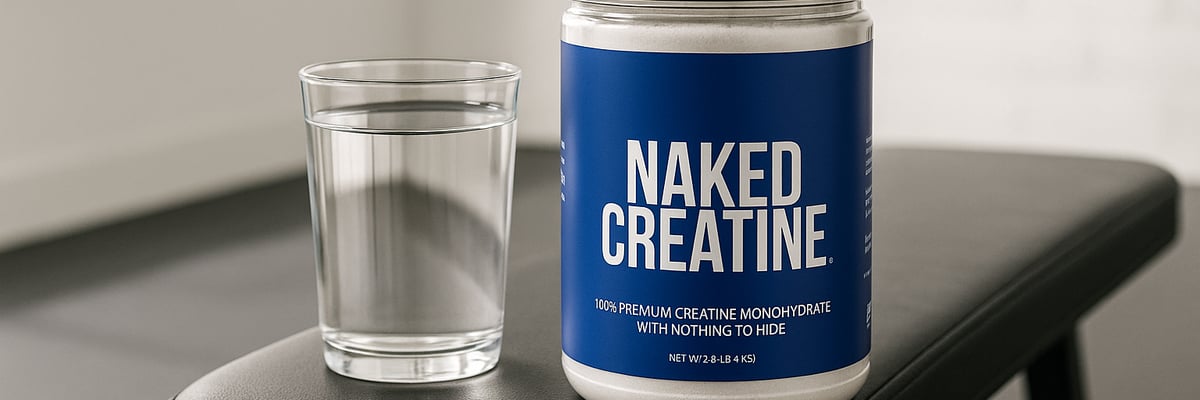
Naked Creatine Monohydrate är ett enkelt, smaklöst pulver utan tillsatser och med tredjepartstestning för renhet. Blandat i vatten under din fastetid ger det dig fulla prestations- och återhämtningsfördelar av kreatin utan att kompromissa med fastan. Om du fastar regelbundet och tränar hårt är det det enkla alternativet som tar bort all gissning om vad som faktiskt finns i ditt tillskott.
Sammanfattning

Svaret på "bryter kreatin fastan" är ett tydligt nej — förutsatt att du använder rätt produkt och blandar den korrekt. Rent kreatinmonohydrat i vatten, svart kaffe eller osötat te passar bekvämt inom vilken fastetid som helst. Det tillför inga kalorier. Det höjer inte insulinet. Det stör inte autofagi på något dokumenterat sätt.
Vad det gör är att hålla dina muskelkreatinlager fyllda så att när du tränar — fastande eller mätt — har dina celler fosfokreatinreserverna för att orka med högintensivt arbete. Det är det praktiska värdet av att upprätthålla ditt tillskottschema under dina fastedagar istället för att hoppa över det.
Det enda som ändrar din beräkning: produkten du väljer. Förblandade kreatinformler, smaksatta alternativ eller blandade tillskott innehåller ofta exakt de ingredienser som bryter din fasta. Läs etiketten. Enkel ingrediens, osmakad, tredjepartstestad är din grund. Börja där, blanda det i vanligt vatten, och din kreatinrutin integreras med ditt fastaprogram utan problem.
Vanliga frågor
Bryter kreatin fastan?
Rent kreatinmonohydrat innehåller inga kalorier och utlöser ingen insulinrespons, så det bryter tekniskt sett inte fastan i metabol bemärkelse. Men om ditt fasta mål strikt är autofagi eller vila för magen kan intag av tillskott betraktas som en störning beroende på vilket protokoll du följer.
Orsakar kreatin biverkningar om det tas på tom mage?
Vissa personer upplever mild mag-tarmbesvär, som uppblåsthet eller kramper, när de tar kreatin utan mat. Om du upplever detta kan det hjälpa att dela upp dosen eller ta kreatin med en liten mängd mat under ditt ätfönster för att minska känsligheten i magen.
Påverkar kreatin insulin- eller blodsockernivåer?
Kreatinmonohydrat i sig innehåller varken kolhydrater eller socker, så det orsakar inte en topp i blodsocker eller insulinnivåer. Detta gör det i stort sett kompatibelt med fastandeprotokoll som fokuserar på att bibehålla låga insulinnivåer, såsom de som används för metabol hälsa eller viktkontroll.
När är den bästa tiden att ta kreatin under intermittent fasta?
De flesta experter rekommenderar att ta kreatin under ditt ätfönster, helst runt din träning – antingen före eller efter träning – i kombination med protein och kolhydrater för att stödja upptag och muskelupptag. Men om du tränar i fastande tillstånd är det fortfarande fördelaktigt att ta kreatin före träningen eftersom konsekvent daglig dosering är viktigare än exakt timing.
Stör kreatin autofagi under fasta?
Aktuell forskning tyder inte på att rent kreatinmonohydrat signifikant stör autofagi, den cellulära rengöringsprocess som triggas av fasta. Eftersom kreatin inte innehåller kalorier är det osannolikt att det aktiverar näringskänsliga vägar som mTOR eller insulinsignalering som skulle stoppa autofagisk aktivitet.
Hur mycket kreatin bör jag ta dagligen vid intermittent fasta?
Den vanliga underhållsdosen av kreatin är 3–5 gram per dag, vilket är detsamma oavsett om du praktiserar intermittent fasta. En laddningsfas på 20 gram per dag (uppdelat på 4 doser) i 5–7 dagar är valfri och kan hjälpa till att mätta muskellagren snabbare, men är inte nödvändig för långsiktiga resultat.
Är Naked Creatine testat av tredje part och fritt från tillsatser?
Naked Creatine innehåller endast en ingrediens — 100 % rent kreatinmonohydrat — utan konstgjorda smaker, sötningsmedel eller fyllnadsmedel som kan bidra med dolda kalorier eller oönskade ämnen under fasta. Det är också testat av tredje part för kvalitet och renhet, vilket ger dig trygghet i att innehållet stämmer överens med etiketten.
Kan kreatin hjälpa till att bevara muskelmassa under fasta?
Ja, kreatintillskott kan hjälpa till att bevara muskler under fasta genom att bibehålla fosfokreatinlagren i musklerna, vilket ger energi för korta högintensiva aktiviteter och minskar nedbrytningen av muskelprotein under energibegränsade förhållanden. Tillsammans med tillräckligt proteinintag under din ätperiod är kreatin ett värdefullt verktyg för att behålla mager muskelmassa vid kaloriunderskott.
Toppval av produkter
Vald av över 1 miljon kunder. Fri frakt på beställningar över 100 $.
Kreatinmonohydratpulver | Naked Creatine - 2,2 LB
$35.99
- ✓ 100 % premium kreatinmonohydrat
- ✓ Högsta tillgängliga kvalitet: löser sig snabbt och absorberas snabbt
- ✓ 5 g kreatin per portion
- ✓ Inga konstgjorda sötningsmedel, smaker eller färger

Citron Lime Kreatinmonohydratpulver | Naked Creatine - 1,1 LB
$29.99
- ✓ 100 % premium kreatinmonohydrat
- ✓ Högsta tillgängliga kvalitet: löser sig snabbt och absorberas snabbt
- ✓ 5 g kreatin per portion
- ✓ Inga konstgjorda sötningsmedel, smaker eller färger

Jordgubbskreatinmonohydratpulver | Naked Creatine - 1,1 LB
$29.99
- ✓ 100 % premium kreatinmonohydrat
- ✓ Högsta tillgängliga kvalitet: löser sig snabbt och absorberas snabbt
- ✓ 5 g kreatin per portion
- ✓ Inga konstgjorda sötningsmedel, smaker eller färger