





Key Takeaways
- Bench press isn't mandatory: You can build a strong, full chest using push-ups, dumbbell variations, cables, and machines without ever touching a barbell bench.
- Alternatives exist for every situation: Whether you're injured, training at home, or just tired of waiting for the bench station, effective substitutes are available for every equipment setup.
- Muscle recruitment matters more than the tool: Good bench press alternatives share the same horizontal pushing pattern and recruit the pecs, anterior deltoids, and triceps.
- Dumbbells offer advantages the barbell doesn't: Greater range of motion, independent arm loading, and reduced shoulder stress make dumbbell variations worth using even when you have full gym access.
- Progressive overload still applies: You can build real strength without bench pressing by systematically increasing reps, sets, weight, or reducing rest periods over time.
- Nutrition closes the gap: Adequate protein intake and smart supplementation support the muscle protein synthesis that makes any chest training pay off.

Beef Protein Powder | Naked Beef Protein - 1.1LB
- No Artificial Additives
- Made in the USA
- Quality Verified
- Expert Nutrition Support
The Best Bench Press Alternatives for Building a Strong Chest

Bench press is one of the most effective compound movements for chest development. It loads the pectorals, anterior deltoids, and triceps through a horizontal pushing pattern that's hard to beat for raw strength and muscle mass. But it's not the only way to build a powerful chest, and for a lot of people, it's not even the best way.
The truth is that any exercise replicating that same pushing pattern, recruiting the same primary muscles, and allowing progressive overload qualifies as a legitimate bench press alternative. That covers a wide range of movements: bodyweight drills you can do in a hotel room, dumbbell variations that give you a fuller range of motion, cable exercises that keep the muscle under constant tension, and machine presses that let you train safely to failure without a spotter.
This guide covers the best bench press alternatives across all those categories. Whether you're dealing with a shoulder issue, training at home, or just want to build smarter chest programming, you'll find exercises here that deliver real results.
- Recruits the same primary movers: pectoralis major, anterior deltoid, and triceps
- Follows a horizontal or slight-angle pushing pattern
- Allows progressive overload over time (more weight, reps, or difficulty)
- Can be performed safely without compromising the shoulder joint
- Fits your available equipment and training environment
Why You Might Need a Bench Press Alternative

There's nothing inherently wrong with the flat bench press. It's an efficient compound movement with decades of research behind it. The problem is that it doesn't work for everyone in every situation, and forcing it when it doesn't fit is how people get hurt or stuck.
Injury is the most common reason. The rotator cuff and AC joint take significant stress during the bench press, particularly when the elbows flare wide or the shoulder blades aren't properly retracted. Shoulder impingement is another frequent complaint, especially in lifters who bench frequently without addressing mobility. If pressing overhead or on a flat bench causes pain, pushing through it rarely fixes anything.
Equipment access is the second barrier. Not everyone trains in a gym with a free rack and a dedicated bench station. Home gyms often run on dumbbells, bands, and bodyweight. Even in commercial gyms, the bench press station is frequently the most contested piece of equipment during peak hours.
Then there's the matter of adaptation. Muscles respond to new stimuli. If you've run the same flat bench program for months and progress has stalled, rotating in alternatives isn't giving up on bench press. It's good periodization. Different exercises load the chest from different angles and challenge stabilizer muscles the barbell version ignores, which can break plateaus and add balanced thickness across the pectoral region.
Bench Press Alternatives at Home (No Equipment Needed)
Push-ups are the most underrated chest exercise in existence. The movement pattern mirrors the bench press almost exactly, just inverted. You're pressing your bodyweight away from a fixed surface through the same pec-dominant horizontal push. The difference is that push-ups also demand full core engagement and scapular stability throughout every rep.
Standard push-ups are just the starting point. Varying hand position dramatically changes which part of the chest gets emphasized:
- Wide-grip push-ups: More pec stretch at the bottom, greater outer chest recruitment
- Diamond push-ups: Hands close together under the sternum, heavy triceps involvement
- Decline push-ups: Feet elevated on a chair or couch, shifts emphasis to the upper chest
- Archer push-ups: One arm extends out laterally while the other bends, loading each side unilaterally
Dips using two sturdy chairs or a countertop edge target the lower chest and triceps. Lean your torso slightly forward to shift the load toward the pecs rather than purely the arms.
For progressive overload without added weight, use these strategies: increase total reps per set, slow the lowering phase to a 3-4 second count, reduce rest between sets, or move toward harder variations like archer push-ups or single-leg decline push-ups. A bodyweight chest workout built on these progressions can build genuine muscle when volume and consistency are managed well.
Suggested starting point: 3 to 4 sets of push-ups to near failure, 60 to 90 seconds rest between sets, three times per week.
Dumbbell Bench Press Alternatives

Dumbbells solve several of the bench press's most common limitations. Each arm works independently, so dominant-side compensation is eliminated. The range of motion is longer than a barbell allows, particularly at the bottom of the press where the pecs get a fuller stretch. And the ability to rotate the wrists naturally throughout the movement puts far less stress on the shoulder joint.
Dumbbell chest press (flat): The closest direct substitute for the barbell bench press. Lie on a flat bench, hold a dumbbell in each hand at chest level with elbows at roughly 45 degrees, and press up until the arms are extended. Lower slowly and controlled. Use 3 to 4 sets of 8 to 12 reps for hypertrophy, or 4 to 6 reps with heavier weight for strength.
Dumbbell fly: This isolates the chest through a wide arcing movement rather than a press. Keep a soft bend in the elbows throughout. Lower the dumbbells until you feel a strong stretch across the pecs, then bring them back together at the top. Use lighter weights than you'd press. This exercise builds chest width and reinforces the mind-muscle connection in the pecs. 3 sets of 12 to 15 reps works well here.
Dumbbell pullover: A unique movement that hits the chest, lats, and serratus anterior simultaneously. Lying perpendicular across a bench, lower a single dumbbell behind your head in a controlled arc, then pull it back over your chest. The serratus anterior benefit is worth noting: it supports the rib cage visually and improves scapular mechanics, which helps every other chest exercise you do.
Floor press with dumbbells: No bench required. Lying flat on the floor naturally limits the depth of the movement, eliminating the extreme shoulder stretch at the bottom of a full press. This makes it the most shoulder-friendly dumbbell pressing option available, and a solid choice for anyone returning from a rotator cuff irritation.
Barbell and Cable Bench Press Alternatives
If you have access to a barbell, adjustable bench, or cable machine, you have several targeted alternatives that allow you to train the chest from angles the flat bench doesn't reach.
Incline bench press: Set the bench to 30 to 45 degrees. Angles above 45 degrees shift too much load onto the anterior deltoid and away from the upper pec. This variation builds the clavicular head of the pectoralis major, which is what creates that full, shelf-like upper chest appearance. Use 3 to 4 sets of 6 to 10 reps with a barbell or dumbbells.
Decline bench press: Targets the lower chest fibers and typically allows slightly more weight than the flat version due to mechanical advantage. It also generates less shoulder impingement risk than flat pressing for many lifters, making it a smarter option if the flat bench bothers your AC joint. 3 to 4 sets of 8 to 10 reps.
Close-grip bench press: Bring your hands to shoulder-width or slightly narrower. The narrower grip shifts emphasis heavily toward the triceps while still engaging the chest through the same horizontal push. Because the elbows stay closer to the torso, shoulder stress is significantly reduced. This makes it both a strength builder and a shoulder-friendly press option. 3 to 4 sets of 6 to 10 reps.
Cable chest press: Set the cables at chest height and press forward from a staggered stance. Unlike any free weight variation, cables maintain constant tension on the pecs throughout the entire range of motion, including at the top where free weights go slack. This continuous mechanical tension makes cable pressing particularly effective for hypertrophy. 3 to 4 sets of 10 to 15 reps.
Machine chest press: Underutilized by experienced lifters, but genuinely valuable. The guided path lets you train closer to failure without a spotter. It's ideal for the last exercise of a chest workout when fatigue has compromised your ability to stabilize a barbell or dumbbell safely. The tradeoff is reduced stabilizer recruitment, but that's a reasonable exchange at the end of a session.
How to Build a Chest Workout Without Bench Press

Removing the bench press from your program doesn't mean removing structure. A well-organized chest session using alternatives should still cover three elements: a compound pressing movement, an isolation movement for stretch-focused loading, and enough total volume to drive growth.
Here's a sample chest workout using alternatives only:
- Dumbbell chest press (flat bench): 4 sets × 8 reps
- Incline dumbbell press: 3 sets × 10 reps
- Cable chest press: 3 sets × 12 reps
- Dumbbell fly: 3 sets × 15 reps
- Dips (bodyweight or weighted): 2 sets to near failure
For push/pull programming, chest exercises belong on push days alongside shoulder pressing and tricep work. Training chest two times per week with 48 hours between sessions gives muscles adequate recovery while providing enough frequency to drive consistent adaptation.
Progressive overload without a bench press PR still follows the same principles. Track your dumbbell press weight , your push-up rep count, or your cable press load. When you hit the top of your target rep range cleanly for two consecutive sessions, increase the weight or difficulty. Keep a log. Progress is progress regardless of the implement.
📊 What Research Says
Research comparing muscle activation across chest exercises consistently shows that the pectoralis major can be effectively recruited through multiple pushing patterns. A 2017 study published in the Journal of Strength and Conditioning Research found that push-ups performed with equivalent loading to a bench press produced comparable pectoral and anterior deltoid muscle activation, confirming that movement pattern and load, not the specific implement, determine chest stimulus.
Fuel Your Chest Gains: Nutrition Tips

Training creates the stimulus for muscle growth. Nutrition is what determines whether your body actually responds to it. No amount of well-programmed chest work will produce meaningful results if protein intake is chronically low or caloric intake doesn't support the building process.
For muscle building, target 0.7 to 1 gram of protein per pound of bodyweight per day. For a 180-pound lifter, that's 126 to 180 grams of protein daily. Distributing that across 3 to 5 meals and snacks keeps muscle protein synthesis elevated throughout the day rather than spiking it once and letting it fall.
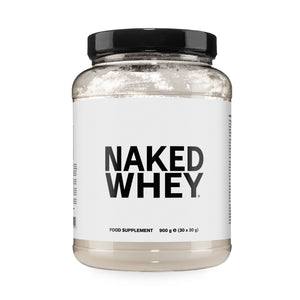
Post-workout nutrition deserves specific attention. Consuming protein within two hours after training provides the amino acids needed to begin repairing and building the muscle tissue stressed during your session. Whey protein is fast-digesting and well-suited to this window. Naked Whey delivers 25 grams of clean protein per serving from a single ingredient: 100% grass-fed whey with no additives. For overnight recovery, a slower-digesting protein like Naked Casein sustains amino acid delivery across the longer fasting window during sleep.
Creatine monohydrate is worth adding if strength and power output are priorities. It's the most studied ergogenic compound in sports nutrition, and evidence consistently supports its ability to increase high-intensity work capacity. More reps at heavier loads across your chest alternatives translates directly into more muscle over time. 3 to 5 grams daily of Naked Creatine is the evidence-backed dose, no loading phase required.
Get enough sleep, manage training stress , and keep total calories adequate for your goals. Supplementation supports a solid nutritional foundation. It doesn't replace one.
Frequently Asked Questions
What are the best bench press alternatives for building chest muscle?
Push-up variations, dumbbell flyes, and cable crossovers are among the most effective alternatives for chest development. Dumbbell press variations are particularly useful because they allow a greater range of motion than a barbell, which increases the stretch on the pectorals and can drive more muscle growth over time.
Can I build a strong chest without ever doing the bench press?
Yes. The bench press is a tool, not a requirement. What matters for chest development is progressive overload, sufficient volume, and training the pectorals through a full range of motion — all of which you can achieve with dumbbells, cables, or bodyweight movements.
What bench press alternatives are safe for people with shoulder injuries?
Low cable flyes, landmine presses, and neutral-grip dumbbell presses tend to be the most shoulder-friendly options. They reduce the external rotation stress that makes the barbell bench press problematic for people with rotator cuff issues or shoulder impingement. Always get clearance from a physical therapist before loading a compromised shoulder.
Are push-ups a legitimate bench press alternative or just a beginner exercise?
Push-ups are a legitimate chest exercise at any training level. Research published by Calatayud et al. in the Journal of Human Kinetics (2015) found that weighted push-ups produced similar pectoral and tricep muscle activation to the barbell bench press. Add a weight vest or elevate your feet to keep the stimulus challenging as you get stronger.
Which bench press alternative works best if I only have dumbbells at home?
The dumbbell floor press is your most practical option for heavy pressing without a bench. It limits the range of motion slightly, which actually reduces shoulder stress while still loading the chest and triceps effectively. Pair it with dumbbell flyes on the floor to cover both pressing and isolation work.
How do bench press alternatives compare for targeting the upper chest?
Incline dumbbell press and low-to-high cable flyes are the most direct alternatives for the upper pectorals. The clavicular head of the pec responds best to pressing at an incline between 30 and 45 degrees, so keeping that angle consistent matters more than which piece of equipment you use.
Do I need to change my nutrition approach when switching to bench press alternatives?
Your nutrition priorities stay the same: adequate protein intake, a caloric surplus for muscle gain or a moderate deficit for fat loss, and proper recovery. Hitting 0.7 to 1 gram of protein per pound of bodyweight daily supports chest muscle repair and growth regardless of which pressing variation you train. The exercise changes; the nutritional fundamentals don't.
How often should I train with bench press alternatives to see results?
Training the chest two times per week with adequate volume is the evidence-supported sweet spot for hypertrophy. Schoenfeld et al. (2016, Journal of Strength and Conditioning Research) found that training a muscle group twice weekly produced greater growth than once-weekly training with the same total volume. Aim for 10 to 20 working sets per week spread across two sessions.
Top General Nutrition Picks
Chosen by 1 million+ customers. Free shipping on orders over $100.

Bone Broth Protein Powder | Naked Bone Broth - 1LB
$39.99
- ✓ Grass-Fed Source
- ✓ Unflavored
- ✓ No Artificial Additives

Vanilla Beef Protein Powder | Naked Vanilla Beef Protein - 1.2LB
$44.99
- ✓ Whey Protein Base
- ✓ No Artificial Additives
- ✓ Made in the USA

Chocolate Beef Protein Powder | Naked Chocolate Beef Protein - 1.2LB
$44.99
- ✓ No Artificial Additives
- ✓ Made in the USA
- ✓ Quality Verified