



Picking the right protein depends on a number of different factors. The biggest two are going to be your dietary restrictions and how you react to dairy products.
Take a look at the information below to see which Naked Nutrition products fit your lifestyle and goals.
Consider Your Diet and Your Goals
The first thing to consider when trying to pick the best protein powder for you is whether or not you have any dietary restrictions. Vegans, for example, would not want to use whey or casein since these are both derived from milk. You also need to consider allergies and intolerance.
Whey contains lactose, which some people are intolerant to. Casein does contain lower levels of lactose – making it acceptable to some – but it is also possible to have an allergy to casein itself. Soy is also a common allergen. Even if they do not have an allergy to towards soy beans, many people chose to limit the amount of soy in their diet due to the potential negative health effects it contains.
The next step is to decide why you want to take a protein powder to begin with. If you’re looking to lose weight with minimal muscle loss, you may opt for our high protein meal replacement powder. Our general protein powders - including Naked Whey and Naked Pea - are also ideal for weight loss as long as you're watching your intake.
If you want to maintain or grow your muscle mass, then you’ll want a protein powder that has a considerable amount of calories to keep you feeling full, such as casein protein. For workout recovery, whey is a fast-absorbing protein powder that's going to provide the right nutrition to speed up the recovery process.
Whey
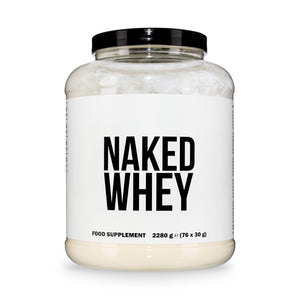
Whey protein is the most popular form of supplemental protein, and is derived from milk. Naked Whey is a complete amino acid source with moderate to high levels of most essential amino acids including valine, leucine, and isoleucine (Branched Chain Amino Acids or BCAAs).

Whey has a relatively large amount of l-cysteine; the amino acid precursor to n-acetylcysteine and to the anti-oxidant enzyme glutathione. Also, whey has some bioactive peptides that may reduce blood pressure (by acting as weak ACE inhibitors).
While whey has a very high biological value (BV) it is not as filling as other types of protein and is quickly digested by the body. This is why whey is great for you right after a workout.
Casein
Naked Casein is milk protein minus the whey. It is a complete protein source and its amino acid profile is relatively high in glutamine.
It is a slow absorbing protein due to its gel forming properties, which means that it’s generally better to mix Naked Casein in a blender rather than a shaker bottle. Also, casein is a great choice for a before bed shake since your body will absorb the protein slowly throughout the night.
Casein is fantastic with baked goods due to its tendency to gel. You can make protein cheesecakes and protein muffins with casein whereas other proteins like whey or rice would need xanthan gum or glucomannan to act as gel-forming agents independently.
Finally, casein is a good choice for those who want to lose fat while keeping and increasing muscle. The BV rating is lower than whey but casein protein encourages carbohydrate burning and fat loss.
One important note: the allergic response tends to be far stronger with casein than whey. So if you have a dairy issue, you might need to lay off.
Goat
Naked Goat is a fantastic substitute for children and adults who are allergic to cow's milk. It has been demonstrated that 90 percent of children who have an allergy to cow's milk do not show allergy symptoms when using goat whey.
Goat whey has many of the similar properties as whey protein with a high protein and amino acid content, with goat whey having higher levels of potassium per serving.

For people who cannot tolerate cow's milk, goat whey can be a good way to get the benefits of drinking milk without the symptoms.
Pea
Naked Pea is a vegan, gluten-free protein type that has no lactose and is also free of cholesterol. Pea protein is easily digestible, allowing for maximum absorption.
It also contains an ideal combination of essential amino acids for athletic performance: lysine for balanced nitrogen levels in muscles, arginine promotes muscle metabolism and a healthy heart, glutamine helps restore nitrogen balance after a heavy workout, and leucine, isoleucine and valine help maintain tissues during exercise.
Pea protein is also hypoallergenic and ideal for those allergic to soy, whey, egg, or other animal-based proteins.
Rice
Naked Rice comes from organic sprouted whole grain brown rice, and provides all 9 essential amino acids – the building blocks of our muscles, it is also rich in complex carbohydrates and B and E vitamins.
Brown rice protein also contains high levels of antioxidants and essential nutrients including iron, potassium, riboflavin, niacin, phosphorous, and thiamin.

Brown rice protein tends to be low in the amino acid lysine, and high in cysteine and methionine, whereas pea protein is high in lysine and low cysteine and methionine. When combined, brown rice and pea protein offer a Protein Efficiency Ratio that rivals dairy and egg, but without the unpleasant side effects and allergens.
We hope these descriptions help when picking your protein.