




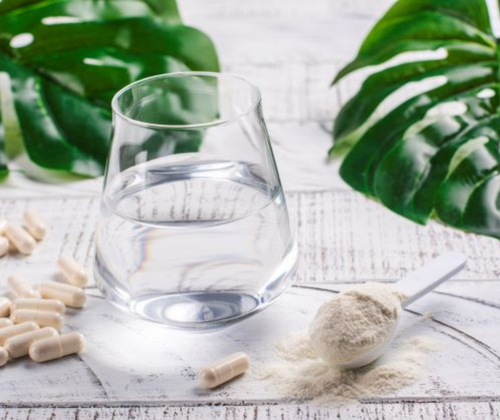
The most abundant protein in the human body, collagen is a main component of tendons, ligaments, muscles, fat, and skin (1).
Although we naturally produce collagen, there are health benefits to taking supplemental collagen such as improving the health of the joints, skin, and digestive system, as well as reducing recovery time after a workout.
In fact, the more collagen you have, the better your body is at producing and maintaining its collagen stores.
Collagen supplements have become increasingly popular over the past several years.
Naked Collagen is a great option because not only is it sourced from grass-fed pasture, raised cows, but the collagen is hydrolyzed, meaning it is broken down and easier for you to absorb.
Can you take collagen on an empty stomach?
There are many claims that it is best to take collagen on an empty stomach.
The theory here is that since stomach acid is needed to digest collagen proteins, the acid will be more effective and readily available on an empty stomach.
Our bodies are pretty miraculous machines, so when collagen proteins enter our digestive system, we absorb the protein and it goes to wherever the body needs it most – regardless if your stomach is empty or full (4).
However, while it is definitely safe to take collagen on an empty stomach (like to break a fast), there is no conclusive evidence that taking collagen on an empty stomach is best.
Just take your collagen whenever you like!
What’s the best way to take collagen?
Taking collagen daily is a no-brainer.
Who doesn’t want shinier hair, glowy skin, strong muscles and joints, and a healthy digestive system? However, deciding how and when to take collagen to reap its benefits may be a bit confusing.
Here are some of the best ways to take collagen.
Take collagen in its hydrolyzed form

Hydrolyzed collagen, also known as collagen peptides, is a broken-down form of collagen that is easier for the body to absorb.
In fact, studies show that collagen is absorbed quicker and in greater amounts when it is hydrolyzed (3).
Hydrolyzed collagen can be easily absorbed through the intestines before it then enters the bloodstream to travel throughout your body. It is also a great supplement if you’re looking to promote better gut health.
If you’re wondering how much collagen you should take per day, 10-20 grams (1-2 servings) is adequate for most purposes.
Collagen and vitamin C

Some sources claim that in order to best absorb collagen it’s necessary to eat something rich in vitamin C.
While it is true that vitamin C is needed for the body to make collagen, it does not make a difference whether or not you consume vitamin C at the same time as collagen.
If you are getting enough vitamin C in your diet, your body is able to make collagen. Aim to eat a diet rich in fresh fruits and vegetables such as kale, broccoli, peppers, oranges, squash, and tomatoes to ensure you are getting adequate vitamin C (2).
Key Takeaways
It does not matter if you take collagen on an empty stomach or with a meal.
Collagen peptides are absorbed through the intestines and then into the bloodstream regardless of when you take them.
The important thing is that you are opting for collagen in its hydrolyzed form. Plus, be sure to incorporate your supplement daily to get the most benefit.
Take your daily collagen supplement at a time that works best for you – whether that means first thing in the morning, before you go to sleep, or mixed into a mid-afternoon snack.
See below for a gut-nourishing and fall-inspired smoothie that would be great as breakfast or a snack:
Gut-Nourishing Pumpkin Smoothie

Ingredients
- 2 scoops of collagen protein powder
- ¼ cup canned pumpkin
- 1 teaspoon pumpkin pie spice
- ½ cup plain greek yogurt
- 1 tsp honey or maple syrup
- 1 frozen banana
- 1 cup of cow’s milk or your favorite non-dairy alternative
Directions: Blend all ingredients and enjoy!