



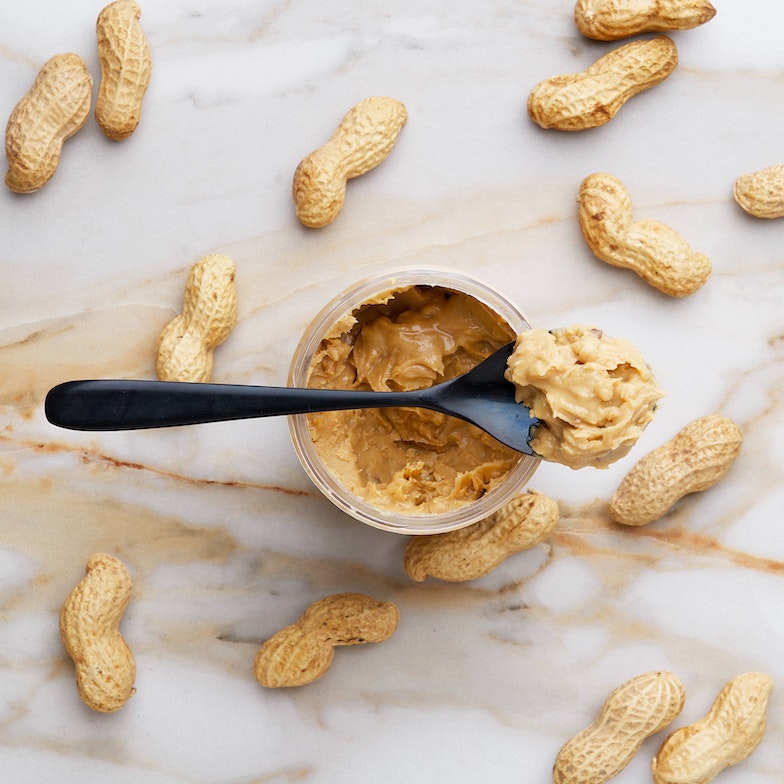
Peanut butter has been a staple of bodybuilders and athletes for a very long time. In one convenient, delicious package, peanut butter delivers a respectable dose of protein, healthy fat and slow carbs.
But, old school peanut butter is not without its problems. And, over the past few years, a new alternative – powdered peanut butter – has popped up.
What are the advantages of powdered peanut butter vs traditional peanut butter?
Powdering Peanut Butter
To fully understand what makes powdered peanut butter an appealing option, it's important to know how one would convert peanut butter into a powder.
While the exact process will vary slightly from company to company, the basic idea is to literally press the fat out of standard peanut butter. And that's it.
With the fatty oils removed, the butter is reduced to a powder with the same flavors. In theory, powdered peanut butter can be reconstituted by adding water. But, more on that later.

Nutritional Breakdown
For now, let's focus on the nutritional comparison of the two peanut butters.
Since peanut butter is powdered through an extraction of fat – of which peanut butter has a considerable amount – it stands to reason that powdered peanut butter would have less fat. Plus, with that fat gone, it has fewer calories. The exact numbers, though, might surprise you.
Here's the nutritional breakdown of one serving of a popular brand of natural creamy peanut butter:
Total calories – 190
Fat – 16g
Carbs – 8g
Protein – 7g
Now, here's the nutritional content of the same serving of Naked PB:
Total calories - 50
Fat - 1.5g
Carbs – 4g
Protein – 6g
The nutritional advantage of powdered peanut butter is pretty clear. In reality, though, there is a lot more to it than that.
Practical Use
One of the challenges that fitness-minded peanut lovers sometimes face when it comes to their peanut butter addiction has to do with the surprising amount of calories that it contains. And, sadly, it's actually much lower in protein than people realize.

In fact, even powdered peanut butter only contains 6g per serving. But, because powdered peanut butter is so low in calories, you can easily eat more and effectively pile on the protein.
For example, you would have to quadruple your serving of powdered peanut butter before the calories about equaled those of a standard serving of peanut butter.
This big ol' 8tbsp serving of powdered peanut butter would still have a pretty fantastic nutritional profile – one that traditional peanut butter just can't touch. It would look like this:
Total calories – 200
Fat – 6g
Carbs – 16g
Protein – 24g
What really makes powdered peanut butter exciting for peanut-lovers, though, is just how useful it is. Cooking or making smoothies with traditional peanut butter can be a challenging prospect.
Powdered peanut butter, though, can be easily added to any recipe or blended into a smoothie. As mentioned, you can also reconstitute your powdered peanut butter.
By adding a small amount of water, the powder will once again become a paste that can be used just like traditional peanut butter.