



Auf dieser Seite
Wie man Kreatin HCL für maximale Ergebnisse einnimmt
Entfesseln Sie Spitzenleistungen mit der genauen Dosierung, dem Timing und den Stapelstrategien, um das Beste aus Kreatin HCL herauszuholen.

Wichtigste Erkenntnisse
- Kleinere Dosis, gleiches Ziel: Kreatin HCL wirkt bei 1–2 Gramm täglich, im Vergleich zu 3–5 Gramm bei Monohydrat, dank seiner überlegenen Wasserlöslichkeit.
- Keine Ladephase erforderlich: Konstante tägliche Dosierung sättigt die Muskelkreatinspeicher effektiv ohne eine Hochdosis-Ladephase.
- Kein Zyklus nötig: Aktuelle Forschung unterstützt kein Kreatin-Zyklus. Tägliche Einnahme auf unbestimmte Zeit ist sicher und effektiver als Ein-Aus-Protokolle.
- Ergebnisse brauchen Wochen, keine Tage: Erwarten Sie erste Leistungsverbesserungen innerhalb von 1–2 Wochen und volle Vorteile nach 3–4 Wochen.
- Gut verträglich: Weniger Magen-Darm-Nebenwirkungen als Monohydrat, was HCL zu einer praktischen Alternative für Menschen mit empfindlichem Verdauungssystem macht.
- Kompatibel mit anderen Ergänzungen: Kombiniert sicher mit Protein, Pre-Workout, Elektrolyten und Koffein.
- Ehrlicher Hinweis: Monohydrat hat eine größere Datenbasis. HCL ist eine starke praktische Alternative, kein klinisch nachgewiesenes Upgrade.

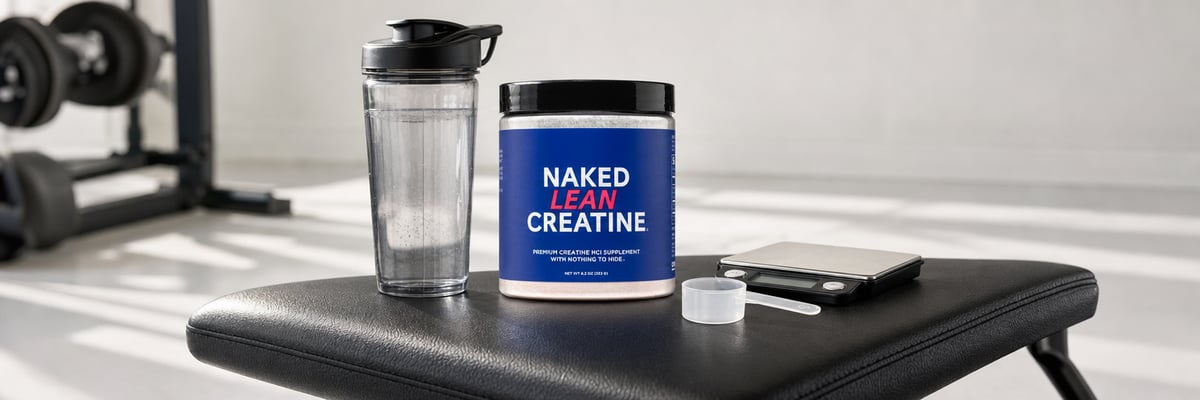
Kreatin HCl Pulver | Naked Lean Creatine - 232g
- Kreatinformel
- Keine künstlichen Zusatzstoffe
- Hergestellt in den USA
- Qualität geprüft
Was ist Kreatin HCL und wie unterscheidet es sich von Monohydrat?

Kreatin ist eine Verbindung, die Ihr Körper natürlich in der Leber und den Nieren produziert und hauptsächlich in der Skelettmuskulatur speichert. Seine Aufgabe ist einfach: Es hilft, ATP zu regenerieren, das Molekül, das jede explosive Bewegung antreibt, die Sie machen. Jeder schwere Kniebeuge, Sprint oder Sprung hängt von der schnellen Verfügbarkeit von ATP ab. Die Einnahme von Kreatin erhöht die Phosphokreatinspeicher Ihrer Muskeln, was dieses Zeitfenster für hochleistungsfähige Energie verlängert, mehr Wiederholungen, schnellere Erholung zwischen den Sätzen und ein größeres Gesamttrainingsvolumen ermöglicht. [1]
Creatin HCL ist Creatin, das mit einer Hydrochloridgruppe an das Molekül gebunden ist. Diese chemische Veränderung bewirkt vor allem eines: Sie erhöht die Wasserlöslichkeit dramatisch. Creatin HCL löst sich fast sofort in Flüssigkeit auf, ohne Sand oder Rückstände, was einen deutlichen Unterschied zur Neigung von Monohydrat darstellt, sich am Boden eines Glases abzusetzen. Diese höhere Löslichkeit soll die intestinale Aufnahme verbessern und die Verdauungsbeschwerden verringern, die manche Menschen bei Monohydrat erleben. [2]
Das praktische Ergebnis ist eine deutlich geringere wirksame Dosis. Die meisten Menschen nehmen täglich 1–2 Gramm Creatin HCL ein, im Vergleich zu 3–5 Gramm Monohydrat. Weniger Pulver, kein Sandgefühl und in der Regel keine Blähungen. Für diejenigen, die die Unterschiede zwischen Creatin HCL und Monohydrat verstehen wollen, sind diese Unterschiede wichtig.
📊 Was die Forschung sagt
Der ehrliche Vorbehalt: Creatin Monohydrat verfügt über jahrzehntelange kontrollierte klinische Studien, die Muskel-Sättigung, Kraftzuwächse und Sicherheit bestätigen. Die Forschung zu HCL speziell steckt noch in den Anfängen, und keine groß angelegte Studie hat bisher bestätigt, dass HCL die Muskel-Creatin-Speicher bei den typischerweise verwendeten niedrigeren Dosen genauso effektiv erhöht wie Monohydrat. [2] HCL wird gut vertragen und ist chemisch stabil, aber seine Überlegenheit gegenüber Monohydrat ist bisher eine Arbeitshypothese und keine endgültige Erkenntnis.
Wer am meisten von der Wahl von HCL profitiert: Menschen mit Magen-Darm-Empfindlichkeit gegenüber Monohydrat, diejenigen, die eine kleinere Dosis bevorzugen, alle, die die Textur von Monohydratpulver nicht mögen, und Sportler, die Creatin ohne das Flüssigkeitsverschiebungsgefühl möchten, das manchmal bei höheren Monohydratdosen auftritt.
Wie man Creatin HCL einnimmt: Dosierung, Zeitpunkt und Mischung

Die empfohlene Tagesdosis von Creatin HCL beträgt 1–2 Gramm. Das war's. Sie benötigen nicht die esslöffelgroßen Portionen, die mit Monohydrat verbunden sind. Da sich HCL so vollständig auflöst, reicht selbst eine kleine Menge Wasser aus, obwohl die meisten Menschen es bevorzugen, es in 180–240 ml zu mischen. Es löst sich sauber auf, hinterlässt keine Rückstände und hat einen milden, leicht säuerlichen Geschmack, den die meisten Menschen gut vertragen oder kaum wahrnehmen.
- Woche 1: Nimm täglich 1 Gramm zu einer festen Zeit ein. Beurteile die Verträglichkeit und achte auf eventuelle Verdauungsreaktionen.
- Ab Woche 2: Erhöhe auf 1,5–2 Gramm täglich. Halte die gleiche Tageszeit ein, um die Gewohnheit zu festigen.
- Körpergewichtsanpassung: Unter 59 kg reicht 1 Gramm aus. Über 100 kg oder bei intensivem Training sollten 2 Gramm täglich angestrebt werden.
- Form: Pulver löst sich schneller auf und ermöglicht flexible Dosierung. Kapseln sind praktischer für unterwegs oder für diejenigen, die das Mischen nicht mögen.
Zur Frage des Timings: Die ehrliche Antwort ist, dass Konsistenz wichtiger ist als die genaue Uhrzeit. Einige Studien deuten auf einen kleinen Vorteil hin, Kreatin nahe am Training einzunehmen, wobei die Einnahme nach dem Training eine etwas bessere Aufnahme zeigt, da die Muskelinsulinsensitivität nach dem Krafttraining erhöht ist. Die Einnahme vor dem Training ist ebenfalls sinnvoll, besonders wenn es mit einer Pre-Workout-Formel kombiniert wird. Wähle den Zeitpunkt, den du tatsächlich einhalten kannst.
An Ruhetagen kann es jederzeit eingenommen werden. Morgens, mit einer Mahlzeit oder zusammen mit anderen Nahrungsergänzungsmitteln – alles funktioniert gleichermaßen gut. Das Ziel ist einfach, die Phosphokreatin-Spiegel in den Muskeln erhöht zu halten. Die Einnahme von Kreatin mit einer gemischten Mahlzeit, die Kohlenhydrate und Protein enthält, kann die Aufnahme leicht verbessern, da die dadurch ausgelöste Insulinreaktion den Kreatintransport in die Muskelzellen unterstützt. Kreatin HCL wird jedoch auch auf nüchternen Magen gut vertragen, besonders im Vergleich zu Monohydrat.
Muss man Kreatin HCL laden oder zyklisch einnehmen?

Kreatin-Laden wurde für Monohydrat entwickelt. Das Protokoll beinhaltet typischerweise die Einnahme von 20 Gramm pro Tag, aufgeteilt in vier oder fünf Dosen über fünf bis sieben Tage, mit dem Ziel, die Kreatinspeicher in den Muskeln schnell zu sättigen. Nach dieser Ladephase reduzieren die Nutzer die Dosis auf eine Standard-Erhaltungsmenge von 3–5 Gramm. Es funktioniert, hat aber seinen Preis: Blähungen, Magenkrämpfe und Wassereinlagerungen sind während der Ladephase, besonders bei den höheren Dosen, die für Monohydrat erforderlich sind, häufig.
Bei Creatin HCL ist eine Ladephase in der Regel nicht notwendig. Die höhere Löslichkeit bedeutet, dass selbst kleine tägliche Dosen effizient aufgenommen werden und die Muskeln allmählich über zwei bis vier Wochen konsequenter Einnahme gesättigt werden. Einige Athleten wählen eine optionale Mini-Ladephase mit 3–4 Gramm HCL für drei bis fünf Tage, um den Prozess zu beschleunigen, aber dies ist nicht durch starke Belege gestützt und erhöht die Wahrscheinlichkeit leichter Magen-Darm-Beschwerden. Für die meisten Menschen ist die Standardtagesdosis der sauberere Ansatz.
Das Kreatin-Cycling, also die Praxis, Kreatin 8–12 Wochen zu nehmen und dann mehrere Wochen Pause zu machen, wurde durch frühe Bedenken populär, dass eine kontinuierliche Einnahme die Nieren belasten oder die Wirkung nachlassen könnte. Diese Bedenken waren größtenteils unbegründet. Aktuelle Forschung unterstützt nicht die Notwendigkeit, Kreatin bei gesunden Personen zu zyklisieren. Der Körper wird nicht unempfindlich gegenüber Kreatin, und eine langfristige kontinuierliche Einnahme hat keine klinisch signifikanten Nebenwirkungen gezeigt. [1]
Es gibt zwei praktische Szenarien, in denen eine Pause sinnvoll ist: wenn du eine klare Ausgangsbasis haben möchtest, um zu beurteilen, ob Kreatin tatsächlich Ergebnisse für dich bringt, oder wenn du in eine Phase mit sehr geringem Trainingsvolumen eintrittst und deine Supplement-Routine vereinfachen willst. Keine davon ist medizinisch notwendig. Die konsequente tägliche Einnahme bleibt das effektivste und einfachste Protokoll.
Wie lange dauert es, bis Creatin HCL wirkt?

Creatin HCL ist kein Stimulans. Du wirst nicht spüren, wie es 30 Minuten nach der ersten Dosis wirkt. Was du ab etwa Woche eins bis zwei bemerkst, ist subtil, aber real: etwas mehr Energie bei schweren Grundübungen, leicht bessere Leistung bei Sprintintervallen oder ein oder zwei zusätzliche Wiederholungen bei einem bestimmten Gewicht. Diese frühen Anzeichen spiegeln die direkte Rolle von Kreatin bei der ATP-Regeneration während kurzer, explosiver Anstrengungen wider.
Die vollständige Muskelsättigung tritt typischerweise nach drei bis vier Wochen konsequenter täglicher Einnahme ein. Dann werden die Vorteile insgesamt deutlicher. Kraftzuwächse werden konstanter, die Muskelvollständigkeit verbessert sich durch den Anstieg des intramuskulären Wassergehalts, die Ausdauer bei hochintensiven Sätzen verlängert sich und die Erholung zwischen den Belastungen wird schneller. Die Veränderungen sind messbar, aber nicht dramatisch, und sie verstärken sich mit fortschreitendem Training.
📊 Was die Forschung sagt
Forschungen zeigen durchgehend, dass Kreatin-Supplementierung die Muskel-Phosphokreatin-Speicher erhöht und die Leistung bei hochintensivem Training verbessert. [1] Die Kraftzuwächse sind real, aber sie sind das Ergebnis davon, dass Kreatin ein intensiveres Training ermöglicht, nicht dass Kreatin unabhängig Muskeln aufbaut. Ohne progressive Überlastung und ausreichende Proteinzufuhr ist der Beitrag von Kreatin begrenzt.
Was Kreatin nicht bewirkt: Fett verbrennen, Muskeln ohne Training aufbauen oder sofortige Ergebnisse liefern. Es gibt Ihren Muskeln mehr Energie für leistungsintensive Arbeit. Die meisten Menschen bemerken die ersten Anzeichen einer Verbesserung innerhalb von Wochen bei konsequenter Anwendung. Kombinieren Sie Kreatin HCL mit konsequentem progressivem Training und ausreichender Proteinzufuhr, und die Ergebnisse zeigen sich planmäßig.
Wie man Kreatin HCL mit anderen Nahrungsergänzungsmitteln kombiniert

Kreatin HCL lässt sich problemlos mit den meisten gängigen Nahrungsergänzungsmitteln kombinieren. Es gibt keine komplizierten Zeitvorgaben oder Wechselwirkungen bei den für die Leistungssteigerung verwendeten Dosierungen.
- Proteinpulver: Eine der effektivsten Kombinationen in der Sporternährung. Protein liefert die Aminosäuren, die für Muskelreparatur und -aufbau benötigt werden, während Kreatin die Trainingsintensität unterstützt, die Anpassungen antreibt. Sie können Kreatin HCL direkt in einen Proteinshake mischen oder separat einnehmen. Beides funktioniert.
- Pre-Workout: Sicher zu kombinieren, aber prüfen Sie zuerst das Etikett Ihres Pre-Workouts. Viele Formeln enthalten bereits Kreatin, manchmal Monohydrat in 1–3 Gramm. Wenn Ihres das tut, kann die zusätzliche Einnahme von HCL Ihre tägliche Kreatinaufnahme unnötig erhöhen. Wenn es kein Kreatin enthält, ist das Mischen von 1–2 Gramm HCL eine einfache Ergänzung.
- Elektrolyte: Natrium, Kalium und Magnesium unterstützen die Hydratation, Muskelkontraktion und Nervenleitung. Bei intensivem Training oder heißen Umgebungen unterstützt die Kombination von Elektrolyten mit Kreatin das Flüssigkeitsgleichgewicht und die Leistung, ohne die Kreatinaufnahme zu beeinträchtigen.
- Koffein: Ältere Studien äußerten Bedenken, dass Koffein die Wirksamkeit von Kreatin beeinträchtigen könnte. Neuere Forschungen bestätigen das nicht. Die Kombination wird weit verbreitet verwendet, gut vertragen und ist praktisch wirksam: Koffein schärft Fokus und Energie, Kreatin unterstützt Kraft und Leistungsfähigkeit. [1]
Eine allgemeine Anmerkung: Kreatin erhöht den Bedarf des Körpers an intrazellulärem Wasser. Bleiben Sie den ganzen Tag über gut hydriert, besonders an intensiven Trainingstagen. Dies ist keine spezielle Anforderung, die nur für Kreatin HCL gilt, aber es lohnt sich, sich diese Gewohnheit anzueignen. Vermeiden Sie die Kombination von Kreatin mit hohen Dosen von Diuretika, es sei denn, ein Arzt hat es empfohlen, da Diuretika aktiv das Flüssigkeitsgleichgewicht stören, das die Funktion von Kreatin unterstützt.
Ist Creatine HCL sicher? Nebenwirkungen und wer einen Arzt konsultieren sollte

Creatin ist eines der am gründlichsten erforschten Supplemente in der Sportwissenschaft und hat eine starke Sicherheitsbilanz. Creatine HCL weist dasselbe Sicherheitsprofil wie Monohydrat auf, ohne Hinweise auf besondere Risiken durch die Hydrochlorid-Modifikation. Bei gesunden Erwachsenen verursacht Creatin keine Nierenschäden, stört keine Leberenzyme, verändert keine Hormone wie Testosteron und beeinträchtigt nicht den Hydratationsstatus. Langzeitstudien über Monate bis Jahre zeigen durchgehend keine klinisch relevanten Nebenwirkungen. [1]
- Nierenschäden: Keine Hinweise bei gesunden Personen. Creatin erhöht die Kreatininwerte im Blut, was in einfachen Laboruntersuchungen auffällig sein kann, aber keinen Hinweis auf Nierenstress oder -schäden darstellt.
- Haarausfall: Basierend auf einer einzigen kleinen Studie aus dem Jahr 2009, die erhöhte DHT-Werte bei Rugbyspielern zeigte. Keine Studie konnte einen direkten Zusammenhang zwischen Creatin und Haarausfall bestätigen.
- Hormonelle Beeinträchtigung: Creatin beeinflusst bei empfohlenen Dosierungen weder Testosteron, Östrogen noch andere Hormone.
- Nur für Männer: Frauen profitieren von der Creatin-Supplementierung genauso wie Männer. Die Sicherheits- und Leistungsdaten gelten gleichermaßen für beide Geschlechter.
Da Creatine HCL sehr gut löslich ist und in kleinen Dosen eingenommen wird, sind Magen-Darm-Nebenwirkungen selten. Personen, die bei Monohydrat Blähungen, Krämpfe oder Übelkeit erlebt haben, finden HCL oft deutlich besser verträglich.
Wer vor der Einnahme von Creatine HCL einen Arzt konsultieren sollte: Personen mit bestehenden Nieren- oder Lebererkrankungen, diejenigen, die Medikamente einnehmen, die die Nierenfunktion beeinflussen, wie NSAIDs oder verschreibungspflichtige Diuretika, Schwangere oder Stillende sowie Personen mit chronischen Magen-Darm-Erkrankungen. Wenn einer dieser Punkte auf Sie zutrifft, sprechen Sie vor Beginn mit Ihrem Arzt. Für alle anderen ist Creatine HCL bei empfohlenen Dosierungen sicher.
Dieser Artikel dient nur zu Informations- und Bildungszwecken und stellt keine medizinische Beratung dar. Konsultieren Sie immer einen qualifizierten Gesundheitsfachmann, bevor Sie ein neues Supplement einnehmen, insbesondere wenn Sie eine Erkrankung haben, schwanger sind oder Medikamente einnehmen.
Worauf Sie bei einem hochwertigen Creatine HCL Supplement achten sollten

Creatin HCL hat von Natur aus eine kurze Inhaltsstoffliste: Es sollte Creatin-Hydrochlorid und kaum etwas anderes enthalten. Das Problem ist, dass viele Produkte auf dem Markt die kleine Portionsgröße als Deckmantel nutzen, um Füllstoffe, künstliche Aromen, Süßstoffe und proprietäre Mischungen hinzuzufügen, die die wirksame Dosis verwässern, ohne die einzelnen Mengen offenzulegen. Das sorgfältige Lesen des Etiketts ist wichtig.
Hier ist, worauf Sie achten und was Sie vermeiden sollten:
- Inhaltsstoffliste: Je kürzer, desto besser. Creatin HCL sollte der Haupt- und idealerweise der einzige Wirkstoff sein. Vermeiden Sie Produkte mit einer langen Liste von Zusätzen, die Kosten verursachen, aber keine Leistungssteigerung bringen.
- Portionsgröße vs. Creatin-Gehalt: Einige Etiketten zeigen eine 2-Gramm-Portion, enthalten aber nur 750 mg tatsächliches Creatin HCL, der Rest sind Füllstoffe. Prüfen Sie, ob der Creatin-HCL-Gehalt pro Portion der angestrebten Dosis entspricht.
- Unabhängige Prüfung: Achten Sie auf Produkte, die von NSF International, Informed Sport oder USP zertifiziert sind. Diese Zertifizierungen bestätigen, dass das Etikett mit dem Produktinhalt übereinstimmt und keine verbotenen Substanzen enthalten sind. Das ist besonders wichtig für Leistungssportler, die Dopingkontrollen unterliegen.
- Geschmacksneutral vs. aromatisiert: Geschmacksneutrales Creatin HCL ist die vielseitigste Option. Es lässt sich in Wasser, Proteinshakes oder Pre-Workout mischen, ohne den Geschmack zu verändern. Aromatisierte Varianten bieten Bequemlichkeit, enthalten aber auch Süßstoffe und künstliche Zutaten, die möglicherweise nicht zu einer Clean-Label-Präferenz passen.
- Pulver vs. Kapseln: Pulver ermöglicht eine präzise Dosierungsanpassung und lässt sich leicht mischen. Kapseln bieten Bequemlichkeit für unterwegs oder für Menschen, die nichts mischen möchten. Beide liefern dasselbe Creatin HCL; die Wahl hängt vom Lebensstil ab.
Naked Nutritions geschmacksneutrales Creatin HCL Pulver enthält keine Füllstoffe oder künstlichen Zusätze und liefert pro Portion eine reine Dosis von 1,5 Gramm Creatin-Hydrochlorid. Es ist für Menschen formuliert, die das Supplement wollen, nicht die Extras. Wenn Sie eine unkomplizierte, hochreine Option suchen, die in jeden Supplement-Stack passt, ohne ihn zu verkomplizieren, ist das der Standard, an dem sich andere Produkte messen sollten.
Die Supplementindustrie hat ein starkes finanzielles Interesse daran, Creatin komplizierter erscheinen zu lassen, als es ist. Das ist es nicht. Ein sauberes Etikett, eine verifizierte Dosierung und eine Prüfung durch Dritte sind die drei Dinge, die ein zuverlässiges Produkt von einer Marketingmaßnahme unterscheiden.
Häufig gestellte Fragen
Wie hoch ist die empfohlene Tagesdosis für Creatin HCL?
Die meisten Studien und Herstellerempfehlungen schlagen vor, 1–2 Gramm Creatin HCL pro Tag einzunehmen, was deutlich weniger ist als die typischerweise empfohlenen 3–5 Gramm für Creatinmonohydrat. Diese reduzierte Dosis ist möglich, weil Creatin HCL besser löslich ist und vom Körper effizienter aufgenommen wird. Beginnen Sie immer mit der niedrigeren Dosis und passen Sie sie je nach Körpergewicht und Trainingsintensität an.
Muss ich bei Creatin HCL eine Ladephase machen?
Nein, eine Ladephase ist bei Creatin HCL aufgrund seiner überlegenen Löslichkeit und Absorptionsrate im Vergleich zu Creatinmonohydrat in der Regel nicht notwendig. Da mehr der Verbindung pro Dosis in Ihr Muskelgewebe gelangt, können Sie Ihre Creatinspeicher allmählich sättigen, ohne das Hochdosis-Ladeprotokoll. Das bedeutet auch, dass Sie weniger wahrscheinlich Verdauungsbeschwerden erleben, die manchmal mit der Ladephase verbunden sind.
Wann ist die beste Zeit, Creatin HCL einzunehmen?
Die am häufigsten empfohlene Zeit, um Creatin HCL einzunehmen, ist 30–45 Minuten vor dem Training, um die Leistung und Kraft während des Trainings zu maximieren. Einige Studien unterstützen auch die Einnahme von Creatin nach dem Training zusammen mit einer Kohlenhydrat- und Proteinquelle, um die Muskelregeneration und Auffüllung zu fördern. Konsistenz ist am wichtigsten, also finden Sie eine Zeit, die zu Ihrer Routine passt, und halten Sie sich täglich daran.
Sollte ich Creatin HCL mit Wasser oder einem anderen Getränk mischen?
Creatin HCL löst sich aufgrund seiner hohen Löslichkeit außergewöhnlich gut in Wasser auf, sodass es sich in nur 6–8 Unzen ohne Klumpen oder Körnigkeit auflösen lässt. Sie können es auch in einen Pre-Workout-Shake, Saft oder Proteinshake mischen, wenn Sie zusätzlichen Geschmack oder Nährstoffe bevorzugen. Vermeiden Sie es, es über längere Zeit mit stark sauren Getränken zu mischen, da eine längere Säureeinwirkung die Verbindung vor dem Verzehr abbauen kann.
Ist Creatin HCL sicher, wenn man es jeden Tag einnimmt?
Ja, Kreatin HCL gilt bei empfohlener Dosierung als sicher für die tägliche Anwendung bei gesunden Erwachsenen und hat ein gut etabliertes Sicherheitsprofil, das anderen Kreatinformen ähnelt. Langfristige tägliche Einnahme hat bei Personen ohne Vorerkrankungen keine Nieren- oder Leberschäden gezeigt. Bei gesundheitlichen Bedenken konsultieren Sie bitte vor Beginn der Einnahme Ihren Arzt.
Verursacht Kreatin HCL Blähungen oder Wassereinlagerungen?
Kreatin HCL verursacht deutlich seltener Blähungen oder Wassereinlagerungen als Kreatinmonohydrat, was einer seiner größten Vorteile ist. Durch seine höhere Löslichkeit wird es im Magen-Darm-Trakt besser aufgenommen, wodurch der osmotische Wassereinstrom in den Darm, der oft zu Blähungen führt, reduziert wird. Viele Sportler, die mit Monohydrat Verdauungsprobleme hatten, empfinden Kreatin HCL als deutlich verträglicher.
Wie lange dauert es, bis man Ergebnisse von Kreatin HCL sieht?
Die meisten Anwender bemerken innerhalb von zwei bis vier Wochen konsequenter täglicher Einnahme Verbesserungen in Kraft, Leistungsabgabe und Trainingsausdauer. Da keine Ladephase erforderlich ist, können die Ergebnisse langsamer eintreten als bei einem Monohydrat-Ladeprotokoll, sind aber über die Zeit ebenso effektiv. Die Kombination von Kreatin HCL mit einem strukturierten Trainingsprogramm und ausreichender Proteinzufuhr hilft, die besten Ergebnisse zu erzielen.
Ist das Kreatin HCL von Naked Nutrition von Dritten getestet oder zertifiziert?
Naked Nutrition steht für Transparenz und Qualität. Die Nahrungsergänzungsmittel werden in Einrichtungen hergestellt, die cGMP-Standards (Current Good Manufacturing Practice) einhalten, um Reinheit und Konsistenz zu gewährleisten. Viele Produkte von Naked Nutrition werden von Dritten getestet, um sicherzustellen, dass das Etikett mit dem Produktinhalt übereinstimmt und keine verbotenen Substanzen oder schädlichen Verunreinigungen enthalten sind. Prüfen Sie stets die Produktseite für die aktuellsten Zertifizierungen und Testergebnisse speziell zur Kreatin HCL-Formel.
Top Produktempfehlungen
Von über 1 Million Kunden gewählt. Kostenloser Versand ab 100 $ Bestellwert.
Kreatin HCl Pulver | Naked Lean Creatine - 232g
$34.99
- ✓ 750 mg Con-Cret® Kreatin HCl
- ✓ Bio-Kaktusfeige für natürlichen Wasserhaushalt
- ✓ Hochwirksam: überlegene Muskelleistung bei geringeren Dosen
- ✓ Wichtige Elektrolyte für optimale Kreatinaufnahme

Raspberry Lime Kreatin HCl Pulver | Naked Lean Creatine - 231g
$34.99
- ✓ 750 mg Con-Cret® Kreatin HCl
- ✓ Bio-Kaktusfeige für natürlichen Wasserhaushalt
- ✓ Hochwirksam: überlegene Muskelleistung bei geringeren Dosen
- ✓ Wichtige Elektrolyte für optimale Kreatinaufnahme