




På denna sida
Hur snabbt bygger kreatin muskler? Vad vetenskapen säger
Upptäck den vetenskapligt stödda tidslinjen för kreatins muskelbyggande effekter och vad du realistiskt kan förvänta dig på dagar, veckor och månader.

Viktiga slutsatser
- Tidslinje för laddningsfas: En kreatinladdningsfas (20 g/dag i 5-7 dagar) mättar muskelförråden snabbt, med märkbara effekter redan efter 5-7 dagar.
- Tidslinje för underhåll: Utan laddningsfas tar en standarddos på 3-5 g/dag 2-4 veckor att ge märkbara resultat eftersom kreatinförråden fylls på gradvis.
- Hur det fungerar: Kreatin ökar tillgänglig ATP-energi under högintensiv träning, vilket möjliggör hårdare träning, bättre progressiv överbelastning och ökad proteinsyntes i musklerna över tid.
- Vätskevikt vs. muskel: Den initiala viktökningen på 1-2 kg är vätska som hålls kvar i muskelcellerna, inte fett. Verklig muskelmassa som byggs upp under kreatinanvändning består om träning och näring fortsätter.
- Bästa formen: Kreatinmonohydrat är fortfarande guldstandarden med årtionden av forskning bakom sig. Kreatin HCL är ett gångbart alternativ med potentiellt mindre vätskeretention.

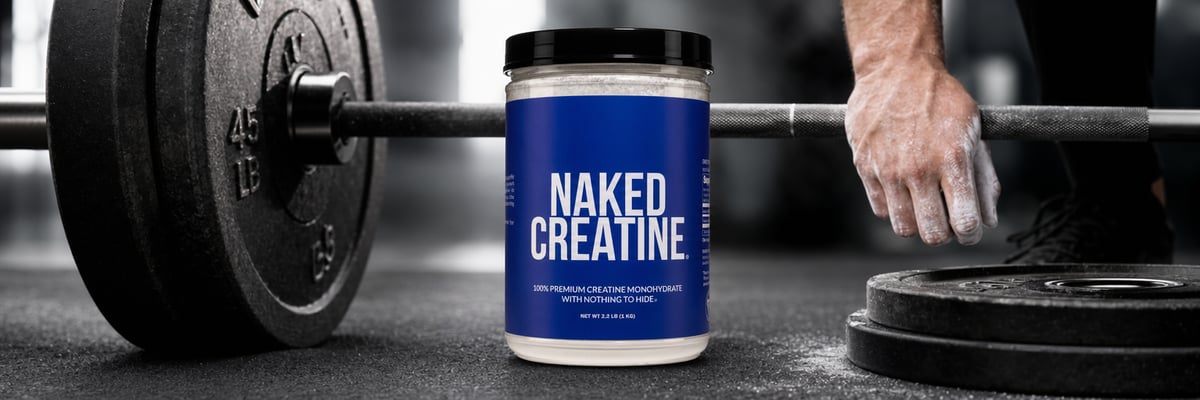
Creatininmonohydratpulver | Naked Creatine - 1 kg
- Fri frakt ingår
- Kreatinmonohydrat
- Kreatinformel
- Evidensbaserade formler
Hur snabbt bygger kreatin muskler? Vad forskningen säger

Du har börjat ta kreatin och nu följer du dina träningspass, kollar i spegeln och väntar. Det är en rimlig fråga: hur snabbt bygger kreatin egentligen muskler? Det ärliga svaret beror på ett beslut du tar i början.
Om du använder en laddningsfas, 20 g per dag uppdelat på 4-5 doser i 5-7 dagar, visar forskning att du snabbt kan mätta muskelns kreatinlager och märka förändringar i prestation och storlek inom den första veckan. [1] Om du hoppar över laddningen och går direkt till en underhållsdos på 3-5 g per dag tar det 2-4 veckor att se fördelarna för dina muskler att nå en liknande mättnadspunkt. [2] Båda metoderna når samma mål. Laddning tar dig bara dit snabbare.
Det första du märker är inte ren muskeltillväxt. Det är förbättrad styrka, bättre träningsprestation och ett fylligare utseende från intramuskulär vätskeretention. Den faktiska strukturella muskelökningen följer som en indirekt effekt av hårdare träning och snabbare återhämtning över veckor och månader. Förvänta dig att processen pågår kontinuerligt, inte omedelbart.
Individuella resultat varierar. Dina grundläggande kreatinnivåer, träningsintensitet, kostkvalitet och till och med om du äter kött påverkar hur snabbt kreatin fungerar för dig. Dessa faktorer behandlas i detalj nedan.
Hur kreatin fungerar för att bygga muskler

Kreatin bygger muskler indirekt genom att ge bättre förutsättningar för träning. Så här fungerar det: dina muskler förlitar sig på adenosintrifosfat (ATP) som sin primära energivaluta för högintensiva kontraktioner. ATP-lagren töms snabbt, inom sekunder vid tung lyftning. Kreatin, som lagras i musklerna som fosfokreatin, donerar en fosfatgrupp till använda ADP-molekyler för att snabbt regenerera ATP. Mer tillgängligt ATP betyder fler repetitioner, fler set och större total träningsvolym innan trötthet uppstår.
- Kreatin som lagras i musklerna som fosfokreatin regenererar ATP under högintensiv ansträngning
- Mer tillgängligt ATP förlänger topprestationen, vilket möjliggör tyngre belastningar och större volym per pass
- Större träningsvolym driver progressiv överbelastning, den primära stimulansen för muskelhypertrofi
- Kreatin förbättrar också anabol cellsignalering och satellitcellsaktivitet, vilket direkt stödjer proteinsyntesen i musklerna
- Snabbare återhämtning efter träning innebär mer produktiva pass vecka efter vecka
Utöver energi spelar kreatin en direkt roll i proteinsyntesen i musklerna. Forskning visar att kreatintillskott ofta leder till vätskeretention och förstärker anabol cellsignalering i muskelvävnad efter styrketräning, inklusive uppreglering av IGF-1 och aktivering av satellitceller som ansvarar för muskelreparation och tillväxt. [3] Det handlar inte bara om att du kan träna hårdare. Dina muskler är också bättre förberedda att svara på den träningen.
Minskad återhämtningstid är en sekundär men betydelsefull fördel. När träningsvärk och cellskador efter träning läker snabbare kan du träna samma muskelgrupp oftare, vilket förstärker hypertrofistimulansen över tid. [2]
Faktorer som påverkar hur snabbt kreatin verkar

Två personer kan börja med kreatin samma dag, följa samma protokoll och se olika resultat efter fyra veckor. Dessa variabler förklarar varför.
- Grundläggande kreatinlager: Vegan och vegetarianer har lägre grundläggande muskelkreatinnivåer eftersom de inte får i sig kreatin från kött eller fisk. De ser vanligtvis en snabbare och mer uttalad initial respons på tillskott.
- Kroppsvikt och muskelmassa: Större idrottare med mer muskelvävnad har en större total kreatinlagringskapacitet, vilket innebär att de kan behöva lite längre tid för att helt mätta lagren vid en standard underhållsdos.
- Träningsintensitet och konsekvens: Kreatin fungerar genom att stödja högintensiv prestation. Om träningspassen inte är tillräckligt krävande för att behöva extra ATP är prestationsfördelen minimal och muskelökningen kommer att spegla det.
- Kvalitet på kosten och proteinintag: Kreatin stödjer stimulansen för muskeltillväxt, men protein tillhandahåller råmaterialet. Utan tillräckligt proteinintag har den anabola signal som kreatin förstärker mindre att arbeta med.
- Konsekvent tillskott: Muskelkreatinlagren minskar om du tar oregelbundna doser. Uppehåll i tillskott fördröjer processen och minskar effekten. Daglig konsekvens är icke förhandlingsbar.
- Vätskebalans: Kreatin drar vatten in i muskelcellerna. Otillräcklig vätskeintag kan dämpa denna effekt och öka risken för milda mag-tarmbesvär.
- Laddning vs. ingen laddning: Som nämnts påskyndar laddning mättnaden. Att hoppa över den innebär en långsammare upptrappning men samma slutresultat.
Kreatinladdning vs. underhållsdos: Vilket passar dig?

Laddningsfasen är frivillig, inte obligatorisk. Att förstå för- och nackdelarna hjälper dig att välja det tillvägagångssätt som passar dina mål och din tolerans.
Laddningsfas: 20 g per dag uppdelat i 4-5 lika doser (4-5 g per dos), tas i 5-7 dagar. Detta fyller snabbt muskelvävnaden med kreatin, mättar lagren och ger märkbara effekter inom den första veckan. [1] [4]
Underhållsdos: 3-5 g per dag, tas konsekvent varje dag. Utan en laddningsfas når muskelkreatinlagren mättnad på ungefär 3-4 veckor. [5]
| Faktor | Laddningsprotokoll | Endast underhåll |
|---|---|---|
| Tid till mättnad | 5-7 dagar | 3-4 veckor |
| Daglig dos | 20 g (uppdelat i 4-5 doser) | 3-5 g (enkel dos) |
| Vattenretention | Mer uttalade initialt | Milda och gradvisa |
| Mag-tarmbiverkningar | Högre risk för uppblåsthet/obehag | Minimal för de flesta |
| Bäst lämpad för | Idrottare som vill ha snabbast effekt | De flesta; känsliga magar |
| Långsiktigt resultat | Identisk med underhåll | Identisk med laddning |
Båda protokollen ger samma slutliga muskelkreatinmättnad. Laddning komprimerar bara tidslinjen. Om du upplever magbesvär, uppblåsthet eller känslighet för höga doser, hoppa helt över laddningsfasen. En konsekvent daglig dos på 3-5 g tar dig till samma resultat med färre biverkningar och mindre komplexitet.
Är kreatinmuskelvinster permanenta?

Det här är frågan som de flesta till slut ställer: om jag slutar ta kreatin, förlorar jag allt? Svaret beror på vilken typ av vinst du frågar om.
När du slutar ta kreatin händer två saker. För det första minskar den intramuskulära vätskeretentionen under de följande dagarna till veckorna, och du kommer sannolikt att se en viktminskning på 2-5 lbs på vågen. För det andra återgår dina muskelkreatinlager gradvis till baslinjen under ungefär 4-6 veckor. [2] Ingen av dessa betyder att du förlorat muskler.
📊 Vad forskningen säger
Strukturell muskelvävnad som byggts upp genom styrketräning medan du använder kreatin behålls efter att du slutat, förutsatt att träningsvolym och proteinintag förblir konsekventa. Viktminskningen som ses när man slutar med kreatin speglar vatten, inte muskler. [2]
Äkta muskelfibertillväxt är en strukturell förändring. Om du tränade hårt, ökade dina lyft och åt tillräckligt med protein under tiden du tog kreatin, består den vävnaden. Det enda sättet att förlora den är genom långvarig inaktivitet eller allvarlig kalorirestriktion.
När det gäller kreatincykling, alltså att ta pauser för att undvika tolerans, finns det inga övertygande bevis för att det är nödvändigt. Kreatin orsakar inte nedreglering av receptorer eller hormonell undertryckning. Om du vill ta en paus är det ett personligt val, inte ett fysiologiskt krav.
Kreatin och vätskeretention: Vad du kan förvänta dig
Vätskeretention är den vanligaste oro folk har när de börjar med kreatin, och det är värt att ta upp det direkt istället för att bortse från det.
Kreatin är osmotiskt aktivt. När det kommer in i muskelceller drar det med sig vatten. Detta är intramuskulär vätskeretention, vatten som lagras inne i muskelcellen själv, inte under huden. De flesta upplever en initial viktökning på vågen på 1-3 kg (2-5 lbs) inom den första eller andra veckan av tillskott. [6] Detta är inte fett. Det är heller inte den typ av svullnad som döljer muskeldefinition på samma sätt som subkutan vätskeretention gör.
Faktum är att intramuskulärt vatten ökar cellvolymen, vilket ger musklerna ett fylligare och tätare utseende. För de flesta som använder kreatin för idrottsprestation är detta en fördel, inte en nackdel.
Laddningsfasen ger mer uttalad vätskeretention eftersom du tar 4-5 gånger normal dos under den första veckan. Om uppblåsthet är ett problem, minskar du den initiala vattenökningen avsevärt genom att hoppa över laddningen och gå direkt till 3-5 g/dag.
Praktiska tips för att minimera uppblåsthet:
- Hoppa över laddningsfasen och börja med 3-5 g/dag
- Dela upp dosen om du tar högre mängder, istället för att ta allt på en gång
- Håll dig väl hydrerad under dagen, kreatin kräver tillräckligt med vatten för att fungera ordentligt
- Ta kreatin med mat om du upplever magbesvär
Vätskeretention från kreatin försvinner inom några dagar efter att du slutat ta tillskottet. Det är en inte en permanent biverkning och inte en anledning att undvika ett av de mest välbeprövade tillskotten inom idrottsnutrition.
Välja rätt kreatin: Monohydrat vs. HCL


Gå in i vilken kosttillskottsbutik som helst så ser du en hylla full av kreatinvarianter. De flesta är inte värda det höga priset. Två former är faktiskt värda att förstå: monohydrat och HCL.
Kreatinmonohydrat är kreatin bundet till en vattenmolekyl. Det har studerats ingående i över tre decennier, och forskningsunderlaget som stöder dess säkerhet och effektivitet är oöverträffat inom kosttillskottsindustrin. International Society of Sports Nutrition (ISSN) erkänner det som ett av de mest effektiva och säkra prestationshöjande tillskotten som finns. [2] Om du vill ha säkerhet är monohydrat standardvalet.
Creatine HCL är kreatin bundet till saltsyra. Detta ökar dess löslighet i vatten, vilket innebär att det kan absorberas mer effektivt vid en lägre dos. Vissa användare rapporterar mindre uppblåsthet och vätskeretention med HCL jämfört med monohydrat. [7] Den ärliga förbehåll: forskningen om HCL är mer begränsad, och direkta jämförelser med monohydrat är få. Det är ett legitimt alternativ, särskilt för dem som upplever mag-tarmproblem med monohydrat, men evidensbasen är ännu inte jämförbar.
Naked Nutritions Kreatinmonohydrat innehåller en enda ingrediens: rent kreatinmonohydrat utan fyllmedel, konstgjorda tillsatser eller onödiga extras. Det är tredjepartstestat för renhet och ger 5 g per portion, mitt i det evidensstödda underhållsspannet. Kreatinmonohydrat och kreatin HCL har båda sin plats, men om du ska ta kreatintillskott är det enklaste valet att börja med ett rent, verifierat monohydrat.
Oavsett vilken form du väljer, är konsekvens viktigast. En något mindre optimal form som tas dagligen överträffar den bästa produkten som tas sporadiskt. Välj en form du tål väl och ta den varje dag.
Vanliga frågor
Hur snabbt bygger kreatin muskler?
De flesta börjar märka mätbara styrke- och prestationsförbättringar inom 1–2 veckor efter att ha börjat med kreatintillskott, särskilt om de använder en laddningsprotokoll. Synliga muskelstorleksökningar, drivna både av vätskeretention och faktisk ökning av mager massa, blir vanligtvis tydliga inom 4–8 veckor av konsekvent användning kombinerat med styrketräning.
Snabbar kreatinladdning på muskeluppbyggnaden?
En laddningsfas — vanligtvis 20 gram per dag uppdelat på 4 doser under 5–7 dagar — mättar dina muskler snabbare än en standarddos, vilket kan påskynda tidiga prestationsförbättringar. Forskning visar dock att efter 3–4 veckor jämnas kreatinnivåerna i musklerna ut oavsett om du laddat eller inte, så laddning är frivillig snarare än nödvändig för långsiktiga resultat.
Hur mycket kreatin bör jag ta dagligen för att bygga muskler?
Den mest välstuderade underhållsdosen är 3–5 gram kreatinmonohydrat per dag, vilket är tillräckligt för att hålla musklernas kreatinförråd fullt mättade över tid. Större individer eller mycket aktiva idrottare kan dra nytta av den högre delen av detta spann, men att överskrida 5 gram dagligen under underhållsfasen har inte visat sig ge ytterligare muskelbyggande fördelar.
Är kreatin säkert för långvarig användning?
Kreatinmonohydrat är ett av de mest omfattande studerade kosttillskotten inom sport, med forskning som sträcker sig över 30 år och konsekvent visar dess säkerhet hos friska individer. Långtidsstudier på upp till 5 år har inte funnit några negativa effekter på njur- eller leverfunktion hos personer utan befintliga sjukdomar.
Kommer jag att förlora muskler när jag slutar ta kreatin?
När du slutar ta kreatin återgår dina muskelreserver till basnivåer inom 4–6 veckor, och du kan märka en liten viktminskning när lagrat vatten lämnar muskelvävnaden. Den faktiska magra muskelmassa du byggt upp genom träning förloras dock inte bara genom att sluta med kreatintillskott.
Fungerar kreatin utan träning?
Kreatin i sig stimulerar inte direkt proteinsyntesen i musklerna, så att ta det utan ett strukturerat styrketräningsprogram ger minimala muskeluppbyggande resultat. Dess huvudsakliga mekanism — att fylla på ATP för högintensiva ansträngningar — ger bara en meningsfull fördel när det kombineras med konsekvent, progressiv träning.
Vilken typ av kreatin är bäst för att bygga muskler?
Kreatinmonohydrat är fortfarande den guldstandardform av kreatin som stöds av den största mängden klinisk forskning och har visat sig vara mycket effektiv för att öka muskelmassa, styrka och träningsprestanda. Även om andra former som kreatin HCl eller buffrat kreatin finns, har ingen konsekvent överträffat monohydrat i direkt jämförande studier om muskeluppbyggande resultat.
Bör jag leta efter några certifieringar när jag köper kreatin?
Ja — att välja en kreatinprodukt som är testad av tredje part och certifierad av organisationer som Informed Sport, NSF Certified for Sport eller Banned Substances Control Group (BSCG) säkerställer att tillskottet innehåller det som står på etiketten och är fritt från skadliga föroreningar. Detta är särskilt viktigt för tävlingsidrottare som är föremål för drogtester, eftersom otestade tillskott kan innebära en risk för otillåtna substanser som inte redovisats.
Toppval av kreatin
Valt av över 1 miljon kunder. Fri frakt på beställningar över 100 $.

Citron Lime Creatininmonohydratpulver | Naked Creatine - 1,1 LB
$29.99
- ✓ 100 % premium kreatinmonohydrat
- ✓ Högsta tillgängliga kvalitet: löser sig snabbt och absorberas snabbt
- ✓ 5 g kreatin per portion
- ✓ Inga konstgjorda sötningsmedel, smaker eller färger

Creatininmonohydratpulver | Naked Creatine - 1,1 LB
$21.99
- ✓ 100 % premium kreatinmonohydrat
- ✓ Högsta tillgängliga kvalitet: löser sig snabbt och absorberas snabbt
- ✓ 5 g kreatin per portion
- ✓ Inga konstgjorda sötningsmedel, smaker eller färger

Jordgubbscreatininmonohydratpulver | Naked Creatine - 1,1 LB
$29.99
- ✓ 100 % premium kreatinmonohydrat
- ✓ Högsta tillgängliga kvalitet: löser sig snabbt och absorberas snabbt
- ✓ 5 g kreatin per portion
- ✓ Inga konstgjorda sötningsmedel, smaker eller färger