




På denna sida
Gör kreatin ditt ansikte puffigt? Sanningen avslöjad
Upptäck vad vetenskapen verkligen säger om kreatin, vätskeretention och om detta populära tillskott ligger bakom din ansiktssvullnad.

Viktiga slutsatser
- Ansiktssvullnad är möjlig, inte garanterad: Kreatin kan orsaka tillfällig vätskeretention som syns i ansiktet, men många upplever ingen svullnad alls.
- Det är vatten, inte fett: All svullnad eller viktökning från kreatin är intracellulär vätskeretention, inte fettökning. Kreatin orsakar inte direkt fettansamling.
- Laddningsfasen är huvudorsaken: Höga doser under laddningsfasen (20g+ per dag) ökar dramatiskt sannolikheten för synlig svullnad. Att hoppa över laddningen eliminerar till stor del denna oro.
- Det löser sig självt: För de flesta avtar eventuell ansiktssvullnad inom några dagar till några veckor när kroppen anpassar sig till kreatinmättnad.
- Enkla justeringar hjälper: Vätskeintag, natriumreduktion och dosuppdelning är de mest effektiva sätten att hantera vätskeretention samtidigt som du får prestationsfördelar.
- Renhet är viktigt: Kreatin av låg kvalitet med fyllmedel och tillsatser kan förvärra uppsvällning. Kreatinmonohydrat med en enda ingrediens minimerar onödiga biverkningar.

Kreatinmonohydratpulver | Naked Creatine - 1 kg
- Fri frakt ingår
- Kreatinmonohydrat
- Kreatinformel
- Evidensbaserade formler
Gör kreatin ditt ansikte puffigt? Här är vad som faktiskt händer

Du börjar ta kreatin, ställer dig framför spegeln en vecka senare, och något ser annorlunda ut. Ditt ansikte ser fylligare ut. Kanske lite svullet. Du undrar om du gjorde ett misstag. Här är det direkta svaret: ja, kreatin kan göra ditt ansikte puffigt, men det är inte universellt, det är inte permanent, och det betyder inte att något är fel.
Frågan om kreatin gör ansiktet puffigt är en av de vanligaste oroarna bland nya användare, och den är värd att tas på allvar snarare än att avfärdas. Ansiktssvullnad är en verklig biverkning kopplad till hur kreatin påverkar vätskebalansen i kroppen. Mekanismen är väl förstådd, riskfaktorerna är identifierbara och lösningarna är enkla.
Det här är inte: ett tecken på att kreatin skadar dig, ett tecken på att du går upp i fett, eller en anledning att sluta ta ett av de mest effektiva och välundersökta tillskotten som finns. Kreatinmonohydrat har decennier av säkerhets- och prestationsdata bakom sig. Tillfällig svullnad i ansiktet är en hanterbar kosmetisk olägenhet för vissa användare, inte en hälsovarning.
Den här artikeln förklarar exakt varför kreatin orsakar vattenretention, vem som mest sannolikt märker av svullnad i ansiktet, hur man kan minska eller förebygga det, och när svullnad i ansiktet bör leda till ett samtal med läkaren istället för en justering av ditt tillskottsintag.
Hur kreatin orsakar vattenretention i kroppen

Kreatin är en naturligt förekommande förening som finns i skelettmuskler. Din kropp producerar det från aminosyror, och du får det också från kostkällor som rött kött och fisk. Att ta kreatintillskott ökar musklernas fosfokreatinlager, vilket direkt förbättrar förmågan att återbilda ATP (adenosintrifosfat), den primära energivalutan dina muskler använder vid högintensiva ansträngningar. Mer fosfokreatin innebär mer kraft tillgänglig i de avgörande ögonblicken.
Vattenretentionen beror på osmos. Kreatin är osmotiskt aktivt, vilket betyder att vatten följer med det över cellmembran för att upprätthålla koncentrationsbalansen. När kreatin samlas i muskelcellerna följer vattnet med. Forskning publicerad i Journal of Athletic Training (Dalbo et al., 2008) bekräftar att kreatintillskott ökar den intracellulära vattenhalten i skelettmuskler, vilket förklarar det mesta av den viktökning som användare upplever vid intag av kreatin .
- Kreatin absorberas in i muskelcellerna och ökar den intracellulära kreatinkoncentrationen.
- Vatten följer via osmos för att balansera koncentrationsgradienten över cellmembranet.
- Denna intracellulära hydrering ökar muskelvolym, cellsignalering och proteinsyntes.
- Total kroppsvätska ökar, vilket ibland kan omfördelas till icke-muskelvävnader, inklusive ansikte och nacke.
Den viktiga skillnaden här är intracellulär kontra subkutan. Det mesta av kreatinrelaterad vattenretention stannar inne i muskelcellerna, vilket faktiskt är fördelaktigt. Det bidrar till det fylligare, tätare utseendet som idrottare märker i sina muskler och stöder den anabola miljön som behövs för muskeltillväxt. Problemet uppstår när den totala kroppsvätskan ökar så mycket att en del vätska omfördelas till mjukvävnader utanför musklerna, inklusive ansikte och nacke, där det syns tydligt.
Varför vissa får ett svullet ansikte av kreatin (och andra inte)
Två personer kan följa samma kreatinprotokoll och få helt olika upplevelser. Den ena märker ingenting. Den andra vaknar med ett märkbart svullet ansikte efter första veckan. Detta är inte slumpmässigt: flera faktorer avgör hur starkt din kropp reagerar på ökningen av total kroppsvätska som kreatin ger.
Laddningsfasen är den största utlösaren. Laddningsprotokoll innebär vanligtvis att man tar 20 gram kreatin dagligen i 5 till 7 dagar för att snabbt mätta musklernas förråd. Den stora, snabba tillförseln av kreatin drar snabbt in en betydande mängd vatten i kroppen, och omfördelningen till ansiktsvävnader blir mer påtaglig. Personer som hoppar över laddningen och börjar med en daglig underhållsdos på 3 till 5 gram upplever en mycket långsammare, mer gradvis mättnad och rapporterar sällan märkbar ansiktsuppsvällning.
Utöver doseringen påverkar alla dessa faktorer den individuella responsen:
- Genetik: Vissa personer är naturligt benägna att behålla mer vatten i mjukvävnader.
- Kroppssammansättning: Högre andel kroppsfett är kopplat till större subkutan vätskeretention.
- Natriumintag: Höga natriumdieter förstärker vattenretentionseffekterna avsevärt, särskilt i ansiktet.
- Basal hydrering: Personer som är kroniskt uttorkade kan uppleva mer uttalade vätskeförskjutningar när kreatin introduceras.
- Hormonella faktorer: Kvinnor kan märka ökad känslighet för vätskeretention under lutealfasen i sin menstruationscykel, när grundnivån för vätskeretention redan är förhöjd.
För de flesta som upplever svullnad i ansiktet är det mest märkbar under de första en till två veckorna och avtar sedan gradvis när kroppen når en ny vätskebalans. Det är en tillfällig justering, inte ett permanent tillstånd.
Vätskeretention vs. fettökning: Vad viktökningen från kreatin egentligen är

Att se vågen öka med två till fyra pund under den första veckan med kreatintillskott oroar många. Antagandet att detta representerar fettökning är felaktigt. Fettansamling kräver ett ihållande kaloriöverskott över tid. Vätskeförskjutningar sker inom några dagar. Tidslinjen i sig visar vad du ser.
Kreatin orsakar inte direkt fettökning. Dess mekanism fungerar helt genom cellulär hydrering och stöd för energisystemet, inte genom någon hormonell eller metabol väg som främjar fettlagring. En översikt i Journal of Strength and Conditioning Research (Lemon, 2002) noterar att kortsiktig viktökning från kreatin beror på vätskeretention, inte ackumulering av fettvävnad.
📊 Vad forskningen säger
En studie publicerad i Medicine and Science in Sports and Exercise (Volek et al., 2003) visade att kreatintillskott kombinerat med styrketräning gav betydligt större ökningar i mager massa jämfört med placebo, utan någon ökning i kroppsfettprocent. De prestationsförbättringar som kreatin ger kan indirekt stödja fettförlust genom att möjliggöra hårdare, mer produktiva träningspass.
Det finns en betydande praktisk skillnad mellan intracellulär vätskeretention och den subkutana vätskan som orsakar ett mjukt, svullet utseende. Kreatin driver främst intracellulär retention, som sitter inne i muskeln och faktiskt bidrar till ett hårdare, fylligare muskelutseende snarare än ett mjukt, puffigt sådant. Om du tränar konsekvent och äter på underhåll eller ett måttligt överskott är viktförändringar vid kreatinanvändning nästan helt vatten. Vikt på vågen är mycket mindre viktigt än kroppssammansättning och hur du presterar i gymmet.
Hur man minskar ansiktsuppsvullnad vid intag av kreatin

Om du upplever ansiktsuppsvällning från kreatin behöver du inte välja mellan att sluta med tillskottet och att leva med biverkningen. Flera praktiska justeringar minskar svullnaden betydligt utan att offra de prestationsfördelar som kreatin ger.
Hoppa över eller förkorta laddningsfasen. Att börja direkt med en daglig underhållsdos på 3 till 5 gram är lika effektivt som långvarig laddning. Musklerna når full mättnad inom tre till fyra veckor vid denna dos. Processen är långsammare, men slutresultatet är identiskt, och den långsammare mättnadskurvan minskar dramatiskt den akuta vatteninflödet som orsakar synlig svullnad.
Håll dig konsekvent hydrerad. Att dricka tillräckligt med vatten under dagen signalerar till kroppen att vätska finns tillgänglig och minskar behovet av att behålla den. Sikta på minst hälften av din kroppsvikt i uns vatten dagligen, och mer om du tränar hårt eller bor i ett varmt klimat.
Övervaka natriumintaget. Natrium är en av de främsta orsakerna till extracellulär vätskeretention. Processade livsmedel, charkprodukter, kryddor och snabbmat är de största bidragsgivarna. Att minska natriumintaget när du börjar med kreatin tar bort en samverkande faktor som förvärrar svullnad.
Dela upp dosen. Istället för att ta 5 gram på en gång, dela upp det i två doser om 2,5 gram vid olika tidpunkter på dagen. Vissa användare rapporterar att fördelad dosering minskar den akuta vätskeförskjutning de märker vid en stor dos.
Ge det tid. För de flesta försvinner märkbar svullnad inom två till tre veckor när kroppen når vätskebalans vid den nya kreatinmättnadsnivån. Konsekvens är viktigare än att cykla av och på.
Om svullnaden är allvarlig, inte försvinner efter några veckor eller åtföljs av andra symtom, kontakta en vårdgivare innan du fortsätter.
När ska man vara orolig: Är det kreatin eller något annat?

Kreatinrelaterad ansiktsuppsvällning följer ett förutsägbart mönster: den uppträder inom de första en till två veckorna, är mild till måttlig i intensitet och avtar gradvis. Svullnad som inte följer detta mönster bör uppmärksammas oavsett vilka kosttillskott du tar.
Ansiktssvullnad kan ha orsaker helt orelaterade till kreatin. Allergiska reaktioner, njurdysfunktion, sköldkörtelrubbningar och vissa mediciner orsakar alla ansiktsödem, och kreatin kan felaktigt få skulden när något annat faktiskt är orsaken. Om du upplever plötslig, svår ansiktssvullnad, svullnad som uppträder tillsammans med andnöd eller nässelutslag, eller svullnad som kvarstår längre än fyra till sex veckor utan förbättring, sluta ta kreatin och kontakta en läkare.
- Kreatinmonohydrat är ett av de mest omfattande studerade tillskotten inom idrottsnutrition, med över 500 granskade studier publicerade.
- Långvarig användning på 3 till 5 gram dagligen har inte visat sig orsaka njurskador hos friska individer.
- International Society of Sports Nutrition klassificerar kreatinmonohydrat som säkert och effektivt för friska populationer.
- Mild, tillfällig vätskeretention är den vanligaste rapporterade biverkningen och är inte ett tecken på organstress eller toxicitet.
Ett positionsuttalande från International Society of Sports Nutrition (Buford et al., 2007) bekräftar att kreatinmonohydrat är det mest effektiva ergogena näringstillskottet för idrottare och att långvarigt tillskott hos friska individer är säkert. Oro för njurskador från kreatin stöds inte av bevis hos personer med normal njurfunktion. Om du har en befintlig njursjukdom, diskutera kreatinanvändning med din läkare innan du börjar.
Att välja rätt kreatin för att minimera biverkningar

Inte alla kreatintillskott är lika, och formen och renheten på det du tar påverkar hur din kropp reagerar. Kreatinmonohydrat är guldstandarden. Det är formen som används i majoriteten av forskningen, det är mest kostnadseffektivt och har den starkaste evidensbasen för både säkerhet och prestation. Andra former, inklusive kreatin HCl, buffrat kreatin och kreatin etylester, marknadsförs som mindre uppblåsthetsframkallande, men bevisen stöder inte konsekvent dessa påståenden jämfört med välstuderat monohydrat.
Renhet är en separat och underskattad faktor. Kreatinprodukter av låg kvalitet innehåller ofta fyllnadsmedel, artificiella smaker, sötningsmedel och dåligt testade hjälpämnen som bidrar till uppblåsthet och mag-tarmbesvär oberoende av kreatins osmotiska mekanism. Om du upplever mer matsmältningsbesvär eller svullnad än väntat kan problemet vara inte själva kreatinet utan allt annat i produkten.
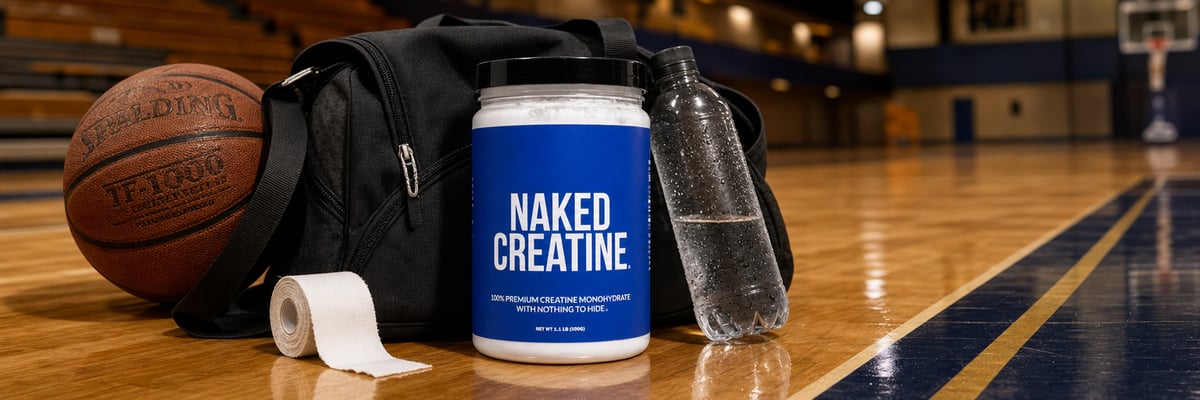
Det enklaste sättet att kontrollera detta är att använda ett kreatinmonohydrat med en enda ingrediens utan tillsatser. Naked Creatine innehåller en ingrediens: rent kreatinmonohydrat. Inga fyllmedel, inga konstgjorda ämnen, inga onödiga föreningar som kan öka vattenretentionen eller irritera magen. När du begränsar formeln till en ingrediens vet du exakt vad du stoppar i kroppen och eliminerar de förvirrande variabler som gör biverkningar svårare att felsöka.
Börja med 3 till 5 gram dagligen, använd en ren produkt, håll dig hydrerad och ge din kropp två till tre veckor att anpassa sig. Det är protokollet som ger fulla kreatinprestandafördelar samtidigt som kosmetiska biverkningar hålls till ett minimum. Om du någonsin bestämmer dig för att ta en paus, läs om Kommer jag att gå ner i vikt om jag slutar ta kreatin? för att få realistiska förväntningar.
Vanliga frågor
Gör kreatin verkligen att ditt ansikte blir svullet?
Kreatin orsakar inte direkt svullnad i ansiktet hos de flesta. Vattenretentionen som är kopplad till kreatintillskott sker främst inom muskelcellerna, inte i underhudsvävnaden, vilket betyder att ditt ansikte sannolikt inte kommer att se svullet ut som en följd av att ta det.
Varför märker vissa personer ett svullnare ansikte när de tar kreatin?
Vissa individer kan uppleva mild vattenretention i hela kroppen under den inledande laddningsfasen av kreatintillskott, vilket kan bidra till ett tillfälligt fylligare utseende — även i ansiktet. Denna effekt är vanligtvis kortvarig och tenderar att avta när kroppen vänjer sig vid tillskottet.
Orsakar kreatinets laddningsfas mer vattenretention än en standarddos?
Ja, laddningsfasen — som vanligtvis innebär att man tar 20 gram per dag i 5 till 7 dagar — kan orsaka en mer märkbar ökning av vattenretention jämfört med en standardunderhållsdos på 3 till 5 gram per dag. Om svullnad i ansiktet är ett bekymmer är det ett bra alternativ att hoppa över laddningsfasen och börja med en lägre daglig dos, vilket fortfarande ger långsiktiga resultat.
Är vattenretentionen från kreatin skadlig för min hälsa?
Den intracellulära vätskeretentionen som orsakas av kreatin anses inte vara skadlig för friska individer och är faktiskt en normal fysiologisk reaktion på ökade kreatinförråd i dina muskler. Många studier stöder kreatins säkerhetsprofil för både kort- och långvarig användning vid rekommenderade doser.
Gör det att dricka mer vatten svullnaden värre?
Att hålla sig väl hydrerad när man tar kreatin rekommenderas faktiskt, eftersom kreatin drar vatten in i muskelcellerna och otillräcklig vätsketillförsel kan leda till kramp eller obehag. Rätt vätskeintag stödjer optimal kreatinfunktion och bidrar inte nämnvärt till svullnad i ansiktet.
Påverkar typen av kreatin jag tar hur mycket vätskeretention jag upplever?
Kreatinmonohydrat är den mest studerade formen och är förknippad med väldokumenterad, hanterbar vätskeretention i musklerna. Andra former som kreatin HCl marknadsförs ofta som mindre uppblåsthetsframkallande, men vetenskapliga bevis som stöder bättre resultat från alternativa former jämfört med kreatinmonohydrat är fortfarande begränsade.
Hur lång tid tar det innan eventuell initial svullnad eller uppblåsthet försvinner?
Eventuell initial vätskeretention eller känsla av uppblåsthet brukar försvinna inom en till två veckor när din kropp anpassar sig till kreatintillskott. Om symtomen kvarstår efter denna period kan det vara värt att utvärdera andra kost- eller livsstilsfaktorer som kan bidra till problemet.
Bör jag sluta ta kreatin om jag märker svullnad i ansiktet?
Mild, tillfällig svullnad är vanligtvis inget att oroa sig för, men betydande eller plötslig svullnad i ansiktet som känns ovanlig kan vara ett tecken på en allergisk reaktion eller ett orelaterat medicinskt tillstånd som bör diskuteras med din vårdgivare. Kontakta alltid en läkare om du upplever svullnad tillsammans med andra symtom som andningssvårigheter, nässelutslag eller snabb hjärtfrekvens.
Toppval av produkter
Vald av över 1 miljon kunder. Fri frakt på beställningar över 100 $.

Kreatinmonohydratpulver | Naked Creatine - 1,1LB
$21.99
- ✓ 100% premium kreatinmonohydrat
- ✓ Högsta tillgängliga kvalitet: löser sig snabbt och absorberas snabbt
- ✓ 5 g kreatin per portion
- ✓ Inga konstgjorda sötningsmedel, smaker eller färger

Citron Lime Kreatinmonohydratpulver | Naked Creatine - 1,1LB
$29.99
- ✓ 100% premium kreatinmonohydrat
- ✓ Högsta tillgängliga kvalitet: löser sig snabbt och absorberas snabbt
- ✓ 5 g kreatin per portion
- ✓ Inga konstgjorda sötningsmedel, smaker eller färger

Jordgubbskreatinmonohydratpulver | Naked Creatine - 1,1LB
$29.99
- ✓ 100% premium kreatinmonohydrat
- ✓ Högsta tillgängliga kvalitet: löser sig snabbt och absorberas snabbt
- ✓ 5 g kreatin per portion
- ✓ Inga konstgjorda sötningsmedel, smaker eller färger