




På den här sidan
Ger kreatin dig energi? Vad vetenskapen egentligen säger
Kreatin ger dig inte en koffeinliknande kick, men vetenskapen visar att det ger dina muskler bränsle på ett mycket kraftfullare sätt.

Viktiga punkter
- Kreatin ger dig energi — men det är cellulär energi (ATP), inte den stimulerande alerthet du får från koffein.
- Fosfokreatinsystemet är det som driver korta, explosiva insatser som tunga lyft, sprintar och högintensiva intervaller.
- Tillskott med kreatin ökar muskelkreatinmättnaden med 20 till 40 %, vilket direkt höjer din kapacitet för högintensiv prestation.
- Fördelarna sträcker sig bortom gymmet — kreatin stödjer muskeltillväxt, återhämtning efter träning och kognitiv funktion.
- 3 till 5 gram per dag är den rekommenderade underhållsdosen; en laddningsfas påskyndar resultaten men är frivillig.
- Kreatinmonohydrat är den mest undersökta, mest effektiva och mest kostnadseffektiva formen som finns tillgänglig.

Kreatinmonohydratpulver | Naked Creatine - 2,2LB
- Fri frakt ingår
- Kreatinmonohydrat
- Kreatinformel
- Evidensbaserade formler
Ger kreatin dig energi? Det korta svaret

Ja – kreatin ger dig energi, men inte den typ du kanske förväntar dig. Det gör att du inte känner dig alert, motiverad eller vaken på samma sätt som en kopp kaffe gör. Det kreatin gör är att öka dina muskler kapacitet att producera ATP (adenosintrifosfat), den faktiska energivalutan som dina celler använder för att dra ihop muskelfibrer under intensiv träning.
Den här skillnaden är viktig eftersom folk ofta lägger till kreatin i en pre-workout-stack i förväntan på en kick som aldrig kommer, för att sedan dra slutsatsen att det "inte fungerar." Kreatins energieffekt är cellulär och kumulativ. Du känner det som förmågan att orka med två extra repetitioner, återhämta dig snabbare mellan seten eller bibehålla kraftuttaget senare under träningspasset – inte som en mental energikick innan du ens går in i gymmet.
Om du vill ha stimulansbaserad vakenhet är koffein verktyget för det. Om du vill ha mer bränsle i själva musklerna för högintensivt arbete är kreatin vad du behöver. Många idrottare använder båda , och det finns goda skäl till det — men de gör i grunden olika jobb.
📊 Vad forskningen säger
En ofta citerad översikt bekräftar att kreatintillskott förbättrar prestationen vid högintensiv träning och ökar den magra kroppsmassan under träning, samtidigt som det klargör att kreatins mekanism är ATP-resyntes — inte stimulering av det centrala nervsystemet. [2]
Resten av denna artikel förklarar exakt hur ATP-systemet fungerar, vilka fördelar kreatin ger, hur det jämförs med koffein och hur man använder det korrekt för bästa resultat.
Vad är kreatin och hur fungerar det?

Kreatin är en naturligt förekommande förening som din kropp syntetiserar från aminosyrorna glycin, arginin och metionin. Cirka 95 % av det lagras i skelettmusklerna. Resten fördelas över hjärnan, levern och njurarna. Din kropp producerar ungefär 1 gram kreatin per dag, och du får i dig ytterligare 1 till 2 gram genom kostkällor som rött kött, fisk och fågel.
Problemet är att kostintag och kroppens egen produktion sällan fyller dina muskler till kapacitet. De flesta ligger på ungefär 60 till 80 % kreatinmättnad. Tillskott med kreatinmonohydrat stänger det gapet, och ökar muskelns kreatinförråd med ytterligare 20 till 40 %. Det extra förrådet är vad som driver förbättrad prestation.
- Kreatin lagras i musklerna som fosfokreatin (PCr), en högenergiförening bunden till en fosfatgrupp.
- När dina muskler behöver snabb ATP under intensiv ansträngning donerar fosfokreatin sin fosfat till ADP, vilket omedelbart regenererar ATP.
- Mer fosfokreatin i förrådet betyder mer ATP tillgängligt — och längre tid innan dina muskler når energiväggen.
- Tillskott fyller på de förråd som kosten och den naturliga syntesen lämnar delvis uttömda, särskilt hos personer som äter lite eller inget kött.
Kreatinmonohydrat är den form som har mest forskning bakom sig och är standarden som alla andra kreatinformer mäts mot. Det är också den mest prisvärda. Om du inte har en specifik anledning att välja annat är monohydrat rätt startpunkt.
Hur ökar kreatin energin under träning?

Dina muskler använder tre energisystem, och det som kreatin direkt stödjer är ATP-PC (fosfokreatin) systemet. Detta system dominerar under de första 10 till 15 sekunderna av maximal ansträngning — en tung marklyft, en 100-meters sprint, en explosiv hoppserie. Det är det snabbaste sättet din kropp kan producera ATP på, och det drivs av fosfokreatin som lagras i muskeln.
När fosfokreatinet tar slut sjunker kraftutgången och du börjar förlita dig på långsammare energivägar. Med mer kreatin i dina muskler förlänger du hur länge ATP-PC-systemet kan upprätthålla maximal kraft. Du resyntetiserar också ATP snabbare mellan repetitioner och set, vilket innebär att du återhämtar dig snabbare och kan hålla hög kvalitet längre in i träningspasset.
Det är därför kreatins energieffekt är mest uttalad vid styrketräning, sprint, HIIT och alla sporter som kräver upprepade kraftutbrott. Det har mindre effekt vid jämn aerob träning som långdistanslöpning, där ATP-PC-systemet spelar en mindre roll.
En sak till att förstå: kreatins fördel är kumulativ. Dina muskler måste nå mättnad innan du märker en meningsfull skillnad. Det kräver konsekvent dagligt tillskott. Att ta kreatin en gång före träning och förvänta sig en omedelbar boost leder till besvikelse.
Om timing — forskningen om kreatin före kontra efter träning är blandad, och det är ärligt talat mindre viktigt än konsekvens. Att ta det vid en tidpunkt du kommer ihåg dagligen är viktigare än att optimera timmen för intag.
Nyckelfördelar med kreatintillskott

Kreatins prestationsfördelar är bland de mest reproducerade resultaten inom all forskning om idrottsnutrition. Här är vad bevisen faktiskt stöder:
- Högintensiv prestation: Kreatin förbättrar konsekvent styrkeutgång, toppkraft och motstånd mot trötthet under korta, explosiva insatser. Idrottare inom styrkelyft, sprint och lagsporter ser alla mätbara förbättringar.
- Muskeltillväxt: Mer träningsvolym leder till större muskelstimulans. Kreatin möjliggör mer volym genom att fördröja trötthet. Det höjer också nivåerna av insulinliknande tillväxtfaktor 1 (IGF-1), ett hormon som driver produktionen av ny muskelvävnad, och aktiverar satellitceller som är involverade i muskelreparation och hypertrofi.
- Återhämtning efter träning: Studier visar att kreatintillskott minskar markörer för muskelskada efter intensiv träning, vilket stödjer snabbare återgång till träning [2]. Mindre vila mellan hårda pass innebär mer total träning över tid.
- Hjärnfunktion: Hjärnan använder ATP i hög takt, och kreatin stödjer ATP-tillgången för kognitiva uppgifter. Forskning i tidskriften Nutrients visade att kreatintillskott kan minska mental trötthet och förbättra kognitiv prestation, särskilt under krävande förhållanden som sömnbrist [3].
Veganer och vegetarianer drar särskilt nytta av kreatintillskott. Eftersom de inte äter kött eller fisk är deras grundläggande kreatinförråd vanligtvis lägre än hos allätare. Tillskott ger större relativa vinster i denna grupp, vilket gör det till ett av de mest praktiska tillskotten för en växtbaserad idrottares regimen.
Kreatin vs. Koffein: Vilken ger dig mer energi?

De verkar genom helt olika mekanismer, så att se detta som en tävling missar poängen. Den bättre frågan är: vilken typ av energi behöver du?
- Kreatin ökar tillgången på ATP inne i muskelcellerna. Effekten känns som ökad styrka, uthållig kraft och minskad muskeltrötthet under högintensiva ansträngningar. Du känner det inte akut — det byggs upp över veckor när musklernas förråd mättas.
- Koffein är en stimulant för centrala nervsystemet. Det blockerar adenosinreceptorer i hjärnan, vilket minskar upplevelsen av ansträngning och trötthet. Du känner av det inom 30 till 60 minuter som ökad vakenhet, motivation och fokus. Det ökar inte den cellulära ATP-produktionen.
Kreatin kommer inte få dig att känna dig mer vaken eller mentalt skarpare på samma sätt som koffein gör [1]. Om du tar kreatin med förväntningen på den effekten kommer du tro att det inte fungerar. Det fungerar — men på cellnivå, inte på den neurologiska nivån.
Kombinationen av de två är där det blir intressant. Viss forskning tyder på att kreatin och koffein tillsammans kan ge tilläggsfördelar för prestationen, även om bevisen fortfarande utvecklas. [4]Många idrottare kombinerar båda: koffein för akut nervdriv och mental skärpa, kreatin för uthållig muskelprestation. För personer som är känsliga för stimulanser är kreatin ensam en stabil, icke-skakig grund.
Slutsats: om du vill känna dig energisk, använd koffein. Om du vill att dina muskler ska ha mer bränsle för hårt arbete, använd kreatin. Om du vill ha båda effekterna, använd båda.
Hur man tar kreatin för bästa resultat
Kreatin är inte komplicerat, men detaljerna spelar roll. Här är vad forskningen faktiskt stöder:
- Underhållsdos: 3 till 5 gram per dag är den standardrekommendationen. Vid denna dos når musklernas förråd mättnad inom 3 till 4 veckors konsekvent användning.
- Uppladdningsfas: Att ta 20 till 25 gram per dag (uppdelat på 4 till 5 doser) i 5 till 7 dagar, och sedan minska till 3 till 5 gram dagligen, mättar dina muskler snabbare – vanligtvis inom 5 till 7 dagar istället för 3 till 4 veckor [5]. Slutmålet är detsamma; uppladdning tar dig bara dit snabbare.
- Vem bör ladda: Om du har en tävling, ett evenemang eller en träningsperiod som börjar snart och vill ha snabbare resultat, är uppladdning vettigt. Om du tar tillskott för långsiktig nytta och inte har bråttom, är det lika effektivt att hoppa över uppladdningsfasen och gå direkt till 5 gram dagligen.
Förvänta dig att märka resultat inom 2-4 veckor utan uppladdning, eller inom den första veckan om du laddar . Om du inte märker något efter 4 till 6 veckors konsekvent användning vid rätt dos, omvärdera om du verkligen är konsekvent – oregelbunden intag är den vanligaste anledningen till att kreatin "inte fungerar."
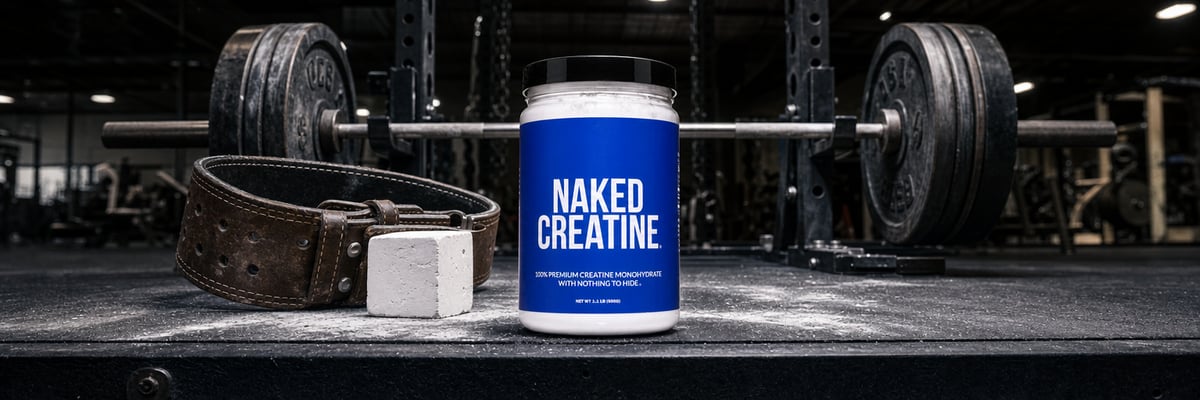
Den bästa formen är fortfarande kreatinmonohydrat. Det är den form som används i majoriteten av forskningen, den absorberas väl och kostar en bråkdel av nyare varianter. Naked Creatine Monohydrate Powder levererar rent kreatinmonohydrat utan tillsatser, fyllmedel eller artificiella ingredienser – bara den förening dina muskler verkligen behöver.
Vem bör ta kreatin?

Kreatin är ett av de mest allmänt tillämpliga kosttillskotten inom idrottsnäring. Det är inte bara för kroppsbyggare. Följande grupper ser konsekvent betydande fördelar:
- Styrke- och kraftidrottare: Alla som tränar motståndsträning, styrkelyft, CrossFit eller olympisk lyftning kommer att dra nytta av den ökade ATP-tillgängligheten och träningsvolymen som kreatin möjliggör.
- Sprint- och lagsportidrottare: Upprepad sprintprestation, explosiv smidighet och återhämtning mellan högintensiva insatser förbättras alla med kreatintillskott.
- Personer som bygger mager muskelmassa: Kreatin bygger inte muskler på egen hand, men det möjliggör högre träningsvolym och intensitet som driver hypertrofi.
- Veganer och vegetarianer: Lägre grundnivåer av kreatin innebär en större relativ respons på tillskott. Detta är en av de mest effektiva användningarna av kreatin.
- Personer intresserade av kognitiv prestation: Ny forskning stöder kreatins roll i att minska mental trötthet, särskilt vid sömnbrist eller långvarig kognitiv stress [3].
Om säkerhet: kreatin är ett av de mest studerade kosttillskotten inom människans näringslära. Decennier av forskning på friska vuxna visar inga negativa effekter vid rekommenderade doser. Oro för njurstress stöds inte av kontrollerad forskning på friska individer. Det sagt, bör alla med befintliga njurproblem eller som tar mediciner som påverkar njurfunktionen rådgöra med läkare innan de börjar med tillskott.
Om du är en frisk vuxen som vill få ut mer av din träning, känna dig mindre trött och återhämta dig snabbare, är kreatinmonohydrat ett av de få kosttillskotten med vetenskapligt stöd som motiverar investeringen. Börja med 5 gram dagligen, ta det konsekvent och ge det fyra veckor innan du utvärderar dina resultat av viktökning .
Vanliga frågor
Ger kreatin direkt energi som koffein gör?
Kreatin ger inte energi på samma stimulerande sätt som koffein gör. Istället fungerar det genom att fylla på adenosintrifosfat (ATP) — kroppens primära energivaluta — vilket gör att dina muskler kan upprätthålla högintensiva ansträngningar längre. Det betyder att energiboosten från kreatin är funktionell och prestationsbaserad, inte en effekt som stimulerar nervsystemet.
Hur producerar kreatin egentligen energi i kroppen?
Kreatin lagras i dina muskler som fosfokreatin, vilket donerar en fosfatgrupp till ADP (adenosindifosfat) för att snabbt återbilda ATP under korta intensiva ansträngningar. Denna process, känd som fosfagens energisystem, aktiveras under de första cirka 10 sekunderna av maximal ansträngning. Ju mer fosfokreatin du har lagrat, desto snabbare kan dina muskler återställa ATP och bibehålla maximal prestation.
Hjälper kreatin med energi under kondition eller uthållighetsträning?
Kreatins energifördelar är mest uttalade under korta, explosiva, högintensiva aktiviteter som sprint, tyngdlyftning och HIIT snarare än vid jämn konditionsträning. Uthållighetsträning förlitar sig mer på aeroba energivägar, där kreatin spelar en mindre betydande roll. Det finns dock viss forskning som tyder på att kreatin kan hjälpa vid upprepade sprintintervaller inom uthållighetsträning.
Hur lång tid tar det innan kreatin börjar öka energi och prestation?
De flesta märker förbättringar i prestationen inom en till fyra veckor av konsekvent kreatintillskott, beroende på om de använder en laddningsfas eller en standard daglig dos. En laddningsfas — vanligtvis 20 gram per dag i 5–7 dagar — mättar muskelns kreatinförråd snabbare, medan en underhållsdos på 3–5 gram dagligen uppnår samma mättnad över tre till fyra veckor. När dina förråd är helt mättade kan du förvänta dig konsekventa förbättringar i styrka, kraft och uthållighet vid hög intensitet.
Är det säkert att ta kreatin dagligen för energi och prestation?
Kreatinmonohydrat är ett av de mest omfattande forskade kosttillskotten för idrott, med årtionden av studier som stöder dess säkerhet vid långvarig daglig användning hos friska individer. Det finns inga trovärdiga bevis som kopplar standarddoser av kreatin till njur- eller leverskador hos personer utan befintliga sjukdomstillstånd. Som alltid, rådgör med din vårdgivare innan du börjar med något nytt tillskott, särskilt om du har en underliggande hälsoproblem.
Vad är den rekommenderade dosen av kreatin för energifördelar?
Den mest välunderbyggda underhållsdosen är 3–5 gram kreatinmonohydrat per dag, vilket är tillräckligt för att hålla musklernas kreatinförråd fullt mättade över tid. De som vill ha snabbare resultat kan välja en laddningsprotokoll på 20 gram dagligen (uppdelat i fyra 5-gramsportioner) i fem till sju dagar innan de går ner till en underhållsdos. Konsekvens är nyckeln — att ta kreatin dagligen, även på vilodagar, säkerställer att dina förråd förblir höga.
Påverkar typen av kreatin hur mycket energi det ger?
Kreatinmonohydrat är fortfarande den guldstandardform som stöds av mest forskning för energi, prestation och säkerhet. Andra former som kreatin HCL eller buffrat kreatin marknadsförs som att de har bättre absorption eller färre biverkningar, men bevisen visar inte konsekvent att de överträffar monohydrat när det gäller energiutbyte eller muskelsaturation. För de flesta är kreatinmonohydrat det mest kostnadseffektiva och väl beprövade valet.
Bör jag leta efter några certifieringar när jag köper kreatin för energistöd?
Ja — certifieringar från tredje part är en viktig indikator på produktens kvalitet och renhet. Leta efter sigill från organisationer som NSF Certified for Sport, Informed Sport eller USP, som verifierar att produkten innehåller det som anges på etiketten och är fri från förbjudna ämnen. Detta är särskilt viktigt för tävlingsidrottare eller alla som vill vara säkra på att deras kreatintillskott uppfyller strikta kvalitetsstandarder.
Toppval av produkter
Vald av över 1 miljon kunder. Fri frakt på beställningar över 100 $.

Jordgubb Kreatinmonohydratpulver | Naked Creatine - 1,1 LB
$29.99
- ✓ 100 % premium kreatinmonohydrat
- ✓ Högsta tillgängliga kvalitet: löser sig snabbt och absorberas snabbt
- ✓ 5 g kreatin per portion
- ✓ Inga konstgjorda sötningsmedel, smaker eller färger

Hallon Lime Kreatin HCl-pulver | Naked Lean Creatine - 231 g
$34.99
- ✓ 750 mg Con-Cret® Kreatin HCl
- ✓ Ekologisk taggfrukt för naturlig vätskebalans
- ✓ Mycket potent: överlägsen muskelprestanda vid lägre doser
- ✓ Viktiga elektrolyter för optimal kreatinabsorption

Orange Kreatinmonohydratpulver | Naked Creatine - 1,1 LB
$29.99
- ✓ 100 % premium kreatinmonohydrat
- ✓ Högsta tillgängliga kvalitet: löser sig snabbt och absorberas snabbt
- ✓ 5 g kreatin per portion
- ✓ Inga konstgjorda sötningsmedel, smaker eller färger