




På denna sida
Kreatin 101: Allt du behöver veta innan du köper
Upptäck vetenskapen, fördelarna och köptipsen som gör kreatin till ett av de mest beprövade tillskotten på marknaden.

Viktiga punkter
- Vad kreatin är: En naturligt förekommande förening gjord av aminosyror som driver högintensiv träning genom att regenerera ATP via fosfokreatinlagren i dina muskler.
- Vem som gynnas mest: Styrkeidrottare, motståndstränande, vegetarianer och veganer samt äldre vuxna ser alla meningsfulla vinster från tillskott.
- Standarddos: 3 till 5 gram per dag är ISSN:s rekommenderade underhållsdos. Uppladdning är valfri, inte nödvändig.
- Vätskeretention är normalt: Tidig viktökning är intramuskulär vätska, inte fett. Det är ett tecken på att kreatinet fungerar.
- Tidslinje för resultat: Styrke- och prestationsförbättringar visar sig vanligtvis inom 7 till 28 dagar. Magra muskelvinster byggs upp över veckor till månader.
- Långsiktig säkerhet: Kreatinmonohydrat är ett av de mest undersökta tillskotten som finns. Regelbunden användning är säker för friska vuxna.
- Särskilda överväganden: Kreatin bryter inte fastan, passar bra med koffein och är lika effektivt för kvinnor som för män.

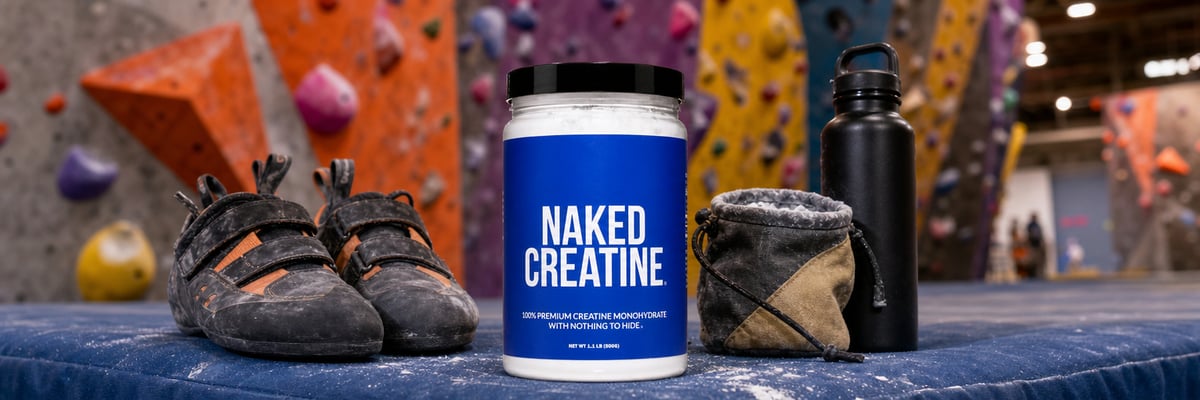
Kreatinmonohydratpulver | Naked Creatine - 2,2 LB
- Kreatinmonohydrat
- Kreatinformel
- Testad av tredje part
- Inga konstgjorda tillsatser
Kreatin 101: Vad det är och hur det fungerar

Du har hört kreatin rekommenderas mer än nästan något annat tillskott. Det finns en anledning till det. Till skillnad från de flesta produkter som slåss om hyllutrymme har kreatin decennier av forskning på människor bakom sig, en tydlig verkningsmekanism och en konsekvent meritlista i verkliga idrottssammanhang.
Kreatin är en naturligt förekommande förening som syntetiseras i levern och njurarna från tre aminosyror: arginin, glycin och metionin. Din kropp producerar ungefär 1 gram per dag på egen hand, och kosten bidrar med ytterligare kreatin genom rött kött och fisk. Problemet är att även med en solid allätarkost är de flesta människors muskler bara 60 till 80 procent mättade med kreatin. Det är där tillskottet får sin plats.
- Kreatin lagras i muskelvävnad som fosfokreatin (PCr).
- Under explosiv, högintensiv ansträngning förbrukas ATP inom sekunder. Fosfokreatin donerar en fosfatgrupp för att snabbt regenerera ATP.
- Mer fosfokreatin tillgängligt innebär mer ATP innan trötthet uppstår, vilket direkt översätts till fler repetitioner, mer kraft och bättre sprintprestation.
- Tillskott mättar musklerna mer fullständigt än enbart kosten, vilket pressar lagren mot deras tak och förlänger energireserven.
När muskelkreatinlagren är helt mättade blir systemet mer effektivt på att regenerera ATP under maximala ansträngningar. Det är mekanismen bakom styrka-, kraft- och prestationsfördelarna du kommer läsa om nedan.
Av de många kreatinformer som finns på marknaden är kreatinmonohydrat fortfarande den mest undersökta, mest kostnadseffektiva och mest konsekvent stödda av kliniska data. Andra former finns, men ingen har visat överlägsna resultat i välkontrollerade studier. Forskningen om kreatins fördelar bygger nästan helt på monohydrat, vilket är skäl nog att börja där.
De grupper som drar mest nytta av tillskott är de som antingen tränar hårt (idrottare och styrketränande), äter lite eller inget kött (vegetarianer och veganer, som har betydligt lägre grundläggande muskelkreatinnivåer) eller äldre vuxna som möter åldersrelaterad muskelförlust och kognitiv nedgång. För alla dessa grupper stänger tillskottet en verklig och mätbar lucka.
Fördelarna med kreatintillskott

Kreatins fördelar är inte spekulativa. De är bland de mest reproducerade resultaten inom idrottsnäringsforskning. Här är vad bevisen konsekvent visar över olika populationer.
Styrka och kraftutveckling. Den mest dokumenterade fördelen är ökad prestation under högintensiv, kortvarig träning. Sprint, tung lyftning och explosiva rörelser är alla starkt beroende av fosfokreatinsystemet. Högre kreatinlager innebär att dina muskler kan upprätthålla maximal kraft längre innan trötthet tvingar dig att avbryta.
Muskelåterhämtning och mager muskelmassa. Kreatin minskar markörer för muskelnedbrytning efter träning och stödjer snabbare återhämtning mellan passen. Över veckor och månader av konsekvent tillskott kombinerat med styrketräning leder detta till större ökningar av mager muskelmassa jämfört med träning ensam.
Kognitiv funktion och hjärnhälsa. Hjärnan använder också ATP för energi. Avgerinos et al. (2018), Experimental Gerontology fann att kreatintillskott förbättrade minnesprestanda hos friska vuxna, med starkast effekter hos äldre och de som befinner sig under metabol stress. Detta är ett område med växande forskningsintresse som utvidgar kreatins relevans långt bortom gymmet.
📊 Vad forskningen säger
Avgerinos et al. (2018) i Experimental Gerontology analyserade sex randomiserade kontrollerade studier och fann att kreatintillskott gav en statistiskt signifikant förbättring i minnestestresultat hos friska vuxna, med störst effekter hos personer över 66 år. Hjärnans energihypotes föreslår att kreatin ökar cerebral fosfokreatintillgång, vilket stödjer kognitiv prestation under stress och trötthet.
Äldre vuxna. Sarkopeni, den åldersrelaterade förlusten av muskelmassa, är en av de mest betydande faktorerna för minskad rörlighet och självständighet efter 60 års ålder. Kreatintillskott i kombination med styrketräning har visat betydande fördelar för muskelbevarande och funktionell styrka hos äldre vuxna. Det finns också växande bevis för fördelar för bentäthet, även om denna forskning fortfarande utvecklas.
Kvinnor. Kreatin fungerar på samma sätt hos kvinnor som hos män. Samma fördelar för prestation, återhämtning och kroppssammansättning gäller. Det finns inga maskuliniserande effekter. Kvinnor, särskilt postmenopausala kvinnor, kan dra stor nytta av kreatin med tanke på dess betydelse för benhälsa och kognitiv funktion.
Vegetarianer och veganer. Kött och fisk är de främsta kostkällorna till kreatin. De som undviker animaliska produkter har lägre grundnivåer av muskelkreatin och svarar därför mer dramatiskt på tillskott. Prestationsökningarna i denna grupp är ofta större än hos allätare som börjar från en högre grundnivå.
Sömnbrist. Forskning tyder på att kreatin delvis kan motverka kognitiva och fysiska prestationsnedsättningar vid otillräcklig sömn genom att öka hjärnans energitillgång. Detta ersätter inte sömn, men är en betydande buffert de dagar du behöver det som mest.
Hur man tar kreatin: Dosering, tidpunkt och laddning

Grunderna här är enkla, och forskningen är tillräckligt tydlig för att du inte behöver överanalysera något av detta.
Standard underhållsdos. International Society of Sports Nutrition (ISSN) rekommenderar 3 till 5 gram kreatinmonohydrat per dag för de flesta. Detta är dosen som upprätthåller full muskelmättnad när dina förråd är fyllda. Större idrottare med betydligt mer muskelmassa kan tycka att 5 till 10 gram är mer lämpligt för underhåll.
Uppladdningsfas: den snabba metoden. Om du vill mätta dina muskler snabbt rekommenderar ISSN en uppladdningsprotokoll på 20 gram per dag (fyra doser om 5 gram spridda över dagen) i 5 till 7 dagar. Detta mättar dina muskler på ungefär en vecka istället för tre till fyra veckor. Nackdelen är en högre sannolikhet för uppblåsthet och mag-tarmbesvär under uppladdningsperioden.
Uppladdningsfas: den långsamma metoden. Att ta 3 gram per dag i 28 dagar ger samma slutresultat med färre biverkningar. Det är mer gradvis, men du når samma mål.
Är uppladdning nödvändig? Nej. Om du börjar med 3 till 5 gram per dag utan någon uppladdning når du full mättnad på ungefär tre till fyra veckor. Prestationsfördelarna blir desamma när du väl är där. Uppladdning påskyndar bara processen. Det handlar om hur snabbt du vill se resultat.
Timing. Både före och efter träning är effektivt. Kreatinnivåerna i blodet når sin topp ungefär 60 minuter efter intag, vilket stödjer att ta det 30 till 60 minuter före träning. Kreatin efter träning hjälper till att fylla på uttömda lager och kan stödja återhämtning. Det viktigaste är konsekvens. Ta det vid samma tid varje dag inom det tidsfönster som passar din rutin.
Vilodagar. Ta det. Dagligt intag håller musklernas kreatinlager fullt mättade. Att missa en dag då och då påverkar inte din utveckling, men att regelbundet hoppa över doser på vilodagar kommer gradvis att minska dina musklers kreatinnivåer över tid.
Vad du kan blanda det med. Vatten, juice eller en proteinshake fungerar alla. Varm vätska kan förbättra pulverets upplösning. Att blanda kreatin med en kolhydrat- och proteinkälla efter träning kan något förbättra upptaget tack vare insulinmedierad transport, även om effekten är måttlig.
Kreatin och koffein. Ja, du kan ta kreatin med kaffe. Kreatin och koffein verkar genom olika mekanismer och kompletterar varandra väl före träning. Kreatin förlänger ditt fosfokreatinlager; koffein ökar vakenheten och minskar upplevd ansträngning. Kombinationen tolereras väl av de flesta. Undvik att ta det för sent på dagen om koffein stör din sömn.
Vanliga biverkningar och hur du hanterar dem

Kreatin är ett av de mest noggrant studerade kosttillskotten som finns. Säkerhetsprofilen vid både kort- och långvarig användning hos friska vuxna är konsekvent stark. Det sagt finns några biverkningar som är bra att känna till så att du kan hantera dem istället för att bli överraskad.
Vätskeretention och viktökning. När kreatin går in i muskelcellerna drar det med sig vatten. Detta är en normal, förväntad reaktion och ett tecken på att kreatinet fungerar. Du kan se en viktökning på 1 till 3 pund på vågen under de första en till två veckorna, särskilt vid laddning. Detta är intramuskulär vätska, inte fett. Det förändrar inte din kroppssammansättning negativt och förbättrar ofta muskelvolym och träningsprestation.
Uppsvälldhet. Uppsvälldhet är vanligare under laddningsfasen på grund av högre enskilda doser och den snabba ökningen av muskelvätska. För att minska uppsvälldhet: hoppa över laddningsfasen och börja med 3 till 5 gram per dag, sprid doserna över dagen istället för att ta allt på en gång, och ta kreatin med mat istället för på tom mage.
Magbesvär. Vissa upplever mild illamående eller magbesvär, särskilt vid större doser. Lösningen är enkel: ta kreatin med mat, håll dig väl hydrerad och minska dosstorleken vid behov. Att dela upp en 5-grams dos i två mindre doser under dagen löser detta för de flesta.
Muskelkramp. Denna oro har cirkulerat i åratal, men forskningen stöder inte starkt en koppling mellan kreatintillskott och ökad kramp hos friska individer. Att hålla sig väl hydrerad är bra praxis oavsett.
Njurfunktion. Detta är den mest seglivade myten kring kreatin. För friska individer visar decennier av forskning inga negativa effekter på njurfunktionen vid rekommenderade doser. Antonio et al. (2017), Journal of the International Society of Sports Nutrition fann inga negativa njurmarkörer hos friska vuxna som använde kreatin i upp till två år. Om du har en befintlig njursjukdom, rådgör med din läkare innan du börjar med tillskott. Det är en lämplig försiktighetsåtgärd. Det är inte en oro för friska vuxna.
Vad du kan förvänta dig: Tidslinje och resultat

Kreatin är inte en stimulant. Du kommer inte att känna av det första dagen. Det du gör är att gradvis mätta dina muskler med fosfokreatin, och prestationsförbättringarna blir märkbara när mättnaden är tillräcklig.
Första 1 till 2 veckorna. Om du laddar kan du märka en viktökning på vågen på grund av vätskeretention under de första dagarna. Vissa rapporterar också en subtil ökning i muskelvolym. Faktiska styrkeförbättringar kan börja visa sig sent under denna period.
7 till 28 dagar. Det är då de flesta märker en verklig förbättring i prestation: en extra repetition eller två på arbetsset, en något längre sprint innan tekniken bryts ner, eller snabbare återhämtning mellan set. Variationer i denna tidslinje beror till stor del på dina startnivåer av kreatin. Vegetarianer och veganer märker vanligtvis förändringar snabbare och mer dramatiskt eftersom de börjar från en lägre baslinje.
Veckor till månader. Mager muskelmassa ackumuleras gradvis när kreatinförstärkt träning möjliggör större total träningsvolym och intensitet över tid. Kreatin bygger inte muskler på egen hand. Det förstärker den stimulans du skapar i gymmet, och den stimulansen, tillämpad konsekvent över månader med tillräcklig näring, ger verkliga och varaktiga muskelvinster.
Är vinsterna permanenta? Svaret beror på vilka vinster du menar. Vattenvikt som samlats under tillskottsperioden försvinner inom några veckor efter att du slutat med kreatin när muskelkreatinförråden återgår till baslinjen. Äkta muskelmassa som byggts upp under tillskottsperioden består så länge din träning och näring förblir konsekvent. Kreatin är verktyget; träning och kost är det som bygger det du behåller.
När du slutar. Muskelkreatinnivåerna återgår till baslinjen inom ungefär 4 till 6 veckor efter att du slutat med tillskott. Du kan se att vågen sjunker några kilo när vattenvikten normaliseras. Styrkenivåerna återgår gradvis till vad din träning ensam kan upprätthålla. Ingenting kraschar. Övergången är gradvis.
Kreatin och särskilda överväganden

Några vanliga frågor dyker upp ofta kring kreatin som inte passar in i kategorierna dosering eller biverkningar. Här är vad forskningen säger om varje fråga.
Kreatin och intermittent fasta. Kreatin innehåller inga kalorier och utlöser ingen insulinrespons. Det bryter inte fastan. Du kan ta rent kreatinpulver upplöst i vatten under din fastaperiod utan att störa det metabola tillstånd du upprätthåller. Undvik bara att blanda det med juice eller en kolhydratkälla under fastan om det är viktigt för dig att bevara fastan.
Kreatin och sömn. Forskning tyder på att kreatin delvis kan motverka den kognitiva och fysiska trötthet som orsakas av sömnbrist genom att öka hjärnans tillgång på fosfokreatin. Dolan et al. (2019), Journal of Sleep Research fann att kreatintillskott minskade nedgångar i humör och kognitiv prestation hos sömnberövade försökspersoner. Att ta kreatin på morgonen kan vara att föredra för kognitivt stöd med tanke på hjärnans energimekanism. Mer forskning behövs för att fastställa optimal tidpunkt för sömnrelaterade fördelar.
Kreatin för kvinnor. Kvinnor får samma prestations-, återhämtnings- och kroppssammansättningsfördelar som män. Kreatin påverkar inte hormoner och ger inga maskuliniserande effekter. Kvinnor efter klimakteriet kan också dra nytta av kreatinets framväxande roll i stöd för benhälsa. Det finns ingen anledning för kvinnor att använda en lägre dos eller undvika kreatin.
Förvaring och hållbarhet. Kreatinmonohydrat är en anmärkningsvärt stabil förening med en hållbarhet på 2 till 3 år, potentiellt längre vid korrekt förvaring. Förvara det i en tätt försluten behållare på en sval, torr plats borta från direkt solljus och fukt. Normal mindre klumpning från fukt påverkar inte styrkan. Tecken på att kreatin faktiskt blir dåligt och har försämrats på riktigt inkluderar en stark obehaglig lukt, betydande färgförändring eller en ovanlig smak. Vid tvekan, byt ut det.
Snabb förvaringschecklista: förseglad behållare, svalt och torrt ställe, borta från fukt och solljus. Kreatinmonohydrat är ett av de mest hållbara tillskotten du kan ha.
Varför Naked Creatine Monohydrate

De flesta kreatinprodukter på marknaden innehåller exakt en ingrediens: kreatinmonohydrat. Skillnaden mellan produkterna handlar om renhet, partikelstorlek och om tillverkaren har testat vad som faktiskt finns i burken.
Naked Creatine är 100 % ren kreatinmonohydrat utan något annat tillsatt. Inga fyllmedel, inga artificiella smaker, inga proprietära blandningar, inga ingredienser du behöver slå upp. Du vet exakt vad du får eftersom etiketten säger exakt vad den innehåller.
Kreatinet är microniserat, vilket betyder att partikelstorleken har minskats för att förbättra blandbarhet och upptag. Microniserat kreatin löser sig renare i vatten och lämnar mindre olöst rester i botten av din shaker. För ett tillskott du tar varje dag spelar det roll.
- Endast en ingrediens: 100 % ren kreatinmonohydrat utan tillsatser eller fyllmedel.
- Microniserad för förbättrad blandbarhet och minskat rester.
- Oberoende testad för renhet och säkerhet, så att du vet att etiketten stämmer med innehållet.
- Inga proprietära blandningar: full transparens för varje dos.
- Inga artificiella färgämnen, smaker eller sötningsmedel av något slag.
Oberoende testning är ett måste för tillskott. Naked Nutrition testar självständigt för att verifiera att Naked Creatine innehåller det som står på etiketten och inget annat. Detta är särskilt viktigt för tävlingsidrottare och alla som tar det de stoppar i kroppen på allvar.
Om du är redo att börja är det enklaste sättet 5 gram per dag i vatten, juice eller din efter-tränings-shake. Konsekvens över tid ger resultat. Naked Creatine tar bort alla anledningar att göra det mer komplicerat.
Vanliga frågor
Vad är kreatin exakt och var kommer det ifrån?
Kreatin är en naturligt förekommande förening som bildas av tre aminosyror — arginin, glycin och metionin — och produceras i levern, njurarna och bukspottkörteln. Du får också små mängder genom kosten, som rött kött och fisk, men tillskott är det mest effektiva sättet att mätta musklerna med det. Cirka 95 % av kroppens kreatin lagras i skelettmusklerna, där det spelar en direkt roll i energiproduktionen.
Hur fungerar kreatin egentligen i kroppen?
Kreatin fungerar genom att öka musklernas förråd av fosfokreatin, som används för att snabbt återbilda ATP — den primära energivalutan dina celler använder under högintensiv träning. När du lyfter tungt eller sprintar förbrukar kroppen ATP mycket snabbt, och kreatin hjälper till att fylla på det snabbare än det annars skulle göra. Detta leder till fler repetitioner, högre kraftutveckling och bättre återhämtning mellan set.
Är det säkert att ta kreatin på lång sikt?
Ja — kreatin är ett av de mest omfattande studerade sporttillskotten i historien, med decennier av forskning som konsekvent visar att det är säkert för friska individer när det tas i rekommenderade doser. Studier som varat upp till fem år har inte funnit några negativa effekter på njur- eller leverfunktion hos personer utan tidigare sjukdomar. Om du har njursjukdom eller annan underliggande hälsoproblem är det bäst att rådgöra med din läkare innan du börjar med tillskott.
Vad är den rekommenderade dagliga dosen av kreatin?
Den mest allmänt rekommenderade underhållsdosen är 3–5 gram kreatinmonohydrat per dag, intaget konsekvent över tid. Vissa väljer att göra en laddningsfas med 20 gram per dag (uppdelat på fyra doser) under de första 5–7 dagarna för att mätta musklerna snabbare, men detta är frivilligt och inte nödvändigt. Att hoppa över laddningsfasen och hålla sig till en daglig dos på 3–5 gram ger samma resultat — det tar bara några extra veckor att helt mätta musklernas förråd.
När är den bästa tiden att ta kreatin?
Forskning tyder på att intag av kreatin nära din träning — antingen före eller efter — kan ge en liten fördel jämfört med att ta det vid slumpmässiga tider under dagen. Tillskott efter träning har visat måttliga fördelar i vissa studier, möjligen på grund av ökat upptag av näringsämnen i musklerna efter träning. Det viktigaste är dock konsekvens: att ta kreatin dagligen vid den tid som passar din rutin ger bäst resultat.
Kommer kreatin att orsaka uppsvälldhet eller vätskeretention?
Kreatin gör att musklerna drar in mer vatten, vilket kan leda till en liten viktökning — vanligtvis 1–3 pund — särskilt under en laddningsfas. Detta vatten lagras intramuskulärt (inne i muskelcellerna), inte under huden, så det kan faktiskt bidra till ett fylligare, mer muskulöst utseende snarare än ett svullet sådant. Uppsvälldhet är ovanligt vid standarddoser, även om mycket stora mängder på en gång kan orsaka magbesvär hos vissa personer.
Hur lång tid tar det att se resultat av kreatintillskott?
Med en laddningsfas märker många förbättringar i styrka och träningsprestation inom den första veckan när muskelns kreatinlager blir helt mättade. Utan laddning tar det vanligtvis 3–4 veckor av daglig användning innan muskeldepåerna optimeras och prestationsförbättringar blir märkbara. Långsiktiga vinster i muskelmassa och styrka byggs gradvis upp under månader av konsekvent träning och tillskott.
Är kreatinmonohydrat bättre än andra former som kreatin HCL eller buffrad kreatin?
Kreatinmonohydrat är fortfarande guldstandarden — det är den mest undersökta formen, mest prisvärd och har starkast bevis för att förbättra styrka, kraft och muskeltillväxt. Nyare former som kreatin HCL och buffrad kreatin (Kre-Alkalyn) marknadsförs som bättre absorberade eller skonsammare för magen, men inga granskade studier har visat att de är meningsfullt överlägsna när det gäller resultat. Om du inte har en specifik känslighet för monohydrat är det fortfarande det smartaste och mest kostnadseffektiva valet.
Toppval av produkter
Vald av över 1 miljon kunder. Fri frakt på beställningar över 100 $.
Kreatinmonohydratpulver | Naked Creatine - 2,2 LB
$35.99
- ✓ 100 % premium kreatinmonohydrat
- ✓ Högsta tillgängliga kvalitet: löser sig snabbt och absorberas snabbt
- ✓ 5 g kreatin per portion
- ✓ Inga konstgjorda sötningsmedel, smaker eller färgämnen

Jordgubb Kreatinmonohydratpulver | Naked Creatine - 1,1 LB
$29.99
- ✓ 100 % premium kreatinmonohydrat
- ✓ Högsta tillgängliga kvalitet: löser sig snabbt och absorberas snabbt
- ✓ 5 g kreatin per portion
- ✓ Inga konstgjorda sötningsmedel, smaker eller färgämnen

Lemon Lime Kreatinmonohydratpulver | Naked Creatine - 1,1 LB
$29.99
- ✓ 100 % premium kreatinmonohydrat
- ✓ Högsta tillgängliga kvalitet: löser sig snabbt och absorberas snabbt
- ✓ 5 g kreatin per portion
- ✓ Inga konstgjorda sötningsmedel, smaker eller färgämnen