


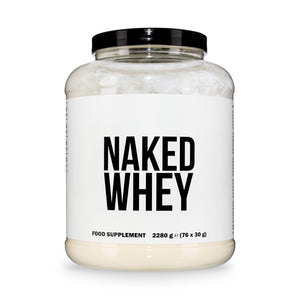



Whey and collagen are both proteins, but they do different jobs, so one is not simply better than the other. Whey is a complete, high-quality protein that is excellent for building and maintaining muscle and meeting your daily protein needs. Collagen is an incomplete protein that is poor for muscle building, but its amino acids support skin elasticity, hydration, and joint, bone, and connective-tissue health. For muscle and overall protein, choose whey; for skin and joints, choose collagen. Many people use both for different goals.
The bottom line: this is not really a competition, because whey and collagen are tools for different jobs. Asking "collagen vs. whey" is a bit like asking whether a hammer or a screwdriver is better; it depends what you are trying to do. Whey is the muscle-and-protein workhorse. Collagen is the skin-and-joints specialist. Below we break down what each one is, why their amino acids matter, which wins for muscle, which wins for skin and joints, the trade-offs of each, and how to decide, or whether to simply use both.
Collagen vs. Whey Protein: The Key Difference

The single most important thing to understand: whey is a complete protein and collagen is an incomplete one, and they are used for different purposes.
-
Whey contains all the essential amino acids in good amounts, including plenty of leucine, the amino acid that triggers muscle building. It is the protein you reach for to grow or maintain muscle and to hit your daily protein target.
-
Collagen is rich in a few specific amino acids (glycine, proline, and hydroxyproline) that make up connective tissue. It is low in several essential amino acids and lacks tryptophan entirely, so it is a poor muscle builder, but those same amino acids support skin and joints.
Keep that distinction in mind and the rest of the comparison falls into place.
What Is Whey Protein?
Whey is one of the two proteins in milk (the other is casein). It is separated from milk during cheese-making, then pasteurized and dried into a powder. It is a fast-digesting, complete protein, meaning it provides all nine essential amino acids your body cannot make on its own. It is especially high in leucine and the other branched-chain amino acids, which is why it is so effective at stimulating muscle protein synthesis, the process of building and repairing muscle.
Decades of research support whey and similar high-quality proteins for building muscle and strength when combined with resistance training [1]. Because high-quality, rapidly digestible proteins like whey best stimulate muscle protein synthesis [2], whey is the default choice for athletes, lifters, and anyone trying to increase their protein intake. It is also one of the more affordable quality proteins available, typically costing less per gram of protein than egg white or most plant-based powders. If you are sensitive to dairy sugar, note that whey does contain some lactose, which we cover in does whey protein have lactose.
What Is Collagen?

Collagen is the most abundant structural protein in your body, making up roughly a third of your total body protein. It is the scaffolding of your skin, tendons, ligaments, cartilage, and bones, giving these tissues strength and elasticity. Your natural collagen production declines with age, which is part of why skin loses firmness and joints can stiffen over time.
That decline starts earlier than most people expect, often as early as your twenties, and everyday factors speed it up. UV exposure, smoking, and a diet heavy in sugar and ultra-processed food all damage existing collagen fibers, which is why sun protection and diet matter alongside any supplement.
Supplemental collagen is usually "hydrolyzed," meaning broken into small peptides for easier absorption. It is rich in glycine and proline, the building blocks of connective tissue. Research shows hydrolyzed collagen can improve skin elasticity, hydration, and wrinkles, and can support joint mobility and reduce joint pain [4]. So collagen is not a muscle protein; it is a connective-tissue protein. If you are weighing collagen against similar options, see collagen vs. bone broth.
Protein Quality: Complete vs. Incomplete
"Protein quality" describes how well a protein supplies the essential amino acids your body needs. By that measure, whey and collagen sit at opposite ends.
Whey scores at the top of protein-quality rankings. It is complete and leucine-rich, so gram for gram it does more for muscle than almost any other protein. Collagen, despite being technically protein, scores poorly as a standalone nutritional protein: it is missing tryptophan and low in other essential amino acids, so it cannot efficiently build muscle on its own. This is not a flaw in collagen; it simply is not what collagen is for. Its value is in the specific amino acids it delivers to skin and connective tissue, not in well-rounded protein nutrition.
For Building Muscle: Whey Wins

If your goal is muscle, strength, or simply getting enough quality protein, whey is the clear choice. It directly stimulates muscle protein synthesis and is proven to enhance training results [1][2].
Collagen, by contrast, does not build muscle. Studies measuring muscle protein synthesis have found that collagen peptides do not increase it compared with placebo [3], and reviews conclude collagen has minimal impact on muscle protein synthesis relative to higher-quality proteins [5]. So if someone is using collagen as their main protein for the gym, they are using the wrong tool. For muscle goals, whey (or another complete protein) should do the heavy lifting.
For Skin, Joints, and Connective Tissue: Collagen Wins
Here the roles reverse. Whey is not a meaningful skin or joint supplement, while collagen is exactly suited to those tissues. Hydrolyzed collagen has been shown to improve skin elasticity and hydration and reduce the appearance of wrinkles, and to improve joint comfort and mobility, especially in active and aging people [4][5]. Its glycine and proline feed the connective tissue that whey does not target [2].
So if your main interest is firmer skin, fewer wrinkles, or healthier, less achy joints and tendons, collagen is the supplement designed for that job, not whey.
What Else Collagen May Support
Skin and joints get the most attention, but collagen is structural tissue throughout the body, and a few other areas come up often:
-
Bone: collagen forms the protein framework that bone mineral is laid down on, and it has been studied alongside orthopedic outcomes for its role in maintaining bone quality as we age [4].
-
Tendons, ligaments, and injury recovery: because these tissues are largely collagen, collagen peptides have been examined for recovery from joint injury and hard training [5]. This is one area where whey and collagen are arguably complementary rather than competing, whey feeding the muscle and collagen feeding the tissue around it.
-
Gut lining: collagen's amino acids are found in the tissue lining the digestive tract, and gut support is a common reason people take it. Worth flagging that this one is the least established of the three; the research here is early, so treat it as a possible bonus rather than a reason to buy.
The Trade-offs of Each
Neither one is perfect, and knowing the downsides up front makes the choice easier.
Where whey can fall short:
-
It contains lactose, so people who are sensitive to dairy sugar may notice bloating or stomach upset. Isolate has less lactose than concentrate if that is an issue.
-
Some people report breakouts with dairy, and the same has been reported with whey, though it is far from universal.
-
It has a distinct taste. Plenty of brands mask it with artificial flavors and sweeteners, which is not everyone's preference either.
Where collagen can fall short:
-
It is incomplete, so it cannot carry your protein intake on its own.
-
It is animal-derived, from bovine, porcine, or marine sources, so it is not an option for vegans and may not fit some dietary requirements.
-
The research base is younger and thinner than whey's. Skin and joint results are promising and reasonably consistent, but decades of muscle research back whey, and collagen simply has not been studied for as long or as broadly.
On the plus side for collagen: it is flavorless, mixes into anything, and is usually easier on the stomach than whey for people who struggle with dairy.
Can You Take Both Collagen and Whey?

Yes, and for many people that is the smartest approach, because they cover different needs. A common pattern is to use whey to hit protein and muscle goals and collagen for skin and joint support. They do not interfere with each other; they simply do different things.
One practical note: do not count collagen toward your "muscle-building" protein total, since it does not contribute meaningfully to that goal. Think of your whey (and food protein) as your muscle and overall protein, and your collagen as a targeted add-on for skin and joints. Used that way, the two are complementary rather than competing.
If you track macros, this is where people get confused, so here is the nuance. Collagen does supply calories and it does show grams of protein on the label, and in that respect it is no different from most plant proteins, which are also incomplete. Logging it in your daily total is not wrong. The mistake is letting it substitute for complete protein: as long as the bulk of your intake comes from whey, meat, dairy, eggs, or well-combined plant sources, a scoop of collagen in the total is fine. Getting most of your protein from collagen is not.
Most people who take both space them out across the day rather than stacking them in one drink, which spreads protein intake and tends to sit better.
Side-by-Side Comparison
|
Factor |
Whey Protein |
Collagen |
|---|---|---|
|
Protein type |
Complete (all essential amino acids) |
Incomplete (lacks tryptophan) |
|
Best for |
Muscle, strength, daily protein |
Skin, joints, connective tissue |
|
Muscle building |
Excellent |
Poor |
|
Skin and joints |
Minimal effect |
Beneficial |
|
Key amino acids |
High leucine |
Glycine, proline |
|
Source |
Milk (dairy) |
Animal connective tissue (or marine) |
|
Digestion |
Fast; contains lactose, may bother sensitive stomachs |
Generally easy on the stomach; dairy-free |
|
Taste |
Distinct dairy flavor |
Essentially flavorless |
|
Cost per gram of protein |
Among the most affordable quality proteins |
Typically higher |
|
Depth of research |
Extensive, decades of studies |
Growing, but newer and narrower |
|
Typical use |
Shakes, post-workout, protein top-up |
Mixed into coffee, water, smoothies |
Which Should You Choose?
Match the protein to your goal:
-
Choose whey if your priority is building or keeping muscle, recovering from training, or simply eating more high-quality protein. A clean, single-ingredient grass-fed whey is an easy way to do that.
-
Choose collagen if your priority is skin elasticity and hydration or joint and connective-tissue comfort, especially as you age.
-
Choose both if you want muscle support and skin/joint support; they work well together for different reasons.
And for either one, the clean-label rule still applies: a single-ingredient, third-party-tested product gives you the protein you want with nothing extra.
How to Use Whey and Collagen
The two are used a little differently in practice:
-
Whey: a typical serving is about 20 to 30 grams of protein, often taken after a workout or any time you need to top up your daily protein. It mixes into water or milk and counts fully toward your protein goal. If muscle is the goal, post-training is a sensible default; if you are just topping up intake, any time of day works.
-
Collagen: studies on skin and joints commonly use around 10 to 15 grams a day, taken consistently over weeks to months, since the benefits build gradually. It is flavorless and dissolves easily, so many people stir it into coffee, water, or a smoothie. Timing does not appear to matter much, so the reason people default to morning coffee is mostly habit, and habit is what gets you the consistency the results depend on.
Because collagen does not build muscle, do not let it crowd out your complete-protein intake. Use whey and whole foods to reach your protein target, and add collagen as a separate, smaller daily habit if skin or joint support is a goal. There is no need to take them at the same time, and taking both does not require any special timing.
A Quick Word on Quality
Whichever you choose, the product matters as much as the type. The cleanest options are close to a single ingredient, just whey, or just collagen peptides, with no added sugar, fillers, or proprietary blends, and ideally third-party tested for purity. A flashy blend with a long ingredient list is not better than a simple, verified one. For collagen specifically, look for "hydrolyzed collagen" or "collagen peptides," which are the forms studied for absorption and results [4]. For whey, a grass-fed, single-ingredient powder keeps things simple. The goal with both is the same: get the protein you are after and not much else.
One label to read carefully: "vegan collagen." There is no plant source of true collagen, so these products are blends of nutrients meant to support your body's own collagen production. That may be a reasonable thing to buy, but it is a different product making a different claim, and it is worth knowing which one you are getting.

Frequently Asked Questions
Is collagen or whey better? Neither is universally better; they serve different goals. Whey is better for muscle and overall protein; collagen is better for skin and joints [2][4].
Can collagen replace whey protein? No. Collagen is an incomplete protein and does not build muscle the way whey does, so it should not be your main protein source for fitness goals [3][5].
Is whey good for skin like collagen? Not meaningfully. Whey is excellent for muscle but is not a targeted skin or joint supplement; collagen is the one studied for those outcomes [4].
Can I take collagen and whey together? Yes. They are complementary, whey for muscle and protein, collagen for skin and joints, and do not interfere with each other.
Does collagen count as protein? It is protein, but low-quality nutritionally because it is incomplete. Do not count it toward your muscle-building protein target; treat it as a skin and joint supplement.
Is collagen easier to digest than whey? For many people, yes. Collagen is dairy-free and tends to sit well, while whey contains some lactose that can cause bloating or stomach upset in those who are sensitive to it.
Does whey protein cause acne? Some people report breakouts with dairy and with whey specifically, but it is not a universal effect. If you notice a pattern, a dairy-free protein is an easy thing to test.
Is collagen good for your bones? Collagen forms the protein framework of bone, and it has been reviewed alongside orthopedic outcomes for that role [4]. It is best treated as one input among several, alongside adequate total protein, calcium, vitamin D, and resistance training.
Is there a vegan collagen? Not a true one. All actual collagen supplements come from animal sources; products marketed as vegan collagen supply nutrients intended to support your own collagen production instead.
Which is better for weight loss, collagen or whey? Whey is more useful for weight loss because it is filling and protects muscle while you diet. Collagen is less satiating and is not a muscle-protective protein, so it is not a weight-loss tool, as we cover in can you take collagen for weight loss.
Is collagen or whey better for older adults? It depends on the goal. Older adults trying to preserve muscle benefit most from a complete protein like whey, while collagen may help age-related skin and joint concerns. Many older adults reasonably use both.
Conclusion
So, collagen vs. whey protein? They are not really rivals, they are specialists.
-
Whey is a complete, high-quality protein that builds muscle and covers your daily protein needs [1][2].
-
Collagen is an incomplete protein that does not build muscle, but supports skin elasticity, hydration, and joint and connective-tissue health [3][4][5].
-
Pick whey for muscle and protein, collagen for skin and joints, or use both for their separate benefits.
The simplest way to decide is to start with your goal, not the label. If you want to be stronger and hit your protein, that is whey. If you want firmer skin and happier joints, that is collagen. And if you want both, there is no reason you cannot have both, each doing the job it is actually good at. The mistake to avoid is expecting one to do the other's job: collagen will not build your muscle, and whey will not target your skin. Choose by the result you want, pick a clean and tested product, and you will get real value from whichever you reach for.
As with any supplement, it is worth checking with your healthcare provider before starting, particularly if you are pregnant, nursing, managing a health condition, or taking medication.
References
-
Morton RW, et al. (2018). A systematic review, meta-analysis and meta-regression of the effect of protein supplementation on resistance training-induced gains in muscle mass and strength. British Journal of Sports Medicine. doi.org/10.1136/bjsports-2017-097608
-
Holwerda AM, van Loon LJC (2021). The impact of collagen protein ingestion on musculoskeletal connective tissue remodeling: a narrative review. Nutrition Reviews. doi.org/10.1093/nutrit/nuab083
-
Kirmse M, et al. (2024). Collagen Peptide Supplementation during Training Does Not Further Increase Connective Tissue Protein Synthesis Rates. Medicine & Science in Sports & Exercise. doi.org/10.1249/MSS.0000000000003519
-
Campos LD, et al. (2023). Collagen supplementation in skin and orthopedic diseases: A review of the literature. Heliyon. doi.org/10.1016/j.heliyon.2023.e14961
-
Khatri M, et al. (2021). The effects of collagen peptide supplementation on body composition, collagen synthesis, and recovery from joint injury and exercise: a systematic review. Amino Acids. doi.org/10.1007/s00726-021-03072-x