




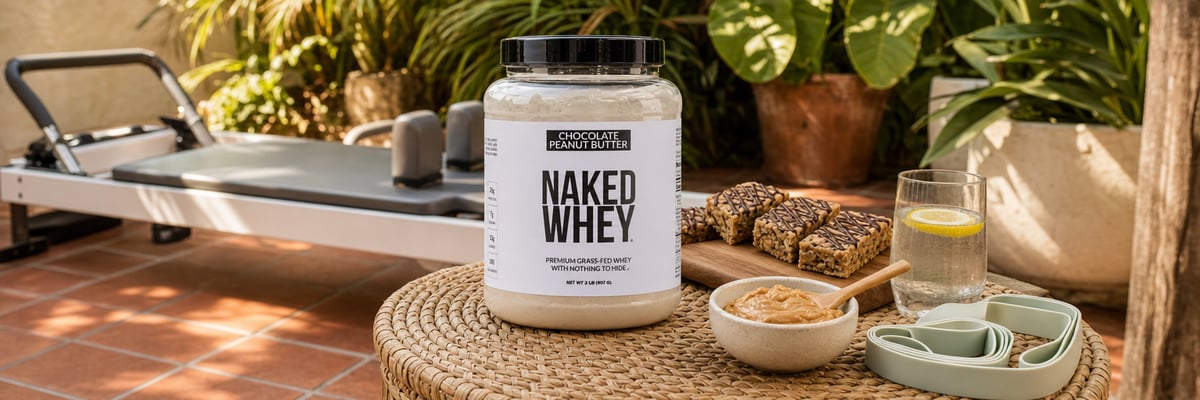
Key Takeaways
- Clean ingredients, real nutrition: This chocolate peanut butter protein bar recipe uses whole foods and no artificial additives, giving you full control over what you eat.
- Cost-effective batch cooking: Making a week's worth of bars at home costs a fraction of what you'd spend on commercial alternatives.
- Simple six-ingredient formula: Oats, peanut butter, honey, rice crisps, vanilla, and Less Naked Chocolate Protein Powder are all you need.
- Customizable macros: Each bar delivers an estimated 15 to 20 grams of protein, with easy substitutions to fit vegan, gluten-free, or lower-sugar goals.
- Stores well: Bars keep up to one week in the fridge and up to three months in the freezer, making batch prep a smart weekly habit.

Chocolate Peanut Butter Whey Protein Powder | Naked Whey
- Whey Protein Base
- No Artificial Additives
- Made in the USA
- Quality Verified
The Best Chocolate Peanut Butter Protein Bar Recipe You Can Make at Home
Most commercial protein bars are glorified candy bars in disguise. Flip one over and you'll find a sugar count that rivals a Snickers, a list of ingredients you need a chemistry degree to decode, and a price tag that adds up fast if you're eating one a day. The good news is you don't have to accept that trade-off.
This chocolate peanut butter protein bar recipe takes about 10 minutes of active prep time and produces bars that are genuinely nutritious, satisfying, and made with ingredients you can actually name. No baking required. No complicated techniques. Just real food assembled in a smart way.
What makes this recipe stand out is the combination of macronutrient balance and honest ingredients. Oats bring complex carbohydrates and fiber. Peanut butter contributes healthy fats and additional protein. Honey acts as a natural binder and sweetener. And Less Naked Chocolate Protein Powder delivers a clean, concentrated protein source that also handles the chocolate flavor without loading the bars with sugar or cocoa-flavored syrups.
📊 What Research Says
A 2020 review published in Nutrients found that individuals who prepare their own meals and snacks tend to consume significantly fewer calories, less sugar, and fewer ultra-processed food additives compared to those who rely on packaged convenience foods. Making your own protein bars isn't just satisfying. It's a measurably healthier habit.
If you've been meaning to cut the commercial bars and take control of your nutrition, this is the recipe to start with.
Why Homemade Protein Bars Beat Store-Bought Every Time

Walk through any supplement aisle and you'll find protein bars marketed with big protein numbers on the front of the package. Turn it around and the nutrition label tells a different story: 25 to 30 grams of sugar, maltitol or other sugar alcohols that cause digestive distress, vegetable glycerin, and a blend of seven different protein sources designed more for palatability than performance. You're paying for clever marketing more than clean nutrition.
The cost argument alone is compelling. Premium commercial protein bars typically run $3 to $4 each. A batch of 10 to 12 homemade bars, made with quality ingredients including a protein powder, costs roughly the same total. That's a per-bar cost closer to $0.75 to $1.00.
Beyond cost, homemade bars give you complete ingredient transparency:
- You choose the protein source and control the protein content per bar.
- You set the sweetener and adjust the sugar level to your goals.
- You eliminate fillers, artificial flavors, and preservatives by default.
- You know exactly what goes in, which makes tracking macros straightforward.
Batch-making takes one Sunday and covers you for the entire week. Store the bars in the fridge and you have a grab-and-go snack or post-workout option ready every day without thinking about it. That kind of consistency is hard to achieve when you're relying on whatever's stocked at your gym's front desk.
Ingredients for This Chocolate Peanut Butter Protein Bar Recipe

Yield: 10 to 12 bars | Prep Time: 10 minutes | Chill Time: 30 minutes | Total Time: 40 minutes
- 1½ cups quick oats: The base of the bar. Quick oats bind well and provide complex carbohydrates and soluble fiber for sustained energy. Use certified gluten-free oats if needed.
- 3 scoops Less Naked Chocolate Protein Powder: The protein anchor of the recipe. Less Naked Chocolate delivers a clean chocolate flavor without artificial sweeteners, using only a handful of quality ingredients including whey protein concentrate and organic coconut sugar.
- ½ cup rice crisps cereal: Adds texture and a light crunch that keeps the bars from feeling dense or gummy.
- ¼ cup honey: The natural binder. Honey holds everything together and adds a mild sweetness without refined sugar. Substitute pure maple syrup for a fully vegan bar.
- ⅓ cup peanut butter: Contributes healthy monounsaturated fats, protein, and that essential peanut butter depth. Natural peanut butter works best. Almond butter or sunflower seed butter are solid substitutes.
- 1 teaspoon vanilla extract: Rounds out the chocolate and peanut butter flavors without adding sweetness.
- It's made with a short, recognizable ingredient list: no artificial flavors, no sucralose, no fillers.
- The chocolate flavor is built in, so no cocoa powder or chocolate syrup is needed.
- The protein content is consistent, making macro tracking straightforward.
- It blends into dry mixtures without clumping, giving the bars a uniform texture.
Step-by-Step Instructions

- Prepare your baking dish. Lightly coat an 8x8-inch or 9x9-inch baking dish with cooking spray, or line it with parchment paper for easier removal and clean cuts. Set it aside.
- Combine the dry ingredients. In a large mixing bowl, add the quick oats, protein powder, and rice crisps. Stir until evenly distributed. The mixture should look uniform in color with no visible protein powder clumps.
- Melt the wet ingredients. In a small saucepan over medium-low heat, combine the peanut butter and honey. Stir frequently for 2 to 3 minutes until the mixture is smooth, fluid, and fully combined. Do not let it boil. Overheating makes the honey crystallize and the bars turn out crumbly.
- Add vanilla and remove from heat. Take the pan off the heat immediately after combining, then stir in the vanilla extract. This prevents the vanilla from cooking off and losing its flavor impact.
- Mix wet and dry ingredients together. Pour the warm peanut butter and honey mixture over the dry ingredients. Fold and stir until every part of the dry mixture is coated. The result should be a thick, sticky, uniform dough with no dry pockets.
- Press firmly into the baking dish. Transfer the mixture to your prepared dish. Use the back of a spatula or the bottom of a flat glass to press the mixture down firmly and evenly. Even pressure is key: bars that aren't compressed well will fall apart when cut.
- Chill until firm. Place the dish in the refrigerator for at least 30 minutes. The bars are ready to cut when they hold their shape when pressed.
- Cut into bars. Remove from the fridge and lift the slab out using the parchment paper. Use a sharp knife and press straight down rather than dragging to get clean edges. Aim for 10 to 12 equal bars depending on your target serving size.
Optional finishing step: Melt 2 to 3 tablespoons of dark chocolate chips in a microwave-safe bowl in 20-second intervals, stirring between each. Drizzle over the cut bars before returning them to the fridge for 10 minutes to set. It adds visual appeal and a richer chocolate finish.
Nutrition Information and Macros Per Bar

The following estimates are based on a yield of 12 bars using the ingredients as listed. Actual values will vary depending on your specific brands of peanut butter, oats, and protein powder.
- Calories: approximately 180 to 210 per bar
- Protein: 15 to 18 grams per bar
- Carbohydrates: 18 to 22 grams per bar
- Fat: 6 to 8 grams per bar
- Fiber: 2 to 3 grams per bar
- Sugar: 7 to 9 grams per bar (from honey; no added refined sugar)
At 15 to 18 grams of protein per bar, each serving makes a meaningful contribution to your daily protein target. For most active adults aiming for 0.7 to 1 gram of protein per pound of bodyweight, one or two of these bars can close the gap between meals or support recovery after training.
Protein timing matters, but total daily intake matters more. These bars are a practical tool for hitting your numbers consistently, not just on days when you remember to prep a full meal. The carbohydrate content from oats and honey also makes them effective as a pre-workout snack, providing fuel without the heaviness of a full meal.
If you want to push the protein content higher, increase to four scoops of protein powder and reduce the oats slightly to maintain the same binding ratio. The texture will be denser, but the bars will still hold together well after chilling.
Tips, Variations, and Storage
Storage Guidelines
- Refrigerator: Store bars in an airtight container for up to one week. Separate layers with parchment paper to prevent sticking.
- Freezer: Wrap individual bars in plastic wrap or place in a zip-top bag. They'll keep for up to three months. Thaw in the fridge overnight or at room temperature for 20 minutes before eating.
Tips for Best Texture
- Press the mixture into the dish firmly and evenly. Loose packing leads to bars that crumble.
- Don't overheat the peanut butter and honey mixture. Medium-low heat is enough. High heat burns the honey and results in a dry, brittle bar.
- Chill for the full 30 minutes minimum. Cutting too early produces ragged edges and bars that won't hold their shape.
Flavor Variations Worth Trying
- Dark chocolate chip: Fold in ¼ cup of mini dark chocolate chips before pressing into the dish.
- Coconut crunch: Add 3 tablespoons of unsweetened shredded coconut to the dry mix.
- Dried fruit: Chopped dried cherries or cranberries add a tart contrast to the chocolate and peanut butter.
- Vanilla or peanut butter protein powder: Naked Nutrition's vanilla or peanut butter flavors work well here. The vanilla version produces a lighter, less intense bar. The peanut butter version doubles down on the PB flavor for a richer result.
Dietary Modifications
- Vegan: Swap honey for pure maple syrup in a 1:1 ratio. All other ingredients are plant-based.
- Gluten-free: Use certified gluten-free quick oats. Rice crisps are typically gluten-free, but check the label on your specific brand.
- Lower sugar: Reduce honey to 3 tablespoons and compensate with an extra tablespoon of peanut butter for binding. The bars will be slightly less sweet and a bit denser.
- Nut-free: Sunflower seed butter replaces peanut butter at a 1:1 ratio and keeps the creamy texture intact.
Make This Your Weekly Protein Bar Habit

This recipe works because it's honest: six real ingredients, straightforward prep, and bars that actually taste good. You're not sacrificing flavor to eat clean, and you're not overpaying for a commercial bar that lists "protein blend" without telling you what's in it.
The practical case for making your own bars comes down to three things: you know exactly what's in them, they cost significantly less per bar than store-bought alternatives, and you can adjust the recipe to match your specific nutritional goals. That level of control is something no packaged product can offer.
Start with the recipe as written. Once you've made it twice and know how the texture should feel, start experimenting. Swap the protein powder flavor . Add chocolate chips. Try maple syrup instead of honey. The base formula is forgiving enough to accommodate most changes while still producing a bar that holds together and tastes like something you'd actually want to eat every day.
Ready to build your batch? Pick up Less Naked Chocolate Protein Powder to get started. It's the clean protein base this recipe is built around: minimal ingredients, no artificial sweeteners, and a chocolate flavor that carries the whole bar.
Frequently Asked Questions
How much protein does each homemade chocolate peanut butter protein bar contain?
Protein content depends on the specific protein powder and peanut butter amounts you use, but a standard batch made with two scoops of whey or plant protein typically yields bars with 15 to 20 grams of protein each. Peanut butter contributes an additional 7 to 8 grams per two-tablespoon serving, so the combination adds up fast. Track your specific ingredients in a macro calculator if hitting a precise number matters to you.
Which protein powder works best in this recipe?
Whey protein concentrate binds well and produces a dense, fudgy texture that holds its shape without refrigeration for short periods. Plant-based blends, particularly pea and rice protein combinations, work just as well if you're dairy-free, though you may need to add a tablespoon of extra liquid to prevent the mixture from becoming too dry. Avoid collagen-only powders here since they don't provide complete protein and they alter the texture significantly.
Can I make this recipe without added sugar?
Yes. If your protein powder is already sweetened, the recipe doesn't need any additional sweetener. If you're using an unflavored or minimally sweet powder, a small amount of honey, maple syrup, or a zero-calorie option like monk fruit extract works without compromising the texture. Taste the mixture before pressing it into a pan so you can adjust rather than guess.
How long do homemade protein bars stay fresh?
Stored in an airtight container in the refrigerator, these bars stay fresh for up to seven days. For longer storage, wrap them individually and freeze them for up to three months. Let a frozen bar sit at room temperature for 15 to 20 minutes before eating, or refrigerate it overnight.
Are these bars safe for people with peanut allergies?
No. Peanut butter is a core ingredient, and this recipe is not appropriate for anyone with a peanut allergy. Almond butter or sunflower seed butter can replace peanut butter with a similar texture, though the flavor profile will differ. Always check your protein powder label for shared-equipment allergen warnings if cross-contamination is a concern.
Do I need to bake these bars, or are they no-bake?
This is a no-bake recipe, which means no oven time and no risk of cooking out the nutrients in your protein powder. Excessive heat above 170 degrees Fahrenheit can denature proteins and degrade heat-sensitive ingredients, so keeping this recipe cold-set is the smarter approach. You just mix, press, chill, and cut.
How do homemade bars compare in cost to store-bought protein bars?
Most commercial protein bars run between $2.50 and $4.00 per bar, and many use lower-quality protein sources, seed oils, or a long list of additives. A homemade batch using a quality protein powder and natural peanut butter typically costs $0.75 to $1.50 per bar depending on your ingredient choices. You control the ingredients and cut the cost at the same time.
Can these bars fit into a weight loss diet?
They can, provided the rest of your daily intake is calibrated to your calorie target. Each bar is calorie-dense because peanut butter and protein powder both pack a lot of energy into a small volume, so portion awareness matters. Used as a structured snack or post-workout recovery option rather than an impulse eat, they support satiety and help prevent overeating at your next meal.
Top General Nutrition Picks
Chosen by 1 million+ customers. Free shipping on orders over $100.

Chocolate Peanut Butter Whey Protein Powder | Naked Whey - 5LB
$139.99
- ✓ Build and Maintain Lean Muscle Mass
- ✓ Boost Immune System
- ✓ Lose Fat
- ✓ Improve Heart Health

Chocolate Vegan Mass Gainer Supplement | Naked Vegan Mass - 8LB
$79.99
- ✓ Fuel Your Workouts
- ✓ Meet Daily Calorie Requirements to Gain Weight
- ✓ Plant-Based Proteins to Build Muscle

Chocolate Peanut Butter Pea Protein Powder | Naked Pea - 5LB
$57.99
- ✓ Sustainable Farming Practices
- ✓ Superior Amino Acid Profile
- ✓ Promote Muscle Gain
- ✓ Lose Weight

Powdered Peanut Butter | Naked PB - 2LB
$21.99
- ✓ Lose Weight
- ✓ Boost Protein Intake
- ✓ Mix Easily With Your Favorite Food