





Key Takeaways
- Pure whey is naturally gluten free: Whey is derived from milk, which contains no gluten-producing grains — so the raw ingredient is inherently safe.
- The product may not be: Cross-contamination during manufacturing and gluten-containing additives in flavored products are the two main risks to understand.
- Certified Gluten-Free matters: The GFCO seal verifies products test below 10 ppm — stricter than the FDA's 20 ppm standard, and the better choice for anyone with Celiac disease.
- Fewer ingredients means lower risk: Unflavored, single-ingredient whey powders carry significantly less cross-contamination risk than complex, heavily flavored formulas.
- All three whey types are naturally gluten free: Concentrate, isolate, and hydrolyzed whey start gluten free — what changes is the brand's manufacturing environment and added ingredients.

Grass Fed Whey Protein Powder | Naked Whey - 5LB
- Build and Maintain Lean Muscle Mass
- Boost Immune System
- Lose Fat
- Improve Heart Health
Is Whey Protein Gluten Free? The Short Answer

Pure whey protein is naturally gluten free. It comes from milk, and milk contains no wheat, barley, rye, or any other gluten-producing grain. So at the ingredient level, whey is a safe choice for people avoiding gluten.
Here's the nuance: the ingredient being gluten free doesn't guarantee the product is. Whey protein powders are processed in manufacturing facilities, blended with flavoring agents, thickeners, and other additives, and sometimes produced on shared equipment alongside products that do contain gluten. Any of these steps can introduce gluten into an otherwise clean protein powder.
Two risks drive most gluten exposure in whey protein products: cross-contamination during manufacturing, and gluten-containing added ingredients in flavored or complex formulas. Understanding both risks — and knowing exactly what to look for on a label — is the difference between confidently using whey protein and accidentally triggering a reaction.
The rest of this article walks through both of those risks and gives you a concrete checklist for choosing whey protein that's genuinely safe.
What Is Gluten and Why Does It Matter in Protein Supplements?
Gluten is a group of proteins found in wheat, barley, rye, and triticale. It's what gives bread its elasticity, but in certain people it triggers a range of harmful responses. For someone with Celiac disease, gluten exposure causes an autoimmune reaction that damages the lining of the small intestine. Even trace amounts — below what you'd taste or notice — are enough to cause damage. Non-celiac gluten sensitivity produces similar symptoms (bloating, fatigue, digestive discomfort) without the intestinal damage. A wheat allergy is an immune response to wheat proteins specifically, which overlaps with but isn't identical to gluten intolerance.
Protein powders are a less obvious gluten source than bread or pasta, which is exactly why they're worth scrutinizing. People who carefully avoid gluten in their main meals may unknowingly consume it through daily protein shakes. The problem compounds when you're using a supplement twice a day — any low-level contamination adds up over time.
📊 What Research Says
For people with Celiac disease, the threshold for harm is extremely low. Current FDA labeling standards set the "gluten free" cutoff at 20 parts per million (ppm), but the Gluten-Free Certification Organization (GFCO) requires products to test below 10 ppm — a stricter standard that better protects those with the most severe sensitivity.
The severity of the reaction shapes how carefully you need to read labels. Someone with a mild sensitivity may tolerate a product made in a shared facility. Someone with diagnosed Celiac disease cannot afford that margin of error.
How Whey Protein Is Made (And Why It's Naturally Gluten Free)

Whey protein is a byproduct of cheese or yogurt production. The process starts with milk. Enzymes or acids are added to separate the milk into two components: curds (which become cheese) and liquid whey. Research published in the International Journal of Food Science [1] confirms that whey is this liquid fraction left over after coagulation — a dairy-derived product from start to finish.
That liquid whey is then processed, filtered, and dried into the concentrated powder you find in supplement products. Because the entire production chain runs from milk — not from any grain source — raw whey contains no gluten whatsoever. The ingredient itself is inherently clean.
- Enzymes or acids are added to milk, separating it into solid curds and liquid whey
- The liquid whey is filtered to remove fat, lactose, and non-protein components
- The filtered liquid is spray-dried into a fine, shelf-stable powder
- No grains, no gluten-producing ingredients — just milk-derived protein at every stage
The gluten risk enters the picture only after the raw whey leaves this production process. When it moves into a manufacturing facility to be blended, flavored, and packaged, the environment and the added ingredients determine whether the final product stays gluten free. The raw material is not the problem. The formulation and the facility are.
Whey Concentrate vs. Whey Isolate vs. Hydrolyzed Whey: Gluten Free Comparison

Whey protein comes in three main forms, and understanding the differences helps you make a better purchasing decision — even though all three start out naturally gluten free.
Whey concentrate is the least processed form, containing roughly 80% protein with the remaining 20% made up of carbohydrates and fat. Whey isolate undergoes additional filtration (microfiltration or ultrafiltration) to push protein content up to around 90%, reducing fat and lactose in the process. According to Tetra Pak's Dairy Processing Handbook [2], this extra filtration step is what distinguishes concentrate from isolate in terms of protein purity and macronutrient composition. Hydrolyzed whey takes that process further — enzymes are used to pre-digest the protein chains into smaller peptides for faster absorption.
| Whey Type | Protein % | Natural GF Status | Key Risk Factor |
|---|---|---|---|
| Concentrate | ~80% | Yes | Added ingredients and facility contamination |
| Isolate | ~90% | Yes | Added ingredients and facility contamination |
| Hydrolyzed | Varies (~90%+) | Yes | Added ingredients and facility contamination |
Notice the pattern: the key risk factor is the same across all three. The extra filtration in isolate production may reduce some risk of trace contamination in certain processing environments, but this advantage disappears the moment a brand adds a flavoring blend made in a shared facility. The type of whey matters less than the brand's manufacturing standards and ingredient choices.
How Gluten Gets Into Whey Protein Products
There are two distinct pathways for gluten to end up in a whey protein product. Knowing both makes you a sharper label reader.
Cross-contamination from shared manufacturing environments. Many supplement brands don't manufacture their own products — they use contract facilities that produce multiple products for multiple brands. When equipment is shared between a gluten-containing product and a whey protein powder, residual gluten particles can transfer. "Shared equipment" means the same blending machines were used. "Shared facility" is broader — it means the building itself handles gluten, which can mean airborne cross-contamination even between separate production runs.
Added ingredients that contain gluten. This is actually the more common source in commercially sold products. Several standard supplement additives can carry gluten:
- Maltodextrin (sometimes derived from wheat)
- Modified food starch (wheat is a common source)
- Textured plant protein
- Wheat germ
- Malt or barley extract (used in some flavoring systems)
- "Natural flavors" (a vague category that can include grain-derived components)
Flavored protein powders carry significantly higher risk than unflavored versions. Chocolate, vanilla, and other flavors typically require a blend of flavoring agents, sweeteners, and texture modifiers — each an additional point of potential gluten exposure. Some brands also use gluten-containing bulking agents to reduce production cost per serving. These never appear on the front of the label.
How to Choose a Truly Gluten-Free Whey Protein

Don't trust the front of the package. "Pure," "clean," and "natural" are marketing terms with no regulatory definition. Here's the process that actually protects you.
Step 1: Look for a Certified Gluten-Free seal. The GFCO (Gluten-Free Certification Organization) seal verifies the product tests below 10 ppm of gluten — stricter than the FDA's 20 ppm standard for gluten-free labeling. For anyone with Celiac disease, this lower threshold matters. Third-party certification means an external body is verifying the claim, not just the brand itself.
Step 2: Check the allergy panel. Under the Food Allergen Labeling and Consumer Protection Act (FALCPA), wheat must be declared as a major allergen. The FASTER Act of 2021 expanded the list to nine major allergens, now including sesame. As the FDA clarifies [3], FALCPA applies to wheat — but rye and barley are not covered, so a "contains: wheat" declaration won't appear on their behalf.
Step 3: Read the full ingredients list. Flag these specifically: wheat starch, malt, barley extract, modified food starch, and any ingredient labeled "textured plant protein" without specifying the source.
Step 4: Choose minimal-ingredient products. Every additional additive is another contamination point. A product with one or two ingredients carries far less risk than one with fifteen.
Step 5: Research the brand's manufacturing setup. A dedicated gluten-free facility is the gold standard. Shared-facility production with rigorous testing is acceptable for most people but riskier for those with severe Celiac disease.
Step 6: Contact the brand directly if you're uncertain. A reputable company will be transparent about its testing protocols and facility status. Vague answers are a signal to walk away.
Naked Nutrition's Gluten-Free Whey Protein Options
Naked Nutrition's approach is built around one principle: fewer ingredients, higher standards. Every whey product carries the Certified Gluten-Free seal — not just a brand claim, but third-party verified below 10 ppm.
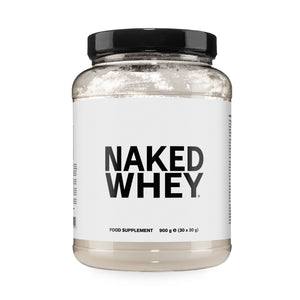
Naked Whey (Grass-Fed Concentrate) contains a single ingredient: whey protein concentrate from grass-fed cows. No fillers, no artificial sweeteners, no flavoring agents. For people avoiding gluten, a one-ingredient product is the most straightforward choice available. The grass-fed sourcing also means it's free from the hormones and antibiotics common in conventional dairy production.
Naked Whey Isolate delivers a higher protein-per-serving ratio with less fat and lactose, making it a strong option for those who are more sensitive or who want a leaner macro profile. Like the concentrate, it's Certified Gluten-Free and unflavored in its base form.
Naked Nutrition's flavored whey options — including chocolate and vanilla varieties — maintain the same Certified Gluten-Free status. The flavoring systems are carefully selected to exclude common hidden gluten sources, and the ingredient lists remain short compared to industry norms. When you see ten or fewer ingredients on a flavored protein label, that's a meaningful difference from the thirty-ingredient formulas common in big-box supplement brands.
The brand's third-party testing, minimal formulation philosophy, and transparent labeling make it a reliable choice for anyone managing gluten sensitivity or Celiac disease who still wants to use whey protein as part of their nutrition plan.
Other Gluten-Free Protein Sources to Consider

Whey isn't your only option. If you're managing Celiac disease or a gluten sensitivity, a variety of protein sources work well — and expanding beyond a single supplement reduces your overall exposure risk.
Whole food proteins are the most reliable category. In their unprocessed forms, meat, poultry, fish, eggs, legumes, nuts, and seeds contain no gluten. The caveat is processing: marinated meats, flavored nuts, and canned legumes can introduce gluten through sauces, seasonings, or shared-facility manufacturing. Always check labels on packaged versions.
Pea protein is the strongest plant-based alternative to whey in terms of amino acid profile. It contains all nine essential amino acids, though it's lower in methionine than whey — a gap easily closed through a varied diet. Pea protein is naturally gluten free, and unflavored versions carry minimal cross-contamination risk. It's a practical choice for people who are dairy-free and gluten-free simultaneously.
Collagen protein is derived from animal connective tissue and is naturally gluten free. It's lower in several essential amino acids compared to whey, so it works best as a complement rather than a replacement.
Egg white protein offers high bioavailability and a complete amino acid profile, making it one of the more underrated gluten-free protein supplements on the market. Like whey, you should verify the product's manufacturing environment before assuming it's safe.
The pattern across all of these alternatives is the same as with whey: the raw ingredient is gluten free, and the risk lives in the processing. Choose products with minimal ingredients, clear allergen labeling, and ideally third-party gluten-free certification.
Frequently Asked Questions
Is whey protein naturally gluten free?
Yes, whey protein in its pure form is naturally gluten free. It's derived from cow's milk during the cheese-making process, and milk contains no gluten. The risk comes from what gets added to the protein after processing, not from whey itself.
What ingredients in whey protein could contain gluten?
The main culprits are flavorings, thickeners, and fillers added to improve taste or texture. Ingredients like maltodextrin derived from wheat, certain artificial flavor blends, and oat-based additives can all introduce gluten into an otherwise clean product. Always scan the full ingredient list, not just the front label.
What's the difference between whey concentrate, isolate, and hydrolysate when it comes to gluten?
All three forms start from the same gluten-free base, but whey isolate undergoes more filtration, which removes a higher percentage of non-protein components including potential contaminants. Hydrolysate is pre-digested isolate, so it carries the same low-risk profile. Concentrate is less filtered, which doesn't automatically mean it contains gluten, but it leaves more room for trace contaminants if the facility isn't carefully managed.
What does "certified gluten free" actually mean on a protein label?
A certified gluten free label means the product has been independently tested and verified to contain fewer than 20 parts per million of gluten, which is the threshold set by the FDA. This certification requires third-party testing, not just a manufacturer's claim. It's the most reliable indicator you can look for if you have celiac disease or serious gluten sensitivity.
Is whey protein safe for people with celiac disease?
A certified gluten free whey protein is generally considered safe for people with celiac disease, but not all whey proteins carry that certification. Cross-contamination during manufacturing is a real concern, especially if a facility also processes wheat-based products. If you have celiac disease, don't rely on "naturally gluten free" claims alone. Look for third-party certification and confirm the facility's cross-contact protocols.
Can cross-contamination happen even if whey protein doesn't list gluten-containing ingredients?
Yes, and this is one of the most overlooked risks. If a protein powder is manufactured on shared equipment or in a facility that also handles wheat, barley, or rye, gluten particles can transfer into the product without appearing on the ingredient label. A product can be technically formulated without gluten and still trigger a reaction in sensitive individuals due to cross-contact.
How much whey protein should someone who is gluten sensitive take per day?
Dosage recommendations for whey protein don't change based on gluten sensitivity. Most active adults benefit from 20 to 40 grams of protein per serving, consumed post-workout or as a dietary supplement to hit daily protein targets. The key is choosing a verified gluten free product, not adjusting the amount. If you're newly switching from a product that caused symptoms, give your gut a few weeks to settle before drawing conclusions about tolerance.
Are unflavored whey proteins less likely to contain gluten?
Generally, yes. Unflavored whey proteins have fewer added ingredients, which means fewer opportunities for gluten to enter the formula. Flavored varieties require sweeteners, flavor compounds, and sometimes bulking agents that can introduce risk. An unflavored whey isolate from a single-ingredient source is one of the safest options for anyone managing gluten intolerance.
Top Whey Protein Picks
Chosen by 1 million+ customers. Free shipping on orders over $100.

Grass Fed Whey Isolate Protein Powder | Naked Whey Isolate - 2LB
$74.99
- ✓ Zero Sugar & Zero Carbs
- ✓ Easy Digestion
- ✓ Maximum Pure Protein

Vanilla Whey Protein Powder | Naked Vanilla Whey - 5LB
$139.99
- ✓ Build and Maintain Lean Muscle Mass
- ✓ Boost Immune System
- ✓ Lose Fat
- ✓ Improve Heart Health

Protein Powder Blend - 3LB Egg, Whey & Casein Protein Blend | Naked Protein - 3LB
$79.99
- ✓ Perfect blend of grass-fed whey protein, micellar casein, and egg white protein powder
- ✓ Provides fast-digesting, medium-digesting, and slow-digesting protein in an ideal ratio
- ✓ Help maintain muscle protein synthesis longer than whey alone*
- ✓ 25g of protein and 5.5g of BCAA's per serving

Pea Protein Powder | Naked Pea - 5LB
$57.99
- ✓ Sustainable Farming Practices
- ✓ Superior Amino Acid Profile
- ✓ Promote Muscle Gain
- ✓ Lose Weight