


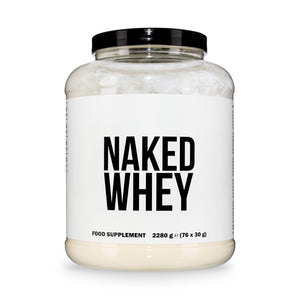


Food isn't really just food anymore. It's just not that simple. Thanks to all sorts of artificial interventions and additives, people now have to be concerned about the way that their food – and its individual ingredients – were treated way before it got to them in a way that was never a concern in past decades.
A prime example of this is the use of GMOs, particularly in protein powders. After all, protein powders are just a powdered form of the chosen protein, right? Unfortunately, no. Not generally.
Most of the time, protein powders are loaded with artificial preservatives, sweeteners, flavorings and tons of other additives. But, even before that all gets tossed in the tub, many protein powders have already been impacted by GMOs. And, most of the time, you would never know that unless you did some extra digging.
Why is this even an issue, though?
What Are GMOs?
Although they are normally known by the abbreviation, GMO, the objects of concern here are more descriptively called Genetically Modified Organisms. Exactly as that title suggests, these are... well, organisms that have been genetically modified.

Now, the tricky thing here is that there are several different forms of genetic modification that these organisms – usually of the plant variety – can undergo. The first, and most common, is selective breeding, which is typically seen in a much more positive way than the other form that we're going to look at.
Technically, selective breeding has been practiced in both plants and animals for centuries and is the process through which we have most modern crops and livestock. Essentially, pushy humans have picked plants and animals that display a desirable trait and arranged things so that that trait is continued and pronounced in future generations. But, more on that later.
For now, let's talk about the other – more sinister-seeming approach. Requiring a scientist in a lab to use proteins from one organism to change the DNA of other, this form of genetic modification tends to raise much more concern.
A prime example of here would be the frost-resistant tomato, which has been modified to produce an organic “anti-freeze” through the insertion of proteins taken from a deep-sea flounder.

When it comes to protein powders, the exact path that GMOs took to get into the tub will depend on the protein source. In the case of milk-based proteins, for example, the cows may have been fed GMO crops.
It's also possible, though, that plant-based protein powders could be made directly from GMOs.
What's The Problem?
Why does it matter, though? These modifications, after all, are designed to make the crops more productive and easier to grow. Isn't that a good thing? In theory, yes. However, in practice, things are a little different.
Those changes to an organism's DNA could cause a huge amount of unintended mutations which may impact us – as the end-user – in unseen ways. In fact, selective breeding has a greater chance of creating these mutations that the more focused work done in a laboratory.
Ultimately, the main problem is that we simply do not know all of the consequences of GMOs. And, until we do, the safe course is to limit our exposure as much as possible. To help with that, Naked Nutrition is proud to offer a full catalog of GMO-free protein powders.