



On this page
Is All Creatine the Same? What You Need to Know
Not all creatine is created equal — here's how to spot the differences and choose the right form for your goals.

Key Takeaways
- Not all creatine is equal: Source, processing method, purity, and chemical form all affect what you're actually getting.
- Contamination is a real risk: A 2011 Italian study found mercury and processing byproducts in multiple commercial creatine products.
- Creatine monohydrate wins on evidence: It has the strongest research base, the best cost-to-benefit ratio, and decades of safe use behind it.
- Absorption speed is irrelevant: Creatine works through muscle saturation over time, not acute delivery, so "faster absorption" claims don't translate to better results.
- Synthetic creatine is chemically identical: Vegan-friendly, fermentation-derived creatine performs the same as animal-sourced varieties.

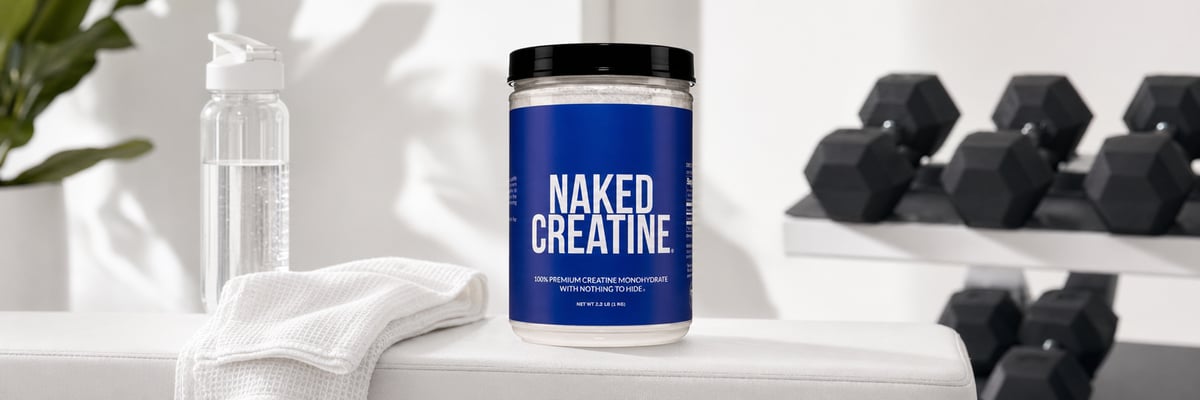
Creatine Monohydrate Powder | Naked Creatine - 2.2LB
- Free Shipping Included
- Creatine Monohydrate
- Creatine Formula
- Evidence-Based Formulas
Is All Creatine the Same? The Short Answer
No. And the differences matter more than most supplement labels will tell you.
Creatine is the most thoroughly researched supplement in sports nutrition, and it works. But not every product on the shelf delivers what it promises. Source, manufacturing process, purity, and chemical form all vary widely across brands, and some of those variables directly affect what you're putting into your body.
This article covers where creatine comes from, what contamination risks actually look like in the research, how the many forms of creatine stack up against each other, and why creatine monohydrate remains the default recommendation despite a crowded market of alternatives.
How Creatine Works in Your Body

Creatine is not a stimulant. It doesn't give you an immediate surge of energy the moment you take it. Understanding how it actually works makes it much easier to cut through the marketing noise.
Your body uses a molecule called ATP (adenosine triphosphate) as its primary energy currency during high-intensity effort. ATP depletes fast, within seconds of maximal output. Creatine, stored in muscle as phosphocreatine, donates a phosphate group to regenerate ATP during those brief, explosive bursts, giving you more capacity for hard efforts before fatigue sets in.
- During high-intensity exercise, ATP is depleted within seconds
- Phosphocreatine stored in muscle donates a phosphate to regenerate ATP rapidly
- Supplementation raises total phosphocreatine stores in muscle over several days
- Higher stores mean more ATP available during sprints, lifts, and explosive efforts
- Benefits come from saturation over time, not from a single dose
Your body produces creatine naturally from amino acids in the liver and kidneys, and you get small amounts from meat and fish. But endogenous production and diet alone rarely saturate muscle stores fully, especially in athletes training at high volume. Vegetarians and vegans, who get almost no dietary creatine, typically show the largest performance gains from supplementation because they start from a lower baseline.
The key practical point: creatine works through cumulative saturation, not through a single acute dose. This fact has direct implications for evaluating different creatine forms, as you'll see below.
Where Creatine Comes From: Animal-Based vs. Synthetic Sources

Creatine occurs naturally in animal muscle tissue, which is why meat and fish are its primary dietary sources. Many conventional creatine supplements are extracted from these animal-based materials. For most consumers, this distinction is invisible on the label. For vegans and vegetarians, it matters significantly.
Synthetic creatine, produced through a chemical synthesis or fermentation process rather than animal extraction, is chemically and functionally identical to its animal-derived counterpart. The creatine molecule is the same regardless of origin. Naked Creatine Monohydrate is produced synthetically, making it a suitable option for plant-based athletes without any compromise in performance.
One quality benchmark worth knowing is Creapure, a trademarked form of creatine monohydrate produced by AlzChem in Germany. It's manufactured through a tightly controlled synthesis process and is widely regarded as one of the purer forms of synthetic creatine available. Many reputable supplement brands specify Creapure as their creatine source precisely because the manufacturing standards are verifiable.
Beyond the vegan question, synthetic production methods can actually reduce contamination risk when manufacturing controls are rigorous. The source of your creatine is the first variable to understand, but it's not the last one that matters.
Not All Creatine Is Created Equal: Purity and Contamination Risks

The supplement industry is not uniformly regulated, and creatine is not exempt from quality problems. A 2011 study published in Food Chemistry tested 33 commercially available creatine products and found that many contained significant levels of two processing byproducts: creatinine and dicyandiamide.
Creatinine is a degradation product that forms when creatine breaks down, often due to excessive heat or moisture during manufacturing. Dicyandiamide is a byproduct of impure synthesis. Neither is considered acutely toxic at low levels, but their presence is a direct signal of poor manufacturing quality. You're paying for creatine and getting less of it than the label claims.
📊 What Research Says
A 2011 Italian analysis of 33 creatine products found widespread contamination with creatinine and dicyandiamide byproducts, indicating inadequate processing. More critically, several products also contained detectable levels of mercury, a toxic heavy metal with no safe threshold for supplemental exposure.
The mercury finding is the most serious concern. Mercury contamination in a creatine supplement is not a minor labeling issue. It points to failures in raw material sourcing and quality control that go beyond the creatine molecule itself.
Protecting yourself requires looking beyond the brand name. Trustworthy creatine products should offer third-party testing results and a Certificate of Analysis (COA) that confirms purity. A COA documents what independent laboratory testing found in the actual product, including contamination screens. If a brand can't or won't provide one, that absence is an answer in itself.
The Many Forms of Creatine Compared

Walk through any supplement retailer and you'll encounter a list that keeps growing of creatine variants, each marketed with its own performance claims. Most of those claims center on absorption speed or superior bioavailability. As explained above, neither of those things meaningfully affects outcomes when creatine works through saturation. Here's how the major forms actually compare.
| Form | Evidence Base | Absorption Claims | Key Consideration |
|---|---|---|---|
| Creatine Monohydrate | Extensive, decades of trials | Moderate, well-established | Gold standard; best cost-to-benefit |
| Creatine HCL | Limited human trials | Claims higher solubility | Significantly more expensive; unproven advantage |
| Creatine Ethyl Ester | Evidence is negative | Claims faster uptake | Degrades into creatinine before reaching muscle |
| Buffered Creatine (Kre-Alkalyn) | Minimal supporting evidence | Claims reduced breakdown in stomach | No demonstrated advantage over monohydrate |
| Creatine Citrate | Some evidence, limited | Better water solubility | Lower creatine content per gram than monohydrate |
| Creatine Magnesium Chelate | Small number of trials | Co-delivery with magnesium | Potential benefit from magnesium; needs more research |
| Creatine Nitrate | Emerging, limited | Combines creatine with nitrate | Interesting but insufficiently studied |
Creatine ethyl ester deserves a specific callout. It was marketed aggressively as a more bioavailable alternative to monohydrate, but research showed that it degrades extensively into creatinine during digestion, meaning a significant portion never reaches muscle tissue in usable form. It is one of the clearest examples of a creatine form that performs worse in practice than its marketing suggests.
Several forms, including citrate and HCL, do dissolve more easily in water, which can improve palatability. That's a legitimate practical benefit. But better solubility does not equal better muscle saturation, and the price premium attached to these forms is rarely justified by the available evidence.
Creatine Monohydrate: Why It Remains the Gold Standard

Creatine monohydrate has been studied continuously since the early 1990s. The breadth of that research, across thousands of subjects in hundreds of trials, consistently supports its ability to increase muscle phosphocreatine stores, improve high-intensity performance, and support lean mass gains when combined with resistance training. No other creatine form comes close to that depth of evidence.
Micronized creatine monohydrate is a refinement worth knowing about. The creatine molecule is the same, but it's been processed into finer particles, which improves solubility and can reduce the grittiness some people notice when mixing regular monohydrate. Efficacy is unchanged. It's a practical upgrade, not a different product category.
- Loading phase: 20g per day split into 4 doses for 5 to 7 days saturates muscle stores rapidly
- Maintenance dose: 3 to 5g per day maintains saturation after loading
- No-loading approach: 3 to 5g daily from the start achieves the same saturation in approximately 3 to 4 weeks
- Neither approach is superior long-term: The loading phase just gets you to peak stores faster
- Timing is flexible: Post-workout timing shows a slight edge in some studies, but consistency matters more than timing
Higher-priced creatine forms have not demonstrated superiority over monohydrate in any well-controlled human trial. The price premium you're paying funds marketing, not better outcomes. Naked Creatine Monohydrate delivers pure, single-ingredient creatine monohydrate with no fillers, dyes, or artificial additives, third-party tested for the purity standards the research demands.
How to Choose the Right Creatine Supplement

Given everything above, choosing a creatine supplement doesn't need to be complicated. The field of genuinely good options is actually smaller than the supplement aisle suggests. Use this checklist when evaluating any product.
- Form: Default to creatine monohydrate. Micronized monohydrate if solubility matters to you. No other form has earned a higher recommendation based on current evidence.
- Source: Confirm whether the product is animal-derived or synthetically produced. Synthetic is necessary for vegans and often comes with stronger manufacturing controls.
- Purity testing: Look for a third-party Certificate of Analysis. It should confirm creatine content and screen for heavy metals and contaminants.
- Ingredients list: It should be short. Ideally one ingredient: creatine monohydrate. No artificial sweeteners, dyes, proprietary blends, or mystery fillers.
- Price: Monohydrate is affordable. If a product costs significantly more and the only justification is a proprietary creatine form, that's a red flag, not a feature.
For dosing, 3 to 5 grams daily is the evidence-backed maintenance range for most adults. If you want faster saturation, a loading phase of 20 grams per day divided across four doses for five to seven days is a valid approach. After that, drop to 3 to 5 grams to maintain stores.
Naked Creatine Monohydrate contains one ingredient: 100% pure creatine monohydrate. No fillers, no artificial additives, third-party tested for purity. It's produced synthetically, making it suitable for vegans, and available in unflavored form so it stacks cleanly with whatever else is in your routine.
The market for creatine supplements is crowded specifically because the molecule works. That's all the more reason to be selective. Buy from brands that show their testing data, keep their ingredient lists clean, and don't rely on proprietary form names to justify a higher price. With creatine, the science already did the work. Your job is to find a product that doesn't undercut it.
Frequently Asked Questions
Is all creatine the same?
No, not all creatine is the same. There are several forms of creatine available, including creatine monohydrate, creatine HCl, buffered creatine, and creatine ethyl ester, each with different solubility, absorption rates, and formulations. However, creatine monohydrate remains the most extensively researched and proven form for improving strength, power, and muscle mass.
What is the difference between creatine monohydrate and creatine HCl?
Creatine monohydrate is the most traditional and well-studied form, typically requiring a slightly larger serving size, while creatine HCl (hydrochloride) is bonded with hydrochloric acid to improve water solubility and potentially reduce bloating. Some users prefer creatine HCl because it may be easier on the stomach, though the overall performance benefits between the two forms are largely comparable.
Does the purity of creatine matter when choosing a supplement?
Yes, purity matters significantly when selecting a creatine supplement. Lower-quality creatine can contain impurities such as creatinine, dicyandiamide, or heavy metals, which may reduce effectiveness and pose health risks. Opting for creatine that uses Creapure® or is third-party tested helps ensure you're getting a high-purity product free from harmful contaminants.
How much creatine should I take per day?
The standard recommended dose of creatine monohydrate is 3–5 grams per day for maintenance, which is sufficient to saturate muscle creatine stores over time without a loading phase. Some individuals choose to do a loading phase of 20 grams per day split into four doses for 5–7 days to accelerate muscle saturation, followed by a maintenance dose. Always follow the specific dosage instructions on your supplement label and consult a healthcare professional if you have any concerns.
Is creatine safe for long-term use?
Creatine monohydrate is one of the most extensively studied sports supplements and has been shown to be safe for long-term use in healthy individuals when taken at recommended doses. Research spanning multiple years has found no significant adverse effects on kidney or liver function in people without pre-existing conditions. As with any supplement, it's wise to consult your doctor before starting creatine if you have underlying health issues.
When will I start seeing results from taking creatine?
Most people begin to notice improvements in strength, endurance, and workout performance within 1–4 weeks of consistent creatine supplementation, depending on whether they use a loading protocol or a standard daily dose. Muscle fullness or slight weight gain from increased water retention in muscle cells can sometimes be noticed within the first week. Visible changes in muscle size and strength gains typically become more apparent over 4–8 weeks when combined with a consistent training program.
What certifications should I look for when buying creatine?
When purchasing creatine, look for products that carry third-party certifications such as Informed Sport, NSF Certified for Sport, or those using the Creapure® trademark, which guarantee purity and accurate label claims. These certifications mean the product has been independently tested for banned substances and contaminants, which is especially important for competitive athletes. Certifications also provide general consumers with added confidence in the quality and safety of the supplement.
Is a more expensive creatine supplement necessarily better?
Not necessarily — price alone is not a reliable indicator of creatine quality or effectiveness. Plain creatine monohydrate is one of the most affordable supplements on the market and is backed by decades of research, meaning you don't have to spend more to get results. Higher-priced products may include additional ingredients, proprietary blends, or novel forms of creatine, but these extras don't always translate to meaningfully better outcomes compared to a pure, high-quality monohydrate.
Top Product Picks
Chosen by 1 million+ customers. Free shipping on orders over $100.
Creatine Monohydrate Powder | Naked Creatine - 2.2LB
$35.99
- ✓ 100% premium creatine monohydrate
- ✓ Highest grade available: fast dissolving and quickly absorbed
- ✓ 5g of creatine per serving
- ✓ No artificial sweeteners, flavors, or colors

Orange Creatine Monohydrate Powder | Naked Creatine - 1.1LB
$29.99
- ✓ 100% premium creatine monohydrate
- ✓ Highest grade available: fast dissolving and quickly absorbed
- ✓ 5g of creatine per serving
- ✓ No artificial sweeteners, flavors, or colors

Raspberry Lime Creatine HCl Powder | Naked Lean Creatine - 231g
$34.99
- ✓ 750 mg Con-Cret® Creatine HCl
- ✓ Organic prickly pear for natural water balance
- ✓ Highly potent: superior muscle performance at lower doses
- ✓ Critical electrolytes for optimal creatine absorption