


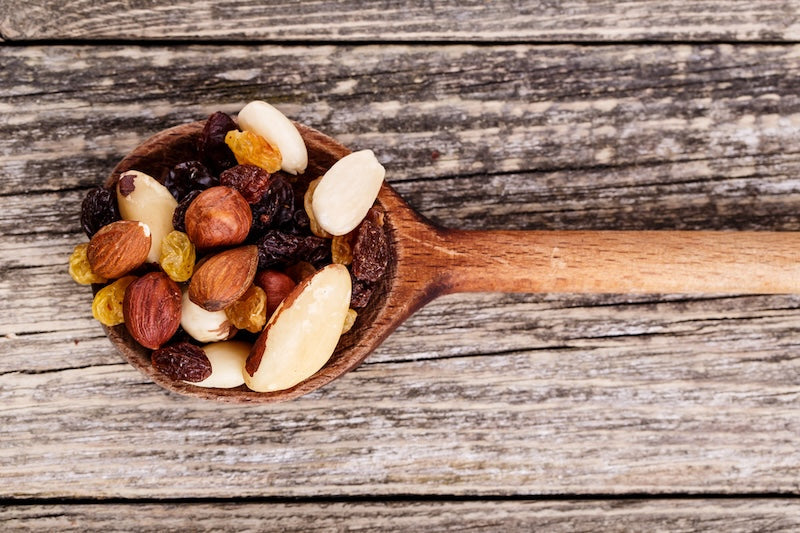

Stellen Sie sich einen leckeren, praktischen und nahrhaften Snack vor, der einen kräftigen Proteinschub liefert. Genau, wir sprechen von proteinreichen Nüssen!
Diese unglaublichen kleinen Kraftpakete bieten essentielle Aminosäuren, gesunde Fette und eine Vielzahl von gesundheitlichen Vorteilen.
Die Kraft proteinreicher Nüsse
Proteinreiche Nüsse sind wahre Superhelden der Natur, da sie essentielle Aminosäuren, gesunde Fette und verschiedene gesundheitliche Vorteile bieten und somit eine wertvolle Ergänzung einer ausgewogenen Ernährung darstellen. Ihre Kraft liegt in den essentiellen Nährstoffen, die sie liefern.
Insbesondere Baumnüsse sind reich an Protein und essentiellen Aminosäuren, die für den Aufbau von Knochen, Muskeln und Haut sowie für die Erhaltung der allgemeinen Gesundheit unerlässlich sind.
Essentielle Aminosäuren

Wir werden uns mit den essentiellen Aminosäuren in Nüssen beschäftigen. Aminosäuren sind die Grundbausteine von Proteinen und spielen eine entscheidende Rolle bei der Produktion von Hormonen und Neurotransmittern sowie beim Muskelaufbau.
Nüsse wie:
Mandeln (oder Mandelpulver)
Walnüsse
Pistazien
Cashewnüsse
Pinienkerne
Paranüsse
liefern verschiedene essentielle Aminosäuren.
Pistazien sind eine Ausnahme unter den Nüssen; sie besitzen ein höheres Verhältnis von essentiellen Aminosäuren zu Protein. Dieses Verhältnis ist viel besser als bei den meisten anderen Nüssen.
Der Genuss einer Vielzahl von Nüssen in Maßen sorgt für eine ausreichende Zufuhr essentieller Aminosäuren zur Unterstützung der Körperfunktionen.
Gesunde Fette
Neben essentiellen Aminosäuren sind Nüsse auch reich an gesunden Fetten, wie Omega-3-Fettsäuren, die die Herzgesundheit und Gehirnfunktion unterstützen. Einige der besten Quellen für gesunde Fette sind:
Mandeln
Walnüsse
Pekannüsse
Macadamianüsse
Eine 1/4 Tasse (30 Gramm) Portion Pistazien enthält 6 Gramm Protein.
Das entspricht der Menge an Protein, die in einer Portion Ei enthalten ist.
Laut Überprüfung 2023 Bei Studien zu Nüssen und Herz-Kreislauf-Erkrankungen ist ein höherer Nusskonsum mit einem reduzierten Risiko für verschiedene Arten von Herzkrankheiten verbunden, darunter Herz-Kreislauf-Erkrankungen, koronare Herzkrankheit, Schlaganfall und Vorhofflimmern.
Nüsse bieten also nicht nur eine hervorragende pflanzliche Proteinquelle, sondern auch wichtige Vitamine und Nährstoffe, die die allgemeine Gesundheit fördern.
Top 10 Nüsse mit dem höchsten Proteingehalt

Nachdem wir die Kraft von proteinreichen Nüssen verstanden haben, werden wir nun die Top 10 der Nüsse mit dem höchsten Proteingehalt und ihre ernährungsphysiologischen Vorteile untersuchen. Diese Nüsse sind:
Erdnüsse
Mandeln
Pistazien
Cashewnüsse
Pinienkerne
Walnüsse
Paranüsse
Haselnüsse
Pekannüsse
Macadamianüsse
Jede dieser Nüsse bietet eine einzigartige Reihe von Nährstoffvorteilen und ist somit eine ausgezeichnete Ergänzung für jede Ernährung.
Erdnüsse
Obwohl technisch Hülsenfrüchte, gelten Erdnüsse als Nüsse und haben den höchsten Proteingehalt unter ihnen, bieten verschiedene gesundheitliche Vorteile und sind vielseitig in der Verwendung.
Erdnüsse liefern etwa 9,5 Gramm Protein pro 1/4 Tasse (37 Gramm).
Zusätzlich sind Erdnüsse eine ausgezeichnete Quelle für Biotin, ein Vitamin, das unserem Körper hilft, Nahrung in Energie umzuwandeln.
Mandeln
Mandeln, die Samen des Mandelbaums, sind reich an:
Protein
Ballaststoffe
Einfach ungesättigte Fette
Antioxidantien
Eine 1/4-Tassen-Portion Mandeln wiegt etwa 35 Gramm. Diese Portion enthält 7 Gramm Protein. Ihr leicht süßer und nussiger Geschmack macht sie zu einer vielseitigen Zutat, perfekt zum Snacken oder zur Verwendung in verschiedenen Gerichten.
Mandeln sind außerdem reich an Vitamin E, Magnesium und Ballaststoffen und bieten zahlreiche gesundheitliche Vorteile.
Pistazien
Pistazien sind kalorienarme, proteinreiche Nüsse mit essentiellen Aminosäuren und zahlreichen gesundheitlichen Vorteilen. Eine 1-Unzen-Portion Pistazien, etwa 49 Kerne, enthält etwa 5,72 Gramm Protein.
Neben ihrem Proteingehalt sind Pistazien reich an Vitaminen und Mineralien wie Vitamin B6, Kupfer und Mangan, was sie zu einer großartigen Wahl für Ihre Gesundheit macht.
Cashewnüsse
Cashewnüsse, besonders roh, liefern Protein, ungesättigte Fette und essentielle Mineralien, was sie zu einem nahrhaften Snack oder einer Zutat macht.
Sie haben eine cremige Textur und einen buttrigen Geschmack, der sie zu einer beliebten Ergänzung verschiedener Gerichte macht. Cashewnüsse sind eine ausgezeichnete Proteinquelle. Eine 1/4-Tassen-Portion (32 Gramm) enthält 5 Gramm Protein.
Zusätzlich sind Cashewnüsse reich an essenziellen Mikronährstoffen wie Kupfer, das eine wichtige Rolle bei der Aufrechterhaltung verschiedener Körperfunktionen spielt.
Pinienkerne
Pinienkerne sind reich an Protein, Omega-3-Fettsäuren und verschiedenen Nährstoffen. Einige Vorteile von Pinienkernen sind:
Hoher Proteingehalt
Reich an Omega-3-Fettsäuren
Milder, leicht süßer Geschmack
Vielseitig einsetzbar in Salaten, Soßen und mehr
Pinienkerne sind auch eine großartige Quelle für einfach ungesättigte Fette und Vitamin K, die zu ihren zahlreichen gesundheitlichen Vorteilen beitragen. Sie enthalten Pinolensäure, eine Fettsäure, die den Appetit zügeln und beim Gewichtsmanagement helfen kann.
Walnüsse

Walnüsse sind proteinreiche Nüsse mit herzgesunden Omega-3-Fetten und mildem Geschmack, perfekt für verschiedene Gerichte. Eine 1/4-Tassen-Portion gehackter Walnüsse enthält 4,5 Gramm Protein.
Walnüsse sind besonders reich an Omega-3-Fettsäuren, die das Risiko von Herzkrankheiten senken und die allgemeine Gesundheit unterstützen können.
Paranüsse
Paranüsse sind nicht nur große, proteinreiche Nüsse, sondern bieten auch 4,75 Gramm Protein pro 1/4 Tasse (33 Gramm) Portion.
Tatsächlich kann schon eine einzige Paranuss eine hervorragende Quelle für Selen sein, ein essentielles Mineral für die Gesundheit der Schilddrüse und den Schutz vor Infektionen.
Haselnüsse
Haselnüsse sind runde, proteinreiche Nüsse mit einem intensiven Geschmack und zahlreichen gesundheitlichen Vorteilen, die häufig in Desserts verwendet werden. Sie enthalten etwa 4 Gramm Protein pro Unze oder 21 Kerne.
Haselnüsse sind reich an L-Arginin, einer Aminosäure, die hilft, Stickstoffmonoxid zu bilden, das wichtig ist, um das Herz gesund zu halten, indem es die Blutgefäße entspannt.
Pekannüsse
Pekannüsse sind fettreiche Nüsse mit moderatem Proteingehalt, reich an Mikronährstoffen und Antioxidantien, geeignet zum Snacken und Backen. Eine 1-Unzen-Portion Pekannüsse enthält etwa 2,6 Gramm Protein.
Pekannüsse sind reich an Antioxidantien und gesunden Fetten, eine großartige Ergänzung jeder Ernährung und können die allgemeine Gesundheit unterstützen.
Macadamianüsse
Macadamianüsse sind:
Niedriger Proteingehalt
Reich an gesunden Fetten, Ballaststoffen und wichtigen Nährstoffen
Wird oft zur Herstellung von pflanzlicher Milch verwendet
Sie enthalten den geringsten Proteingehalt aller Nüsse, sind aber dennoch eine gute Quelle für gesunde Fette, Kohlenhydrate und Ballaststoffe, was sie zu einem nahrhaften Snack oder Zutat macht.
Proteingehalt pro Portion

Beim Vergleich des Proteingehalts verschiedener Nüsse ist es wichtig, standardisierte Portionsgrößen zu verwenden. Hier ist eine detaillierte Aufschlüsselung des Proteingehalts pro 1 Unze (28g) Portion für jede Nuss:
|
Nussart |
Proteingehalt (pro 1 Unze/28g Portion) |
|
Erdnüsse |
7.3g |
|
Mandeln |
6.0g |
|
Pistazien |
5.7g |
|
Cashewnüsse |
4.3g |
|
Pinienkerne |
3.9g |
|
Walnüsse |
4.3g |
|
Paranüsse |
4.1g |
|
Haselnüsse |
4.2g |
|
Pekannüsse |
2.6g |
|
Macadamianüsse |
2.2g |
Die empfohlene Portionsgröße für Nüsse beträgt typischerweise 1 Unze (etwa eine kleine Handvoll oder 1/4 Tasse), um ihre ernährungsphysiologischen Vorteile mit der Kalorienaufnahme in Einklang zu bringen. Diese Portionsgröße liefert einen bedeutenden Beitrag zum täglichen Proteinbedarf, besonders für Personen, die sich pflanzenbasiert ernähren.
Nährwertangaben zeigen, dass Nüsse nicht nur Protein bieten, sondern auch gesunde Fette, Ballaststoffe, Vitamine und Mineralien enthalten, was sie zu einer nährstoffreichen Lebensmittelwahl macht, die die allgemeine Gesundheit unterstützt.
Nüsse mit mehr Protein als ein Ei
Ein mittelgroßes Ei enthält etwa 6 Gramm Protein und dient daher oft als Standard für den Proteinvergleich. Mehrere Nüsse enthalten tatsächlich mehr Protein als ein Ei, wenn man gleiche Portionsgrößen vergleicht:
Erdnüsse: Der Protein-Champion
Erdnüsse, obwohl sie technisch zur Familie der Hülsenfrüchte gehören, übertreffen Eier im Proteingehalt mit 7,3 Gramm pro Unze.
Ihr Protein-Kalorien-Verhältnis macht sie zu einer effizienten Proteinquelle für kalorienbewusste Personen. Erdnussbutter und Erdnusspulver sind beliebte Möglichkeiten, diese proteinreiche Option in die Ernährung einzubauen.
Forschungen deuten darauf hin, dass der regelmäßige Verzehr von Erdnüssen helfen kann, gesunde Blutzuckerwerte zu erhalten und die Herzgesundheit durch ihre Kombination aus Protein und ungesättigten Fetten zu unterstützen.
Mandeln: Das Nährstoffkraftpaket
Mit 6 Gramm Protein pro Unze übertreffen Mandeln Eier leicht im Proteingehalt. Neben Protein liefern Mandeln:
-
Vitamin E für Hautgesundheit und antioxidativen Schutz
-
Magnesium für Muskel- und Nervenfunktion
-
Ballaststoffe für die Verdauungsgesundheit
-
Herzgesunde einfach ungesättigte Fette
Studien haben gezeigt, dass der regelmäßige Verzehr von Mandeln das Gewichtsmanagement unterstützen und den LDL-Cholesterinspiegel senken kann.
Pistazien: Der Star im Aminosäureprofil

Obwohl sie mit 5,7 Gramm Protein pro Unze (etwas weniger als ein Ei) etwas weniger Protein enthalten, stechen Pistazien durch ihr überlegenes Profil an essentiellen Aminosäuren hervor. Das macht ihr Protein besonders wertvoll für den Muskelaufbau und die Reparatur.
Pistazien bieten außerdem:
-
Weniger Kalorien pro Nuss als die meisten anderen Sorten
-
Hoher Gehalt an Antioxidantien, erkennbar an ihrer leuchtend grünen Farbe
-
Eine gute Quelle für Vitamin B6, das für den Proteinstoffwechsel wichtig ist
Nussige Rezeptideen
Von Nussbuttern über Salate bis hin zu Desserts – die Möglichkeiten sind endlos. Machen Sie sich bereit für spannende kulinarische Abenteuer mit Nüssen!
Um das Beste aus diesen proteinreichen Nüssen herauszuholen, probieren Sie, sie in verschiedenen Gerichten zu verwenden. Hier sind einige Ideen:
Streuen Sie Nüsse über Salate für zusätzlichen Crunch, Protein und Geschmack.
Mischen Sie Nüsse in Getreidegerichte für mehr Textur und Geschmack.
Verwenden Sie Nüsse als Topping für Desserts und Backwaren wie Kekse, Kuchen und Gebäck.
Indem Sie Nüsse in Ihre Mahlzeiten und Snacks integrieren, können Sie deren Nährwerte nutzen und den Geschmack Ihrer Gerichte verbessern.
Nussbutter

Nussbutter ist eine köstliche und vielseitige Möglichkeit, proteinreiche Nüsse zu genießen – perfekt zum Aufstreichen auf Toast oder zum Hinzufügen zu Smoothies.
Hausgemachte Nussbutter, wie Erdnuss- oder Mandelbutter, lässt sich leicht zubereiten, indem geröstete Nüsse in einem Mixer zu einer cremigen Masse verarbeitet werden.
Für einen zusätzlichen Nährstoffschub können Sie sogar Chiasamen oder Leinsamen untermischen, die extra Ballaststoffe, Omega-3-Fettsäuren und Protein liefern.
Salate und Toppings
Nüsse können Salaten hinzugefügt oder als Topping für verschiedene Gerichte verwendet werden und liefern zusätzliches Protein, Knusprigkeit und Geschmack.
Verschiedene Nusssorten bringen einzigartige Aromen in Salate, wie den dezenten nussigen und süßen Geschmack von Mandeln oder den kräftigeren Geschmack von Haselnüssen, der gut zu Obstsalaten passt.
Also, streuen Sie ruhig ein paar gemischte Nüsse über Ihre Lieblingsgerichte für eine nahrhafte Note.
Desserts und Backwaren
Proteinreiche Nüsse können in Desserts und Backwaren integriert werden, um den Nährwert und die Textur zu verbessern. Mandelbiscotti, Mandelkuchen oder Erdnussbutter-Proteinbällchen sind nur einige Beispiele für leckere Köstlichkeiten, die mit Nüssen angereichert werden können.
Fügen Sie also ruhig einige Nüsse zu Ihren Lieblingsrezepten hinzu, um eine köstliche und nahrhafte Note zu erhalten.
Portionskontrolle und Mäßigung

Trotz des Nährwerts und des köstlichen Geschmacks von Nüssen und Samen ist es wichtig, Portionskontrolle und Mäßigung zu üben. Sie können kalorienreich sein, daher kann ein Übermaß zu Gewichtszunahme und anderen Gesundheitsproblemen führen.
Empfohlene Portionsgrößen
Empfohlene Portionsgrößen für Nüsse variieren, aber allgemein wird eine Portion von 28 Gramm empfohlen, um eine Überaufnahme von Kalorien und Fett zu vermeiden.
Ausgleich des Nusskonsums mit anderen Proteinquellen
Für eine ausgewogene Ernährung ist es wichtig, eine Mischung aus Nüssen und anderen Proteinquellen zu konsumieren. Variieren Sie Ihre Proteinquellen, einschließlich:
Nüsse
Samen
Hülsenfrüchte
Fisch
Geflügel
Dies gewährleistet eine ausgewogene Aufnahme essentieller Aminosäuren und Nährstoffe.
Häufig gestellte Fragen zu Protein in Nüssen

Sind Nüsse vollständige Proteinquellen?
Die meisten Nüsse gelten als unvollständige Proteinquellen, da sie nicht alle neun essentiellen Aminosäuren in ausreichender Menge enthalten. Pistazien kommen mit ihrem außergewöhnlichen Aminosäureprofil jedoch nahe an vollständige Proteine heran.
Vollständige pflanzliche Proteinquellen stammen typischerweise aus Kombinationen verschiedener pflanzlicher Lebensmittel, wie zum Beispiel:
-
Nüsse zusammen mit Vollkornprodukten
-
Hülsenfrüchte (wie Erdnüsse, die technisch gesehen Hülsenfrüchte sind) kombiniert mit Samen
-
Baumnüsse gemischt mit Reis oder Quinoa
Experten empfehlen, dass Personen, die sich pflanzenbasiert ernähren, im Laufe des Tages eine Vielzahl proteinreicher pflanzlicher Lebensmittel zu sich nehmen, um eine ausreichende Aufnahme aller essentiellen Aminosäuren sicherzustellen.
Wie vergleichen sich die Aminosäureprofile in Nüssen?
Das Aminosäureprofil variiert deutlich zwischen verschiedenen Nüssen:
-
Pistazien enthalten alle neun essentiellen Aminosäuren und haben das höchste Verhältnis essentieller Aminosäuren zu Protein unter den gängigen Nüssen.
-
Paranüsse sind reich an Methionin, einer essentiellen Aminosäure, die in pflanzlichen Lebensmitteln oft begrenzt ist.
-
Mandeln liefern gute Mengen an Arginin, das wichtig für die Gesundheit der Blutgefäße ist.
-
Walnüsse enthalten Tryptophan, das bei der Serotoninproduktion hilft.
Laut Forschung kann die Kombination verschiedener proteinreicher Nussarten helfen, ein vollständigeres Aminosäureprofil zu erreichen.
Wie vergleicht sich das Protein in Nüssen mit tierischem Protein?
Beim Vergleich des Proteingehalts mit anderen Quellen:
-
1 Unze Erdnüsse (7,3 g Protein) ist vergleichbar mit 1 Unze Hähnchen (8,5 g Protein).
-
Mandeln liefern etwa 75 % des Proteins im Vergleich zu einer gleichen Menge gekochtem Rindfleisch.
-
Eine Handvoll gemischter Nüsse kann ähnlich viel Protein liefern wie ein kleiner Joghurt.
Der Vorteil von Nüssen gegenüber vielen tierischen Proteinen liegt in ihrem zusätzlichen Ballaststoffgehalt, dem gesünderen Fettprofil und dem Fehlen von Cholesterin. Allerdings ist die Verdaulichkeit und Bioverfügbarkeit des Proteins aus Nüssen etwas geringer als bei tierischen Quellen.
Können Nüsse beim Muskelaufbau helfen?
Ja, proteinreiche Nüsse können den Muskelaufbau unterstützen, wenn sie Teil einer ausgewogenen Ernährung sind:
-
Die Aminosäuren in Nüssen unterstützen die Reparatur von Muskelgewebe nach dem Training.
-
Die gesunden Fette in Nüssen können helfen, durch Sport verursachte Entzündungen zu reduzieren.
-
Mineralstoffe wie Magnesium und Zink, die in vielen Nüssen vorkommen, spielen eine wichtige Rolle für die Muskelfunktion.
Fitness-Experten empfehlen oft, verschiedene Nüsse in Snacks vor oder nach dem Training einzubauen, da sie eine Kombination aus Protein und energieerhaltenden gesunden Fetten bieten.
Welche ernährungsphysiologischen Vorteile bieten Nüsse über den Proteingehalt hinaus?
Neben ihrem Proteingehalt bieten Nüsse:
-
Herzgesunde ungesättigte Fette, die helfen, das LDL-Cholesterin zu senken
-
Ballaststoffe, die die Verdauungsgesundheit fördern und helfen, den Blutzuckerspiegel stabil zu halten
-
Antioxidantien, die oxidativem Stress und Entzündungen entgegenwirken
-
Wichtige Mineralstoffe wie Selen (vor allem in Paranüssen), die die Schilddrüsenfunktion unterstützen
-
Vitamin E (besonders in Mandeln), das die Zellen vor Schäden schützt
Forschungen haben wiederholt gezeigt, dass regelmäßiger Nusskonsum mit einem geringeren Risiko für Herzkrankheiten, bestimmte Krebsarten und Typ-2-Diabetes verbunden ist.
„Studien zeigen, dass der tägliche Verzehr nur einer kleinen Handvoll Nüsse das Risiko für Herz-Kreislauf-Erkrankungen um bis zu 30 % senken kann“, so die Harvard School of Public Health.
Wie kann ich mehr proteinreiche Nüsse in meine Ernährung integrieren?
Es gibt zahlreiche Möglichkeiten, den Verzehr von proteinreichen Nüssen zu erhöhen:
-
Fügen Sie zerstoßene Nüsse zum morgendlichen Haferbrei oder Joghurt hinzu.
-
Nutzen Sie Nussbutter als Aufstrich oder Dip für Obst und Gemüse.
-
Verwenden Sie gemahlene Nüsse als Teilersatz für Mehl in Backrezepten.
-
Geben Sie gehackte Nüsse in Salate und Pfannengerichte.
-
Stellen Sie eine hausgemachte Studentenfutter-Mischung mit verschiedenen Nüssen für Snacks unterwegs zusammen.
Ernährungsberater empfehlen, verschiedene Nusssorten im Laufe der Woche zu wechseln, um vielfältige ernährungsphysiologische Vorteile zu erhalten.
„Als registrierte Ernährungsberaterin sind Nüsse eine meiner Favoriten. Sie sind voller Nährstoffe und lassen sich leicht in viele verschiedene Mahlzeiten und Snacks integrieren.“ – Meghan Stoops