




På denna sida
Kan du gå ner i vikt genom att sluta ta kreatin? Sanningen
Upptäck vad som verkligen händer med din kropp när du slutar med kreatin och om det faktiskt kan hjälpa dig att gå ner i vikt snabbare.

Viktiga slutsatser
- Vikten på vågen kommer att sjunka: Att sluta med kreatin leder till vattenviktförlust, inte fettförlust. De flesta tappar 1–2 kg vatten inom några veckor efter att ha slutat.
- Kreatin påverkar inte fettmetabolismen: Det har ingen direkt effekt på hur din kropp förbränner fett. Det är kaloriunderskottet som driver fettförlust, inte tillskottet.
- Musklerna bevaras till stor del: De framsteg du byggt upp genom träning består. Musklerna kan se plattare ut utan extra vatten, men själva vävnaden förloras inte.
- Prestationen sjunker tillfälligt: Kreatinfosfatlagren tar 4–6 veckor att återgå till normalnivå efter att du slutat. Räkna med en kortvarig minskning i högintensiv prestation.
- De flesta bör fortsätta ta kreatin under en diet: Kreatin stödjer den hårda träningen som bevarar muskler vid kaloriunderskott.
- Att följa kroppssammansättningen är viktigare än vikten på vågen: Foton, mått och DEXA-skanningar ger en mer exakt bild av framsteg än siffran på vågen.

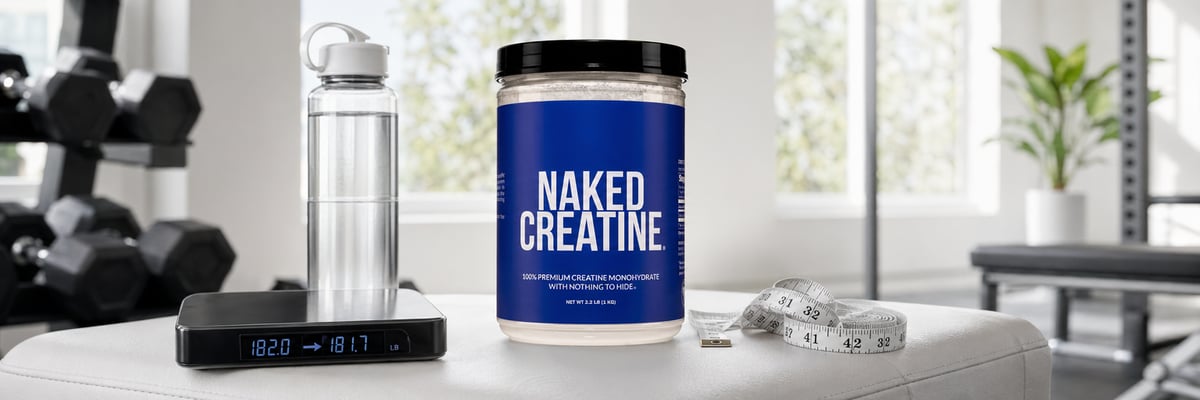
Kreatinmonohydratpulver | Naked Creatine - 2,2 LB
- Fri frakt ingår
- Kreatinmonohydrat
- Kreatinformel
- Evidensbaserade formler
Kommer du att gå ner i vikt om du slutar ta kreatin?
Du har tagit kreatin, vågen visar några kilo mer än väntat, och nu undrar du om det hjälper att sluta med tillskottet för att gå ner i vikt. Det korta svaret är ja, din vikt på vågen kommer sannolikt att sjunka. Men här är det viktiga: den viktnedgången är vatten, inte fett.
Kreatin är ett av de mest undersökta kosttillskotten inom idrottsnutrition. Det är en naturligt förekommande förening som produceras av din lever, njurar och bukspottkörtel, och det lagras främst i skelettmusklerna som kreatinfosfat. Att ta tillskott höjer dessa lager över vad kosten och den naturliga produktionen kan uppnå, vilket förbättrar prestationen under korta, högintensiva ansträngningar som sprint och tung styrketräning.
En bieffekt av förhöjda kreatinlager i musklerna är vätskeretention inne i muskelcellerna. Detta är en osmotisk process, och det är därför din vikt kan öka med 2–5 lbs under tillskott. När du slutar ta kreatin minskar dessa förhöjda lager, vattnet följer med, och vågen visar lägre vikt.
Att sluta med kreatin är ingen fettförluststrategi. Vikten du tappar är vatten som hålls inne i muskelcellerna, och att förlora det förändrar inte din kroppsfettprocent en enda decimal. Om fettförlust är målet är strategin ett varaktigt kaloriunderskott, inte hantering av tillskott.
Den här artikeln förklarar vad som faktiskt händer med din kropp när du slutar ta kreatin, vem som verkligen kan ha nytta av att pausa det, och hur du kan behålla dina träningsframsteg oavsett vilket val du gör.
Hur kreatin orsakar vätskeretention (och varför det inte är fett)

Kreatin drar vatten in i muskelcellerna genom osmos. När kreatinkoncentrationen i muskeln ökar följer vatten med för att upprätthålla jämvikt. Resultatet är ökad intracellulär hydrering, vilket bidrar till muskelns fyllighet, en liten ökning av cellvolymen och en mätbar viktökning.
Denna effekt förstärks under en laddningsfas. Om du snabbt mättar dina muskler genom att ta 20 g per dag i 5–7 dagar, sker vätskeretentionen snabbare och är mer uttalad än vid en standarddos på 3–5 g dagligen. Forskning publicerad i Journal of Athletic Training bekräftar att kreatintillskott leder till betydande ökningar av kroppens totala vattenmängd, där det mesta av ökningen sker i den intracellulära delen.
- Intracellulär vätskeretention (kreatinrelaterad): vatten som hålls inne i muskelcellerna, bidrar till fyllighet och prestation
- Subkutan vätskeretention: vatten som hålls under huden, orsakar det puffiga eller "mjuka" utseendet som förknippas med uppsvällning
- Kreatin orsakar främst intracellulär vätskeretention, inte den subkutana typen som får dig att se uppsvälld ut
- Typisk viktökning av vatten under kreatinanvändning: 2–5 lbs för de flesta
- Det här är inte fett. Det påverkar inte kroppsfettprocenten eller ämnesomsättningen
Din kropp producerar också kreatin naturligt, ungefär 1–2 g per dag från levern, njurarna och bukspottkörteln. Tillskott höjer muskelns kreatinförråd över den nivån, vilket ger prestationsfördelar och den associerade vattenretentionen. Varken vattenökningen eller vattenförlusten när du slutar har något att göra med fettvävnad.
Vad händer med din kropp när du slutar ta kreatin
När du slutar med tillskott minskar dina muskelkreatinnivåer gradvis tillbaka till sin naturliga baslinje. Denna process är inte omedelbar. Forskning visar att det tar ungefär 4–6 veckor för kreatinfosfatnivåerna att helt återgå till nivåerna före tillskott, beroende på din träningsvolym och kreatinintag från kosten, som rött kött och fisk.
Under utsökningsperioden följer vatten med kreatinet ut ur muskelcellerna. De flesta märker att vågen sjunker inom de första 1–2 veckorna, med majoriteten av vattenvikten borta efter tre till fyra veckor. Den exakta mängden varierar mellan individer, men 1–2 kg är det typiska intervallet.
Dina muskler kommer att se och kännas annorlunda under denna period. Utan det extra intracellulära vattnet ser de plattare och mindre pumpade ut, även vid samma träningsnivå. Detta är enbart en visuell och volymmässig förändring, inte en förlust av kontraktil vävnad. De muskeltrådar du byggt finns kvar.
Prestation är den andra variabeln att hantera. Kreatinfosfat är bränslet för ATP-PCr-systemet, som driver de första 6–10 sekunderna av maximal ansträngning. Utan förhöjda nivåer kommer du sannolikt märka minskad prestation vid tunga lyft, sprintar och högintensiv intervallträning. Detta är tillfälligt. De flesta tränande upplever att deras prestation stabiliseras inom 4–6 veckor när kroppen anpassar sig till att arbeta utan det extra tillskottet.
Det slutgiltiga resultatet efter utsökningsperioden: lägre vikt på vågen (vatten), något mindre visuellt muskelvolym, tillfälligt minskad maximal prestation och samma underliggande muskelmassa som du byggt upp genom träning.
Hjälper det verkligen att sluta med kreatin för att förlora fett?

Nej. Att sluta med kreatin orsakar inte fettförlust. Kreatin har ingen betydande effekt på fettmetabolism, lipolys eller kaloriförbrukning. Mekanismen finns helt enkelt inte. När du slutar och vågen visar mindre, är varje kilo av den minskningen vatten, och din kroppsfettprocent är oförändrad.
Fettförlust styrs av en princip: du måste konsumera färre kalorier än du förbrukar under en längre tid. Kreatin påverkar inte den ekvationen åt något håll, åtminstone inte direkt.
📊 Vad forskningen säger
En översikt publicerad i Journal of Sports Science and Medicine visade att kreatintillskott i kombination med styrketräning gav större ökningar i muskelmassa jämfört med träning ensam, utan betydande ökning av kroppsfett. Kreatin stödjer träningskvaliteten som omformar kroppssammansättningen över tid. Att ta bort det tar bort den fördelen.
Det finns också ett indirekt argument för att behålla kreatin under en fettförlustfas. När du är i kaloriunderskott minskar din träningskapacitet naturligt. Kreatin hjälper till att kompensera detta genom att bibehålla prestationen under högintensivt arbete, vilket hjälper till att bevara muskelmassa medan du förlorar fett. Att sluta med kreatin under en diet innebär att du samtidigt minskar bränslet för prestation och skär ner på kalorier. Den kombinationen gör det svårare att behålla muskelvävnad.
Om vågen är problemet, förstå vad siffran egentligen representerar. En skillnad på 1,5 kg i vattenvikt är inte meningsfull framgång mot ett fettförlustmål. Kroppssammansättningsmått, måttband, framstegsfoton och DEXA-skanningar visar vad som faktiskt förändras. Vågen visar hur mycket du väger, inklusive vatten, mat, muskler och fett samtidigt.
Bör du sluta ta kreatin för att gå ner i vikt?

Svaret beror helt på ditt faktiska mål. "Gå ner i vikt" betyder olika saker beroende på vem som frågar, och kreatins roll ändras därefter.
Om du fokuserar på fettförlust och kroppssammansättning: Fortsätt ta kreatin. Det stödjer den träningsintensitet som krävs för att bevara muskler under ett kaloriunderskott. Den extra vätskevikten är kosmetiskt obetydlig och metabolt irrelevant för fettförlust.
Om du är en idrottare som går ner i vikt för en viktklassport: En tillfällig paus är vettig. Om du behöver nå en specifik vikt på vågen inför en tävling är det en legitim kortsiktig strategi att tappa 1–2 kg vattenvikt genom att sluta med kreatin. Börja igen efter invägningen.
Om din oro är estetisk inför ett evenemang: Vissa idrottare och fysiktävlande slutar med kreatin veckorna före en tävling eller fotosession för att minska vätskeretention och förbättra muskeldefinitionen. Detta är ett giltigt taktiskt val för ett specifikt kortsiktigt fönster, inte en långsiktig viktkontrollstrategi.
Innan du slutar helt, överväg dessa alternativ som minskar vätskeretention utan att offra prestationsfördelarna:
- Hoppa över laddningsfasen: Att ta 3–5 g dagligen istället för att ladda med 20 g ger samma långsiktiga muskelsaturation med mindre akut vätskeretention.
- Sänk dosen: Vissa upplever att 2–3 g dagligen behåller det mesta av fördelen med mindre vattenretention som följd.
- Håll dig hydrerad: Tillräcklig vätsketillförsel hjälper kroppen att reglera vätskebalansen mer effektivt, inte mindre.
- Överväg mikroniserat kreatin: Mikroniserat kreatinmonohydrat har mindre partikelstorlek som löser sig lättare och kan orsaka mindre magbesvär, även om vattenretentionsmekanismen är densamma.
Beslutsramen är enkel: om vattenvikt på vågen verkligen påverkar ditt mål (en vägning, en fotografering, en tävlingsvikt), pausa kreatinet. Om ditt mål är faktisk fettförlust och kroppssammansättning finns det ingen rimlig anledning att sluta.
Hur du behåller dina framsteg efter att ha slutat med kreatin

De framsteg du byggt upp under tillskottsperioden försvinner inte när du slutar. Kreatin var ett verktyg som hjälpte dig att träna hårdare. Muskelvävnaden byggdes av träningen. För att behålla musklerna krävs fortsatt träning, inte tillskottet.
Prioritera progressiv styrketräning. Detta är den viktigaste faktorn för att behålla muskelmassa under en diet eller efter att ha slutat med kreatin. Muskler behöver en konsekvent mekanisk stimulans för att bevaras. Minskar du intensiteten eller volymen avsevärt följer muskelförlust oavsett vilka tillskott du tar.
Skydda musklerna med protein. Sikta på 0,7–1 g protein per pund kroppsvikt dagligen, särskilt vid kaloriunderskott. Protein ger aminosyrorna som behövs för muskelproteinsyntes och hjälper till att bevara muskelmassa när det totala kaloriintaget minskar. Forskning i American Journal of Clinical Nutrition visar konsekvent att högre proteinintag skyddar muskelmassa vid energirestriktion.
Justera dina prestationsförväntningar på kort sikt. Under 4–6 veckors uppehållsperiod kommer din topprestation vid högintensivt arbete att vara något lägre. Tolka inte detta som en permanent tillbakagång. Hantera träningsbelastningen på rätt sätt och undvik att jaga personbästa under övergångsperioden.
För att följa utvecklingen, gå från dagliga vägningar till mått som direkt fångar kroppssammansättningen:
- Veckovisa mått med måttband runt midja, höfter, armar och lår
- Månatliga framstegsfoton under konsekvent belysning och förhållanden
- DEXA-skanningar var 3–6:e månad för exakt data om muskelmassa och fettmassa
Om ditt kortsiktiga mål (en tävling, ett evenemang) har passerat, överväg starkt att börja med kreatin igen. Fördelarna med prestation och muskelbevarande är väl dokumenterade, och det finns inga bevis för skada vid långvarig användning hos friska individer.
Naked Creatine: Stödjer dina mål med eller utan tillskott
Om du bestämmer dig för att kreatin passar dina mål spelar valet av produkt roll. Naked Nutritions Naked Creatine är 100 % rent kreatinmonohydrat. En ingrediens. Inga fyllmedel, inga artificiella smaker, inga proprietära blandningar som döljer dosen. Det som står på etiketten är vad som finns i påsen.
Kreatinmonohydrat är den mest undersökta formen av kreatin som finns. Decennier av kliniska studier har fastställt dess säkerhetsprofil och bekräftat dess effektivitet för att öka muskelns kreatinfosfatlager, förbättra högintensiv prestation och stödja ökning av mager massa i kombination med styrketräning. Naked Creatine levererar samma form som används i dessa studier utan onödiga tillsatser.
Tredjepartstestning säkerställer att innehållet på etiketten stämmer överens med produkten. För idrottare som är föremål för dopingkontroller eller för alla som vill ha verifierad renhet är det viktigt.
- Den mest omfattande studerade formen i hundratals kliniska studier
- Bevisat att öka muskelns kreatinfosfatlager med 20–40 % över baslinjen
- Ingen trovärdig evidens för att alternativa former (HCL, etylester, buffrad) är bättre än monohydrat
- Kostnadseffektivt och stabilt; bryts inte ner snabbt i vatten eller vid värme
- Säkert för långvarig användning hos friska vuxna utan bevis på njur- eller leverskada vid standarddoser
Kreatin lägger inte till fett. Det stödjer högintensiv träning som förändrar kroppssammansättningen. För alla som är i ett kaloriunderskott och försöker behålla muskelmassa samtidigt som de förlorar fett är det precis den typen av stöd som är värt att behålla i sin rutin.
Kombinera Naked Creatine med ett högkvalitativt proteinpulver under en diet för att täcka båda behoven: prestationsstödet från kreatin och aminosyratillförseln från protein. Naked Whey och Naked Casein är enkla ingrediensalternativ utan några artificiella tillsatser, designade för att komplettera en ren kosttillskottsstrategi.
Om ditt mål är en slankare, starkare kropp är kombinationen av konsekvent träning, tillräckligt med protein, ett kontrollerat kaloriunderskott och kreatinmonohydrat en av de mest evidensbaserade metoderna som finns. Att sluta med kreatin för att gå ner i vikt hoppar över den faktiska mekanismen för fettförlust och tar bort ett verktyg som gör processen mer effektiv.
Vanliga frågor och svar
Kommer jag att gå ner i vikt när jag slutar ta kreatin?
När du slutar ta kreatin kan du märka en viktminskning på 1–2 kilo inom de första en till två veckorna. Denna viktminskning beror främst på förlust av vatten som kreatinet drar in i dina muskelceller — det är inte fettförlust. Dina faktiska kroppsfettnivåer förändras sannolikt inte bara genom att sluta med kreatintillskott.
Hur lång tid tar det för kreatin att lämna kroppen efter att man slutat?
Efter att du slutat ta kreatin återgår kroppens kreatinlager vanligtvis till sina basnivåer inom fyra till sex veckor. Under denna tid släpper dina muskler gradvis det lagrade kreatinet och den associerade vätskan, vilket är anledningen till att du kan märka en gradvis minskning i muskelvolym eller vikt på vågen. Individuella tidslinjer kan variera beroende på muskelmassa, kost och fysisk aktivitetsnivå.
Är vikten som förloras efter att ha slutat med kreatin riktig fettförlust?
Nej — vikten du tappar efter att ha slutat med kreatin är nästan helt vattenvikt, inte kroppsfett. Kreatin får musklerna att behålla vätska genom en process som kallas osmos, och när kreatinlagren töms släpps den vätskan ut. För att förlora faktiskt kroppsfett behöver du hålla ett kaloriunderskott genom kost och träning, oavsett om du tar kreatin eller inte.
Kommer jag att förlora muskelmassa om jag slutar med kreatin?
Att sluta med kreatin gör troligen att dina muskler ser något mindre eller mindre fyllda ut på grund av förlust av intramuskulärt vatten, men det betyder inte att du förlorar faktisk muskelvävnad. Om kreatinet däremot hjälpte dig att träna hårdare och lyfta tyngre kan du märka en gradvis försämring i träningsprestation över tid, vilket indirekt kan påverka muskelbevarandet. Att hålla en konsekvent träning och tillräckligt proteinintag är det bästa sättet att bevara mager muskelmassa efter att ha slutat med kreatin.
Bör jag sluta ta kreatin om mitt mål är fettförlust?
Inte nödvändigtvis — kreatin orsakar inte direkt fettökning, och det kan faktiskt stödja fettförlust indirekt genom att hjälpa dig behålla träningsintensiteten under ett kaloriunderskott. Många idrottare och de som bantar fortsätter ta kreatin under diet eftersom det hjälper till att bevara mager muskelmassa, vilket håller ämnesomsättningen högre. Att sluta med kreatin enbart för fettförlust stöds inte av stark vetenskaplig evidens.
Orsakar kreatin uppblåsthet, och minskar uppblåstheten om man slutar ta det?
Vissa upplever mild uppblåsthet eller en känsla av mättnad när de först börjar ta kreatin, särskilt under en laddningsfas, på grund av ökad vattenretention i musklerna. Detta är vanligtvis intramuskulär vattenretention snarare än subkutan (under huden) uppblåsthet som påverkar ditt utseende. Om du upplever ihållande magbesvär kan det hjälpa att sluta eller minska din kreatindos, men för de flesta minskar uppblåstheten efter den inledande anpassningsperioden.
Hur mycket vikt kan jag förvänta mig att tappa efter att ha slutat med kreatin?
De flesta tappar mellan 1 och 2,5 kilo på vågen efter att ha slutat med kreatin, även om personer som laddat aggressivt eller har större muskelmassa kan se något mer. Denna vikt motsvarar vattnet som lagrats tillsammans med kreatinet i muskelvävnaden, inte fett. Tänk på att denna vikt sannolikt kommer tillbaka snabbt om du återupptar kreatintillskott.
Är kreatin säkert att ta långsiktigt, eller bör jag cykla av det periodiskt?
Kreatin är ett av de mest omfattande studerade kosttillskotten för sport och har visat sig vara säkert för långvarig användning hos friska individer i många kliniska studier. De flesta studier tyder på att det inte finns något fysiologiskt behov av att cykla av kreatin, och din kropp blir inte beroende av det på ett sätt som försämrar den naturliga kreatinproduktionen på lång sikt. Om dina träningsmål ändras eller du föredrar att ta en paus är det dock enkelt att sluta med kreatin och det orsakar inga allvarliga biverkningar.
Toppval av produkter
Vald av över 1 miljon kunder. Fri frakt på beställningar över 100 $.
Kreatinmonohydratpulver | Naked Creatine - 2,2 LB
$35.99
- ✓ 100 % premium kreatinmonohydrat
- ✓ Högsta tillgängliga kvalitet: löser sig snabbt och absorberas snabbt
- ✓ 5 g kreatin per portion
- ✓ Inga konstgjorda sötningsmedel, smaker eller färger

Hallon Lime Creatine HCl-pulver | Naked Lean Creatine - 231 g
$34.99
- ✓ 750 mg Con-Cret® Creatine HCl
- ✓ Ekologisk taggig päron för naturlig vattenbalans
- ✓ Mycket potent: överlägsen muskelprestanda vid lägre doser
- ✓ Viktiga elektrolyter för optimal kreatinupptagning

Jordgubbscreatinkreatinmonohydratpulver | Naked Creatine - 1,1 LB
$29.99
- ✓ 100 % premium kreatinmonohydrat
- ✓ Högsta tillgängliga kvalitet: löser sig snabbt och absorberas snabbt
- ✓ 5 g kreatin per portion
- ✓ Inga konstgjorda sötningsmedel, smaker eller färger