




På denna sida
Ingredienser att undvika i kreatintillskott (och varför)
Det som gömmer sig i ditt kreatin kan sabotera dina framsteg, din hälsa och din plånbok.

Viktiga slutsatser
- Kreatinkvalitet beror på hela etiketten: Kreatinmonohydrat är det mest forskningsstödda idrottstillskottet som finns, men fyllnadsmedel, sötningsmedel och syntetiska färgämnen i formulan kan underminera dess fördelar.
- Konstgjorda sötningsmedel medför verkliga risker: Sukralos har kopplats till DNA-skador och läckande tarm, medan aspartam klassificerades som en möjlig Grupp 2B-karcinogen av IARC 2023.
- Syntetiska färgämnen fyller ingen funktion: Röd nr 3, Röd nr 40, Gul nr 5 och andra tillsätts enbart för utseendets skull och har kopplats till hälsoproblem som varit allvarliga nog att leda till regleringsförbud.
- Proprietära blandningar döljer underdoserat kreatin: "Kreatinkomplex" och aminosyrablandningar kan späda ut det faktiska kreatininnehållet utan att avslöja det.
- Fyllnadsmedel är inte inerta: Titandioxid är en IARC Grupp 2B-karcinogen och förbjöds av EU 2022. Det hör inte hemma i ett kreatintillskott.
- Rena kreatinetiketter är korta: Leta efter kreatinmonohydrat som den första och huvudsakliga ingrediensen, med NSF Certified for Sport eller Informed Sport-certifiering och ett offentligt tillgängligt analyscertifikat.

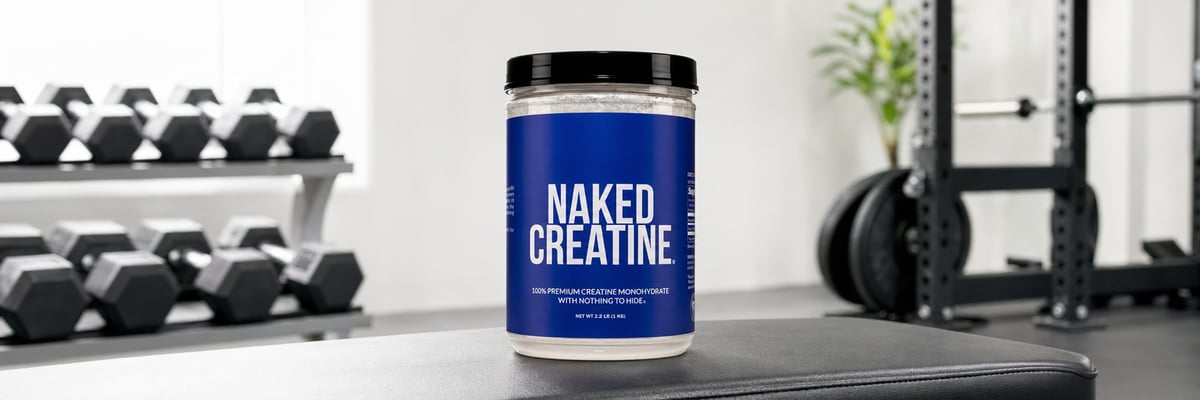
Creatinmonohydratpulver | Naked Creatine - 2,2 LB
- Fri frakt ingår
- Kreatinmonohydrat
- Kreatinformula
- Evidensbaserade formler
Varför ingredienser att undvika i kreatin är lika viktiga som kreatinet självt

Du har gjort din research om kreatinmonohydrat. Du vet att det ökar fosfokreatinlagren, stödjer ATP-regenerering och har decennier av säkerhetsdata bakom sig. Så du köper ett smaksatt kreatinpulver, antar att det svåra är gjort och går vidare. Problemet är att du kanske just köpt ett tillskott som underminerar de mål du använder kreatin för att stödja.
Att veta vilka ingredienser man ska undvika i kreatintillskott är inte en obetydlig detalj. Den aktiva ingrediensen är viktig, men det gäller även allt annat i formulan. Konstgjorda sötningsmedel, syntetiska färgämnen, onödiga fyllnadsmedel och icke avslöjade proprietära blandningar är vanliga tillsatser i kosttillskottsindustrin. De tillsätts för att förbättra smak, utseende eller tillverkningseffektivitet. De förbättrar inte dina resultat, och vissa utgör verkliga hälsorisker.
Denna artikel är en komplett ingredienslista. Den täcker vad man ska undvika och varför, hur en ren kreatinetikett faktiskt ser ut, och hur man verifierar att det som står på etiketten är det som finns i burken.
Kreatinmonohydrat behöver inget annat för att fungera. Om ingredienslistan på ditt tillskott är längre än några rader bör du fråga varför.
Artificiella sötningsmedel i kreatin: vad forskningen säger

Tillskottsföretag tillsätter artificiella sötningsmedel av tre skäl: de är billiga, kalorifria och gör ett annars smaklöst pulver aptitligt utan att tillsätta socker. Den logiken är kommersiellt vettig. Hälsokonsekvenserna är en annan historia.
Sucralos är 600 gånger sötare än vanligt socker och förekommer i otaliga smaksatta proteinpulver och kreatinprodukter. En studie publicerad i Journal of Toxicology and Environmental Health fann att konsumtion av sucralos orsakar en kemisk reaktion som kan skada mänskligt DNA och kan bidra till läckande tarm-syndrom, båda kopplade till ökad inflammation och förhöjd cancerrisk [1]. Det är en betydelsefull upptäckt för ett sötningsmedel som finns i kosttillskott marknadsförda som hälsoprodukter.
Aspartam är 200 gånger sötare än socker och har en längre, mer omdiskuterad forskningshistoria. En översikt från 2021 publicerad i Nutrients dokumenterade samband mellan aspartamkonsumtion och fetma, typ 2-diabetes, neurodegenerativa sjukdomar, hudåkommor och cancer-risk, och noterade att många av dessa samband kräver vidare storskalig undersökning [2]. International Agency for Research on Cancer (IARC) uppgraderade aspartam till en möjlig cancerframkallande substans i Grupp 2B år 2023, vilket placerar det i samma kategori som vissa miljökemikalier och yrkesexponeringar.
Andra sötningsmedel att kontrollera på dina etiketter inkluderar:
- Acesulfamkalium (Ace-K)
- Sackarin
- Neotame
Det enklaste sättet att eliminera denna oro är att välja en smaklös kreatinmonohydrat. Naked Creatine innehåller en enda ingrediens: kreatinmonohydrat. Inga sötningsmedel, ingen smaksättning, inga kompromisser. För dem som föredrar ett smaksatt alternativ använder Naked Nutritions Jordgubbssmakat Kreatinmonohydrat äkta jordgubbssaftspulver, inte ett syntetiskt sötningsmedel som försöker efterlikna hur frukt ska smaka.
📊 Vad forskningen säger
En studie från 2023 i Journal of Toxicology and Environmental Health fann att sukralos genererar potentiellt DNA-skadande biprodukter kallade sukralos-6-acetat under matsmältningen, och att nivåer tillräckliga för att orsaka mätbara DNA-strängbrott kan uppnås vid normal konsumtion [1]. Detta är samma ingrediens som listas som "sucralose" på tillskottsetiketter i hela branschen.
Konstgjorda färgämnen och färger: dolda ingredienser i smaksatt kreatin
Syntetiska färgämnen i smaksatta pulver finns helt och hållet av marknadsföringsskäl. Ett körsbärssmakande kreatin är mer övertygande med en röd nyans. En tropisk blandning ser mer tilltalande ut i gult-grönt. Färgämnet gör inget för produktens funktion. Det signalerar smak till dina ögon och signalerar tveksamma formuleringsprioriteringar till den som läser etiketten.
De sex huvudsakliga syntetiska färgämnena att undvika i kreatin och andra tillskott är:
- Red No. 3 (Erythrosine)
- Red No. 40 (Allura Red)
- Yellow No. 5 (Tartrazine)
- Yellow No. 6 (Sunset Yellow)
- Blue No. 1 (Brilliant Blue)
- Blue No. 2 (Indigo Carmine)
Dessa färgämnen har kopplats till hyperaktivitet hos barn, allergiska reaktioner och i fallet med Red No. 3, utveckling av sköldkörteltumörer i djurstudier. Den regulatoriska reaktionen har varit talande: Kalifornien förbjöd Red No. 3 i mat och kosttillskott 2023, och det ansluter sig till en lista över syntetiska färgämnen som har förbjudits eller begränsats i EU, Kanada och andra marknader. När flera oberoende tillsynsmyndigheter rör sig i samma riktning gällande en ingrediens är det en signal värd att ta på allvar.
Naturliga alternativ fungerar utan hälsorisker. Färgning från riktig frukt, grönsaksjuicer eller rödbetsextrakt ger en visuellt tilltalande produkt utan syntetisk kemi. Om du köper smaksatt kreatin, kontrollera om färgen kommer från själva smaktillsatsen eller från ett separat tillsatt färgämne.
Tillsatt socker och proprietära blandningar att se upp för
Kreatin kräver inte socker för att fungera. Viss tidigare forskning har föreslagit att intag av kreatin tillsammans med en stor mängd kolhydrater kan förbättra upptaget via insulinmedierad transport, men effekten är måttlig och motiverar inte att fylla ditt tillskott med tillsatt socker dagligen. De flesta företag som tillsätter socker till kreatin gör det för smaken, inte för fysiologin.
American Heart Association rekommenderar högst 25 gram tillsatt socker per dag för kvinnor och 36 gram per dag för män [5]. Den genomsnittlige amerikanen konsumerar redan omkring 77 gram dagligen. Ett kreatintillskott behöver inte öka den siffran. Forskning publicerad i BMJ har direkt kopplat hög konsumtion av tillsatt socker till ökad risk för fetma, typ 2-diabetes, hjärt-kärlsjukdomar och vissa cancerformer [4].
Socker förekommer på ingredienslistor under många namn. Var uppmärksam på:
- Rörsocker eller förångad rörjuice
- Rörsocker- eller majssirap
- Kornmalt
- Agavenektar
- Dextros, maltodextrin, fruktos
Proprietära blandningar är en separat men relaterad fråga. Det är formler där tillverkaren listar en grupp ingredienser under ett enda blandningsnamn utan att avslöja hur mycket av varje ingrediens blandningen innehåller. En "kreatinprestandakomplex" kan inkludera kreatinmonohydrat tillsammans med kreatin HCl, beta-alanin och flera aminosyror. Den totala blandningsvikten kan vara 5 gram, men du har ingen möjlighet att veta om den innehåller 4,5 gram kreatin eller 1 gram.
Den praktiska regeln: kreatinmonohydrat ska listas som den första och huvudsakliga ingrediensen, med en tydlig dos per portion angiven i näringsdeklarationen. Om du ser en proprietär blandning, leta någon annanstans.
Fyllnadsmedel, tillsatser och förbjudna ämnen i kreatintillskott

Fyllnadsmedel tjänar tillverkningsändamål: de förbättrar pulverflödet under produktionen, förhindrar klumpbildning, tillför volym till underdoserade produkter och förlänger hållbarheten. Inga av dessa fördelar överförs till dig som konsument. I ett rent kreatinpulver är de onödiga tillsatser.
Vanliga fyllnadsmedel och tillsatser att undvika:
- Magnesiumstearat: Ett flödesmedel som används vid produktion av tabletter och kapslar utan näringsmässig nytta.
- Kiseldioxid: Ett klumpförebyggande medel. Inte akut skadligt, men en indikator på en formel som prioriterar tillverkningsbekvämlighet.
- Titaniumdioxid: Ett vitmedel som EU förbjöd i livsmedel 2022. IARC klassificerar det som en möjlig cancerframkallande substans i grupp 2B [6] [7]. FDA tillåter det fortfarande, men EU:s försiktighetsförbud speglar en växande vetenskaplig konsensus om dess säkerhetsprofil.
- Microkristallin cellulosa: Ett fyllnadsmedel som härstammar från trämassa.
- Talc och propylenglykol: Industriella föreningar utan någon roll i en ren sportnäringsprodukt.
Kontaminering med tungmetaller är en mindre diskuterad men verklig risk med kreatinkällor av låg kvalitet. Kreatin som produceras utan korrekt rening kan innehålla påvisbara nivåer av bly, arsenik eller kadmium. Oberoende testning via analysintyg bör inkludera screening för tungmetaller, inte bara testning för förbjudna ämnen.
📊 Vad forskningen säger
IARC klassificerade titandioxid som en grupp 2B möjlig cancerframkallande substans baserat på bevis för att inandade nanopartiklar orsakar lungtumörer hos råttor [6]. Europeiska myndigheten för livsmedelssäkerhet följde upp med ett beslut 2021 att titandioxid inte längre kan anses vara säkert som livsmedelstillsats, vilket ledde till EU-förbudet 2022. Om det finns i ditt tillskott är det inte där för din skull.
Angående förbjudna ämnen: anabola steroider, stimulantia som efedrin och amfetaminer, och peptidhormoner som humant tillväxthormon (HGH) har ingen legitim plats i något kreatintillskott. Förfalskade produkter som säljs online utgör en verklig risk. USADA publicerar ett plånbokskort med alla förbjudna ämnen med deras vanliga namn, vilket är värt att bokmärka. Produkter med NSF Certified for Sport-märket har oberoende testats och verifierats vara fria från förbjudna ämnen [8].
Vad man ska leta efter i ett rent kreatintillskott

De tidigare avsnitten täckte vad man ska undvika. Här är hur en ren kreatinetikett faktiskt ser ut.
- Kreatinmonohydrat listat som den första och huvudsakliga ingrediensen med angiven dos per portion (3 till 5 gram)
- Creapure-certifiering, som indikerar farmaceutisk kvalitet på kreatinmonohydrat tillverkat i Tyskland med verifierad renhet
- NSF Certified for Sport eller Informed Sport-märke, som bekräftar oberoende testning för förbjudna ämnen
- GMP-certifierad tillverkningsanläggning, som säkerställer konsekventa produktionsstandarder
- Analysintyg (COA) tillgängligt på begäran eller offentligt publicerat, inklusive screening för tungmetaller
- Kort ingredienslista: helst endast kreatinmonohydrat, eller kreatinmonohydrat med enbart naturlig smakämne
Kreatinmonohydrat är fortfarande den guldstandardformen. Alternativ som kreatin HCl och buffrat kreatin (Kre-Alkalyn) marknadsförs som överlägsna, men forskningen stöder inte dessa påståenden. Kreatinmonohydrat har fler kliniska studier bakom sig än alla andra former tillsammans, och dess upptag och effektivitet vid standarddoser är väl etablerade.
Creapure är ett specifikt märke av kreatinmonohydrat som produceras av AlzChem i Tyskland. Det genomgår noggranna renhetstester och anses allmänt vara det högkvalitativa kreatinmonohydratet på marknaden. När du ser Creapure på en etikett vet du exakt vad som finns i behållaren och var det kommer ifrån.
Naked Nutrition Creatine: Rena ingredienser, inga kompromisser
Naked Nutrition bygger sina kosttillskott på en enkel princip: varje ingrediens i formeln måste ha en anledning att finnas där. Om den inte förbättrar produktens effektivitet eller säkerhet för användaren hör den inte hemma på etiketten.
Naked Creatine innehåller en ingrediens: kreatinmonohydrat. Inga fyllmedel, inga artificiella sötningsmedel, inga färgämnen, inga proprietära blandningar. Den blandas rent i vatten eller vilken dryck som helst, ger en exakt 5-grams dos per portion och lämnar ingen tvekan om vad du konsumerar. Det är det renaste sättet att ta kreatin.
För dem som föredrar ett smaksatt alternativ använder Naked Strawberry Flavored Creatine Monohydrate äkta jordgubbsjuicepulver för smak och färg. Ingen sukralos, ingen röd färg No. 40, inget syntetiskt alls. Ingredienslistan är kort eftersom inget onödigt har tillsatts. Den är tredjepartstestad och fri från artificiella tillsatser.
Båda Naked Creatine-produkterna är tredjepartstestade, fria från artificiella tillsatser och tillverkade i GMP-certifierade anläggningar. Om du vill verifiera vad som finns i produkten kan du begära analysintyget direkt.
Kosttillskottsbranschens standard är att lägga till mer: mer smak, mer färg, fler blandningar som motiverar ett högre pris. Naked Nutritions tillvägagångssätt är motsatsen. Börja med den mest effektiva formen av ingrediensen. Lägg bara till det som behövs för att göra den användbar. Testa allt. Det är hela formeln.
Hur man läser en kreatinetikett som ett proffs
De flesta skummar en kosttillskottsetikett och tittar på framsidan. Framsidan av förpackningen är marknadsföring. Baksidan är information. Så här läser du den korrekt.
- Näringsdeklaration: Visar portionsstorlek, portioner per förpackning och mängd per portion av varje aktiv ingrediens. För kreatin bör dosen vara tydligt angiven, vanligtvis 3 till 5 gram kreatinmonohydrat per portion.
- Ingredienslista: Visar varje ingrediens i formeln i fallande ordning efter vikt. Om kreatinmonohydrat inte är listat först och tydligt kan det vara underdoserat jämfört med andra ingredienser.
- Upptäckt av proprietär blandning: Om du ser ett blandningsnamn (t.ex. "Performance Matrix" eller "Creatine Complex") med total vikt men inga individuella ingrediensmängder, är det en proprietär blandning. Behandla det som en varningssignal.
- Sockeralias: Sök i ingredienslistan efter rörsocker, förångad rörjuice, majssirap, dextros, maltodextrin och agave. Tillsatt socker måste också finnas med i näringsdeklarationen enligt lag.
- Certifiering
Vanliga frågor
Vilka är de vanligaste skadliga ingredienserna att undvika i kreatintillskott?
De vanligaste ingredienserna att se upp för inkluderar konstgjorda sötningsmedel som sukralos och acesulfamkalium, konstgjorda färgämnen, fyllmedel som maltodextrin och proprietära blandningar som döljer exakta mängder ingredienser. Vissa produkter av lägre kvalitet innehåller också onödiga tillsatser som kiseldioxid eller magnesiumstearat i överdrivna mängder. Läs alltid hela ingredienslistan innan du köper något kreatintillskott.
Varför bör jag undvika proprietära blandningar i kreatinprodukter?
Proprietära blandningar tillåter tillverkare att lista ingredienser utan att avslöja exakta mängder av varje, vilket gör det omöjligt att veta om du får en effektiv dos kreatin eller mestadels billiga fyllmedel. Denna brist på transparens kan innebära att du betalar ett högt pris för en produkt som levererar mindre kreatin än utlovat. Välj tillskott som tydligt redovisar varje ingrediens och dess exakta dos på etiketten.
Är konstgjorda sötningsmedel i kreatintillskott verkligen farliga?
Även om konstgjorda sötningsmedel som sukralos och acesulfamkalium generellt anses säkra av FDA, tyder viss forskning på att de kan påverka tarmflorans hälsa negativt och orsaka matsmältningsbesvär hos känsliga individer. För ett tillskott som kreatin som tas dagligen under lång tid kan upprepad exponering för dessa tillsatser bli betydande. Att välja ett osmakat eller naturligt sötat kreatin minimerar eventuella risker.
Vad är maltodextrin och varför är det en oro i kreatintillskott?
Maltodextrin är ett billigt kolhydratbaserat fyllmedel som utvinns från stärkelse och ibland tillsätts i kreatinprodukter som volymgivare eller för att förbättra blandbarheten. Det har ett mycket högt glykemiskt index, vilket innebär att det snabbt kan höja blodsockernivån, vilket kan vara en oro för personer som kontrollerar blodsockret eller följer en lågkolhydratdiet. Rent kreatinmonohydrat bör inte behöva fyllmedel, så dess närvaro är ofta ett tecken på en produkt av lägre kvalitet.
Hur kan jag se om ett kreatintillskott har testats av en tredje part för renhet?
Sök efter certifieringar på produktetiketten från välrenommerade oberoende organisationer som Informed Sport, NSF Certified for Sport eller USP Verified, som testar kosttillskott för föroreningar, tungmetaller och etikettens korrekthet. Dessa certifieringar bekräftar att det som står på etiketten faktiskt finns i produkten och att inga förbjudna ämnen är närvarande. Utan en oberoende certifiering finns ingen verifiering att produkten är fri från skadliga föroreningar.
Är kreatin med tillsatta aminosyror eller koffein säkert att ta?
Kreatinprodukter som innehåller tillsatt koffein eller aminosyror är inte i sig osäkra, men de komplicerar doseringen och kan orsaka problem beroende på din totala kosttillskottsstack och hälsostatus. Koffein har särskilt studerats för att potentiellt dämpa några av kreatins prestationsfördelar, och dagligt intag av stimulanser kan leda till beroende eller sömnstörningar. Om du vill använda både kreatin och koffein är det generellt bättre att ta dem som separata, tydligt doserade tillskott.
Behöver rent kreatinmonohydrat några ytterligare ingredienser för att vara effektivt?
Nej — rent kreatinmonohydrat är en av de mest omfattande undersökta och effektiva formerna av kreatin i sig och kräver inga ytterligare ingredienser för att ge resultat. Den standardeffektiva dosen är 3–5 gram per dag, och det fungerar genom att öka fosfokreatinlagren i musklerna för att stödja energiproduktion under högintensiv träning. Eventuella tillsatta ingredienser är antingen för smak, konservering eller marknadsföringssyften snarare än vetenskaplig nödvändighet.
Är dyra "avancerade" kreatinformler med extra ingredienser värda kostnaden?
I de flesta fall, nej — premiumprissatta kreatinblandningar med proprietära ingrediensmatriser, adaptogener eller absorptionsförstärkare överträffar sällan vanligt kreatinmonohydrat i granskad forskning. De extra ingredienserna fungerar ofta mer som marknadsföringsdifferentierare än som evidensbaserade prestationshöjare, och de ger också fler möjligheter att inkludera onödiga eller oönskade tillsatser. Dina pengar är generellt bättre spenderade på ett högkvalitativt, tredjepartstestat rent kreatinmonohydrat.
Toppval av produkter
Vald av över 1 miljon kunder. Fri frakt på beställningar över 100 $.
Creatinmonohydratpulver | Naked Creatine - 2,2 LB
$35.99
- ✓ 100 % premium kreatinmonohydrat
- ✓ Högsta tillgängliga kvalitet: löser sig snabbt och absorberas snabbt
- ✓ 5 g kreatin per portion
- ✓ Inga konstgjorda sötningsmedel, smaker eller färger

Hallon Lime Creatine HCl-pulver | Naked Lean Creatine - 231 g
$34.99
- ✓ 750 mg Con-Cret® Creatine HCl
- ✓ Ekologisk taggfrukt för naturlig vattenbalans
- ✓ Mycket potent: överlägsen muskelprestanda vid lägre doser
- ✓ Viktiga elektrolyter för optimal kreatinabsorption

Jordgubbscreatininmonohydratpulver | Naked Creatine - 1,1 LB
$29.99
- ✓ 100 % premium kreatinmonohydrat
- ✓ Högsta tillgängliga kvalitet: löser sig snabbt och absorberas snabbt
- ✓ 5 g kreatin per portion
- ✓ Inga konstgjorda sötningsmedel, smaker eller färger