




På denna sida
Så här kommer du igång med kreatin: En nybörjarguide
Bygg mer muskler, förbättra din prestation och träna hårdare med denna enkla guide för att börja med kreatin på rätt sätt.

Viktiga punkter
- Det mest undersökta tillskottet som finns: Kreatinmonohydrat har decennier av kliniska bevis bakom sig, vilket gör det till ett av de säkraste och mest effektiva tillskotten för muskeltillväxt och prestation.
- Två sätt att börja: En laddningsfas (20 g/dag i 5–7 dagar, sedan 3–5 g/dag) mättar musklerna snabbt; en underhållsdos (3–5 g/dag från dag ett) når samma nivå på 3–4 veckor med mindre magbesvär.
- Konsekvens slår timing: Kreatin fungerar genom ackumulering. Daglig användning är mycket viktigare än när du tar det. Du behöver inte cykla det.
- Inte bara för män eller idrottare: Kvinnor, äldre vuxna och personer med växtbaserad kost drar alla nytta av kreatintillskott, ibland mer än genomsnittliga gymbesökare.
- Vattenretention är inte fettökning: Inledande viktökning på vågen speglar vatten som flyttar in i muskelcellerna, vilket är en prestationsfördel, inte ett kosmetiskt problem.
- Formen är viktig: Kreatinmonohydrat är fortfarande guldstandarden. Ingen annan form har visat bättre resultat i direkt jämförande forskning.

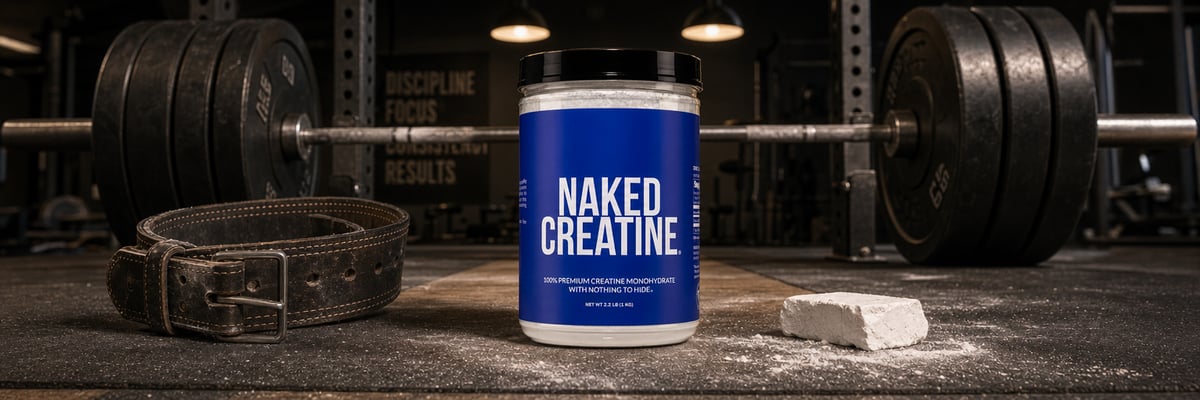
Kreatinmonohydrat Pulver | Naked Kreatin - 2.2LB
- Kreatinmonohydrat
- Kreatinformel
- Testad av tredje part
- Inga konstgjorda tillsatser
Vad är kreatin och hur fungerar det?

Kreatin är en naturligt förekommande förening som syntetiseras i kroppen från tre aminosyror: arginin, glycin och metionin. Din lever och njurar producerar det, och du får också små mängder från kostkällor som rött kött, fågel och fisk. När kreatin kommer in i muskelceller binder det till fosfat för att bilda fosfokreatin, den förening som dina muskler använder för att snabbt återbilda ATP under explosiva, högintensiva insatser.
ATP (adenosintrifosfat) är muskelns energivaluta. Din kropp förbrukar tillgängligt ATP på ungefär 8 till 10 sekunder vid maximal ansträngning, oavsett om det är en tung knäböj, en sprint eller ett boxhopp. Fosfokreatin träder in för att ladda om ATP-förrådet så att du kan hålla uppe prestationen längre. Forskning publicerad i Journal of the International Society of Sports Nutrition bekräftar att en ökning av muskelkreatinlagren med 20 till 40 procent genom tillskott direkt förbättrar prestationen vid upprepade högintensiva insatser.
Kreatinmonohydrat är den mest studerade och mest effektiva formen av tillskott. När du läser om kreatintillskott i forskning är det nästan alltid kreatinmonohydrat som testas. Det är referenspunkten som alla andra former mäts mot, och inget alternativ har konsekvent överträffat det.
- Dina muskler lagrar kreatin som fosfokreatin, vilket snabbt regenererar ATP under intensiv träning
- ATP förbrukas inom 8 till 10 sekunder vid maximal ansträngning — fosfokreatin förlänger den tiden
- Tillskott ökar muskelns kreatinlager med 20 till 40 procent över baslinjen
- Högre lager innebär mer kraft, fler repetitioner och snabbare återhämtning mellan set
- Vegetarianer och veganer börjar med lägre kreatinlager och ser vanligtvis de största prestationsökningarna från tillskott
Fördelar med kreatintillskott

Forskningen om kreatin är ovanligt konsekvent för tillskottsindustrin. I hundratals studier upprepas kärnfördelarna: mer mager muskelmassa, större styrka, förbättrad högintensiv prestation och snabbare återhämtning. Men hela bilden är bredare än vad de flesta inser.
Muskeltillväxt och styrka: Kreatintillskott i kombination med styrketräning ger större ökningar i mager kroppsmassa och maximal styrka än träning ensam. Mekanismen är direkt: mer fosfokreatin innebär mer arbete per pass, vilket driver en större adaptiv stimulans över tid.
Uthållighet och återhämtning: Kreatin gynnar inte bara styrkeidrottare. Det minskar markörer för muskelskada efter intensiv träning och stödjer påfyllning av glykogen, vilket förkortar återhämtningstiden mellan passen.
Hjärnhälsa: Kreatin lagras inte bara i musklerna. Hjärnan använder också ATP, och kreatinfosfat stödjer den kognitiva energitillgången. Ny forskning tyder på att tillskott kan förbättra arbetsminnet och minska mental trötthet, särskilt hos sömnbristande individer och äldre.
Fördelar för kvinnor: Premenopausala kvinnor som tar kreatintillskott visar märkbara förbättringar i styrka och träningsprestation. Det finns också tidig forskning som indikerar potentiella fördelar för benhälsa, vilket gör kreatin värt att överväga under hela livet, inte bara på gymmet.
Fördelar för äldre vuxna: Muskelförlusten accelererar efter 40 års ålder. Kreatintillskott i kombination med styrketräning hjälper till att bevara mager muskelmassa och funktionell styrka hos äldre. Den kognitiva stödaspekten är också relevant här, med studier som pekar på potentiella fördelar för åldersrelaterad kognitiv nedgång.
En missuppfattning att reda ut: kreatin orsakar inte fettökning. All initial viktökning speglar vatten som flyttar in i muskelceller och, över tid, ny muskelvävnad, båda är resultat du vill ha.
Hur man börjar ta kreatin: uppladdning vs. underhållsdosering

När du börjar ta kreatin har du två metoder. Båda fungerar. Skillnaden är hastighet, inte resultat.
Uppladdningsfas: Ta 20 g per dag, uppdelat i fyra doser om 5 g, i 5 till 7 dagar. Därefter sänk till en daglig underhållsdos på 3 till 5 g. Forskning tyder på att kreatinuppladdning är det snabbaste sättet att mätta muskelreserverna, där de flesta användare märker styrke- och prestationsförändringar inom den första veckan. Nackdelen: högre dagliga doser ökar risken för magbesvär. Att dela upp 20 g på fyra doser minskar detta avsevärt. Ta aldrig 20 g på en gång.
Endast underhållsmetod: Börja med 3 till 5 g per dag från dag ett. Ingen uppladdningsfas krävs. Muskelkreatinlagren når full mättnad efter cirka 3 till 4 veckor. Denna metod är skonsammare för matsmältningen och är en bättre startpunkt för riktiga nybörjare som inte har någon tidsgräns.
📊 Vad forskningen säger
En översikt i Journal of the International Society of Sports Nutrition visade att ett uppladdningsprotokoll med 20 g/dag i 5 till 7 dagar snabbt höjer muskelkreatinkoncentrationen till samma mättnadsnivå som slutligen uppnås med lägre dagliga doser – bara på en bråkdel av tiden. Båda strategierna ger likvärdiga långsiktiga resultat i muskelmassa och prestationsökning.
Här är en jämförelse sida vid sida för att hjälpa dig välja:
- Resultatens hastighet: Uppladdning når mättnad på cirka 1 vecka; underhåll tar 3 till 4 veckor
- Matsmältnings-tolerans: Uppladdning medför högre risk för mag-tarmbesvär om doserna inte delas upp; underhåll tolereras väl av nästan alla
- Bästa kandidat för uppladdning: Idrottare med tävling eller evenemang på gång som vill ha snabbare resultat
- Bästa kandidat för underhåll: Nybörjare, personer med känslig matsmältning, alla som spelar på lång sikt
- Långsiktigt resultat: Identiskt. Båda metoderna når samma muskelmättnadsnivå.
En notering om tidslinjen: vissa källor antyder att underhållsdosering visar resultat på 3 till 4 dagar. Det är felaktigt. Vid 3 till 5 g per dag tar full muskelmättnad närmare 3 till 4 veckor. Sätt realistiska förväntningar så att du inte överger protokollet för tidigt.
När och hur man tar kreatin för bästa resultat

Det viktigaste med kreatintiming är detta: ta det varje dag. Kreatin fungerar genom ackumulering i muskelvävnad, inte genom en akut topp som koffein. Att missa dagar minskar dina förråd gradvis. Konsekvens är den faktor som avgör resultat, inte klockan.
Det sagt kan timing efter träning ge en marginell fördel. Ett fåtal studier tyder på att ta kreatin nära din träningssession, särskilt efter träning, kan förbättra muskelupptaget något på grund av ökat blodflöde och metabol aktivitet i nyligen tränade muskler. Effekten är måttlig och bör inte skapa oro över exakt timing, men om du vill ha en standardrekommendation: ta det efter träningen.
På vilodagar, ta din underhållsdos när som helst under dagen, tillsammans med en måltid. Målet på vilodagar är helt enkelt att bibehålla muskelns kreatinmättnad.
Hur man blandar kreatin:
- Med vatten: Kreatinmonohydrat löser sig tillräckligt i vanligt vatten. Enkelt och effektivt.
- Med en proteinshake: Tillsätt din dos i din befintliga efter-träningsshake.
- Med juice eller smoothie: Att ta kreatin tillsammans med kolhydrater kan förbättra muskelupptaget genom en insulinmedierad mekanism, vilket gör fruktjuice eller en kolhydratrik smoothie till ett praktiskt alternativ.
- Med en blandad måltid: Att ta kreatin med en protein- och kolhydratmåltid ger samma insulin-drivna upptagsfördel.
Hydrering är viktigare när du tar kreatintillskott. Eftersom kreatin osmotiskt drar vatten in i muskelcellerna ökar ditt totala vätskebehov. Sikta på att dricka minst 2 till 3 liter vatten dagligen. Om du tränar hårt eller svettas mycket, justera uppåt. Du behöver inte cykla kreatinet. Långvarig daglig användning vid rekommenderade doser är säker och stöds av forskningslitteraturen.
Biverkningar, säkerhet och vem som bör undvika kreatin

Kreatinmonohydrat har en av de starkaste säkerhetsprofilerna bland kosttillskott på marknaden. Decennier av forskning på friska vuxna har inte identifierat några betydande biverkningar vid rekommenderade doser. De biverkningar som uppstår är nästan alltid dosberoende och kan undvikas.
Vanliga biverkningar och hur man hanterar dem:
- Magbesvär, uppblåsthet eller kramper: Uppstår oftast när man tar för mycket på en gång. Att dela upp doserna och hålla sig hydrerad eliminerar detta för de flesta.
- Vattenretention: Kreatin är osmotiskt aktivt, vilket betyder att det drar in vatten i muskelcellerna när koncentrationen ökar. Detta är mekanismen bakom tidig viktökning och är en fördel, inte en nackdel. Fylligare, bättre hydrerade muskler presterar bättre och återhämtar sig snabbare.
- Viktökning på vågen: Förvänta dig 0,5 till 1,5 kilo extra vikt på vågen under den första veckan, vilket speglar intramuskulärt vatten och med tiden ny muskelvävnad. Detta är inte fett. Kroppssammansättningen förbättras även när vågen visar högre siffror.
- Säkert för friska vuxna vid 3 till 5 g/dag på lång sikt, stöds av över 30 års forskning
- Mag-tarmbiverkningar är dosberoende, inte ett tecken på intolerans — dela upp större doser för att undvika dem
- Ta inte 20 g i en enda dos; dela upp i fyra 5 g portioner vid uppladdning
- Rekommenderas inte för barn utan medicinsk övervakning
- Rådgör med läkare innan start om du har njursjukdom, leversjukdom eller tar receptbelagda mediciner
Personer med befintlig njursjukdom eller nedsatt njurfunktion bör rådgöra med sin läkare innan de börjar med tillskott, eftersom njurarna bearbetar kreatinin (en nedbrytningsprodukt av kreatinmetabolismen) och en redan belastad njure behöver medicinsk övervakning. Detsamma gäller för personer med leversjukdom. Om du tar receptbelagda mediciner av något slag är det klokt att snabbt kontrollera med din läkare innan du börjar med något nytt tillskott.
Att välja rätt kreatintillskott


Gå in i vilken kosttillskottsbutik som helst så hittar du kreatin HCl, buffrat kreatin, kreatin etylester och ett dussin andra märkesvarianter som alla påstår sig vara bättre än standardmonohydrat. Ingen av dem har visat bättre resultat i direkta jämförelser. Kreatinmonohydrat är fortfarande den mest studerade, mest kostnadseffektiva och mest pålitligt verksamma formen som finns. När en tillskottskategori har så mycket forskning bakom en specifik form finns det ingen rimlig anledning att betala mer för ett mindre studerat alternativ.
När du väljer en kreatinprodukt, leta efter:
- Endast en ingrediens: Kreatinmonohydrat, inget annat. Inga proprietära blandningar som döljer doseringen.
- Inga fyllnadsmedel eller tillsatser: Konstgjorda färgämnen, sötningsmedel och onödiga hjälpämnen förbättrar inte effektiviteten och tillför inget värde.
- Tredjepartstestat: Oberoende tester bekräftar märkets noggrannhet och kontrollerar för förbjudna ämnen, vilket är viktigt för tävlingsidrottare och alla som vill veta vad de faktiskt konsumerar.
- Transparent märkning: Du ska kunna se exakt hur många gram kreatinmonohydrat som finns i varje portion.
Naked Nutritions kreatinmonohydrat uppfyller alla dessa krav. Det finns i en smaklös version för dem som föredrar att blanda det i befintliga shakes, och i en apelsinsmakande kreatinmonohydrat för dem som vill ha något de verkligen ser fram emot att ta. Endast en ingrediens. Inga fyllmedel. Inga konstgjorda tillsatser. Det är precis vad du bör leta efter.
Renhet är viktigt eftersom du tar detta varje dag. En produkt med onödiga ingredienser ökar exponeringen för dessa tillsatser över hundratals doser per år. Håll det enkelt, håll det rent och låt kreatinet göra jobbet.
Vanliga frågor
Vilken är den bästa formen av kreatin för nybörjare?
Kreatinmonohydrat anses allmänt vara det bästa alternativet för nybörjare tack vare dess omfattande forskningsstöd, bevisade effektivitet och prisvärdhet. Det har studerats i årtionden och visat sig konsekvent förbättra styrka, kraftutveckling och muskelåterhämtning. Dyrare former som kreatin HCl eller buffrat kreatin erbjuder ingen bevisad fördel jämfört med monohydrat för de flesta.
Behöver jag göra en laddningsfas när jag börjar med kreatin?
En laddningsfas – vanligtvis 20 gram per dag uppdelat på fyra doser under 5–7 dagar – kan mätta dina muskler med kreatin snabbare, vilket gör att du märker resultat tidigare. Laddning är dock helt frivillig; att ta en standarddos på 3–5 gram dagligen ger samma muskelmättnad inom 3–4 veckor. Om du upplever magbesvär är det helt effektivt att hoppa över laddningsfasen och gå direkt till underhållsdosen.
När är den bästa tiden att ta kreatin?
Forskning tyder på att intag av kreatin nära din träning – antingen precis före eller precis efter – kan ge en liten fördel när det gäller muskelökning och styrkeförbättringar. Kreatinintag efter träning föredras marginellt i vissa studier på grund av ökat näringsupptag under återhämtningsperioden. På vilodagar är konsekvens viktigare än tidpunkt, så ta det helt enkelt vid samma tid varje dag, till exempel tillsammans med en måltid.
Är kreatin säkert för långvarig användning?
Kreatinmonohydrat är ett av de mest omfattande studerade kosttillskotten inom idrott, med en stark säkerhetsprofil dokumenterad både vid kort- och långvarig användning hos friska individer. Studier som sträcker sig över flera år har inte funnit några betydande negativa effekter på njur- eller leverfunktion hos personer utan befintliga sjukdomar. Som med alla tillskott är det bäst att rådgöra med en vårdpersonal om du har underliggande hälsoproblem innan du börjar.
Hur mycket vatten bör jag dricka när jag tar kreatin?
Eftersom kreatin drar in vatten i dina muskelceller är det särskilt viktigt att hålla sig välhydrerad när du tar tillskottet. Sikta på att dricka minst 8–10 koppar (64–80 oz) vatten per dag och öka intaget om du tränar intensivt eller i en varm miljö. Tillräcklig vätskeintag hjälper också till att minimera eventuella biverkningar som uppblåsthet eller kramp, särskilt under laddningsfasen.
Hur lång tid tar det att se resultat från kreatin?
De flesta börjar märka förbättringar i styrka, träningsvolym och träningsprestanda inom 1–2 veckor av konsekvent tillskott, särskilt om man använder en laddningsprotokoll. Synliga förändringar i muskelvolym kan uppstå snabbt på grund av ökad vätskeretention i muskelvävnad, medan långsiktiga vinster i muskelmassa vanligtvis utvecklas över 4–8 veckor av regelbunden träning och tillskott. Resultaten varierar beroende på träningsintensitet, kost och individuell respons.
Orsakar kreatin viktökning?
Kreatin kan orsaka en initial viktökning på vågen — vanligtvis 1–3 pund — på grund av ökad vätskeretention i muskelcellerna, inte fettökning. Detta är en normal och förväntad reaktion som speglar att dina muskler lagrar mer glykogen och vätska, vilket faktiskt kan förbättra deras utseende och prestation. Med tiden beror eventuell ytterligare viktökning från kreatinanvändning främst på ökad muskelmassa genom förbättrad träningsinsats.
Bör jag leta efter några certifieringar när jag köper kreatin?
Ja — certifieringar från tredje part är en viktig kvalitetsindikator när du väljer ett kreatintillskott, eftersom de verifierar att produkten innehåller det den påstår och är fri från skadliga föroreningar eller förbjudna ämnen. Leta efter sigill från organisationer som Informed Sport, NSF Certified for Sport eller USP, som genomför rigorösa oberoende tester. Att välja ett kreatin som använder Creapure®, ett varumärkesskyddat tyskproducerat kreatinmonohydrat, är en annan pålitlig markör för renhet och kvalitet.
Toppval av produkter
Vald av över 1 miljon kunder. Fri frakt på beställningar över 100 $.
Kreatinmonohydrat Pulver | Naked Kreatin - 2.2LB
$35.99
- ✓ 100% premium kreatinmonohydrat
- ✓ Högsta tillgängliga kvalitet: snabbupplösande och snabbt absorberande
- ✓ 5g kreatin per portion
- ✓ Inga konstgjorda sötningsmedel, smaker eller färger

Citron Lime Kreatinmonohydrat Pulver | Naked Kreatin - 1.1LB
$29.99
- ✓ 100% premium kreatinmonohydrat
- ✓ Högsta tillgängliga kvalitet: snabbupplösande och snabbt absorberande
- ✓ 5g kreatin per portion
- ✓ Inga konstgjorda sötningsmedel, smaker eller färger

Hallon Lime Kreatin HCl Pulver | Naked Lean Kreatin - 231g
$34.99
- ✓ 750 mg Con-Cret® Kreatin HCl
- ✓ Ekologisk kaktusfikon för naturlig vätskebalans
- ✓ Mycket potent: överlägsen muskelprestanda vid lägre doser
- ✓ Viktiga elektrolyter för optimal kreatinupptagning