



Förbättrar kreatin huden? Vad vetenskapen säger
Kreatin är älskat av gymbesökare, men ny forskning tyder på att detta populära tillskott också kan ge oväntade fördelar för din hud.

Viktiga slutsatser
- Kreatin är naturligt i din hud: Hudceller är beroende av kreatin för energimetabolism, och kroppens naturliga produktion minskar med åldern.
- Fyra evidensbaserade hudfördelar: Forskning pekar på UV-skydd, förbättrad cellomsättning, bättre hydrering och ökad kollagensyntes och fasthet.
- Orala och topiska vägar fungerar olika: Oralt kreatin stödjer systemisk energitillgång; topiskt kreatin (och kreatinin) ger lokaliserade kollagenstimulerande effekter.
- 3 till 5 gram dagligen är standarddosen: Kreatinmonohydrat är den mest undersökta formen. Konsekvens är viktigare än tidpunkt.
- Vem som gynnas mest: Vuxna över 30, veganer och vegetarianer, samt alla som har att göra med fotoåldrande eller förlorad hudfasthet.
- Bevisen är lovande men inte fullständiga: Data om UV-skydd och cellomsättning är starkare; effekter på hydrering via oral tillskott behöver mer forskning.

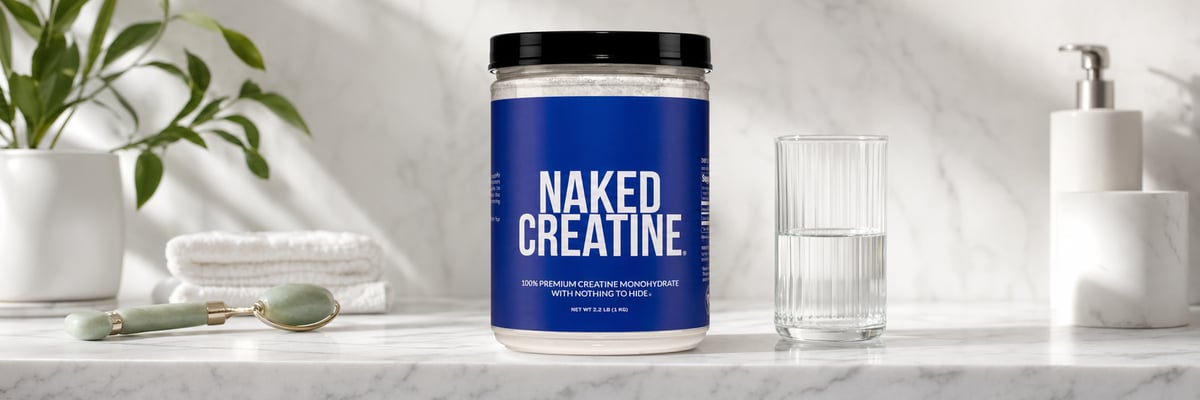
Kreatinmonohydratpulver | Naked Creatine - 2,2LB
- Fri frakt ingår
- Kreatinmonohydrat
- Kreatinformel
- Evidensbaserade formler
Förbättrar kreatin huden? Här är vad forskningen säger

Du känner redan till kreatin som tillskottet som driver muskelkontraktion och ger energi vid högintensiv träning. Men om du frågar om kreatin förbättrar huden blir de flesta tysta. Frågan låter långsökt. Det är den inte.
Kreatin finns naturligt i dina hudceller, där det stöder samma grundläggande process som det gör i resten av kroppen: ATP-produktion. Hudceller behöver energi för att föröka sig, reparera UV-skador, syntetisera kollagen och upprätthålla sin vattenbalans. När tillgången på kreatin minskar, minskar också hudens förmåga att göra allt detta effektivt. Och kreatinsyntesen minskar med åldern.
Forskning under de senaste två decennierna har utforskat både oral kreatintillskott och topiska kreatinformuleringar för hudåldrande. Resultaten omfattar rynkreducering, kollagenstimulering, UV-skydd och förbättrad cellomsättning. Vissa resultat är mer robusta än andra, och denna artikel är ärlig om var bevisen är starka och var mer data fortfarande behövs.
Den här artikeln behandlar vad kreatin är, hur det fungerar specifikt i huden, skillnaden mellan att ta det oralt och applicera det topiskt, samt hur du faktiskt kan lägga till det i din rutin om du vill prova.
Vad är kreatin och hur fungerar det i kroppen?

Kreatin är en naturligt förekommande förening som huvudsakligen syntetiseras i levern, njurarna och bukspottkörteln från aminosyrorna arginin, glycin och metionin. När det väl producerats transporteras det via blodomloppet och lagras mestadels i skelettmuskler, där det spelar en central roll i att regenerera adenosintrifosfat (ATP), cellens primära energivaluta.
Mekanismen är direkt: kreatinfosfat donerar en fosfatgrupp till ADP och regenererar snabbt ATP under korta högintensiva aktiviteter. Det är därför det är så effektivt för styrketräning och sprint. Men ATP-återbildning är inte exklusivt för muskler. Varje metabolt aktiv cell i kroppen, inklusive hudceller, är beroende av samma process.
Utöver syntes kan du få kreatin från kostkällor. Rött kött, fisk och skaldjur är de rikaste källorna. Därför visar veganer och vegetarianer konsekvent lägre grundnivåer av kreatin än allätare och svarar ofta mer märkbart på tillskott. Om din kost innehåller lite eller inget animaliskt protein är dina kreatinförråd sannolikt under optimala nivåer.
- Kreatin driver ATP-återbildning i varje högenergicell, inte bara muskelvävnad
- Hudceller använder ATP för replikation, DNA-reparation, kollagensyntes och för att bibehålla fukt
- Kostbaserat kreatin kommer nästan uteslutande från animaliska källor, vilket gör att veganer och vegetarianer får brist
- Endogen kreatinproduktion minskar med åldern, vilket reducerar cellernas energitillgång i huden
Kreatin är ett av de mest undersökta kosttillskotten inom idrottsnutrition, med årtionden av säkerhets- och effektivitetsdata bakom sig. Den forskningsbasen tillämpas nu inom dermatologi och hudåldrande, och de tidiga resultaten är värda att uppmärksamma.
Hur gynnar kreatin hudhälsan?

Hudceller är metaboliskt aktiva och energikrävande. Keratinocyter, cellerna som bildar hudens yttre lager, delar sig kontinuerligt och migrerar till ytan, en process som kräver en stadig ATP-produktion. Fibroblaster, cellerna som ansvarar för att producera kollagen och elastin, är lika energikrävande. När kreatintillgången minskar i hudvävnad saktar dessa processer ner, och de synliga effekterna följer: grövre textur, minskad fasthet, långsammare reparation efter solexponering.
UV-skydd
UV-strålning genererar reaktiva syreföreningar som skadar DNA och påskyndar hudens åldrande. Kreatin hjälper till att motverka detta genom att stödja de energikrävande reparationsmekanismer som cellerna använder efter UV-exponering. Forskning publicerad i Journal of Investigative Dermatology visade att kreatintillskott minskade UV-inducerad DNA-skada i hudceller [1]. Separat bekräftade forskning i samma tidskrift att kreatin hjälper till att återuppladda hudcellernas metabolism, vilket skyddar mot oxidativ stress från UV-exponering och andra miljöstressfaktorer [2]. Kreatin är inte en solskyddsmedel, men det stödjer den cellulära mekanismen som begränsar den efterföljande skadan.
Cellomsättning och elasticitet
Kreatin stödjer keratinocytproliferation, processen där huden kontinuerligt förnyar sitt yttre lager. Snabbare och mer effektiv cellomsättning innebär att äldre, skadade celler ersätts lättare. Samma forskning som dokumenterade UV-skyddseffekter observerade också att förbättrad hudcellomsättning ledde till större elasticitet och en minskning av hyperpigmentering [1]. Detta är två av de mest synliga tecknen på hudens åldrande, och mekanismen här är väl förankrad i grundläggande cellbiologi.
Återfuktning
Kreatin är osmotiskt aktivt, vilket betyder att det drar vatten in i cellerna. Denna egenskap är väl dokumenterad i muskelvävnad, där kreatintillskott pålitligt ökar det intracellulära vatteninnehållet. Samma osmotiska effekt kan gälla för hudceller. Forskning har visat att kreatintillskott ökar kroppens totala vattenmängd [5], vilket delvis kan förklara anekdotiska rapporter om att huden verkar mer återfuktad och strålande. Det sagt, direkt bevis som specifikt kopplar oralt kreatin till förbättrad hudåterfuktning är begränsade. Detta är ett område där mer forskning behövs innan starka påståenden kan göras.
Kollagensyntes och fasthet
Kollagenproduktion är en energikrävande process. Fibroblaster behöver tillräckligt med ATP för att syntetisera och korslänka kollagenfibrer. När kreatin stödjer fibroblastens energimetabolism förbättras kollagenproduktionen. Studier har visat minskningar i rynkdjup och hudens grovhet efter kreatintillskott, och topisk applicering av kreatinrelaterade föreningar har gett mätbara ökningar i hudens fasthet (diskuteras i detalj i nästa avsnitt).
📊 Vad forskningen säger
En studie från 2008 i Journal of Investigative Dermatology [1] visade att kreatintillskott gav mätbara minskningar i rynkdjup och hudens grovhet, tillsammans med förbättrad keratinocytproliferation och minskad UV-inducerad DNA-skada. Den är fortfarande en av de mest citerade studierna som kopplar oral kreatin till synliga hudåldrandeeffekter.
Oral tillskott vs. topisk kreatin: Vad är skillnaden?

Den ursprungliga forskningen om kreatin och hud täcker två distinkta leveransmetoder, och det är värt att tydligt skilja dem åt eftersom de fungerar olika och bevisen för varje kommer från olika sammanhang.
Oral kreatintillskott ökar den systemiska tillgängligheten av kreatin. När du tar 3 till 5 gram kreatinmonohydrat dagligen, fyller du på förråden i hela kroppen, inklusive i hudvävnad. De hudfördelar som observerats från oral kreatin, såsom minskad UV-skada och förbättrad cellomsättning, är resultatet av bättre energiförsörjda hudceller som utför sina uppgifter mer effektivt över tid.
Topisk kreatin appliceras direkt på huden och används i flera anti-aging hudvårdsprodukter. Studierna som visar kollagenstimulering och förbättrad hudfasthet som nämns i denna artikel (referens 3, referens 4) använde topisk applicering, inte oral tillskott. Dessa effekter är lokala och relativt direkta: kreatinet i formuleringen stödjer fibroblastens energimetabolism precis vid appliceringsstället.
En skillnad värd att klargöra: kreatin och kreatinin är relaterade men inte samma förening. Kreatinin är en metabol biprodukt av kreatinnedbrytning. Viss hudvårdsforskning använder kreatinin istället för kreatin, och vissa studier använder båda. När du granskar produktetiketter eller forskning, kontrollera vilken förening som faktiskt används.
Kan du kombinera båda metoderna? Ja, och det finns en rimlig anledning till det. Oralt tillskott ökar systemisk kreatintillgänglighet, vilket gynnar huden tillsammans med alla andra vävnader i kroppen. Topiska produkter ger lokala effekter. Ingen av metoderna har bevisats vara överlägsen för huden specifikt, men de verkar genom kompletterande mekanismer snarare än konkurrerande.
Hur man tar kreatin för hudhälsa
Protokollet för hudhälsa är detsamma som för idrottsprestation: 3 till 5 gram kreatinmonohydrat per dag. Kreatinmonohydrat är den mest studerade formen, mest kostnadseffektiva och referenspunkten mot vilken alla andra kreatinformuleringar jämförs. Det finns inga övertygande bevis för att dyrare former fungerar bättre för hud eller sport.
Timing är mindre viktigt än konsekvens. Kreatin fungerar genom att mätta muskel- och vävnadslager över tid. Att missa det "perfekta" fönstret runt din träning spelar ingen roll. Det som spelar roll är att ta det dagligen. Viss forskning tyder på att ta kreatin tillsammans med en måltid som innehåller kolhydrater kan förbättra upptaget något genom att utnyttja insulinresponsen, så att kombinera det med frukost eller en måltid efter träning är en praktisk standard.
Hur lång tid innan du ser hudförändringar? Sätt realistiska förväntningar. Kreatinlagren tar ungefär 3 till 4 veckor att helt mättas vid dagligt tillskott. Strukturella förändringar i huden, särskilt kollagenombyggnad och minskad rynkdjup, sker över månader snarare än veckor. De flesta studier som visar synliga hudförbättringar pågick i 6 veckor eller längre. Bedöm inte resultat efter två veckor.
Naked Creatine Monohydrate innehåller en ingrediens: kreatinmonohydrat. Inga fyllnadsmedel, inga flödesmedel, inga artificiella smaker. Om du vill lägga till kreatin i din rutin utan att lägga till något annat, är det poängen.
Glödande hud Mango Smoothie
Ett praktiskt sätt att ta ditt dagliga kreatin tillsammans med andra näringsämnen som stödjer huden:
- ½ kopp fryst mango (vitamin C för kollagensyntes)
- ½ kopp frysta jordgubbar (antioxidanter för att bekämpa oxidativ stress)
- 1 till 2 nävar spenat (vitamin A, folat och järn för hudcellernas reparation)
- 1 skopa kreatinmonohydrat
- 2 matskedar malda linfrön eller linfröolja (omega-3-fettsyror för hudbarriärens funktion)
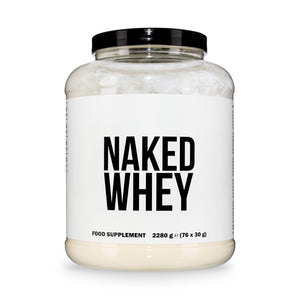
- ½ kopp grekisk yoghurt eller 2 skopor Naked Whey (protein för kollagenprekursorer)
- 1 kopp sojamjölk
Anvisningar: Mixa alla ingredienser tills det är slätt. Kolhydraterna från frukten ger en naturlig upptagshjälp för kreatinet, och proteinet säkerställer att du tillför kollagenbyggande aminosyror tillsammans med kreatinet.
Vem kan dra mest nytta av kreatin för huden?

Alla kommer inte att märka samma grad av fördelar av kreatintillskott för huden. Vissa börjar från en lägre utgångspunkt, vilket innebär att det finns mer att återhämta.
Vuxna över 30 år är mest benägna att se meningsfulla resultat. Den endogena kreatinsyntesen minskar med åldern, vilket innebär att hudens energitillgång naturligt minskar över tid. Tillskott återställer tillgången närmare nivåerna som finns i yngre hud.
Veganer och vegetarianer är den andra gruppen med högst fördelar. Eftersom kostkreatin nästan uteslutande kommer från animaliska källor, har växtbaserade ätare kroniskt lägre kreatinförråd. Forskning visar konsekvent att denna grupp svarar starkare på kreatintillskott, både i muskelvävnad och sannolikt även i huden.
Idrottare som redan tar tillskott för prestation kan uppleva hudförbättringar som en sekundär effekt utan att ändra sin nuvarande rutin. Om du redan tar 3 till 5 gram kreatinmonohydrat dagligen för träning, får dina hudceller samma energistöd.
Alla som är oroliga för fotoåldrande, rynkdjup eller minskad hudfasthet har en rimlig evidensbas för att lägga till oral kreatin, särskilt i kombination med topiska hudvårdsprodukter som innehåller kreatin eller kreatinin.
- Kreatin är ett av de mest undersökta tillskotten som finns, med en väletablerad säkerhetsprofil hos friska vuxna
- Långtidsstudier bekräftar inga negativa effekter på njur- eller leverfunktion hos friska individer [6]
- Ytterligare forskning stöder dess säkerhet vid standarddoser för tillskott [7]
- Personer med befintliga njurproblem bör rådfråga läkare innan de börjar med tillskott, eftersom kreatinmetabolism ökar kreatininnivåerna, vilket kan påverka vissa njurfunktionstest
Sammanfattning om kreatin och hud

Kreatins roll för hudhälsa är inte spekulativ. Hudceller är beroende av ATP, kreatin stödjer ATP-produktion, och kreatinnivåerna i huden minskar med åldern. Forskningen som kopplar tillskott till minskade rynkor, förbättrad fasthet, UV-skydd och bättre cellomsättning grundar sig i den enkla biologin.
Bevisen är starkast för UV-skydd och cellomsättning. Data om kollagenstimulering och fasthet är solida för topisk applicering och antydande för oral tillskott. Hydreringseffekter via oral kreatin är det minst stödda påståendet och förtjänar mer rigorösa studier innan man drar säkra slutsatser.
Om du är över 30, äter lite eller inget kött, eller redan märker tidiga tecken på hudens åldrande, är 3 till 5 gram kreatinmonohydrat per dag ett kostnadseffektivt och väl tolererat tillskott i din rutin. Ha en produkt med enbart en ingrediens som Naked Creatine Monohydrate till hands, ta den dagligen med mat och ge det minst sex veckor innan du utvärderar resultaten. Din huds energimetabolism kommer att fungera bättre oavsett om du kan se det direkt eller inte.
Vanliga frågor
Förbättrar kreatin verkligen hudens utseende?
Forskning tyder på att kreatin kan erbjuda måttliga hudfördelar, inklusive förbättrad återfuktning, minskad rynkdjup och ökad fasthet när det appliceras topiskt eller tas som tillskott. Studier visar att det stödjer cellernas energiproduktion i hudceller, vilket kan hjälpa till att reparera och regenerera vävnad mer effektivt. Resultaten varierar dock mellan individer och kreatin bör inte ses som en fristående hudvårdslösning.
Hur gynnar kreatin huden på cellnivå?
Kreatin hjälper till att fylla på ATP – cellernas primära energivaluta – vilket stödjer den metaboliska aktiviteten hos hudens fibroblaster som ansvarar för att producera kollagen och elastin. När hudceller har mer tillgänglig energi är de bättre rustade att reparera UV-skador och upprätthålla hudens strukturella integritet. Denna cellulära energiboost är vad forskare tror driver kreatins potentiella anti-aging-effekter på huden.
Är det bättre att ta kreatin oralt eller applicera det topiskt för hudens fördelar?
Båda appliceringsmetoderna har visat lovande resultat, men topisk applicering levererar kreatin direkt till huden där det kan verka lokalt på epidermala och dermala celler. Oral kreatintillskott gynnar främst muskelvävnad och kan ha begränsad direkt påverkan på huden jämfört med en dedikerad topisk formula. Vissa forskare föreslår att en kombinationsmetod – att ta kreatin oralt samtidigt som man använder en hudvårdsprodukt med kreatin – kan ge de mest omfattande resultaten.
Kan kreatin hjälpa till att minska rynkor och ålderstecken?
Kliniska studier har visat att topiska kreatinformuleringar kan minska synligheten av fina linjer och rynkor, särskilt när de kombineras med andra aktiva ingredienser som folsyra. Genom att ge energi till hudceller och stimulera kollagensyntesen stödjer kreatin hudens naturliga reparationsprocesser som avtar med åldern. Även om det inte ersätter beprövade anti-aging-aktiva ämnen som retinol, kan det vara en värdefull kompletterande ingrediens i en anti-aging-rutin.
Är kreatin säkert att använda för hudhälsa?
Kreatin anses allmänt vara säkert både för oral tillskott och för topisk användning, med årtionden av forskning som stöder dess tolerans hos friska vuxna. Topiska kreatinprodukter tolereras vanligtvis väl och orsakar sällan irritation eller allergiska reaktioner. Som alltid bör personer med känslig hud eller underliggande hälsotillstånd rådfråga en hudläkare eller vårdgivare innan de lägger till nya ingredienser i sin rutin.
Hur lång tid tar det att se hudförbättringar från kreatin?
De flesta studier som observerar mätbara hudförbättringar från topiskt kreatin rapporterar resultat efter 4 till 12 veckors konsekvent användning. Oralt kreatintillskott kan ta längre tid att ge märkbara effekter på huden, eftersom muskler och annan vävnad prioriteras för kreatinupptag. Konsekvens är nyckeln — oregelbunden användning ger sannolikt inga meningsfulla eller bestående resultat.
Orsakar kreatintillskott vätskeretention som påverkar huden?
Oralt kreatin är välkänt för att dra vatten in i muskelceller, vilket kan orsaka en tillfällig ökning av kroppsvikten på grund av intracellulär vätskeretention. Denna effekt är främst lokaliserad till muskelvävnad och orsakar vanligtvis inte synlig svullnad i ansiktet eller hudsvullnad. Om du är orolig för vätskeretention kan det hjälpa att hålla sig välhydrerad och börja med en lägre dos för att kroppen ska kunna anpassa sig mer bekvämt.
Vad ska jag leta efter i ett kreatintillskott om jag vill ha hudfördelar?
För allmän tillskott, leta efter produkter som använder Creapure® eller annat kreatinmonohydrat testat av tredje part, eftersom renhet och kvalitet direkt påverkar effektivitet och säkerhet. Om du vill ha riktade hudfördelar, sök efter topiska hudvårdsprodukter som listar kreatin som en aktiv ingrediens, helst tillsammans med kompletterande ämnen som niacinamid, peptider eller hyaluronsyra. Certifieringar som NSF eller Informed Sport är värdefulla kvalitetsmarkörer och hjälper till att säkerställa att du får exakt det som står på etiketten.
Toppval av produkter
Vald av över 1 miljon kunder. Fri frakt på beställningar över 100 $.
Kreatinmonohydratpulver | Naked Creatine - 2,2LB
$35.99
- ✓ 100% premium kreatinmonohydrat
- ✓ Högsta tillgängliga kvalitet: löser sig snabbt och absorberas snabbt
- ✓ 5 g kreatin per portion
- ✓ Inga konstgjorda sötningsmedel, smaker eller färger

Jordgubb Kreatinmonohydratpulver | Naked Creatine - 1,1LB
$29.99
- ✓ 100% premium kreatinmonohydrat
- ✓ Högsta tillgängliga kvalitet: löser sig snabbt och absorberas snabbt
- ✓ 5 g kreatin per portion
- ✓ Inga konstgjorda sötningsmedel, smaker eller färger

Orange Kreatinmonohydratpulver | Naked Creatine - 1,1LB
$29.99
- ✓ 100% premium kreatinmonohydrat
- ✓ Högsta tillgängliga kvalitet: löser sig snabbt och absorberas snabbt
- ✓ 5 g kreatin per portion
- ✓ Inga konstgjorda sötningsmedel, smaker eller färger