





På denna sida
Påverkar kreatin tarmhälsan? Det du behöver veta
Upptäck hur kreatin påverkar ditt matsmältningssystem och om din tarmhälsa bör påverka dina beslut om tillskott.

Viktiga slutsatser
- Dosen avgör: Kreatin i 3–5g per dag orsakar sällan matsmältningsproblem. Problem uppstår vanligtvis vid 10g eller mer i en enda dos.
- Bevisen är tydliga: En klinisk studie visade diarréfrekvens på 29 % vid 5g två gånger dagligen (jämförbart med placebo) men 56 % vid 10g en gång dagligen — det är dosen, inte kreatinet, som är problemet.
- Vätskeintaget är avgörande: Kreatin drar vatten in i muskelcellerna, så otillräckligt vätskeintag ökar belastningen på mag-tarmsystemet.
- Produktens renhet är viktig: Tillsatser, fyllmedel och tillverkningsföroreningar i kreatin av låg kvalitet kan utlösa eller förvärra matsmältningssymtom.
- Att dela upp doserna fungerar: Under en laddningsfas minskar risken för mag-tarmproblem avsevärt om varje dos begränsas till 5g och sprids över 4–5 tillfällen under dagen.
- Symtomen är tillfälliga: De flesta matsmältningsbesvär försvinner inom några dagar efter att dosen minskats eller efter byte till en renare produkt.
- Kontakta läkare om symtomen kvarstår: Om mag-tarmsymtom fortsätter efter att du helt slutat med kreatin, sök medicinsk utvärdering — det kan finnas en underliggande orsak.

Kreatin Monohydrat Pulver | Naked Kreatin - 2.2LB
- Fri frakt ingår
- Kreatinmonohydrat
- Kreatinformel
- Evidensbaserade formler
Påverkar kreatin tarmhälsan? Vad vetenskapen säger

Du har börjat ta kreatin, tränar hårt och så händer det — magkramper, lös avföring eller den obehagliga uppblåsta känslan en timme efter din morgondos. Innan du skyller på kreatinet och slänger burken är det värt att förstå vad som faktiskt händer och om tillskottet i sig är problemet.
Det korta svaret på om kreatin påverkar tarmhälsan är: ja, det kan det – men bara under specifika förhållanden. Den viktigaste av dessa är dosen. Vid standardunderhållsdosen på 3–5 g per dag visar kontrollerad forskning att matsmältningsbiverkningar inte är vanligare än med placebo. Vid 10 g eller mer i en enda dos förändras bilden avsevärt.
Den här artikeln behandlar hur kreatin påverkar matsmältningssystemet, vad forskningen faktiskt visar, vilka variabler som är viktigast för mag-tarmtolerans och vad du kan göra för att använda kreatin bekvämt och effektivt.
Vad är kreatin och hur fungerar det i kroppen?

Kreatin är en förening som produceras naturligt i kroppen från aminosyrorna glycin och arginin, och det koncentreras främst i skelettmusklerna. Tillskott med kreatin ökar musklernas lager av fosfokreatin, som kroppen använder för att snabbt återbilda ATP – energivalutan för varje muskelkontraktion. Därför förbättrar kreatin pålitligt prestationen vid högintensiva, kortvariga ansträngningar: sprint, tung lyftning och explosiv träning.
Kreatinmonohydrat är den mest studerade formen med stor marginal. Decennier av forskning stöder dess säkerhet och effektivitet, vilket gör det till standardrekommendationen för de flesta. En egenskap hos kreatin som är central för att förstå dess matsmältningspåverkan är att det är mycket osmotiskt. Det attraherar vatten. När kreatin absorberas in i muskelceller drar det med sig vatten – vilket är användbart för prestationen men skapar en fysiologisk förskjutning som påverkar vätskebalansen i hela kroppen, inklusive tarmen.
- Kreatin lagras som fosfokreatin i muskelvävnad och används för att återbilda ATP under intensiv träning
- Tillskott ökar musklernas fosfokreatinlager bortom vad kosten ensam kan uppnå
- Kreatin är osmotiskt – det drar vatten in i cellerna där det lagras, vilket ökar kroppens totala vattenbehov
- Denna osmotiska egenskap är den primära mekanismen bakom kreatinets matsmältningspåverkan vid höga doser
Hur kreatin påverkar matsmältningssystemet och tarmhälsan

Kreatinets osmotiska natur är den mest sannolika mekanismen bakom dess effekter på mag-tarmkanalen. När en stor mängd kreatin konsumeras vid ett och samma tillfälle drar det vatten in i mag-tarmkanalen innan det når musklerna. Denna vätskeförflyttning kan öka tarmrörelserna, göra avföringen lösare eller orsaka kramper – samma grundläggande mekanism som bakom osmotiska laxermedel som magnesiumcitrat, men i mycket mindre skala.
📊 Vad forskningen säger
En studie publicerad i Journal of Athletic Training visade att när deltagarna tog kreatin med 5g två gånger dagligen rapporterade 29 % diarré — en frekvens jämförbar med placebogruppen. När samma totala dagliga mängd konsoliderades till en enda dos på 10g ökade förekomsten av diarré till 56 % [3]. Kreatinet var inte annorlunda. Dosstrukturen var det.
Den studiens resultat är den viktigaste datapunkten i hela denna diskussion. Den visar tydligt att problemet inte är kreatinet i sig — det är hur mycket du tar på en gång. Forskning bekräftar att det inte finns några bevis för matsmältningsproblem vid rekommenderade doser på 3–5g per dag. [1], och nuvarande riktlinjer rekommenderar att varje dos begränsas till 5g även under laddningsfaser [4].
Det finns en andra variabel värd att undersöka: produktkvalitet. Kreatinprodukter av låg kvalitet kan innehålla tillsatser, sötningsmedel, fyllnadsmedel eller tillverkningsföroreningar som själva kan utlösa mag-tarmsymtom. I sådana fall orsakas matsmältningsproblemen inte alls av kreatinet — det är vad som finns i burken tillsammans med det som är orsaken. [2].
Symtomen som människor upplever varierar också mycket. Vissa märker bara mild uppblåsthet eller gasbildning, särskilt under de första veckorna av användning. Andra, särskilt de som börjar med högre doser, kan uppleva lös avföring eller diarré. För de flesta är symtomen tillfälliga och normaliseras när kroppen anpassar sig till kreatinets närvaro och vattenbindande effekter .
Spelar kreatintypen roll för tarmtolerans?

Kreatinmonohydrat är guldstandarden — den mest undersökta, mest prisvärda och mest effektiva formen som finns tillgänglig. Men det är inte det enda alternativet, och för personer med verklig känslighet i mag-tarmkanalen kan formen och renheten på kreatinet de väljer göra en betydande skillnad.
Kreatinhydroklorid (HCL) är bundet till saltsyra, vilket ökar dess vattensolubilitet avsevärt jämfört med monohydrat. Eftersom det löser sig mer fullständigt i tarmen kan det orsaka mindre osmotisk störning vid motsvarande doser — en relevant faktor för alla som har haft problem med monohydratrelaterad uppblåsthet. Det sagt är forskningsunderlaget för kreatin HCL vs monohydrat betydligt mindre än för monohydrat, och direkta jämförelser av magtolerans är begränsade.
Produktens renhet är en lika viktig variabel och något som ofta förbises. Kreatinmonohydrat certifierat genom Creapure — en kvalitetsstandard som kräver oberoende testning för renhet och kontroll av föroreningar — är en väsentligt annorlunda produkt än ett otestat pulver tillverkat utan tredjepartskontroll. Föroreningar som dicyandiamid eller dihydrotriazine kan förekomma i dåligt tillverkat kreatin och är troliga bidragande orsaker till oförklarliga magbesvär.
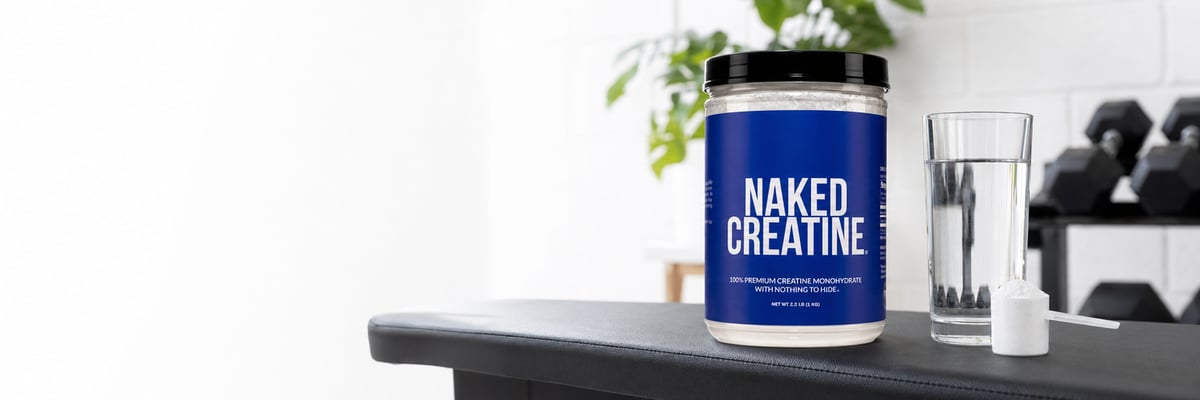
Naked Creatine använder en enda ingrediens: 100 % kreatinmonohydrat, utan fyllmedel, konstgjorda sötningsmedel eller tillsatser. Om du har haft magproblem med andra kreatinprodukter är det logiska första steget att börja med en renare bas innan du justerar dosen eller byter till en helt annan form.
Den praktiska slutsatsen här är att om du upplever magbesvär av kreatin, är den första frågan du bör ställa inte "vilken form ska jag byta till?" — utan "vad mer finns i min nuvarande produkt, och vilken dos tar jag?"
Hur man tar kreatin utan att störa magen

De flesta magrelaterade problem med kreatin är förebyggbara. Följande strategier tar itu med grundorsakerna direkt: dosstorlek, vätskeintag, timing och produktval.
- Håll dig till 3–5 g per dag för underhåll. Detta är dosintervallet som forskning stöder som effektivt och väl tolererat. Det finns ingen fördel med att överskrida det vid regelbunden användning.
- Begränsa varje dos till 5 g under uppladdning. Om du gör en uppladdningsfas (20–25 g dagligen i 5–7 dagar), sprid ut det på 4–5 separata doser med några timmars mellanrum. Konsolidera aldrig till en eller två stora doser.
- Ta kreatin med mat. Mat saktar ner magsäckstömningen och buffrar den osmotiska belastningen i tarmen. Att ta kreatin på fastande mage är den snabbaste vägen till magbesvär för känsliga personer.
- Öka ditt vätskeintag. Eftersom kreatin drar vatten in i muskelvävnad ökar ditt totala vätskebehov. Att hålla sig välhydrerad förhindrar att vätskeomfördelningen belastar magen och minskar risken för uttorkningsrelaterade symtom som kramp.
- Tillsätt elektrolyter om du får diarré. Vätskeförlust från diarré tömmer natrium, kalium och magnesium. Ett elektrolyttillskott eller sportdryck hjälper till att ersätta det som förlorats medan du hanterar symtomen.
- Börja med lägre dos om du är känslig. Att börja med 2–3g per dag och öka över en till två veckor låter din mage anpassa sig utan chocken av full dos från dag ett.
- Välj en ren produkt med en enda ingrediens. Eliminera tillsatser som en variabel innan du justerar dos eller form.
Om symtomen är allvarliga eller inte svarar på dessa justeringar, minska dosen ytterligare eller sluta helt. Kreatin har verkliga fördelar, men ingen av dem är värd betydande pågående mag-tarmbesvär. Rådgör med din vårdgivare om symtomen är allvarliga eller kvarstår efter att du slutat.
Vanliga myter om kreatin och mag-tarmhälsa

Kreatin har samlat på sig mer än sin beskärda del av felaktig information genom åren. Här är vad bevisen faktiskt visar om de mest ihärdiga påståendena.
- Myth: Kreatin orsakar alltid magproblem. Verklighet: Vid 3–5g per dag visar forskning att mag-tarmbiverkningar inte är vanligare än placebo. Problem är dosberoende och till stor del förebyggbara.
- Myth: Vätskeretention från kreatin är farligt. Verklighet: Viktökningen från kreatin är intracellulär vätska — vatten som dras in i muskelcellerna. Det är normalt, förväntat och försvinner när du slutar ta tillskottet.
- Myth: Kreatin skadar njurarna. Verklighet: Kreatintillskott höjer blodets kreatininnivåer, vilket är en biprodukt av kreatinmetabolismen. Förhöjt kreatinin används ibland som en markör för njurfunktion, men omfattande forskning bekräftar att det inte indikerar njurskada hos friska individer [5] [6].
- Myth: Kreatin orsakar akne. Verklighet: Kreatin i sig har ingen direkt mekanism för att orsaka akne. Vad som ofta händer är att kreatin förbättrar träningskapaciteten, vilket leder till längre och hårdare pass — vilket ökar svettproduktionen och kan bidra till tilltäppta porer. Aknen, om den uppstår, är en träningseffekt, inte en kreatineffekt.
Mönstret i alla dessa myter är detsamma: en koppling observeras, orsak antas och den faktiska mekanismen misstolkas. Att förstå varför kreatin kan orsaka akne — och vad det inte gör — gör det lätt att avfärda dessa farhågor.
När du bör rådfråga en vårdpersonal om kreatin och matsmältning
För de allra flesta är kreatinrelaterade matsmältningssymtom milda, kortvariga och direkt kopplade till dosen. Att minska dosen, dela upp doserna, äta innan tillskottet och dricka mer vatten löser problemet inom några dagar.
Det finns dock situationer där professionell vägledning är lämplig. Om du redan har minskat din dos till 3 g eller mindre, tagit kreatin med mat, prioriterat vätskeintag och bytt till en ren produkt med enbart en ingrediens — och du fortfarande upplever betydande mag-tarmbesvär — kan något annat bidra. Underliggande tillstånd som irritabel tarm, bakteriell överväxt i tunntarmen eller matöverkänslighet kan alla förvärras av osmotiska ämnen. Kreatin kan avslöja ett redan existerande problem snarare än att skapa ett nytt.
Det viktigaste tecknet att agera på är detta: om mag-tarmsymtom kvarstår eller förvärras efter att du helt slutat ta kreatin, är det inte ett kreatinproblem. Det kräver en medicinsk utvärdering. Alla symtom som direkt orsakas av kreatin bör försvinna inom några dagar efter att du slutat med tillskottet. Om de inte gör det, handlar det om något oberoende av tillskottet och en vårdgivare kan hjälpa till att identifiera vad det är.
Använd kreatin i 3–5 g per dag, ta det med mat, drick tillräckligt med vatten och köp från ett märke som är transparent med vad produkten innehåller. Det är den fullständiga praktiska vägledningen. Om det inte fungerar för dig, sänk dosen ytterligare eller sluta — och låt dig undersökas om symtomen kvarstår efter tillskottet.
Vanliga frågor
Påverkar kreatin tarmhälsan negativt?
För de flesta påverkar inte kreatin tarmhälsan negativt när det tas i rekommenderade doser på 3–5 gram per dag. Vissa individer kan uppleva milda matsmältningsbesvär, uppblåsthet eller lös avföring, särskilt under en högdosladdningsfas. Att byta till mindre, mer frekventa doser eller att hoppa över laddningsfasen helt kan avsevärt minska dessa biverkningar.
Kan kreatin orsaka uppblåsthet eller magkramper?
Uppblåsthet och magkramper är bland de vanligaste rapporterade matsmältningsbiverkningarna av kreatin, särskilt när stora doser tas på en gång. Detta är ofta kopplat till kreatins osmotiska effekt som drar vatten till tarmen och musklerna. Att sprida ut din dagliga dos över dagen och hålla sig väl hydrerad kan hjälpa till att minska dessa symtom.
Påverkar kreatin tarmfloran?
Nuvarande forskning om kreatins direkta påverkan på tarmfloran är fortfarande pågående och ännu inte avgörande. Vissa tidiga studier antyder att kreatin kan ha en måttlig inverkan på mikrobiell aktivitet, men inga betydande skadliga förändringar i mikrobiomets sammansättning har fastställts vid standarddoser. Fler kliniska studier på människor behövs innan definitiva slutsatser kan dras.
Är kreatinmonohydrat lättare för magen än andra former?
Kreatinmonohydrat är den mest välstuderade och allmänt använda formen av kreatin, och det tolereras generellt väl av de flesta. Vissa alternativa former, som buffrat kreatin (Kre-Alkalyn) eller kreatinhydroklorid (HCl), marknadsförs som skonsammare för matsmältningssystemet, även om bevisen för deras överlägsenhet jämfört med monohydrat är begränsade. Att välja ett högkvalitativt, rent kreatinmonohydrat och ta det med mat är ett praktiskt första steg för dem med känslig mage.
Bör jag ta kreatin med mat för att skydda min mage?
Att ta kreatin tillsammans med en måltid eller ett mellanmål kan hjälpa till att minska risken för matsmältningsbesvär, särskilt för personer med känslig mage. Mat saktar ner hastigheten med vilken kreatin kommer in i matsmältningskanalen, vilket kan lindra osmotiska effekter som bidrar till uppblåsthet eller illamående. Att kombinera kreatin med kolhydrater kan också förbättra dess upptag i muskelvävnad.
Är kreatin säkert för långvarig användning ur ett matsmältningsperspektiv?
Långtidsanvändning av kreatin vid standardunderhållsdoser på 3–5 gram per dag har visat sig vara säker i många studier som sträcker sig över flera år. Forskning har inte identifierat några kroniska negativa effekter på mag-tarmsystemet hos friska individer. Som med alla tillskott är det klokt att rådgöra med en vårdpersonal om du har en befintlig matsmältningssjukdom innan du börjar med kreatin.
Kan personer med IBS eller andra matsmältningsbesvär ta kreatin?
Personer med irritabel tarm (IBS) eller andra mag-tarmsjukdomar kan vara mer känsliga för kreatins matsmältningsbiverkningar. Att börja med en lägre dos och gradvis öka den, samtidigt som man undviker laddningsfasen, är generellt rekommenderat för dem med känslig matsmältning. Rådgör alltid med en gastroenterolog eller läkare innan du lägger till kreatin i din rutin om du har en befintlig mag-tarmsjukdom.
Påverkar kvaliteten eller renheten av kreatin maghälsan?
Ja, renheten i ditt kreatintillskott kan spela en betydande roll för matsmältnings-toleransen. Kreatinprodukter av låg kvalitet kan innehålla föroreningar eller fyllnadsmedel som bidrar till mag-tarmirritation, medan högrenhetsalternativ som Creapure®-certifierat kreatinmonohydrat genomgår rigorösa tester för att säkerställa minimala föroreningar. Att välja ett tillskott som är testat av tredje part för renhet och fritt från onödiga tillsatser är en smart strategi för att skydda din tarmhälsa.
Toppval av produkter
Vald av över 1 miljon kunder. Fri frakt på beställningar över 100 $.
Kreatin Monohydrat Pulver | Naked Kreatin - 2.2LB
$35.99
- ✓ 100% premium kreatinmonohydrat
- ✓ Högsta tillgängliga kvalitet: snabbupplösande och snabbt absorberande
- ✓ 5g kreatin per portion
- ✓ Inga konstgjorda sötningsmedel, smaker eller färgämnen

Jordgubb Kreatin Monohydrat Pulver | Naked Kreatin - 1.1LB
$29.99
- ✓ 100% premium kreatinmonohydrat
- ✓ Högsta tillgängliga kvalitet: snabbupplösande och snabbt absorberande
- ✓ 5g kreatin per portion
- ✓ Inga konstgjorda sötningsmedel, smaker eller färgämnen

Hallon Lime Kreatin HCl Pulver | Naked Lean Kreatin - 231g
$34.99
- ✓ 750 mg Con-Cret® Kreatin HCl
- ✓ Ekologisk kaktusfikon för naturlig vätskebalans
- ✓ Mycket potent: överlägsen muskelprestanda vid lägre doser
- ✓ Viktiga elektrolyter för optimal kreatinupptagning