



På denna sida
Kan du laga mat med kreatin utan att förlora dess fördelar?
Upptäck om värme förstör kreatins effekt och hur du säkert kan tillsätta det i dina favoritrecept utan att slösa en skopa.

Viktiga slutsatser
- Ja, du kan laga mat med kreatin: Kreatinmonohydrat är stabilt under typiska hemmamatlagningsförhållanden och bryts inte ner i någon meningsfull grad vid standardtemperaturer på spis eller ugn.
- Nedbrytningströskeln är 450°F (cirka 232°C): Kreatin börjar omvandlas till kreatinin vid temperaturer över ungefär 450°F — långt över vad de flesta recept kräver.
- Absorptionen är likvärdig: Så länge kreatinet inte har brutits ner innan du äter det absorberar kroppen det på samma sätt oavsett om det är blandat i kallt vatten eller tillagat i mat.
- Metoder med lägst risk fungerar bäst: Att röra ner kreatin i havregryn, yoghurt, smoothiebowls eller tillsätta det efter tillagning i såser håller värmeexponeringen minimal och effekten intakt.
- Standarddos gäller fortfarande: Oavsett om du lagar mat eller blandar kallt är 3–5 g per dag den evidensbaserade underhållsdosen.
- Renhet är viktigt vid matlagning: Ett rent, tillsatsfritt kreatinmonohydratpulver blandas lätt in i recept utan att påverka smak eller konsistens.

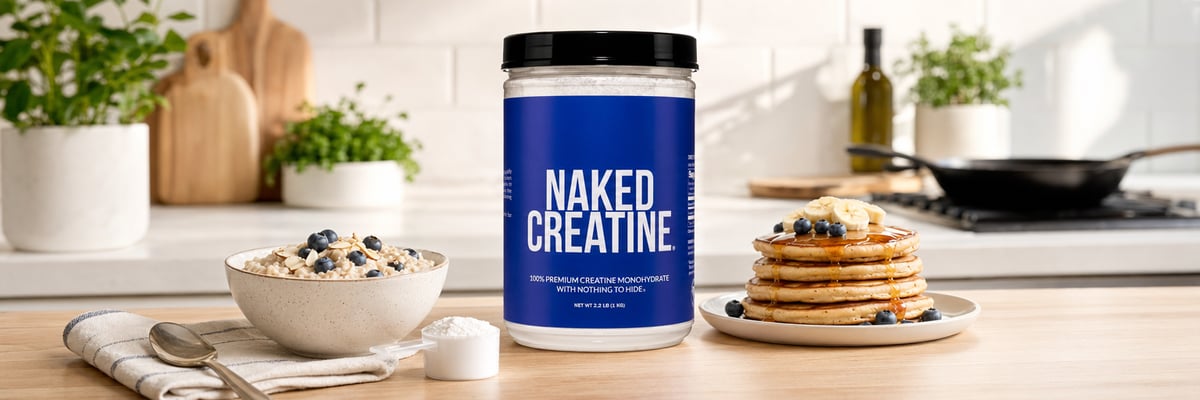
Kreatin Monohydrat-pulver | Naked Creatine - 2.2LB
- Fri frakt ingår
- Kreatinmonohydrat
- Kreatinformel
- Evidensbaserade formler
Kan du laga mat med kreatin? Det korta svaret

Ja, du kan laga mat med kreatin. Om du har rört ner ditt kreatinpulver i vatten varje morgon av vana, inte nödvändighet, finns det goda nyheter: kreatinmonohydrat är tillräckligt stabilt under de flesta matlagningsförhållanden för att behålla sin effekt genom din pannkakssmet, din havregrynsgröt eller dina proteinmuffins efter träningen.
Den största oron många har är om värme förstör kreatin innan det kan göra någon nytta. Det är en rimlig fråga, och vetenskapen har ett tydligt svar. Kreatinmonohydrat, den mest studerade och allmänt tillgängliga formen av kreatin, bryts inte ner i någon meningsfull grad vid de temperaturer som används vid vanlig matlagning. Nedbrytningströskeln ligger långt över vad din spis eller ugn någonsin når under ett normalt recept.
Den här artikeln förklarar exakt vad som händer med kreatin vid värme, vilka matlagningsmetoder som är säkrast, hur absorptionen jämförs med kall blandning och några praktiska recept du kan börja använda idag. Om du varit nyfiken på att integrera kreatin i dina måltider som en hållbar daglig vana, här är vad du behöver veta.
Vad är kreatin och hur fungerar det?

Kreatin är en naturligt förekommande förening som finns i muskelvävnad och produceras av levern, njurarna och bukspottkörteln. Det finns också i animaliska livsmedel som rött kött och fisk, men inte i tillräckligt stora mängder för att mätta muskeldepåerna på ett meningsfullt sätt. Där kommer tillskott in i bilden.
- Kreatin lagras i musklerna som fosfokreatin, som donerar en fosfatgrupp för att återställa ATP under högintensiv ansträngning.
- Mer tillgängligt fosfokreatin innebär snabbare ATP-återbildning, vilket översätts till mer kraft vid sprintar, tunga lyft och explosiva rörelser.
- Att komplettera med 3–5 g dagligen mättar muskelns fosfokreatinlager över tid, vilket ger mätbara förbättringar i styrka och kraftutveckling.
- Dessa fördelar ackumuleras vid konsekvent daglig användning — tidpunkten i förhållande till träning är mindre viktig än att helt enkelt ta det varje dag.
Kreatinmonohydrat är guldstandarden. Det har decennier av forskning bakom sig, den starkaste säkerhetsprofilen av alla sporttillskott och en enkel absorptionsprofil. Den vanliga dagliga dosen för underhåll är 3–5 g, vilket motsvarar ungefär en jämn tesked. Det är tillräckligt litet för att försvinna i nästan vilket recept som helst utan att märkbart ändra smak eller konsistens.
Attraktionen med att laga mat med kreatin är enkel: om du redan äter frukost eller förbereder måltider efter träning, tar du bort ett steg i rutinen genom att tillsätta din kreatindos direkt i maten. Konsekvens är avgörande för kreatinets fördelar, och allt som gör det lättare att ta dagligen är värt att överväga.
Förstör värme kreatin? Vad vetenskapen säger

Den största risken med att utsätta kreatin för värme är en omvandlingsprocess som kallas cyklisering, där kreatin bryts ner till kreatinin. Kreatinin är en avfallsprodukt som dina njurar filtrerar bort. Det stödjer inte ATP-produktion, förbättrar inte muskelprestanda och är i princip en förlorad dos. Frågan är: triggar vanlig matlagning verkligen denna omvandling?
📊 Vad forskningen säger
Enligt forskning publicerad i Journal of the International Society of Sports Nutrition [1] är kreatinmonohydrat stabilt i pulverform även vid förhöjda temperaturer och visar ingen meningsfull nedbrytning under förhållanden som motsvarar normal matlagning. Föreningen förblir stabil i mer än tre år när den förvaras korrekt i rumstemperatur.
Den ofta citerade nedbrytningsgränsen är ungefär 450°F (232°C). Under den temperaturen förblir kreatinet strukturellt intakt. För referens når en spisplatta på medelvärme runt 300–350°F vid pannans yta. En vanlig ugn inställd på 375°F värmer luften inuti ugnen, inte insidan av din smet eller deg, som förblir betydligt svalare under större delen av gräddningstiden.
Våt värme är särskilt gynnsamt. När kreatin löses i vätskeingredienser som mjölk, smet eller havregryn absorberar och fördelar vatteninnehållet värmen, vilket håller den effektiva temperaturen lägre än den omgivande matlagningsmiljön. Torra värmescenarier, som att utsätta ett tunt lager kreatinpulver direkt för en mycket het yta, är minst gynnsamma — men det är ändå osannolikt att nå 450°F-gränsen under normala förhållanden.
Slutsatsen: kreatin bryts inte ner i någon meningsfull grad vid vanlig matlagning. Omvandlingen till kreatinin är ett verkligt fenomen, men för att utlösa det krävs långvarig exponering för extrem värme som hemmamatlagning helt enkelt inte ger.
Bästa (och sämsta) sätten att laga mat med kreatin

Inte alla matlagningsmetoder har samma riskprofil för kreatin. Här är en praktisk översikt, rangordnad från säkrast till högst risk.
Säkraste metoder (minimal till ingen värmeexponering):
- Röra ner i havregrynsgröt efter tillagning
- Blanda i yoghurt, keso eller smoothiebowls
- Tillsätta i overnight oats eller no-bake energibollar
- Röra ner i såser eller soppor efter att de tagits från värmen
- Blanda i proteinshakes eller kalla drycker
Måttliga metoder (standardvärme, låg nedbrytningsrisk):
- Bakning vid 325–375°F — kreatin inbäddat i våt smet håller sig långt under nedbrytningsgränsen
- Matlagning på spisen på medelvärme, särskilt i vätskerika rätter som pannkakor eller äggröra
- Recept för slow cooker där temperaturen håller sig runt 200–300°F hela tiden
Metoder med högre risk (använd med försiktighet):
- Grillning och högtemperaturstekning — yttemperaturer kan överstiga 450°F
- Fritering — oljetemperaturer ligger vanligtvis på 175–190°C, vilket är gränsfall för nedbrytningsrisk
- Rostning eller rostat kreatin direkt utan våta ingredienser
Även inom den högre riskkategorin är den praktiska påverkan på ditt kreatinintag liten. Kreatin är tillräckligt billigt för att ersätta eventuell förlorad effekt med en något större dos utan problem. Det smartaste är helt enkelt att tillsätta kreatinet i slutet av tillagningen, i de våta ingredienserna eller efter att värmen tagits bort helt. Kreatin löser sig lätt i vätskor, så det påverkar inte konsistensen och det finns ingen anledning att utsätta det för mer värme än nödvändigt.
Kreatinrecept att prova: Power Pancakes och mer
Att inkludera kreatin i måltider kräver ingen större receptändring. Pulvret är neutralt i smaken och löser sig lätt i både våta och torra ingredienser. Här är fyra praktiska alternativ.
Power Pancakes (Ger cirka 8 pannkakor)
Dessa pannkakor steks på en medelvarm stekpanna, med yttemperaturer runt 150–160°C. Smetens fukthalt säkerställer att kreatinet håller sig långt under nedbrytningsgränsen under hela tillagningen.
Ingredienser:
- 1 kopp mjöl
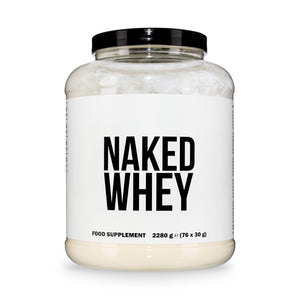
- 1 skopa Vanilla Naked Whey
- 1 tesked bakpulver
- 1/2 tesked bikarbonat
- 1/4 tesked salt
- 1 ägg
- 1 kopp mjölk (mejeribaserad eller växtbaserad)
- 1 matsked smält kokosolja
- 1 tesked vaniljextrakt
- 5g Naked Creatine Monohydrate
Instruktioner:
- Vispa ihop mjöl, proteinpulver, kreatin, bakpulver, bikarbonat och salt i en stor skål.
- Vispa ägget i en separat skål och blanda i mjölk, kokosolja och vanilj.
- Blanda de våta och torra ingredienserna och rör tills de precis blandats. Överarbeta inte smeten.
- Värm en non-stick stekpanna på medelvärme och smörj lätt med kokosolja eller matlagningsspray.
- Häll 1/4 kopp smet per pannkaka. Stek i 2–3 minuter tills bubblor bildas och kanterna ser fasta ut. Vänd och stek ytterligare 1–2 minuter tills gyllene.
- Toppa med honung, lönnsirap, färsk frukt eller nötsmör.
Ungefärliga näringsvärden per pannkaka: 150 kalorier, 10g protein, 18g kolhydrater, 4g fett. Hela satsen ger din kompletta dagliga dos på 5g kreatin fördelat på 8 pannkakor, eller ungefär 0,6g per pannkaka.
Kreatin Overnight Oats
Blanda 1/2 kopp havregryn, 1/2 kopp grekisk yoghurt, 1/2 kopp mjölk, 5g kreatin och dina valfria pålägg (bär, nötsmör, honung) i en burk. Rör om ordentligt och kyl över natten. Ingen värmeexponering, maximal bekvämlighet. Cirka 350–400 kalorier och 25–30g protein beroende på pålägg.
Kreatinyoghurtparfait
Rör ner 5g kreatin direkt i 1 kopp grekisk yoghurt innan du varvar med granola och frukt. Kreatinet löser sig helt och är helt omärkbart i smaken. Detta är den enklaste dagliga leveransmetoden för den som regelbundet äter yoghurt.
Kreatinenergibollar (utan bakning)
Blanda 1 kopp havregryn, 1/2 kopp jordnötssmör, 1/3 kopp honung, 1 skopa Vanilla Naked Whey, 5g kreatin och 1/4 kopp chokladbitar. Rulla till 12 bollar och kyl i 30 minuter. Varje boll innehåller ungefär 0,4g kreatin, så en portion på 3 bollar ger cirka 1,25g — kombinera med en morgonshake för att nå din fulla dagliga dos.
Påverkar matlagning kreatinupptaget?

Kreatinupptag sker i tunntarmen via en dedikerad natriumberoende transportör som kallas CreaT1. Leveransformen, vare sig kall dryck, bakverk eller tillagad måltid, ändrar inte denna mekanism. Det viktiga är om kreatinet fortfarande är kreatin när det når din tarm.
Så länge matlagningen inte har omvandlat en betydande del av ditt kreatin till kreatinin innan intag är biotillgängligheten likvärdig oavsett leveransform. Forskningen om kreatinstabilitet [1] stödjer detta direkt: kreatinmonohydrat som inte har brutits ner absorberas på samma sätt oavsett hur det konsumeras.
Det finns en ytterligare fördel med att ta kreatin tillsammans med måltid som är värd att nämna. Att inta kreatin tillsammans med kolhydrater och protein stimulerar insulinfrisättning, vilket verkar förbättra kreatinupptaget i muskelvävnad. Studier har visat att kombinationen av kreatin med en kolhydrat-proteinmåltid ger större muskelkreatinretention än att ta kreatin ensam i vatten. Att laga kreatin i en balanserad måltid, som Power Pancakes-receptet ovan, levererar naturligt denna kombination.
Den praktiska slutsatsen: att laga mat med kreatin påverkar inte hur din kropp använder det. Om något kan det ge en liten fördel i upptaget att kombinera det med en riktig måltid jämfört med att ta det upplöst i vanligt vatten på fastande mage.
Naked Nutrition Kreatin: Det bästa valet för matlagning
När du tillsätter ett kosttillskott i mat spelar innehållet i tillskottet större roll än när det används i en fristående shake. Fyllnadsmedel, klumpförebyggande medel och artificiella smaker kan bete sig oförutsägbart vid värme, förändra smaken på ditt recept eller helt enkelt tillsätta ingredienser du inte vill ha i dina måltider.
Naked Creatine Monohydrate innehåller en ingrediens: kreatinmonohydrat. Inga fyllmedel, inga artificiella tillsatser, inget annat. I ett matlagningssammanhang betyder det att du tillsätter rent kreatin till ditt recept och inget annat. Pulvret är finmalt, vilket gör att det löser sig snabbt i smet, yoghurt, gröt eller såser utan att klumpa sig eller ge en grynig textur.
Smakprofilen är i princip neutral. De flesta upplever ingen märkbar smak när kreatin tillsätts i ett smaksatt recept. Även i vanlig gröt eller yoghurt är smaken försumbar. Du kompromissar inte med din måltid för att nå dina tillskottsmål.
För proteinrikare recept som Power Pancakes förvandlar kombinationen av Naked Creatine och Vanilla Naked Whey en enkel frukost till en komplett prestationsmåltid, som ger både din kreatindos och över 20 gram högkvalitativt protein i en sittning. Båda produkterna är fria från artificiella sötningsmedel, färger och smaker, så de hör verkligen hemma i ett recept snarare än att bara tolereras i ett.
Om du bygger en hållbar tillskottsrutin är matbaserad tillförsel en av de mest praktiska strategierna som finns. Rätt produkter gör det enkelt.
Gör matlagning med kreatin till en del av din rutin

Kreatin fungerar genom konsekvens, inte genom enstaka doser. Att missa en dag då och då förstör inte dina framsteg, men att bygga in kreatin i en daglig vana du redan har, som frukost eller en måltid efter träning, tar bort det motstånd som gör att folk missar dagar från början.
Vetenskapen är tydlig: kreatinmonohydrat är stabilt vid normala matlagningsförhållanden, upptaget är lika bra som vid kall blandning, och att kombinera kreatin med en måltid som innehåller kolhydrater och protein kan faktiskt stödja bättre muskelupptag. Du offrar inte effektivitet genom att laga mat med det. Du ändrar bara sättet du tar det på.
Börja enkelt. Rör ner 5g Naked Creatine Monohydrate i din morgongröt eller yoghurt den här veckan. När det blivit en vana kan du prova pannkaksreceptet eller overnight oats. Målet är att få in kreatinintaget så naturligt i din dagliga kost att du aldrig behöver tänka på det igen – och resultaten sköter sig själva.
Vanliga frågor
Kan man laga mat med kreatin utan att förstöra det?
Forskning tyder på att kreatin är relativt stabilt vid måttliga tillagningstemperaturer, men långvarig exponering för hög värme — särskilt över 150°C (300°F) — kan börja bryta ner det till kreatinin, en avfallsprodukt. Att baka eller koka vid lägre temperaturer under kortare tid tenderar att bevara mer av kreatinets styrka. För att vara säker rekommenderar många experter att tillsätta kreatin till maten efter tillagning eller till varma (inte kokande) vätskor.
Vad händer med kreatin när det värms upp?
När kreatin utsätts för värme genomgår det en kemisk omvandling till kreatinin, vilket inte ger samma prestations- eller muskelbyggande fördelar. Omfattningen av denna omvandling beror på temperaturen, tillagningstiden och surheten i maten eller vätskan det blandas med. Lägre temperaturer och kortare tillagningstider minimerar denna nedbrytning och hjälper till att behålla mer aktivt kreatin.
Kan jag tillsätta kreatin i min morgonhavregrynsgröt eller kaffe?
Ja, du kan röra ner kreatin i havregrynsgröt eller kaffe, men det är bäst att tillsätta det när maten eller drycken har svalnat något snarare än när den fortfarande är kokhet. Att blanda kreatin i varm havregrynsgröt som tagits bort från värmen är ett praktiskt sätt att få in det i din morgonrutin utan betydande nedbrytning. För kaffe är det smart att låta det svalna till en drickbar temperatur innan du tillsätter kreatin.
Bryts kreatin ner snabbare vid tillagning i sura livsmedel?
Ja, surhet påskyndar omvandlingen av kreatin till kreatinin, vilket är anledningen till att blandning av kreatin i mycket sura livsmedel eller drycker — som apelsinjuice eller tomatbaserade såser — kan minska dess effektivitet, särskilt när värme också är inblandad. Om du vill laga mat med kreatin i sura rätter hjälper det att hålla temperaturen låg och tillagningstiden kort för att minimera förluster. Neutrala eller svagt sura miljöer är bättre för att bevara kreatinets integritet.
Är det säkert att laga mat med kreatin?
Att laga mat med kreatin anses generellt vara säkert — biprodukten kreatinin som bildas vid upphettning är en naturligt förekommande förening som redan finns i kroppen och är inte skadlig vid typiska kostmängder. Huvudfrågan är dock effektivitet snarare än säkerhet, eftersom nedbrutet kreatin helt enkelt inte ger de prestationsfördelar du betalar för. Att hålla sig till att tillsätta kreatin efter tillagning eller vid låg värme säkerställer både säkerhet och effektivitet.
Vad är det bästa sättet att ta kreatin för att maximera dess effektivitet?
Den mest pålitliga metoden är att blanda kreatin monohydrat i en kall eller rumstempererad vätska, som vatten eller en proteinshake, och konsumera det omedelbart före eller efter träning. Detta undviker helt nedbrytning relaterad till värme och syra och möjliggör full absorption av den aktiva föreningen. Konsistens i daglig dosering — vanligtvis 3–5 gram per dag — är mycket viktigare än tidpunkten för långsiktiga resultat.
Vilken form av kreatin håller bäst vid tillagning?
Kreatin monohydrat är den mest undersökta formen och fungerar ganska bra vid måttliga tillagningstemperaturer jämfört med vissa nyare former som kreatin etylester, som kan vara mer benägen att brytas ner vid värme och sura förhållanden. Buffrat kreatin (Kre-Alkalyn) marknadsförs som mer stabilt vid olika pH-nivåer, även om prestandafördelarna jämfört med monohydrat inte är slutgiltigt bevisade. För alla matlagningsändamål är kreatin monohydrat fortfarande det mest kostnadseffektiva och undersökta alternativet.
Hur mycket kreatin förloras under tillagningsprocessen?
Studier på köttlagning har visat att grillning, stekning eller kokning kan minska det naturliga kreatininnehållet med allt från 20 % till över 50 %, beroende på temperatur och tillagningstid. När tillsatt kreatinpulver används i recept och tillagas kan liknande nedbrytningsnivåer uppstå, vilket innebär att en betydande del kan omvandlas till kreatinin innan du konsumerar det. Att tillsätta kreatin efter tillagning är den mest effektiva strategin om du vill säkerställa att du får hela den angivna dosen.
Toppval av produkter
Vald av över 1 miljon kunder. Fri frakt på beställningar över 100 $.
Kreatin Monohydrat-pulver | Naked Creatine - 2.2LB
$35.99
- ✓ 100% premium kreatin monohydrat
- ✓ Högsta tillgängliga kvalitet: löser sig snabbt och absorberas snabbt
- ✓ 5g kreatin per portion
- ✓ Inga konstgjorda sötningsmedel, smaker eller färger

Jordgubb Kreatin Monohydrat-pulver | Naked Creatine - 1.1LB
$29.99
- ✓ 100% premium kreatin monohydrat
- ✓ Högsta tillgängliga kvalitet: löser sig snabbt och absorberas snabbt
- ✓ 5g kreatin per portion
- ✓ Inga konstgjorda sötningsmedel, smaker eller färger

Kreatin HCl-pulver | Naked Lean Creatine - 232g
$34.99
- ✓ 750 mg Con-Cret® Kreatin HCl
- ✓ Ekologisk kaktusfikon för naturlig vätskebalans
- ✓ Mycket potent: överlägsen muskelprestanda vid lägre doser
- ✓ Viktiga elektrolyter för optimal kreatinupptagning