




Yes, you technically can dry scoop creatine, meaning swallow the dry powder without mixing it into water, but there is no reason to, and a few real risks. Dry scooping does not make creatine work faster or better because creatine builds up in your muscles over days, no matter how you take it. It does raise the chance of choking, inhaling powder into your airways, and stomach upset. The simplest, safest approach is to stir three to five grams into water or any drink.
The bottom line: dry scooping is a social-media habit, not a performance hack. Your body does not absorb creatine any better when you swallow it dry, so all you are really doing is trading a glass of water for a higher chance of coughing, choking, or an upset stomach. Below is what dry scooping actually is, why it does not help, the risks worth knowing, and the easy way to take creatine that works just as well.
What Does "Dry Scooping" Creatine Mean?

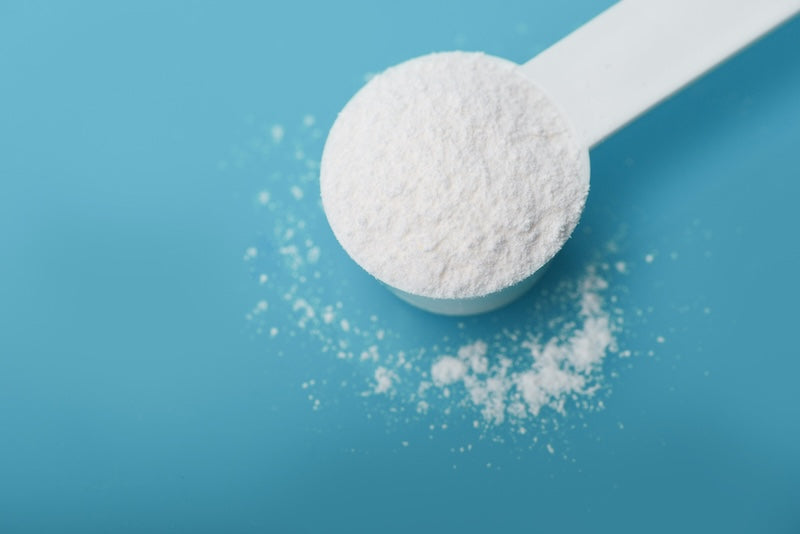
Dry scooping means tipping a scoop of creatine powder straight into your mouth and swallowing it, usually with little or no liquid, instead of stirring it into water first. The trend started with pre-workout powders on TikTok and spread to creatine, framed as a faster, more "hardcore" way to take a supplement. If you want a refresher on the supplement itself, our guide to what creatine is covers the basics.
The idea behind it is that skipping the water saves time or gets the supplement into you quicker. As you will see, neither of those translates into any real benefit with creatine.
Why Did Dry Scooping Become Popular?
Dry scooping spread on social media, where it reads as fast, intense, and a little extreme, which is exactly what makes a short clip shareable. The original videos were mostly about pre-workout powder, posted to show off a big pre-training caffeine hit. Creatine got pulled into the same trend by association, even though it is a completely different kind of supplement that produces no immediate "kick" at all.
That is the heart of the confusion. A habit can look hardcore and still do nothing useful. With pre-workout, there is at least an argument that people want the stimulant fast, even if dry scooping is a risky way to get it. With creatine, there is not even that, because creatine does not give you an acute jolt in the first place. The visual of dry scooping has simply outrun the science of how creatine works.
Does Dry Scooping Creatine Make It Work Faster?

No. This is the key thing most people get wrong. Creatine does not work like caffeine, where you feel an acute hit. Instead, it works by slowly filling up the creatine stores in your muscles over days of consistent use, and once those stores are full, that is what improves your strength and power [4]. A daily three to five gram dose gets you there; a loading phase is optional, not required [2].
Because the benefit comes from saturation over time, the speed at which a single dose hits your stomach simply does not matter. On top of that, creatine monohydrate is already absorbed almost completely, around 99 percent, however you take it [3]. Swallowing it dry does not increase how much your body absorbs. You end up in the exact same place as someone who stirred it into a glass of water, just with more risk along the way. Timing is flexible too, which we cover in our take on the best time to take creatine.
The Risks of Dry Scooping Creatine
Here is where the honest case against it lives. None of these is guaranteed, but they are real, and they are avoidable.
-
Choking. A mouthful of dry powder is genuinely a choking hazard. It is easy to gasp or inhale at the wrong moment, especially right before a workout when you are breathing hard.
-
Inhaling powder. Breathing in a cloud of fine powder can irritate your airways and trigger coughing fits. It is not something your lungs are meant to handle.
-
Esophageal and stomach irritation. Concentrated dry powder can scrape or irritate the tube to your stomach. A documented medical case described a weightlifter who developed extensive ulcerations in his esophagus after dry scooping pre-workout powder, which took weeks of treatment to heal [1]. Even short of that, dry powder can cause bloating, cramps, or general stomach discomfort.
-
Inaccurate dosing and waste. Some powder sticks to your mouth or spills, so you may get less than the dose you intended.
-
Contamination. Dipping a scoop near your mouth, then back into the tub, can introduce moisture and bacteria into the container.
To be fair, that esophageal case involved pre-workout, which contains acids and other ingredients that creatine does not. Plain creatine is gentler. But the choking and inhalation risks apply to any dry powder, and there is no upside to balance them out.

Dry Scooping Creatine vs. Pre-Workout: Why It Matters
Most of the alarming dry-scooping stories involve pre-workout, not creatine, and the difference is worth understanding. Pre-workout powders are usually multi-ingredient blends built around concentrated caffeine, beta-alanine, and added acids for flavor. That combination is what makes a dry mouthful harsh on the throat and stomach. The documented case of severe esophageal ulceration was a competitive weightlifter dry scooping pre-workout, whose powder contained caffeine and several acids, not someone taking plain creatine [1].
Creatine monohydrate, by contrast, is a single, relatively inert powder with no stimulants and no added acids, so dry scooping it is milder. Here is the important part though: milder is not the same as beneficial. The choking and inhalation hazards apply to any fine powder you tip into your mouth, and creatine gives you no reason to accept even a small risk, because it works exactly the same when you simply stir it into water [3][4]. So, whether it is pre-workout or creatine, dry scooping ranges from genuinely dangerous to pointless, never helpful.
Is There Any Benefit at All?
Practically none. The only thing dry scooping saves is the few seconds it takes to stir powder into water, and even that is shaky once you account for spilled or stuck powder. There is no scientific evidence that dry scooping makes creatine more effective than the normal method [2][4]. You are accepting real risk for zero measurable reward.
The Safer, Equally Effective Way to Take Creatine

Just mix it. Stir three to five grams of creatine into water, juice, a smoothie, or your protein shake, and drink it [2]. That is it. It absorbs just as well, it is impossible to choke on, and it is gentle on your stomach. Timing does not need to be precise, so take it whenever it fits your day.
One small tip: creatine monohydrate does not fully dissolve into a clear liquid, so a little may settle at the bottom. Give it a stir or a shake, drink it reasonably quickly, and add a splash more water to catch the rest. A clean, single-ingredient creatine monohydrate, which is just creatine and nothing else, mixes simply into any drink, so there is no reason to swallow it dry. If you prefer taking it on an empty stomach, that is fine too, as we explain in can you take creatine on an empty stomach.
How to Use Creatine the Right Way
Since the whole appeal of dry scooping is "doing creatine right," it helps to know what actually matters. The good news is that creatine is one of the simplest supplements to use well.
-
Dose: three to five grams per day is the standard, research-backed amount [2][4]. That is usually one level scoop.
-
Loading is optional. You can take a higher "loading" dose of around 20 grams a day, split into smaller servings, for five to seven days to fill your muscle stores faster. But it is not required; a steady three to five grams a day reaches the same place in a few weeks [2].
-
Consistency beats timing. Because creatine works by saturation, taking it every day matters far more than the exact time of day. Morning, pre-workout, post-workout, with food or without, it all works [4].
-
Mix it into liquid. Water, juice, a smoothie, or your protein shake are all fine. Stir or shake, drink it down, and rinse the glass with a little more water to get the last bit.
That is the entire routine. No dry scooping, no elaborate timing, no special window. A clean daily habit with a simple, well-mixed dose is what delivers creatine's benefits for strength and muscle.
What If You Have Already Been Dry Scooping?
If you have been dry scooping creatine and feel fine, do not panic. Most people who do it will not have a dramatic problem; the risks are about raising your odds of choking or irritation, not a certainty of harm. The sensible move is simply to stop and switch to mixing it into liquid going forward. There is no benefit you are giving up by doing so, since dry and mixed creatine end up working the same [3][4].
Pay attention to your body, though. If you notice a persistent sore throat, pain or difficulty swallowing, chest discomfort, or a lingering cough after dry scooping, those are signs of possible irritation to your throat or esophagus, and you should see a healthcare professional. The documented harm from dry scooping involved exactly these kinds of swallowing symptoms [1]. Catching irritation early and stopping the habit is usually enough for it to settle.
Does It Matter How You Mix Creatine?

Not much, which is more good news. Creatine monohydrate does not fully dissolve in cold liquid, so do not be alarmed if some settles at the bottom; that does not mean it is not working. A few simple habits help: use room-temperature or slightly warm water if you want it to dissolve a bit better, stir or shake well, drink it within a few minutes, and swirl in a little extra liquid to swallow whatever is left in the glass.
You can take creatine with water, juice, a smoothie, or your protein shake, with or without food, at any time of day. Because creatine works by building up in your muscles over time rather than acting in the moment, none of these details change the result [4]. The only approach to avoid is the one this article is about: skipping the liquid entirely.
Frequently Asked Questions
Is it bad to dry scoop creatine? It is not worth it. The main hazards are choking and inhaling the powder, plus possible stomach irritation, and there is no performance benefit to offset them [1][2].
Does dry scooping creatine make it absorb faster or better? No. Creatine works by saturating your muscles over days, and it is already nearly fully absorbed, regardless of how you take it, so swallowing it dry changes nothing [3][4].
Will dry scooping creatine hurt your throat or stomach? It can. Concentrated dry powder may irritate the esophagus and stomach; one medical case linked dry scooping pre-workout to serious esophageal ulcers [1]. Plain creatine is milder, but mixing it into liquid avoids the issue entirely.
How should I take creatine instead? Stir three to five grams into water or any drink, once a day, at whatever time suits you [2]. A loading phase is optional.
Conclusion
So, can you dry scoop creatine? Physically yes, but it is a habit with real downsides and no real upside.
-
It does not make creatine work faster or absorb better; creatine saturates your muscles over days regardless [3][4].
-
It adds avoidable risks: choking, inhaling powder, and possible throat or stomach irritation [1].
-
Mixing three to five grams into a drink is just as effective and far safer [2].
Skip the trend. Stir a clean, single-ingredient creatine into water or your shake, take it whenever fits your routine, and you get every benefit of creatine with none of the risk. The simple way is the smart way here.
References
-
Caratenuto R, et al. (2023). Social Media Trends, Dry Scooping, and Extensive Esophageal Ulcerations. Case Reports in Gastrointestinal Medicine / PMC. pmc.ncbi.nlm.nih.gov/articles/PMC10713499
-
Antonio J, et al. (2021). Common questions and misconceptions about creatine supplementation. Journal of the International Society of Sports Nutrition. doi.org/10.1186/s12970-021-00412-w
-
Kreider RB, et al. (2022). Bioavailability, Efficacy, Safety, and Regulatory Status of Creatine and Related Compounds. Nutrients. doi.org/10.3390/nu14051035
-
Kreider RB, et al. (2017). ISSN position stand: safety and efficacy of creatine supplementation in exercise, sport, and medicine. Journal of the International Society of Sports Nutrition. doi.org/10.1186/s12970-017-0173-z