



For the most part, whey and casein tend to dominate the protein powder scene. But, for some people, these milk-derived powders might be off limits.
Vegans and some vegetarians, for example would pass on them. Or, individuals who deal with lactose intolerance, allergies, or other food sensitivities may also find themselves looking elsewhere for a convenient source of protein.
Thankfully, there are many plant-based options out there. Over the past few years, for example, hemp protein has become widely used as a vegan option. But, pea protein – a relative new-comer – could be even more useful.
Why? How does pea protein compare with its hemp-based counterpart?
Total Nutrition
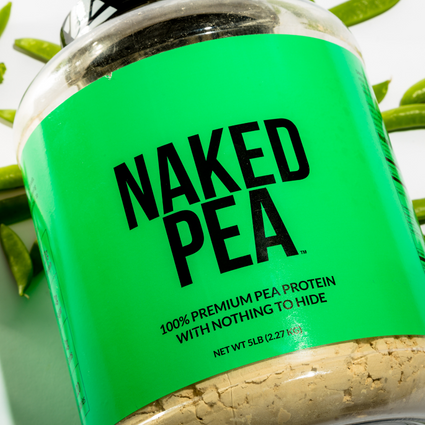
To start, what sort of nutrition does each of these protein sources offer? Broken down into its macronutrients, a serving of Naked Nutrition's Pea Protein looks like this:
- Calories: 120
- Fat: 0.5g
- Carbs: 2g
- Protein: 27g
What about hemp protein? The same serving size would contain:
- Calories: 90
- Fat: 3g
- Carbs: 9g
- Protein: 15g
Already, it seems like pea protein – with more protein and less carbs and fat – has a clear advantage over hemp. But, these numbers are not all that makes a protein more or less useful.
Protein Quality
Although the term “protein” is generally used in a broad sense, the reality is that there isn't just one protein. There are tons of different forms, all of which contain a distinct mix of amino acids arranged in a unique structure.
Once you ingest these proteins, your body tears them apart so that those amino acids can be reorganized and re-purposed depending on your immediate needs. The “quality” of a protein, then, depends largely on its amino acid profile.
A protein that contains all of the amino acids that your body is not capable of producing on its own is considered “complete.”

A 2012 analysis, published in the Journal of Nutraceuticals, Functional Foods and Healthy Ingredients, found that even though pea protein is technically “incomplete” it is still an extremely high quality protein source. In fact, the researchers stated that pea protein is of a similar quality to casein and eggs – something that cannot be said of hemp.
Part of the reason that the researchers involved in the above-mentioned study were so excited about pea protein had to do with something called the Protein Digestibility-Corrected Amino Acid Score (PDCAAS) – a test that rates the absorb-ability of a particular protein from 1 to 100 percent.
Pea protein scored an impressive 95 percent rating in adults. Hemp protein, however, didn't do so well. Depending on the exact process used to produce the hemp powder, the PDCAAS usually hovered around a mere 50 percent.
Cost
Finally, it's important to consider the potential cost of your chosen protein powder.
Pea protein, as the name so clearly suggests is made from peas – a fairly common and sustainable crop. This allows for the production of pea protein at a relatively low cost to the manufacturer, which saves you money as well.

Hemp, however, is much more difficult to grow. Because the protein comes from the same plant as marijuana, the crop is tightly regulated in many countries and can be costly for manufacturers to obtain.
In turn, the product ends up costing you more. As a result, hemp is one of the most expensive protein powders on the market.
The Bottom Line
So, how do these two protein powders compare? Pea protein is vastly superior to hemp in both nutritional content and protein quality. Additionally, it tends to cost less because it is a much easier plant to grow and harvest than the tightly controlled hemp.