




Key Takeaways
- Different tools, different jobs: Whey protein is a lean protein source for muscle maintenance and fat loss. Mass gainer is a high-calorie supplement built to drive a caloric surplus for significant weight and muscle gain.
- Calories are the deciding factor: A serving of Naked Whey delivers 120 calories and 25g of protein. Naked Mass delivers up to 1,250 calories and 50g of protein. Your daily calorie target tells you which one belongs in your stack.
- Hardgainers need mass gainer. Most others don't: If you struggle to eat enough to gain weight, mass gainer solves a real problem. If you eat normally and want to add protein, whey is sufficient.
- Protein quality matters more than calories alone: More calories don't automatically mean more muscle. Training intensity and total daily protein intake determine muscle growth outcomes.
- Ingredients matter: Most commercial mass gainers are loaded with artificial sweeteners, colors, and low-quality carb sources. Look for clean-label options with transparent ingredient panels.
- Supplements support a diet, they don't replace one: Neither product works without consistent training and a structured nutrition plan behind it.

Mass Gainer Protein Supplement | Naked Mass - 8LB
- Fuel Your Workouts
- Meet Daily Calorie Requirements to Gain Weight
- Build and Sustain Muscle Mass
Mass Gainer vs Whey Protein: Key Differences Explained

You've probably stood in front of the supplement wall, or scrolled through a dozen product pages, trying to figure out whether you need whey protein or a mass gainer. The names alone don't tell you much. Both come in powder form, both mix into shakes, and both contain protein. But they serve fundamentally different purposes, and choosing the wrong one won't just waste money — it'll actively work against your goals.
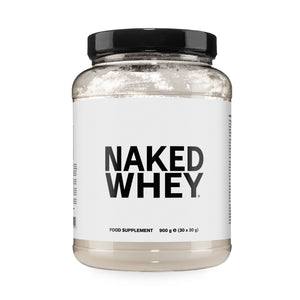
Whey protein is a concentrated protein source. It's low in carbohydrates, low in fat, and low in calories. One serving of Naked Whey provides 25 grams of protein, 3 grams of carbohydrates, 2 grams of fat, and 120 calories. Its job is to help you hit your daily protein target without meaningfully affecting your total calorie intake.
Mass gainer is a caloric surplus vehicle. It combines protein with a significant load of carbohydrates and fats to deliver a large number of calories in a single serving. Naked Mass delivers 50 grams of protein, 252 grams of carbohydrates, 2.5 grams of fat, and 1,250 calories per serving. Its job is to make weight and muscle gain easier for people who can't eat enough from food alone.
| Nutrient | Naked Whey (per serving) | Naked Mass (per serving) |
|---|---|---|
| Calories | 120 | 1,250 |
| Protein | 25g | 50g |
| Carbohydrates | 3g | 252g |
| Fat | 2g | 2.5g |
| Best Use Case | Lean muscle, fat loss, protein gap | Bulking, hardgainer support, high-TDEE athletes |
The core distinction is simple: whey protein fills a protein gap, mass gainer fills a calorie gap. Everything else flows from that.
What's Actually in Each Supplement?

Reading a supplement label is a skill worth developing. The ingredient list tells you far more than the marketing copy on the front of the bag.
Whey protein comes in two primary forms. Whey concentrate retains more of the naturally occurring fats and lactose from milk, making it slightly lower in protein by weight but richer in bioactive compounds. Whey isolate is further filtered to remove most of the fat and lactose, resulting in a higher protein percentage per gram and a better option for people with lactose sensitivity. A clean whey product should have one primary ingredient: whey protein. Watch for products that add artificial sweeteners like sucralose or acesulfame potassium, artificial flavors, or unnecessary fillers. Naked Whey uses a single-ingredient formula sourced from grass-fed cows, with no artificial additives and non-GMO certification.
Mass gainers typically combine a protein blend (usually whey concentrate and micellar casein) with a carbohydrate source and sometimes added fats. The carbohydrate source deserves attention. Most mass gainers use maltodextrin, which is derived from starch and has a high glycemic index. It digests quickly, spikes blood glucose, and provides fast-available energy. It's not a slow-digesting complex carb despite what some labels imply. It's useful for rapidly replenishing glycogen post-workout, but it doesn't provide the sustained energy of oats or sweet potatoes. Naked Mass uses a blend of maltodextrin and organic tapioca maltodextrin, keeping the profile cleaner than most competitors.
- Protein source listed first (whey concentrate, whey isolate, or micellar casein)
- No artificial sweeteners (sucralose, acesulfame K, aspartame)
- No artificial colors or flavors
- Grass-fed sourcing and non-GMO status for whey products
- Carbohydrate source clearly identified (maltodextrin, oat flour, tapioca)
- Third-party testing verification on the label or product page
For those who avoid dairy entirely, both product categories have plant-based alternatives. Naked Nutrition offers a vegan mass gainer using pea protein, and a plant-based whey alternative for those who need dairy-free protein without sacrificing quality. The protein source changes, but the purpose of each product remains the same.
Who Should Use Whey Protein?
Whey protein works for a wide range of people: competitive athletes, recreational gym-goers, older adults working to preserve muscle mass, and anyone whose diet consistently falls short on protein. The goals it supports best are lean muscle gain, muscle maintenance during a caloric deficit, and general health.
On the muscle-building side, whey protein is well-established as effective. Research published in the American Journal of Clinical Nutrition confirms whey protein's role in increasing muscle mass when combined with resistance training. Timing gets discussed a lot, but the evidence is nuanced: while muscle protein synthesis is elevated in the post-workout window, other research shows that total daily protein intake matters more than any specific timing window. Hit your daily target consistently and you'll get the result.
Whey protein also plays a useful role in fat loss. Protein is the most satiating macronutrient, and higher protein intakes are linked to reduced overall calorie consumption. One study found that replacing part of the diet with whey protein, combined with resistance training, produced roughly 8 pounds of fat loss while simultaneously increasing lean muscle mass. That's a meaningful outcome for a relatively simple dietary change.
📊 What Research Says
A high-protein diet providing 30% of daily calories has been shown to support fat loss and preserve lean muscle during a caloric deficit. If your current diet doesn't reach that threshold, whey protein is a practical and efficient way to close the gap.
The standard recommended dose is 1 to 2 scoops per day (25 to 50 grams), with timing flexible based on your schedule. Whey protein shouldn't replace whole food protein sources like eggs, meat, fish, and dairy — it supplements what your diet already provides. If you're already eating 150 to 180 grams of protein daily from food, an additional scoop may not be necessary.
Side effects are generally mild. Excess intake can cause bloating, gas, or GI discomfort, particularly in people sensitive to lactose. Anyone with a diagnosed dairy allergy should avoid whey entirely and opt for a plant-based protein instead.
Who Should Use a Mass Gainer?

Mass gainer is a specific solution to a specific problem: you need to eat significantly more calories than you currently do, and food alone isn't cutting it. The people who benefit most are hardgainers with fast metabolisms, ectomorphs who struggle to add weight regardless of how much they eat, high-volume endurance or strength athletes with very high total daily energy expenditure, and individuals with a medical need to gain weight.
The math is straightforward. To gain muscle, you need a caloric surplus. For most people, that means eating 300 to 500 calories above their maintenance level daily. If your maintenance is already 3,500 calories and you're training hard twice a day, getting to 4,000+ calories from food alone becomes a practical challenge. A single serving of Naked Mass adds 1,250 calories — that's the equivalent of a full meal, in liquid form, without the fullness that comes with whole food volume.
Timing matters more with mass gainers than with whey. The post-workout window is an effective time to consume a high-carbohydrate serving because glycogen replenishment is prioritized. Mass gainer can also work well between meals or as a calorie-dense meal replacement when you're genuinely unable to eat enough whole food. What it shouldn't do is replace structured meals for someone who eats normally and just wants to speed up muscle growth.
Will mass gainer make you gain unwanted fat? It can, if you use it without a caloric deficit structured around training. A 1,250-calorie shake consumed on a rest day by someone who doesn't need extra calories will contribute to fat gain. Mass gainer works when paired with consistent, high-intensity resistance training and a genuine caloric deficit between energy expenditure and the caloric surplus needed for muscle growth. Use it with purpose and stop once you've reached your target weight.
Mass gainer is not a shortcut for people who train casually. Without the training stimulus to direct those extra calories toward muscle tissue, the surplus gets stored as fat. The supplement supports the work — it doesn't substitute for it.
How to Choose the Right Option for Your Goals

The decision between mass gainer vs whey protein comes down to one number: your daily calorie target relative to your maintenance intake. Everything else follows from that.
Here's a simple decision framework based on three common goals:
- Fat loss or body recomposition: You need a caloric deficit or maintenance. Whey protein is the right choice. It adds protein without significant calories, supports muscle retention, and keeps hunger more manageable. Mass gainer will actively work against this goal.
- Lean muscle gain (maintenance plus a small surplus): Whey protein, combined with a well-structured diet, handles this effectively. A 200 to 300 calorie surplus from food is usually sufficient. You don't need the scale of calories that mass gainer provides.
- Significant bulk (large caloric surplus required): Mass gainer is appropriate if you've already maximized your food intake and still can't reach your calorie target. Use it to fill the gap, not as a foundation.
- Protein target for muscle gain: 0.7 to 1.0 gram per pound of bodyweight daily
- Caloric surplus for bulking: 300 to 500 calories above maintenance
- Caloric deficit for fat loss: 300 to 500 calories below maintenance
- If you're consistently under your protein target by 25 to 50g: whey protein solves it
- If you're consistently under your calorie target by 500 to 1,000+: mass gainer is worth considering
One common misconception is that mass gainer builds more muscle than whey because it contains more protein per serving. That's not how muscle protein synthesis works. The anabolic response to protein plateaus at around 20 to 40 grams per meal for most people. Beyond that, the extra protein is oxidized for energy. More calories don't equal more muscle — adequate protein, a training stimulus, and a modest surplus do. Choose the product that fits your calorie math, not the one with the largest serving size.
Some athletes also cycle between both products depending on their training phase. During a structured bulk, mass gainer fills calorie gaps. During a cut or maintenance phase, whey covers protein needs without the calorie overhead. Both products can coexist in a long-term nutrition strategy if your goals shift seasonally.
Naked Nutrition's Whey Protein and Mass Gainer: What Sets Them Apart
Most of the supplement industry competes on price, flavor, and marketing. Naked Nutrition competes on ingredient transparency. That distinction matters when you're choosing something you'll consume daily for months or years.
Naked Whey is sourced from grass-fed cows raised on small California and Idaho dairy farms, without growth hormones. The formula contains one ingredient: whey protein concentrate. No artificial sweeteners, no artificial flavors, no fillers. It's third-party tested and non-GMO certified. Each serving delivers 25 grams of protein, 5.9 grams of BCAAs, and 120 calories. For anyone who wants clean protein without reading a paragraph of additives on the label, it delivers exactly what it promises.
Naked Mass uses a protein blend of whey concentrate and micellar casein to provide both fast and sustained amino acid release. The carbohydrate base uses organic tapioca maltodextrin rather than the cheapest available starch source. No artificial sweeteners, no soy, no GMO ingredients. At 1,250 calories and 50 grams of protein per serving, it's one of the more complete clean-label mass gainers available. The chocolate peanut butter variant adds a flavored option without sacrificing the no-artificial-additive standard.
For those who avoid dairy, Naked Nutrition's vegan mass gainer uses pea protein as its primary protein source, maintaining the same clean-label philosophy. Plant-based whey alternatives are available for the protein-only category as well. The product line is broad enough to accommodate most dietary preferences without forcing a compromise on ingredient quality.
The underlying principle across all of it is straightforward: you should be able to read every ingredient on the label and know what it is and why it's there. That's not a premium feature. It's the standard every supplement should meet.
Frequently Asked Questions
What's the main difference between a mass gainer and whey protein?
Whey protein is a concentrated protein source, typically delivering 20 to 30 grams of protein per serving with minimal carbohydrates and fat. A mass gainer stacks that protein alongside a large dose of carbohydrates and additional calories, often 500 to 1,000 calories per serving, to help you hit a caloric surplus. If you're eating enough food and just need more protein, whey is the right tool. If you genuinely can't eat enough calories to gain weight, a mass gainer fills that gap.
Can I use whey protein to gain muscle mass?
Yes, and for most people it's the better option. Muscle growth requires adequate protein and a caloric surplus, but those extra calories don't have to come from a supplement. If your diet already provides enough total calories, whey protein gives you the leucine-rich amino acid profile that triggers muscle protein synthesis without piling on unnecessary carbohydrates. Whey isolate in particular delivers a fast-digesting protein hit that works well post-workout.
Who should actually use a mass gainer?
Mass gainers are best suited for hardgainers: people with fast metabolisms who struggle to eat enough whole food to maintain a caloric surplus. They're also useful for athletes in high-volume training blocks who burn through calories faster than they can replace them with meals alone. If you're gaining fat easily or you're already eating 3,000 or more calories per day without difficulty, a mass gainer is likely overkill.
How much protein do I actually need to build muscle?
Research consistently points to 0.7 to 1 gram of protein per pound of bodyweight per day as the effective range for muscle building. A 2017 meta-analysis by Morton et al. in the British Journal of Sports Medicine, covering 49 studies and 1,800 participants, found that protein intakes above 0.82 grams per pound produced no additional gains in muscle mass. Whether you hit that target through whey protein, a mass gainer, or whole food doesn't change the outcome.
Are mass gainers safe to use daily?
For healthy adults, yes, but dosage context matters. Many mass gainers deliver 250 grams of carbohydrates or more per serving, and consuming that on top of a full diet can push you well beyond a moderate caloric surplus, leading to fat gain rather than lean muscle. Read the label, calculate your actual daily calorie target, and treat the mass gainer as a tool to fill a specific gap, not a replacement for structured nutrition.
What should I look for on a mass gainer ingredient label?
Prioritize products with a clean carbohydrate source like oat flour or sweet potato, not primarily maltodextrin or added sugars. The protein source matters too: whey concentrate or isolate is preferable to a blend padded with slower, cheaper proteins. Check that the product is third-party tested for banned substances and heavy metals, which is especially important given that protein and mass gainer products have historically shown higher contamination rates in independent testing.
Is whey protein or a mass gainer better after a workout?
Post-workout, your muscles prioritize protein and glycogen replenishment, so both can work depending on your goals. Whey protein delivers fast-digesting amino acids quickly, which supports muscle protein synthesis. If you're in a hard training block and need to recover quickly for another session the next day, pairing whey with a high-carbohydrate meal or using a mass gainer post-workout accelerates glycogen repletion. For most casual lifters eating balanced meals, whey protein alone is sufficient.
Are mass gainers more expensive than whey protein per serving?
On a per-serving basis, mass gainers often appear affordable, but the cost per gram of protein is usually higher than straight whey protein. A tub of mass gainer packs most of its weight in carbohydrates, which are cheap to produce, while the actual protein content is proportionally small. You'll frequently get better value by buying a quality whey protein and pairing it with whole food carbohydrates like oats, bananas, or rice rather than paying a premium for a pre-mixed formula.
Top Whey Protein Picks
Chosen by 1 million+ customers. Free shipping on orders over $100.

Grass Fed Whey Protein Powder | Naked Whey - 5LB
$139.99
- ✓ Build and Maintain Lean Muscle Mass
- ✓ Boost Immune System
- ✓ Lose Fat
- ✓ Improve Heart Health

Grass Fed Whey Isolate Protein Powder | Naked Whey Isolate - 2LB
$74.99
- ✓ Zero Sugar & Zero Carbs
- ✓ Easy Digestion
- ✓ Maximum Pure Protein

Vegan Mass Gainer Supplement | Naked Vegan Mass - 8LB
$79.99
- ✓ Fuel Your Workouts
- ✓ Meet Daily Calorie Requirements to Gain Weight
- ✓ Plant-Based Proteins to Build Muscle

Pea Protein Powder | Naked Pea - 5LB
$57.99
- ✓ Sustainable Farming Practices
- ✓ Superior Amino Acid Profile
- ✓ Promote Muscle Gain
- ✓ Lose Weight