





Key Takeaways
- 4 calories per gram: Protein and carbohydrates both contain 4 calories per gram, while fat contains 9 calories per gram.
- Thermic edge: Your body burns 20–30% of protein's calories just digesting it, making protein's net calorie impact lower than carbs or fat.
- Daily protein targets vary by goal: From 0.8 g/kg for general health up to 2.7 g/kg for active muscle building.
- Caloric strategy matters: A 10–20% deficit supports fat loss; a 10–20% surplus supports muscle gain without excessive fat storage.
- Label literacy is non-negotiable: Always check serving size first. Protein calories (grams × 4) are separate from total label calories.
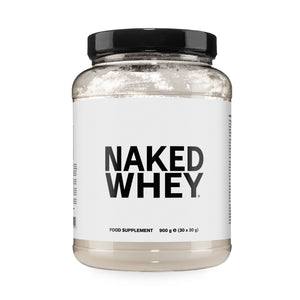
- Whey protein is a practical solution: One scoop of Naked Whey delivers approximately 25g of protein, or about 100 protein calories, with minimal ingredients.

Grass Fed Whey Protein Powder | Naked Whey - 5LB
- Build and Maintain Lean Muscle Mass
- Boost Immune System
- Lose Fat
- Improve Heart Health
How Many Calories Are in a Gram of Protein?

The direct answer: 1 gram of protein contains 4 calories. That's the same calorie density as carbohydrates, and less than half that of fat, which clocks in at 9 calories per gram. These figures come from the Atwater system, the standard method scientists use to calculate the energy yield of macronutrients based on how the body metabolizes them.
| Macronutrient | Calories per Gram |
|---|---|
| Protein | 4 cal/g |
| Carbohydrates | 4 cal/g |
| Fat | 9 cal/g |
Knowing the raw number is useful, but translating it to real food makes it actionable. A 3-ounce serving of chicken breast contains roughly 21–28 grams of protein, which equals 84–112 protein calories. Greek yogurt (plain, nonfat) provides around 17 grams of protein per cup, contributing about 68 protein calories. A single scoop of Naked Whey delivers approximately 25 grams of protein, equivalent to 100 protein calories, in a clean, minimal-ingredient format.
The key distinction: protein calories are not the same as total food calories. Chicken breast also contains a small amount of fat. Greek yogurt contains carbohydrates from lactose. When you're tracking for a specific goal, you need to account for all three macronutrients, not just protein, to get an accurate picture of your total calorie intake.
Why Protein Calories Work Differently in Your Body

Protein and carbohydrates share the same calorie count on paper, but they don't behave the same way once you eat them. The difference comes down to the thermic effect of food (TEF): the energy your body expends to digest, absorb, and metabolize what you eat. Protein has a dramatically higher TEF than any other macronutrient.
📊 What Research Says
Research published in Nutrition and Metabolism found that protein carries a thermic effect of 20–30%, compared to 5–10% for carbohydrates and just 0–3% for fat. That means if you eat 100 calories worth of protein, your body burns approximately 20–30 of those calories breaking it down, leaving only 70–80 net usable calories. [3]
This metabolic difference has real consequences for body composition. A high-protein diet effectively reduces your net calorie intake without requiring you to eat less food. Protein also outperforms carbs and fat on satiety, meaning it keeps you fuller longer and reduces the likelihood of overeating later in the day.
There's another benefit specific to people eating in a caloric deficit: protein preserves lean muscle mass. When you cut calories, the body can break down muscle tissue for energy. A sufficient protein intake signals the body to protect that muscle, so the weight you lose comes predominantly from fat rather than hard-earned muscle. For anyone focused on change your body composition rather than just the number on the scale, this distinction matters enormously.
- Your body uses energy to break down food into amino acids, absorb them, and reassemble them for use in tissues and metabolic processes.
- Protein requires significantly more enzymatic work than carbohydrates or fat, which is why its TEF is 4–6 times higher than fat's.
- This thermogenic effect is highest when protein intake is spread across multiple meals rather than concentrated in one sitting.
- Net protein calories after TEF: approximately 70–80 calories per 100 calories consumed, compared to 90–95 calories for carbohydrates.
How Many Grams of Protein Do You Need Per Day?

Your optimal protein intake depends on your goal, your activity level, and your body weight. The standard RDA of 0.8 grams per kilogram of body weight represents a floor for general health, not a target for performance or physique goals. Most active adults need considerably more.
Here's how the targets break down across different goals:
- Sedentary adults (general health): 0.8 g/kg body weight
- Active individuals and athletes: 1.2–2.0 g/kg, per research published in the Journal of the International Society of Sports Nutrition [1]
- Muscle building and body recomposition: 1.8–2.7 g/kg, supported by evidence in the Journal of the International Society of Sports Nutrition [2]
To make this concrete, take a 170-pound (77 kg) person as an example:
- General health: 0.8 × 77 = ~62g of protein per day
- Athletic performance: 1.6 × 77 = ~123g of protein per day
- Muscle building: 2.2 × 77 = ~170g of protein per day
Hitting 170 grams of protein through whole food alone takes deliberate planning. This is where a clean whey protein supplement earns its place. One scoop of Naked Whey adds 25 grams of complete protein with no artificial fillers, making it straightforward to close the gap between what your diet provides and what your goals require. If you're unsure where your target falls, a registered dietitian can calculate your protein needs tailored to your body and training load.
How to Calculate Your Daily Calorie Needs
Before you can optimize macros, you need a reliable estimate of how many calories your body actually burns each day. This is your Total Daily Energy Expenditure (TDEE), and it has three main components: your Basal Metabolic Rate (BMR, the calories your body burns at rest), calories burned through physical activity, and the thermic effect of food discussed above.
For a starting reference point, the Dietary Guidelines for Americans estimates that the average woman requires 1,600–2,200 calories per day, while the average man requires 2,200–3,000, depending on age and activity level. These are broad ranges. Your individual TDEE can differ significantly based on body composition, training volume, and metabolism. Online TDEE calculators can give you a working estimate to start from.
Once you know your TDEE, your calorie target becomes goal-specific:
- Weight loss: Eat 10–20% below your TDEE to create a sustainable deficit. For a 2,400-calorie TDEE, that means consuming 1,920–2,160 calories daily.
- Muscle gain: Eat 10–20% above your TDEE to fuel hypertrophy without excessive fat accumulation.
- Maintenance: Match your intake to your TDEE as closely as possible.
Extreme deficits, those beyond 25–30% of TDEE, cause the body to cannibalize muscle tissue and impair hormone function. Extreme surpluses result in disproportionate fat gain that takes considerably longer to reverse. The 10–20% range is the evidence-based sweet spot for sustainable, health-preserving progress in either direction.
How to Track Your Protein and Macros for Your Goals

Macro tracking is the practice of monitoring your daily intake of protein, carbohydrates, and fat to align your nutrition with a specific outcome. It sounds tedious until you realize that a few weeks of consistent tracking builds an intuitive understanding of food composition that stays with you long-term. Apps like MyFitnessPal make it practical: scan a barcode, log a meal, and your macro breakdown updates in real time.
The macro split you aim for depends on what you're trying to accomplish:
- Body recomposition (lose fat, build muscle): Prioritize protein at 1.8–2.7 g/kg. Use carbohydrates to fuel training sessions and recovery. Keep fat intake at 15–25% of total calories, focusing on unsaturated sources like fish, seeds, and plant oils.
- Muscle gain: Operate in a modest caloric surplus with protein as the priority. Carbohydrates fuel the high-intensity training required to stimulate hypertrophy. Fat fills the remainder of your calorie target.
- Weight loss: A caloric deficit is the primary driver. But keeping protein high, think 30–40% of total calories, protects muscle tissue and helps manage hunger through TEF and satiety effects.
- Weight maintenance: A balanced split works well: roughly 20–30% protein, 45–60% carbohydrates, and the remainder from healthy fats.
One practical note: macro ratios matter less than total protein grams. If you hit your protein target in absolute grams and your overall calories align with your goal, the percentage splits are secondary. Start with protein, then fit carbs and fat around it.
How to Read Nutrition Labels for Protein and Calories
The most common nutrition label mistake is ignoring the serving size. A protein cookie that looks like a single serving might list 200 calories and 20 grams of protein per serving, with two or three servings per package. Eat the whole thing and you've consumed 400–600 calories, not 200. Check serving size before anything else.
Once you have the serving size, here's how to extract the information that matters:
- Total calories: The energy from all three macronutrients combined.
- Protein grams: Multiply by 4 to get protein's caloric contribution. If a product lists 25g protein, that's 100 calories from protein alone.
- Carbohydrate grams: Also multiply by 4 for caloric contribution.
- Fat grams: Multiply by 9 for caloric contribution.
These three figures should roughly add up to the total calorie count listed on the label. If there's a large discrepancy, check whether the label accounts for fiber or sugar alcohols, which are handled differently in calorie calculations.
Label clarity is something Naked Nutrition takes seriously. Every product label lists exactly what's in the formula and nothing that isn't, so you can run those calculations with confidence. When a label has a long ingredient list full of artificial additives, calculating your actual protein intake becomes an unreliable exercise.
How Whey Protein Helps You Hit Your Protein and Calorie Goals

Whole food sources of protein are the foundation of a solid diet. But consistently hitting 130–170+ grams of protein per day through chicken, eggs, Greek yogurt, and fish alone requires significant meal planning and food volume. Whey protein fills that gap efficiently, without adding unnecessary calories, carbohydrates, or fat.
Whey is a complete protein, meaning it contains all nine essential amino acids your body can't produce on its own. It's also rapidly absorbed, which makes it particularly effective before or after a workout when muscle protein synthesis is elevated and your muscles are primed to use amino acids for repair and growth. Research consistently shows that fast-digesting proteins consumed around training sessions support better muscle recovery than slower protein sources taken at the same time.
- Approximately 25g of complete protein per serving, contributing ~100 protein calories
- Sourced from grass-fed cows with no artificial sweeteners, flavors, or additives
- Fast-absorbing whey concentrate supports post-workout muscle protein synthesis
- Simple ingredient list means the label math is accurate and the nutrition is exactly what it says
If you don't consume dairy, a pea-based protein powder like Naked Pea delivers a comparable amino acid profile and protein yield per serving. It's not a compromise. Pea protein is a complete protein source and absorbs well, making it a legitimate alternative for plant-based athletes.
Pick the format that fits your diet, use it to close the gap between your daily protein target and what your meals provide, and pair it with an honest calorie strategy built around your specific goal. That's the whole system. It doesn't need to be more complicated than that.
Frequently Asked Questions
How many calories are in one gram of protein?
One gram of protein provides 4 calories. This is the same caloric value as one gram of carbohydrates, while fat provides 9 calories per gram — more than double.
Does whey protein powder have the same 4 calories per gram of protein?
Yes, the protein in whey powder still delivers 4 calories per gram. The total calorie count on the label is higher because it accounts for all macronutrients in the serving, including any carbohydrates, fats, and added ingredients beyond the protein itself.
Why does protein feel more filling than carbs even though they have the same calories per gram?
Protein has a higher thermic effect of food, meaning your body burns roughly 20 to 30 percent of protein calories just digesting it, compared to 5 to 10 percent for carbohydrates. It also stimulates satiety hormones like peptide YY and GLP-1 more strongly, which keeps hunger suppressed longer.
How much protein do I actually need per day?
For active individuals and those trying to build or preserve muscle, 0.7 to 1 gram of protein per pound of body weight per day is a well-supported target. Sedentary adults need less, around 0.36 grams per pound, but most people doing regular resistance training benefit from the higher end of that range.
Will eating more protein cause weight gain?
Protein calories count the same as any other calories when it comes to total energy balance. However, because protein is highly satiating and has a higher thermic effect, increasing protein intake often leads to eating fewer total calories overall, which supports fat loss rather than weight gain.
Is Naked Whey protein third-party tested?
Naked Nutrition products are third-party tested for heavy metals and banned substances, and the whey is sourced from small dairy farms in California and Idaho. The short ingredient list means you're not paying for fillers, artificial sweeteners, or additives that inflate the label without adding nutritional value.
How do I calculate the protein calories in my whey shake?
Multiply the grams of protein listed on the label by 4 to get the calories coming from protein alone. For example, a serving with 25 grams of protein contributes 100 protein calories, and the remaining calories in the total come from fat and carbohydrates in that serving.
Can I get enough protein from food alone, or do I need a supplement?
Whole foods like chicken, eggs, Greek yogurt, and fish are excellent protein sources, and a well-planned diet can absolutely meet daily protein targets without supplementation. Whey protein is useful when hitting your gram targets through food alone is inconvenient, expensive, or you need a fast post-workout option that digests quickly.
Top Whey Protein Picks
Chosen by 1 million+ customers. Free shipping on orders over $100.

Chocolate Goat Whey Protein Powder | Naked Goat - 2lb
$74.99
- ✓ 100% premium grass-fed goat whey protein
- ✓ Sourced from pasture-raised, small-herd dairy goats
- ✓ Cold processed without acid or bleach
- ✓ Non-denatured: rich in amino acids and glutathione

Chocolate Peanut Butter Whey Protein Powder | Naked Whey - 5LB
$139.99
- ✓ Build and Maintain Lean Muscle Mass
- ✓ Boost Immune System
- ✓ Lose Fat
- ✓ Improve Heart Health

Chocolate Whey Protein Powder | Naked Chocolate Whey - 5LB
$139.99
- ✓ Build and Maintain Lean Muscle Mass
- ✓ Boost Immune System
- ✓ Lose Fat
- ✓ Improve Heart Health

Goat Whey Protein Powder | Naked Goat - 2lb
$74.99
- ✓ 100% premium grass-fed goat whey protein
- ✓ Sourced from pasture-raised, small-herd dairy goats
- ✓ Cold processed without acid or bleach
- ✓ Non-denatured: rich in amino acids and glutathione