




On this page
Does Creatine Make You Gain Weight? The Truth Explained
Discover what's really behind the scale increase and whether creatine's weight effects should concern you.

Key Takeaways
- Creatine does not cause fat gain: Any weight increase comes from water retention in muscle cells or added lean muscle mass, not body fat.
- Water weight is temporary: Expect 2–5 lbs during a loading phase; maintenance dosing produces far less. It stabilizes within 2–4 weeks.
- Creatine has zero calories: Fat gain requires a sustained caloric surplus. Creatine has no role in that equation.
- Muscle mass improves your metabolism: More lean muscle means your body burns more fuel at rest, which supports fat loss over time.
- You can minimize water retention: Skipping the loading phase, staying hydrated, and considering creatine HCL all reduce early bloating.
- Most people don't need to worry: For casual gym-goers, the performance benefits of creatine far outweigh minor, temporary scale fluctuations.

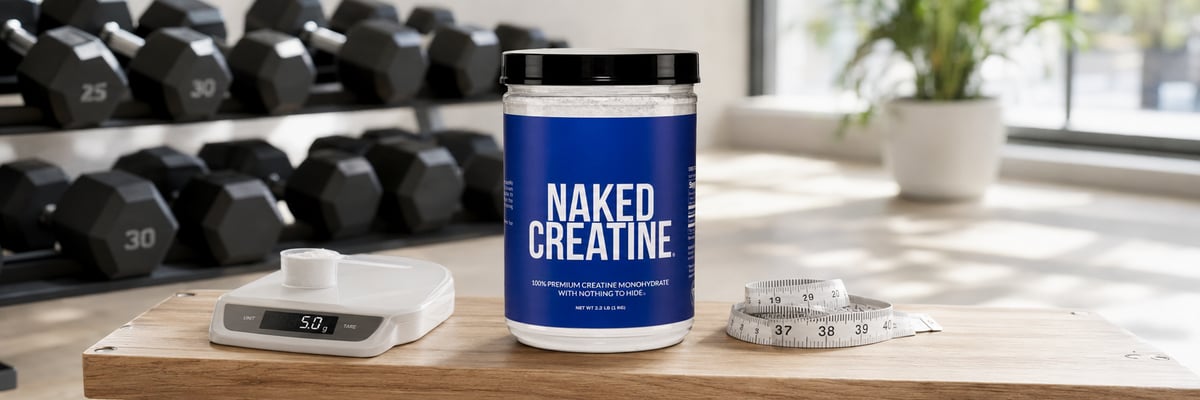
Creatine Monohydrate Powder | Naked Creatine - 2.2LB
- Free Shipping Included
- Creatine Monohydrate
- Creatine Formula
- Evidence-Based Formulas
Does Creatine Make You Gain Weight? Here's What the Science Says

You start taking creatine, a week goes by, and the scale is up two pounds. Panic sets in. You wonder if you made a mistake. You didn't. That number on the scale is not telling you what you think it's telling you.
Does creatine make you gain weight? The short answer is yes, but the weight you're gaining is almost certainly water inside your muscle cells or, over time, actual lean muscle. Neither of those is fat. Creatine does not cause fat gain, full stop.
To understand what's actually happening in your body when you take creatine, it helps to distinguish between three types of weight change: water retention, lean muscle mass, and fat. All three affect the scale differently, and only one of them should concern you. This article breaks down each one so you know exactly what to expect and why.
What Is Creatine and How Does It Work?

Creatine is a naturally occurring compound your body produces from amino acids in the liver, kidneys, and pancreas. You also get it from dietary sources like red meat and fish. About 95 percent of your body's creatine is stored in skeletal muscle as phosphocreatine, with the remainder found in the brain and other tissues.
During high-intensity exercise, your muscles burn through ATP (adenosine triphosphate), your body's primary energy currency, at a rate faster than your aerobic system can replenish it. Phosphocreatine donates a phosphate group to ADP to rapidly regenerate ATP, keeping your muscles fueled through those hard sprints, heavy lifts, and explosive efforts. When creatine stores are higher, you can sustain that intensity longer before fatigue sets in.
- Creatine is stored as phosphocreatine in muscle tissue
- During high-intensity effort, phosphocreatine rapidly regenerates ATP
- Higher creatine stores mean more fuel available before fatigue hits
- Supplementation saturates muscle stores beyond what diet alone provides
- Creatine monohydrate is the most studied and validated form available
Creatine monohydrate is the most researched form of the supplement, with decades of clinical data behind it. Its safety profile is well-established, and it's endorsed by major sports science organizations. If you're new to creatine, this is the context that matters: it's a performance tool with a robust scientific foundation, not a mystery compound.
Creatine and Water Retention: Why It Happens and What to Expect

The most immediate weight change you'll notice from creatine is water retention. This is the one that catches people off guard, and it's also the most misunderstood.
Creatine is osmotically active. As it accumulates inside muscle cells, it pulls water in with it. This is intramuscular water retention, meaning the fluid is inside the muscle fiber itself, not sitting beneath the skin the way subcutaneous water does. These are two completely different phenomena. Subcutaneous retention is what gives you that soft, puffy look. Intramuscular retention makes your muscles appear fuller and more hydrated, which is a performance advantage, not a cosmetic problem.
📊 What Research Says
Research published in Nutrients confirms that creatine's osmotic activity draws water into muscle cells, increasing intracellular hydration and supporting ATP production during high-intensity exercise — a mechanism that directly enhances performance and recovery, not one that compromises your physique.
How much water weight should you expect? If you do a loading phase, roughly 2–5 lbs is common in the first week. Stick to a maintenance dose of 3–5g per day and the change is much more subtle, often less than a pound or two. Some users report a feeling of puffiness in the early weeks. This typically resolves within 2–4 weeks as your body adjusts to its new creatine saturation point and stops pulling in additional fluid.
The key takeaway: the water being stored alongside creatine in your muscles is actively helping you train harder and recover faster. It's not a side effect to eliminate. It's part of how creatine works.
Does Creatine Cause Fat Gain? The Truth About Body Composition
Creatine contains zero calories. This is not a technicality — it's the entire argument. Fat gain happens when you consume more calories than you burn over a sustained period. Since creatine contributes no calories to that equation, it cannot directly cause fat gain. Any fat you gain while taking creatine is a result of your diet, not the supplement.
What creatine does do is improve your capacity to train harder. That leads to greater muscle development over time. More muscle mass raises your resting metabolic rate, meaning your body burns more calories at rest. Over the long term, creatine's effect on body composition tilts toward fat loss, not fat gain.
Research consistently confirms that creatine supplementation does not increase fat mass. The weight increases seen in studies are attributable to water retention and lean tissue gains, both of which are compositionally different from adipose tissue.
Here's the distinction that matters most: your weight can go up while your body fat goes down. If you start creatine while maintaining your diet and training, gaining two pounds on the scale while losing body fat percentage is a legitimate outcome. The scale is a poor tool for measuring progress when body composition is changing. Track measurements, photos, and strength markers alongside your weight and you'll get a far more accurate picture.
How to Minimize Water Retention from Creatine
Water retention from creatine is manageable. If it's a concern for you, these five strategies make a meaningful difference.
- Stay well hydrated. This sounds counterintuitive, but a hydrated body is less likely to hold onto excess fluid. When you're chronically dehydrated, your body hoards water as a survival response. Drink consistently throughout the day, targeting at least half your body weight in ounces.
- Skip the loading phase. A loading phase front-loads 20g per day for 5–7 days and accelerates water retention. Starting directly at a 3–5g maintenance dose takes longer to saturate muscle stores, around 3–4 weeks, but produces a much gentler water retention response. The end result is the same.
- Split your daily dose. If you experience digestive discomfort from taking creatine all at once, divide your dose. Half in the morning, half in the evening tends to improve both tolerability and absorption without affecting efficacy.
- Consider creatine HCL. Creatine hydrochloride is more water-soluble than monohydrate, which means it dissolves more easily and may cause less gastrointestinal bloating and water retention for some users. The effective dose is also smaller, typically around 1–2g per day.
- Watch your sodium intake. Sodium drives fluid retention independent of creatine. If you're eating high-sodium foods while starting creatine, you're compounding the effect. Moderating sodium can reduce early bloating noticeably.
Most users find that any initial puffiness or discomfort resolves on its own within 2–4 weeks of consistent supplementation. Your body adapts, creatine stores stabilize, and the osmotic pull on water levels off.
How to Take Creatine for the Best Results
Getting your dosing strategy right makes creatine more effective and reduces the likelihood of unwanted side effects. Here's what the evidence supports.
Daily dose: 3–5g per day is the standard maintenance dose and is sufficient to fully saturate muscle creatine stores over time. If you want to speed up that saturation, a loading protocol of 20g per day split into four 5g doses for 5–7 days will get you there faster, but also increases early water retention and the chance of GI discomfort.
Timing: Consistency matters more than the specific time of day. Research suggests that daily intake is the primary driver of results, with some studies noting a marginal advantage to post-workout dosing for muscle retention and recovery. Taking it with your post-workout meal is a reasonable default, but don't stress the timing if consistency is more important to your routine.
Pair with carbohydrates: Taking creatine alongside simple carbohydrates triggers an insulin response that improves creatine uptake into muscle cells. A piece of fruit, some rice, or a carbohydrate-containing sports drink works well. Some research suggests adding protein alongside carbohydrates for an even greater effect on creatine retention.
Cycling vs. daily use: You don't need to cycle creatine. Daily maintenance dosing maintains muscle creatine stores without the complexity of on and off phases. Cycling is an option, but it introduces more variability, more potential side effects during loading phases, and makes adherence harder. Keep it simple.
Results from creatine build over weeks, not days. If you're consistent with your dose, you'll have fully saturated muscle stores within 3–4 weeks on maintenance and within one week if you loaded.
Who Should Pay Attention to Creatine Weight Gain?
For most people, the minor scale fluctuations from creatine don't require any special management. But a few populations benefit from thinking more strategically about timing and dosing.
Weigh-in sport athletes. Wrestlers, combat sport athletes, and lightweight rowers operate under strict weight classifications. Even 2–3 lbs of water weight can affect eligibility. If you compete in a weigh-in sport, consider using a maintenance dose rather than loading, monitor your hydration carefully in the weeks leading up to competition, and discuss timing adjustments with your coach or sports dietitian.
Bodybuilders and physique competitors. On stage, every ounce of subcutaneous water matters. Most experienced competitors taper off or stop creatine 1–2 weeks before a show to shed the intramuscular water and appear as dry as possible. This is a standard pre-competition strategy, and the muscle you've built doesn't disappear when you stop.
Women. Creatine is equally beneficial and safe for women. The research supporting creatine's performance benefits applies across sexes. Some women report more noticeable early bloating, but this is typically mild and resolves with continued use. There's no physiological reason for women to avoid creatine over concerns about weight gain.
Older adults. Creatine is one of the most well-supported supplements for preserving muscle mass during aging. The minor water weight associated with creatine use is clinically insignificant compared to the muscle preservation and strength benefits it provides for this population.
Casual gym-goers. If you're training for general fitness, the slight increase in scale weight from creatine is simply not worth worrying about. The strength, endurance, and recovery improvements you'll experience over 4–8 weeks of consistent use are the metrics that matter.
The Bottom Line: What Kind of Weight Are You Actually Gaining?

When the scale goes up after starting creatine, you're looking at one of two things: water inside your muscle cells or new lean tissue built through training. Neither is fat. Both are either temporary or actively beneficial.
The water retention is part of creatine's mechanism. It's not a flaw. Fuller, more hydrated muscle cells perform better, recover faster, and look more developed. The lean muscle you build over weeks and months of creatine-supported training is the real long-term return on your investment.
📊 What Research Says
Multiple controlled studies confirm that creatine supplementation does not increase fat mass. Weight changes attributed to creatine are consistently explained by water retention and lean muscle gains — two outcomes that improve, not harm, your body composition over time.
If you're hesitant to start creatine because you're afraid of getting heavier, separate the scale number from the actual question: is your body composition improving? Strength going up, measurements staying the same or shrinking, and performance improving are all signs that creatine is doing exactly what the science says it should. Start at 3–5g per day, stay consistent, and give it four weeks before you judge the results.
Frequently Asked Questions
Does creatine make you gain weight immediately?
Yes, most people experience a small amount of weight gain within the first week of starting creatine, typically ranging from 1 to 3 pounds. This initial gain is almost entirely water weight, as creatine draws fluid into your muscle cells through a process called osmosis. It is not fat gain, and it often gives muscles a fuller, more volumized appearance.
Will creatine cause fat gain?
Creatine itself does not cause fat gain — it contains no calories and does not influence fat storage hormones. Any overall body weight increase beyond initial water retention is typically the result of added lean muscle mass built over time through consistent training. If you are concerned about body composition, creatine is generally considered one of the safest and most effective supplements for improving muscle-to-fat ratio.
How much weight can you expect to gain from creatine?
During a loading phase, some individuals gain between 2 and 4 pounds of water weight in the first week. Over several months of consistent supplementation combined with resistance training, you may gain additional lean muscle mass, though this varies widely based on your diet, training intensity, and individual genetics. Most of the scale weight increase in the early stages is temporary water retention, not permanent body mass.
Does creatine cause bloating or puffiness?
Some users report mild bloating or a feeling of fullness, particularly during a loading phase when taking higher doses such as 20 grams per day. This is largely due to increased intramuscular water retention rather than subcutaneous bloating beneath the skin. Skipping the loading phase and starting with a standard daily dose of 3 to 5 grams can help minimize this effect.
What is the recommended dosage of creatine to avoid excessive weight gain?
The standard maintenance dose of 3 to 5 grams of creatine monohydrate per day is sufficient for most people to saturate muscle stores over time without a dramatic spike in water retention. If you prefer a faster saturation approach, a loading phase of 20 grams per day for 5 to 7 days is effective but may cause slightly more initial weight gain. Sticking to the maintenance dose from the start is a popular strategy for those sensitive to water retention.
Is creatine safe for long-term use?
Creatine monohydrate is one of the most extensively studied sports supplements in the world, with decades of research supporting its safety for healthy individuals. Long-term use at standard doses has not been shown to cause kidney or liver damage in people without pre-existing conditions. As always, it is a good idea to consult your healthcare provider before starting any new supplement, especially if you have underlying health concerns.
Will I lose the weight I gained from creatine if I stop taking it?
Yes, if you stop taking creatine, your muscles will gradually release the stored water as creatine levels in your body decline, typically over a period of 2 to 4 weeks. This means the water weight gained during supplementation will largely disappear after discontinuation. However, any lean muscle mass you built while training with creatine supplementation is generally maintained, provided you continue exercising and eating adequately.
Does Naked Creatine contain any additives that could contribute to extra weight gain?
Naked Creatine contains a single ingredient — pure creatine monohydrate — with no added sugars, artificial flavors, or fillers that could contribute to unwanted calorie intake or weight gain. It is also third-party tested and Informed Sport certified, ensuring you get exactly what is on the label with no hidden ingredients. This makes it a clean, straightforward option for anyone looking to add creatine to their routine without unnecessary extras.
Top Product Picks
Chosen by 1 million+ customers. Free shipping on orders over $100.
Creatine Monohydrate Powder | Naked Creatine - 2.2LB
$35.99
- ✓ 100% premium creatine monohydrate
- ✓ Highest grade available: fast dissolving and quickly absorbed
- ✓ 5g of creatine per serving
- ✓ No artificial sweeteners, flavors, or colors

Raspberry Lime Creatine HCl Powder | Naked Lean Creatine - 231g
$34.99
- ✓ 750 mg Con-Cret® Creatine HCl
- ✓ Organic prickly pear for natural water balance
- ✓ Highly potent: superior muscle performance at lower doses
- ✓ Critical electrolytes for optimal creatine absorption

Strawberry Creatine Monohydrate Powder | Naked Creatine - 1.1LB
$29.99
- ✓ 100% premium creatine monohydrate
- ✓ Highest grade available: fast dissolving and quickly absorbed
- ✓ 5g of creatine per serving
- ✓ No Artificial Sweeteners, Flavors, or Colors