




On this page
How to Know If Creatine Is Working: Signs It's Effective
Discover the key physical and performance signs that confirm your creatine supplement is actually doing its job.

Key Takeaways
- Creatine works gradually: It's not a stimulant. You won't feel it the way you feel a pre-workout, but the performance changes are real and measurable within days to weeks.
- Five clear signs it's working: Increased strength, better muscular endurance, visible muscle fullness, faster recovery, and a modest weight gain of 1 to 3 lbs.
- Two dosing paths: A loading phase (20g/day for 5 to 7 days) saturates muscles in under a week. A maintenance-only approach (3 to 5g/day) achieves the same result in 3 to 4 weeks.
- Consistency drives results: Take it daily, including rest days. Stay hydrated. Pair it with resistance training and adequate protein.
- Non-responders exist: A small percentage of people don't respond to creatine supplementation. But most "creatine isn't working" cases come down to inconsistency, dehydration, or insufficient training.
- Product purity matters: Single-ingredient creatine monohydrate with no fillers or additives gives you the cleanest signal of whether creatine itself is working.

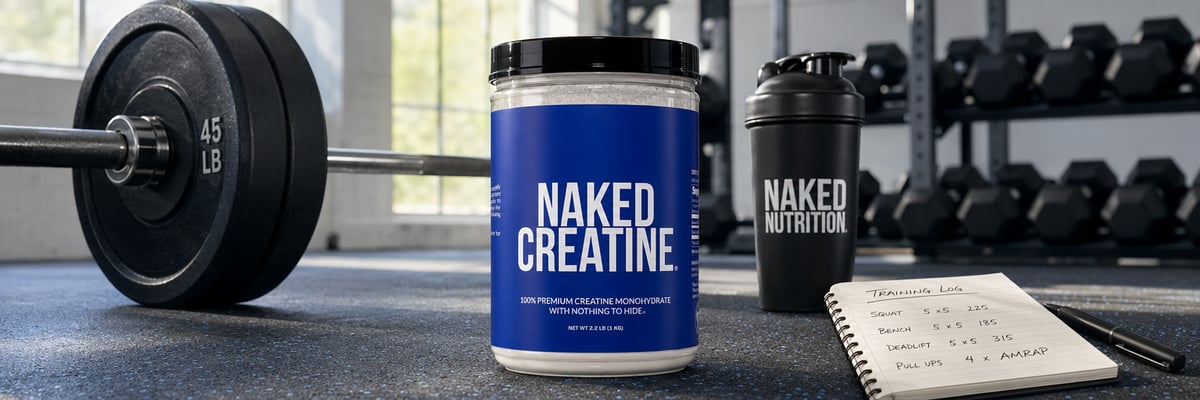
Creatine Monohydrate Powder | Naked Creatine - 2.2LB
- Free Shipping Included
- Creatine Monohydrate
- Creatine Formula
- Evidence-Based Formulas
How to Know If Creatine Is Working

You've been taking creatine for a couple of weeks. Your workouts feel... about the same. You're wondering whether the tub of powder is actually doing anything or whether you've just been adding an extra step to your morning routine for no reason.
This is one of the most common questions surrounding creatine supplementation, and it usually comes from a misunderstanding of how creatine works in the body. Creatine doesn't create a noticeable physical sensation the way caffeine does. Its mechanism is quieter and more fundamental: it replenishes phosphocreatine stores in your muscles, which accelerates ATP regeneration during high-intensity effort. More available ATP means more power output, more reps, and faster recovery between sets.
The effects are real, well-documented, and significant. They're just not immediate and not felt the way a stimulant is felt. Knowing what to look for, and when, is how you know if creatine is working. Naked Creatine Monohydrate provides a pure baseline for this, with no additives that could muddy the picture.
- Creatine is stored in muscle cells as phosphocreatine (PCr), your body's fastest energy reserve
- During explosive or high-intensity effort, PCr donates a phosphate group to ADP to rapidly regenerate ATP
- Supplementing creatine increases total PCr stores beyond what diet alone provides
- Higher PCr stores mean more ATP available per effort, translating to greater power output, more reps, and less early fatigue
- Full muscle saturation, not a single dose, is what drives the performance benefits
5 Signs Your Creatine Is Working

Instead of waiting to "feel" something, track these five concrete markers. They're the actual evidence that creatine is saturating your muscles and doing its job.
1. Increased Strength and Power Output
The most direct sign is that your lifts go up. You're moving heavier weights, completing reps you were failing before, or generating more explosive power on compound movements. Research consistently confirms that creatine supplementation increases maximal strength and power output during resistance training [1]. If your numbers are trending upward week over week, creatine is working.
2. Enhanced Muscular Endurance
Creatine doesn't just help with single maximal efforts. It extends how long your muscles can sustain high-intensity work before fatigue sets in. If you're completing more sets at a given weight, reducing rest time between sets, or finishing workouts that previously felt impossible, that's creatine extending your phosphocreatine-fueled capacity.
3. Muscle Fullness and Visible Size
Creatine is osmotically active, meaning it draws water into muscle cells. This intracellular fluid increase makes muscles appear fuller and larger, often within the first two to three weeks of supplementation. This isn't bloating or subcutaneous water. It's your muscles holding more fluid internally, which is a direct sign that creatine stores are being saturated.
4. Faster Recovery Between Sessions
If you're bouncing back from hard training sessions faster than before, that's creatine reducing muscle damage markers and accelerating the repair process. Athletes notice reduced soreness, better readiness to train, and the ability to handle higher training volumes over time.
5. A Modest, Measurable Weight Gain
Expect to gain 1 to 3 lbs in the first week or two. This weight comes from two sources: intracellular water drawn into muscle tissue, and over time, actual muscle mass accrued from enhanced training performance. This is not fat gain. The scale going up slightly is confirmation that creatine is reaching your muscles.
Pro Tip: Keep a workout log and weigh yourself at the same time each morning. Track your working sets and weights weekly. After four weeks, the data will tell you whether creatine is moving the needle, far more reliably than any subjective feeling will.
Can You Actually Feel Creatine Working?

Short answer: not the way most people expect. Creatine produces no stimulant effect. There's no energy rush, no tingling, no mental sharpness signal. If you're looking for that kind of feedback, you're looking for the wrong thing.
The distinction worth understanding is the difference between feeling a supplement and observing its effects. Pre-workout caffeine creates a feeling within 30 minutes. Creatine creates a performance environment that only becomes measurable over repeated training sessions. It raises the ceiling on what your muscles can do; it doesn't announce itself while doing it.
That said, after one to two weeks of consistent use, some people do notice a subtle but real shift in their workout capacity. Reps that previously ended in failure start going through. Sets feel slightly less taxing at the same weight. It's not a sensation so much as a pattern that becomes visible when you're paying attention to your performance data.
The psychological expectation gap here is real. Many people abandon creatine on a regular basis in the first two weeks because they don't feel anything dramatic, when in reality their muscles are quietly accumulating phosphocreatine stores and the payoff is still building. Give it the full timeline before drawing conclusions.
How Long Does Creatine Take to Work?
The timeline depends almost entirely on how you dose it. There are two established approaches, and both reach the same destination at different speeds.
Loading Phase: Take 20g of creatine daily for 5 to 7 days, split into four 5g doses throughout the day, then drop to a maintenance dose of 3-5 grams daily . This rapidly saturates muscle phosphocreatine stores. A study published in the Journal of Strength and Conditioning Research found that the loading protocol produces measurable performance improvements in as few as five to seven days [3]. The tradeoff: some people experience gastrointestinal discomfort from the high daily dose.
Maintenance-Only Approach: Start at 3 to 5g daily from day one, no loading phase required. This method fully saturates muscles by week three to four. The end state is identical to loading; it just takes longer to get there.
📊 What Research Says
A loading protocol of 20g/day for five to seven days followed by a 3 to 5g maintenance dose produces significant strength and power improvements within the first week of supplementation, according to published research [3]. Both loading and non-loading approaches reach the same muscle saturation endpoint; only the timeline differs.
One group worth noting: vegetarians and vegans typically have lower baseline creatine stores because dietary creatine comes almost exclusively from meat and fish. Lower starting stores mean more room to fill, which often translates to a faster and more pronounced response to supplementation compared to heavy meat eaters.
| Method | Protocol | Time to Notice Results | Potential Downside |
|---|---|---|---|
| Loading Phase | 20g/day for 5 to 7 days, then 3 to 5g/day | 5 to 7 days | Possible GI discomfort |
| Maintenance Only | 3 to 5g/day from day one | 2 to 4 weeks | Slower saturation timeline |
What to Do If Creatine Doesn't Seem to Be Working
Before concluding that creatine doesn't work for you, run through the most common reasons it appears ineffective. In the vast majority of cases, the issue is one of these four variables, not the creatine itself.
- Inconsistent dosing: Creatine works through cumulative muscle saturation. Missing days resets your progress. If you're taking it three days on, two days off, your muscles never fully saturate.
- Dehydration: Creatine's osmotic mechanism requires adequate intracellular water. If you're chronically under-hydrated, creatine can't do its job effectively and you may also experience cramping or discomfort.
- Insufficient training stimulus: Creatine amplifies the results of resistance training. Without a consistent, progressive training program, there's no signal for creatine to amplify. The supplement doesn't build muscle by itself.
- Low protein intake: Aim for 0.7 to 1g of protein per pound of bodyweight. Without adequate protein, muscle protein synthesis stalls regardless of creatine status.
A small percentage of people are genuine creatine non-responders. This typically occurs in individuals who already have naturally high muscle creatine concentrations, often due to high dietary meat intake. If your baseline stores are already near maximal, supplementing adds little additional phosphocreatine. Non-responders aren't doing anything wrong; they're just starting from a higher baseline.
Product quality is also a factor. Creatine supplements loaded with fillers, proprietary blends, or undisclosed additives make it impossible to know whether you're actually getting an effective dose of creatine monohydrate. Naked Creatine Monohydrate contains one ingredient: creatine monohydrate. No additives, no proprietary blends, and no guesswork about what's in the tub.
How to Make Your Creatine Work Better
Creatine is not a shortcut. It's a performance amplifier, and the degree to which it amplifies your results depends on the quality of the inputs surrounding it. These are the variables you can control.
Consistency: Take your creatine every day, including rest days. Muscle saturation is maintained through daily dosing, not just training-day dosing. Skipping rest days slowly depletes the stores you've built.
Hydration: The baseline recommendation for adults is 64oz of water daily. When supplementing creatine, add approximately 16oz per 3 to 5g dose. Creatine draws water into muscle cells via osmosis, and that mechanism requires you to be well-hydrated. If you're not, the process is compromised and you may experience headaches or muscle cramps as side effects.
Timing and co-ingestion: Post-workout creatine taken alongside carbohydrates and protein appears to enhance uptake via the insulin response. Research suggests that the insulin spike from carbohydrates promotes creatine transport into muscle cells [2]. A post-workout meal or shake is a practical and effective delivery window.
Nutrition foundation: Creatine cannot compensate for a caloric deficit, low protein intake, or a diet that doesn't support muscle growth. You need adequate calories to fuel anabolism, sufficient carbohydrates to replenish glycogen, and 0.7 to 1g of protein per pound of bodyweight to support muscle protein synthesis. Creatine works within your nutrition framework, not around it.
Training quality: Creatine raises your performance ceiling. You still have to train hard enough to reach it. Progressive overload, consistent effort, and a structured resistance training program are what give creatine something meaningful to amplify.
Naked Nutrition Creatine: A Clean Option Worth Considering

If you want to know whether creatine is working, you need to start with a product that doesn't introduce unnecessary variables. A supplement with artificial flavors, sweeteners, fillers, or proprietary blends makes it harder to isolate creatine's actual effect on your performance.
Naked Creatine Monohydrate contains one ingredient: creatine monohydrate. No artificial colors, no sweeteners, no additives of any kind. It's third-party tested for purity and heavy metals, so what's on the label is what's in the tub. That transparency matters when you're trying to evaluate whether a supplement is doing its job.
- Single-ingredient formulas let you isolate and evaluate creatine's actual effect on your performance
- No artificial sweeteners or flavors means no confounding variables in your supplement stack
- Third-party testing verifies that label claims match what's actually in each serving
- Creatine monohydrate is the most extensively researched form, with decades of safety and efficacy data
If you're going to take creatine seriously, use a product serious enough to back up your effort.
Frequently Asked Questions
How long does it take to know if creatine is working?
Most people begin noticing the effects of creatine within 1–2 weeks of consistent use, especially if they complete a loading phase of 20 grams per day for 5–7 days. If you skip loading and take a standard maintenance dose of 3–5 grams daily, it may take 3–4 weeks before you notice meaningful changes in strength or performance. Patience and consistency are key — creatine builds up in your muscles over time rather than producing immediate effects.
What are the first signs that creatine is working?
The earliest signs creatine is working include increased muscle fullness or a slightly "pumped" appearance, which is caused by water being drawn into your muscle cells. You may also notice you can push out an extra rep or two, sustain higher intensity during workouts, or recover more quickly between sets. These subtle performance improvements are reliable early indicators that your muscles are becoming saturated with creatine.
Should I do a loading phase to make creatine work faster?
A loading phase — typically 20 grams per day split into 4 doses for 5–7 days — saturates your muscles with creatine more quickly, allowing you to experience benefits sooner. However, loading is not required; taking 3–5 grams daily will achieve the same saturation level, it simply takes 3–4 weeks instead of about one week. If you experience digestive discomfort during loading, skipping it and going straight to a maintenance dose is a perfectly effective alternative.
Why am I not noticing any results from creatine?
If you're not seeing results, the most common reasons are inconsistent dosing, an insufficient intake of water, or not allowing enough time for muscle saturation to occur. It's also worth noting that roughly 25–30% of people are considered "creatine non-responders," meaning their muscles are already near-saturated from dietary meat consumption and they experience minimal additional benefit. Evaluating your training intensity, hydration, and dosing consistency will help you determine whether creatine simply needs more time or isn't the right supplement for your biology.
Does weight gain mean creatine is working?
Yes, modest weight gain — typically 1–3 pounds in the first week or two — is actually a positive sign that creatine is working, as it reflects increased water retention within your muscle cells rather than fat gain. This intracellular water retention is part of the mechanism that supports greater strength and muscle volume. Over time, consistent training while taking creatine can lead to additional lean muscle mass gains on top of this initial water-related weight increase.
What type of creatine is most effective?
Creatine monohydrate is the most extensively researched and widely validated form of creatine, and it remains the gold standard recommended by sports nutrition experts. It is also the most cost-effective option, with decades of studies confirming its safety and efficacy for improving strength, power, and muscle endurance. While other forms like creatine HCl or buffered creatine exist, none have consistently outperformed monohydrate in clinical research.
Is creatine safe to take long-term?
Creatine monohydrate is one of the most studied sports supplements in the world, with research spanning over 30 years supporting its safety for healthy individuals when taken at recommended doses. Long-term use at 3–5 grams per day has not been shown to cause harm to kidney or liver function in people without pre-existing conditions. As with any supplement, individuals with kidney disease or other medical conditions should consult a healthcare provider before starting creatine.
Does it matter when I take creatine for it to work?
The most important factor for creatine to work is taking it consistently every day, rather than the specific time of day you consume it. Some research suggests that taking creatine close to your workout — either pre- or post-exercise — may offer a slight advantage in uptake and utilization, but the difference is minimal compared to the benefit of daily consistency. Pairing creatine with a carbohydrate or protein source can help enhance its absorption through an insulin-mediated uptake mechanism.
Top Product Picks
Chosen by 1 million+ customers. Free shipping on orders over $100.
Creatine Monohydrate Powder | Naked Creatine - 2.2LB
$35.99
- ✓ 100% premium creatine monohydrate
- ✓ Highest grade available: fast dissolving and quickly absorbed
- ✓ 5g of creatine per serving
- ✓ No artificial sweeteners, flavors, or colors

Strawberry Creatine Monohydrate Powder | Naked Creatine - 1.1LB
$29.99
- ✓ 100% premium creatine monohydrate
- ✓ Highest grade available: fast dissolving and quickly absorbed
- ✓ 5g of creatine per serving
- ✓ No Artificial Sweeteners, Flavors, or Colors

Creatine HCl Powder | Naked Lean Creatine - 232g
$34.99
- ✓ 750 mg Con-Cret® Creatine HCl
- ✓ Organic prickly pear for natural water balance
- ✓ Highly potent: superior muscle performance at lower doses
- ✓ Critical electrolytes for optimal creatine absorption