Skip to content

Während unseres Lagerwechsels auf Amazon verfügbar. Bald wieder zurück.

Take the quizLink to /en-ch/pages/supplements-quiz

Free shipping on orders $99+

What Are Incomplete and Complete Proteins?

What Are Incomplete and Complete Proteins?

No discussion regarding sports nutrition would be complete without at least mentioning protein. And, if proteins come up, you're very likely to start talking about the quality of said macronutrient.


When that happens, there are generally two terms that get used: complete protein and incomplete protein. But what, exactly, do these phrases mean?


Measuring Protein Completeness


As you may or may not be aware, proteins are actually composed of many small substances called amino acids. In fact, these amino acids are what make proteins so very important. Because aminos acids can be used to build just about any cell, tissue or chemical that your body needs, having a steady supply of them supports a huge range of biological functions.


Protein shake next to a scoop of protein powder and a gym weight


But, some – in fact, most – amino acids can actually be made within your body out of other raw materials. Because you do not need to get these aminos through your diet, they are considered “nonessential.”


There are nine amino acids, however, which can only be found in your diet. These are referred to as “essential amino acids.” Just for reference's sake, these are:


  • tryptophan
  • lysine
  • methionine
  • phenylalanine
  • threonine
  • valine
  • leucine
  • histidine
  • isoleucine

    In dietary jargon, a “complete” protein is one that contains all of these amino acids. Logically, then, an incomplete protein is lacking one or more essential amino acid.


    Interestingly, the term “complete” does not refer to the content of nonessential amino acids. Although, it should be noted, “incomplete” is sometimes used incorrectly to describe a protein that is lacking a nonessential amino acid or two.


    Does It Matter?


    Often, when people do get to talking about complete and incomplete proteins, the general attitude seems to suggest that only complete proteins are with your time and energy.


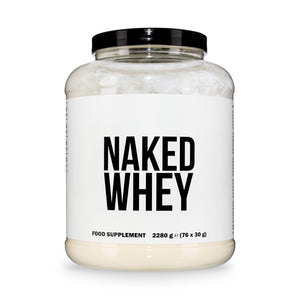
    Tub of Naked Whey in a black gym bag


    Is this true? Well... not really. While it is true that complete proteins do provide everything your body needs in one easy package, that does not make incomplete proteins useless. In fact, can make effective use of amino acids that come from a variety of foods or even from different meal spread throughout the day.


    Because many plants are incomplete proteins, vegans, for example often make excellent use of wise food combinations. This allows one incomplete protein to complement and complete another. As mentioned, however, this doesn't even need to be done in the same meal.


    Eating a variety of foods over the course of the day, then, will give you a chance to collect all of the essential amino acids that you need from incomplete sources. 

    Related Articles

    The Best Chocolate Pea Protein Powders of 2026

    What Is Chocolate Pea Protein Powder? Chocolate pea protein powder is a plant-based protein supplement made from yellow split peas that have been processed into either an isolate or a concentrate. Peas provide a hypoallergenic, vegan-friendly protein source that is naturally free of dairy and gluten and contains all nine essential amino acids. Most chocolate pea protein powders deliver roughly...

    Link to article: The Best Chocolate Pea Protein Powders of 2026

    The Best Vanilla Pea Protein Powders of 2026

    What Is Vanilla Pea Protein Powder? Vanilla pea protein powder is a plant-based protein supplement made by extracting protein from yellow split peas and adding natural or artificial vanilla flavoring. It has become one of the most popular plant proteins on the market because it delivers a high protein content without relying on dairy, soy, or gluten, making it accessible...

    Link to article: The Best Vanilla Pea Protein Powders of 2026

    The Best Powdered Peanut Butter Protein Powders of 2026

    What Is Powdered Peanut Butter Protein? Powdered peanut butter protein is made by pressing roasted peanuts to remove most of the oil and then grinding the defatted peanuts into a fine powder. Removing the oil lowers the calorie and fat content while concentrating the peanuts' protein, fiber, and flavor. A typical 2-tablespoon (12g) serving provides roughly 4 to 8g of...

    Link to article: The Best Powdered Peanut Butter Protein Powders of 2026

    The Best Strawberry Whey Protein Powders of 2026

    What Is Strawberry Whey Protein Powder? Whey protein is the water-soluble fraction of milk proteins, separated out during cheese and yogurt production. It is a complete protein, meaning it contains all nine essential amino acids, and it is one of the fastest-digesting protein sources available. Whey is rich in branched-chain amino acids, particularly leucine, which plays a central role in...

    Link to article: The Best Strawberry Whey Protein Powders of 2026