



Key Takeaways
- Protein Gap: Cow's milk delivers 8g of protein per cup versus just 1.5g in almond milk, making it the stronger choice for calorie-dense, high-protein shakes.
- Calorie Difference: Unsweetened almond milk contains roughly 40 calories per cup compared to 146 in whole milk, a meaningful gap when you're managing a caloric deficit.
- Micronutrients: Cow's milk is naturally rich in calcium, potassium, and B vitamins; almond milk is typically fortified to compensate for its naturally sparse nutrient profile.
- Digestive Fit: Almond milk is lactose-free and suits most people with lactose intolerance, but isn't appropriate for those with tree nut allergies and may contain carrageenan.
- Texture and Taste: Cow's milk produces a creamier shake; almond milk yields a lighter, thinner result that pairs well with chocolate, vanilla, and peanut butter flavors.
- Goal-Based Choice: Use cow's milk to maximize protein and calories in a bulking shake; use unsweetened almond milk when cutting or avoiding dairy.

Powdered Almonds | Naked Almond - 1.5LB
- Active Lifestyle Support
- Manage a Healthy Weight
- Boost Flavor and Texture
Almond Milk vs Regular Milk in Protein Shakes: What's the Difference?

You're about to blend a protein shake and you pause at the fridge. Almond milk or regular milk? It seems like a small decision, but it shapes the protein content, calorie count, texture, and even the digestibility of everything in that blender. The choice matters more than most people realize.
Over the past decade, almond milk has moved from a niche health food store item to a mainstream refrigerator staple. Many fitness enthusiasts have swapped cow's milk in their shakes without fully understanding the nutritional trade-offs they're making. Sometimes that swap is the right call. Sometimes it isn't.
This article breaks down the full comparison between almond milk vs regular milk in protein shakes: macronutrients, micronutrients, digestive considerations, taste, texture, and which option actually serves your fitness goals. By the end, you'll know exactly which liquid belongs in your next shake and why.
What Is Almond Milk and How Is It Made?
Almond milk isn't milk in any biological sense. It's blended almonds and water, strained to remove the solids, with a resulting liquid that resembles dairy milk in appearance but differs substantially in nutrition. The name is a convenience, not a literal description.
Commercially, manufacturers blend almonds with water, then run the mixture through fine filters to achieve a smooth, consistent texture. The challenge is that the finished product is quite bland and nutritionally sparse on its own, which is why most store-bought versions include additives. Sweeteners raise the flavor profile. Carrageenan, a seaweed-derived thickener, improves the texture and mouthfeel. Vitamins and minerals are added to compensate for what the processing removes.
Reading the ingredient label on commercial almond milk can be a humbling exercise. Some brands contain as little as 2 percent actual almonds.
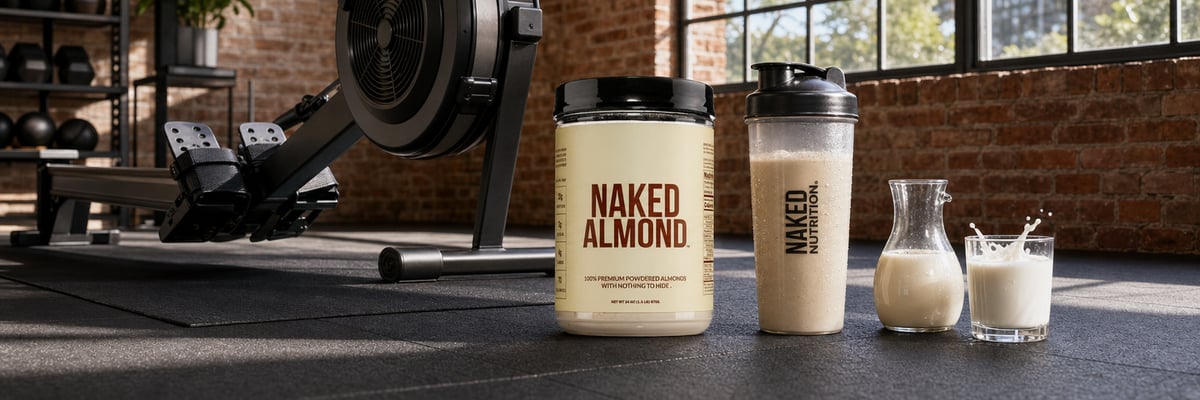
If you want almond flavor without the additive list, Naked Nutrition's Almond Powder is made with a single ingredient: almonds. It blends cleanly into shakes and gives you full control over what goes into your drink.
Understanding what almond milk actually is sets the stage for an honest nutritional comparison. Because once you know it's mostly water with some processing, the macronutrient numbers that follow won't surprise you.
Nutrition Comparison: Almond Milk vs Cow's Milk

The nutritional gap between these two liquids is substantial. Here's a direct side-by-side comparison per one-cup (240ml) serving:
| Nutrient | Unsweetened Almond Milk | Whole Milk | 2% Milk | Skim Milk |
|---|---|---|---|---|
| Calories | ~40 | ~146 | ~122 | ~83 |
| Protein | 1.5g | 8g | 8g | 8g |
| Fat | 3.5g | 8g | 5g | 0.2g |
| Carbohydrates | 1.5g | 11g | 11g | 12g |
| Sugar | 0g | 12g (lactose) | 12g (lactose) | 12g (lactose) |
One number stands out immediately: protein. Every variety of cow's milk delivers 8g of protein per cup. Almond milk offers 1.5g. That's not a minor difference, it's a fivefold gap. If you're adding protein powder to your shake, the powder is doing the heavy lifting regardless, but cow's milk still contributes meaningfully to your total.
Sweetened almond milk complicates the picture. Some flavored commercial varieties contain 15 to 20g of carbohydrates per cup, almost entirely from added sugar. That erases almond milk's low-carb advantage entirely and adds empty calories without nutritional benefit.
- Bulking: Whole or 2% cow's milk adds protein, healthy fats, and calories that support a caloric surplus without requiring extra ingredients.
- Cutting: Unsweetened almond milk keeps the shake light at around 40 calories per cup, letting your protein powder do its job without inflating your macros.
- Moderate maintenance: Skim milk splits the difference, delivering full protein content at a lower calorie cost than whole milk.
The right choice depends entirely on where your total daily calories need to land, not on which option sounds healthier in the abstract.
Vitamins and Minerals: Which Milk Has More Micronutrients?
Macronutrients get most of the attention in fitness nutrition, but micronutrients drive recovery, hormonal function, bone health, and energy production. On this front, cow's milk holds a clear natural advantage.
Cow's milk contains approximately 300mg of calcium per cup, around 30 percent of the recommended daily intake for most adults. Unsweetened almond milk, in its natural state, contains only about 24mg. Most commercial brands fortify their products to reach 300 to 450mg per cup, which closes the gap on paper, but the bioavailability of added calcium may not match that of naturally occurring dairy calcium.
Vitamin D follows a similar pattern. Cow's milk naturally contains some vitamin D, and most commercial dairy is further fortified to around 100 IU per cup. Almond milk contains no natural vitamin D and is typically fortified to comparable levels. Both can contribute to your daily needs, but neither alone is a reliable primary source.
📊 What Research Says
A review published in the Journal of Food Science and Technology found that plant-based milk alternatives, including almond milk, are significantly lower in protein, potassium, and naturally occurring micronutrients compared to cow's milk, with nutritional content varying widely by brand based on fortification practices. Choosing a fortified variety matters.
Where almond milk does have a genuine edge is vitamin E. Almonds are one of the richest natural sources of this fat-soluble antioxidant, and almond milk retains a useful amount, typically around 50 percent of the daily value per cup. Cow's milk contributes negligible vitamin E. Cow's milk also provides meaningful amounts of potassium, phosphorus, and several B vitamins including B12 and riboflavin, nutrients that support muscle function and energy metabolism, and that almond milk lacks unless specifically fortified.
Allergies, Intolerances, and Digestive Considerations

For many people, the question of which milk to use in a protein shake isn't about preference at all. It's about what their digestive system will actually tolerate.
Lactose intolerance is the most common issue with cow's milk. Lactose is the naturally occurring sugar in dairy, and digesting it requires an enzyme called lactase. A significant portion of the global adult population produces insufficient lactase, leading to bloating, gas, cramping, and diarrhea after consuming dairy. Estimates suggest that roughly 68 percent of the world's adult population has some degree of lactose malabsorption, according to the National Institute of Diabetes and Digestive and Kidney Diseases. For those individuals, almond milk is a practical and comfortable alternative.
Casein allergy is a separate and more serious condition. Unlike lactose intolerance, which is a digestive enzyme deficiency, casein allergy is an immune response to one of the primary proteins in cow's milk. Symptoms can include skin reactions, respiratory issues, and in severe cases, anaphylaxis. Anyone with a diagnosed casein allergy needs to avoid all dairy, full stop.
Almond milk isn't digestively neutral for everyone either. Many commercial brands contain carrageenan, a thickening agent derived from red seaweed. Some research suggests carrageenan may promote intestinal inflammation in sensitive individuals, though the evidence remains debated. If you notice digestive discomfort after drinking commercial almond milk, checking the label for carrageenan is a reasonable first step.
Finally, almond milk is not appropriate for anyone with a tree nut allergy. For those who need both dairy-free and nut-free options, lactose-free cow's milk provides a useful middle ground, delivering the same protein and micronutrient profile as regular cow's milk without the lactose trigger.
How Each Milk Affects the Taste and Texture of Your Protein Shake
Nutrition aside, the liquid you choose changes how your shake actually feels and tastes, and that matters for consistency. A shake you enjoy is one you'll make again tomorrow.
Cow's milk creates a richer, creamier base. The higher fat and protein content give it body, so shakes blended with whole or 2% milk feel more like a meal and less like a drink. Skim milk is lighter but still notably thicker than almond milk due to its protein content. If you're going for a thick, indulgent shake, dairy is the natural choice.
Almond milk produces a thinner, lighter consistency. The low protein and fat content mean there's less to thicken the shake, and the result can feel watery if you're used to dairy-based drinks. That said, many people prefer the lighter mouthfeel, particularly for post-workout shakes they're drinking quickly rather than sipping slowly.
On the flavor side, almond milk's mild, slightly nutty taste pairs naturally with chocolate, vanilla, and peanut butter protein flavors. It doesn't compete with the protein powder the way a stronger-flavored liquid might. Cow's milk has a subtle sweetness from lactose that works well with most flavors but can mute the more delicate ones.
- If using almond milk, blend rather than shake your protein drink. Blending incorporates air and improves texture significantly, bringing it closer to a dairy-based shake in consistency.
- Adding a tablespoon of nut butter or half a banana to an almond milk shake adds body without requiring cow's milk.
- For the creamiest possible shake with cow's milk, use 2% rather than skim, as the fat content noticeably improves texture.
Which Should You Choose for Your Protein Shake?

The right answer depends on what you're trying to accomplish, not on which option gets more favorable press right now.
Choose cow's milk if your priority is maximizing protein and calorie density. A shake made with whole milk and a quality whey protein powder delivers substantially more protein, more healthy fats, and more total calories than the same shake made with almond milk. This is the better setup for building muscle mass or eating in a caloric surplus. The naturally occurring calcium, potassium, and B vitamins are a genuine bonus.
Choose unsweetened almond milk if you're managing a caloric deficit, dealing with lactose intolerance, or simply prefer a lighter shake. At roughly 40 calories per cup, it keeps your total shake count low while your protein powder handles the protein target. It's also a straightforward swap for anyone avoiding dairy for personal or ethical reasons.
Either way, the quality of your protein powder matters as much as your liquid choice. Naked Whey is a single-ingredient whey protein concentrate sourced from grass-fed cows, with no artificial flavors, sweeteners, or fillers. It mixes cleanly into both cow's milk and almond milk, and the macronutrients are transparent so you can build your shake around your exact goals.
And if neither milk fits your current macros, water is always a zero-calorie option. The protein powder does its job regardless of what you mix it with. The liquid is about context, not necessity.
Know your goal, check your numbers, and pick accordingly. That's the whole decision.
Frequently Asked Questions
Does using almond milk instead of regular milk significantly reduce the protein in my shake?
Yes, and the gap is larger than most people expect. Unsweetened almond milk typically delivers 1 gram of protein per cup, while whole or 2% cow's milk provides 8 grams per cup. If you're already hitting your protein targets through food and your protein powder, the difference is manageable. If you're relying on the liquid to contribute, regular milk has a clear edge.
Which option is better for building muscle?
Regular milk supports muscle protein synthesis more directly because it contains a meaningful amount of complete protein, including both whey and casein, alongside calories that contribute to a muscle-building environment. That said, your total daily protein intake matters far more than what liquid you blend your shake with. A high-quality whey protein powder mixed with almond milk can still produce solid results if the rest of your diet is dialed in.
How do the calories compare between almond milk and regular milk protein shakes?
Unsweetened almond milk contains roughly 30 to 40 calories per cup, while whole milk delivers around 150 calories and 2% milk around 120 calories per cup. If you're in a calorie deficit or cutting, almond milk keeps your shake lean without sacrificing volume. If you're in a muscle-building phase and struggling to hit your calorie goals, regular milk is an easy way to add nutritious calories without changing the rest of your meal plan.
Is almond milk a good option if I'm lactose intolerant?
Almond milk is naturally lactose-free, making it a practical swap for anyone who experiences bloating, cramping, or digestive discomfort with dairy. It blends smoothly and doesn't affect the texture of most protein shakes noticeably. Just check that your protein powder is also low in lactose or uses a lactase enzyme if whey concentrate tends to bother you.
Does the type of milk I use affect how well the protein powder mixes or tastes?
Regular milk produces a creamier, thicker shake because of its fat content and protein structure. Almond milk is thinner and slightly nuttier, which can actually complement vanilla or chocolate flavors well. Neither option causes clumping issues with standard whey protein powders, though whole milk can make a shake feel heavier if you're blending immediately post-workout.
Which milk option is better for weight loss?
Unsweetened almond milk cuts roughly 80 to 120 calories per serving compared to whole milk, which adds up if you're drinking protein shakes daily. The higher protein content in regular milk does support satiety, so the calorie savings from almond milk aren't automatically a win if you end up hungrier sooner. Choose based on your full daily intake, not just the shake in isolation.
Are there any micronutrient differences worth knowing about?
Regular milk is a strong natural source of calcium, potassium, phosphorus, and vitamins B12 and D. Most commercial almond milks are fortified with calcium and vitamin D, but the amounts vary by brand and the bioavailability of fortified nutrients isn't always equivalent to naturally occurring ones. If dairy is a significant part of your diet's micronutrient strategy, regular milk contributes more reliably.
Can I use almond milk with any type of protein powder, or does it work better with certain formulas?
Almond milk works well with whey concentrate, whey isolate, and plant-based protein powders. Its lower fat and protein content means it won't compete with or mask the powder's nutritional profile, which is useful when you want clean macros. Casein protein is one exception where regular milk often works better, as the added protein and fat slow digestion further and improve the pudding-like texture many people prefer.
Top Whey Protein Picks
Chosen by 1 million+ customers. Free shipping on orders over $100.

Grass Fed Whey Protein Powder | Naked Whey - 5LB
$139.99
- ✓ Build and Maintain Lean Muscle Mass
- ✓ Boost Immune System
- ✓ Lose Fat
- ✓ Improve Heart Health

Pea Protein Powder | Naked Pea - 5LB
$57.99
- ✓ Sustainable Farming Practices
- ✓ Superior Amino Acid Profile
- ✓ Promote Muscle Gain
- ✓ Lose Weight

Grass Fed Whey Isolate Protein Powder | Naked Whey Isolate - 2LB
$74.99
- ✓ Whey Protein Base
- ✓ Protein Isolate
- ✓ Grass-Fed Source